Kerala Backwater Cruise from Kochi: Vaikom Eco Boat Review (Solo Woman)
Kerala Backwaters, the Slow Way
Disclosure: I paid for this stay myself and the opinions are my own. This post contains affiliate links, which means I may earn a small commission if you book through them, at no extra cost to you. Last updated: 01/10/26
Looking for a Kerala backwater cruise from Kochi?
I took a peaceful , non-motorised eco boat from Vaikom, near Fort Kochi, as a solo woman traveller.
In this review, I’ll share:
- what the eco backwater cruise was like as a solo woman
- which location to start your backwater cruise
- how it compares with a motorised houseboat
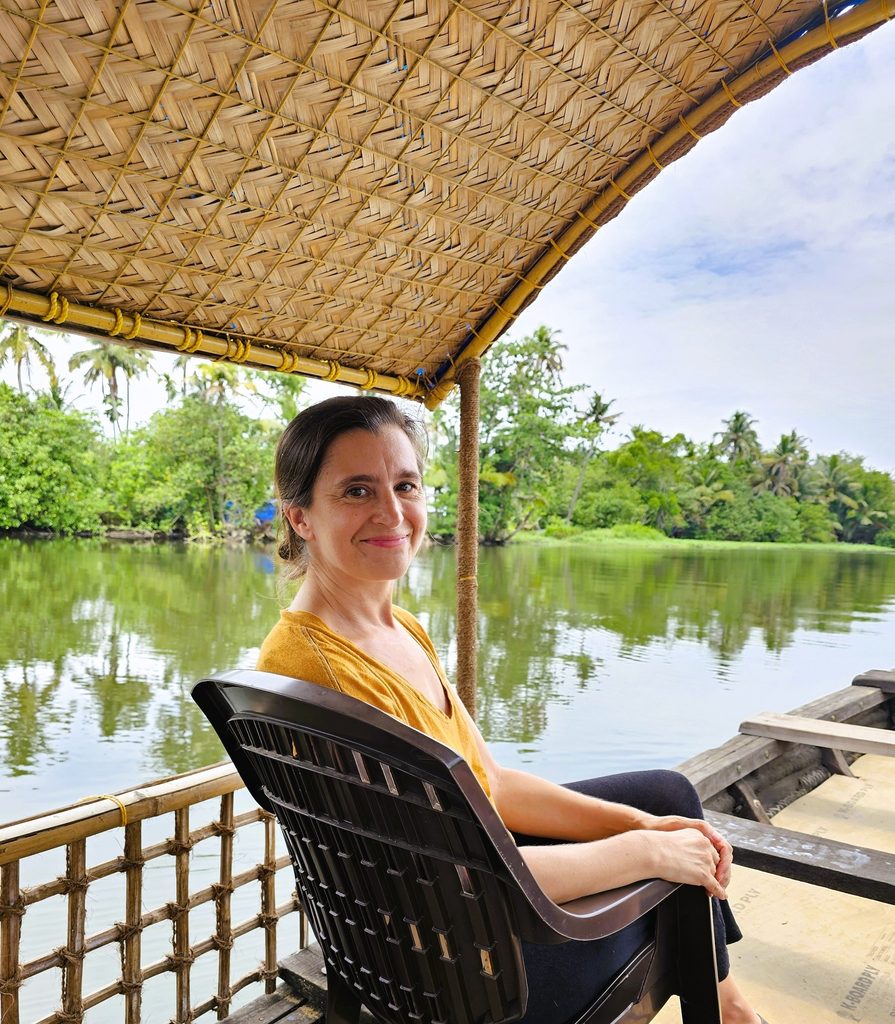
The Orchids to Olives approach to reviews
As a midlife solo traveller with chronic health issues and variable energy, I consider practical things such as accessibility, comfort, safety, noise, food and how physically demanding a place is — as well as how easy it is to rest, recharge and feel at ease there.
My reviews are based on my own experience, so what works for me may not work for everyone. My aim is to give you enough information to decide whether a place might work for you too.

Quick facts
- Tour: Backwater Village Eco Boat Cruise with Lunch
- Booked via: Viator
- Price: £25 (May 26)
- Departs from: Vaikom, with hotel pick-up from Fort Kochi
- Pick-up time: 9am
- Travel time: About 1 hour 15 minutes each way by car
- On the water: About 2.5 hours
- Lunch: About 30 minutes, a traditional Kerala meal on a banana leaf
- Group size: 4 on my trip
- Boat: Small, non-motorised punt boat
- Best for: Anyone wanting a quiet, slow morning on the backwaters
- Not for: Anyone wanting music, drinks, speed or a long journey
- Accessibility: Uneven ground at the landing, help getting into the boat, plastic seats with back support (no cushions)
- Facilities: Washroom and seating at the start
- Wear/bring: Sturdy flat shoes, sun protection, repellent, water
- Best time of year: October to March is regarded as the best time weather wise, but I went in May and it was fine. April – June is the hottest season, and mid June – August is monsoon.
Kerala Backwater Cruise from Kochi – so many choices
You can’t really come to Kerala without experiencing the backwaters. But once you start looking, it can be surprisingly confusing. There are different departure points, different types of boats and very different ways of experiencing the water, from large motorised houseboats to tiny traditional boats that move quietly through the waterways.
As a midlife female solo traveller who tends to look for slower, more restorative experiences, I was much more drawn to the latter.
I chose a small eco boat from Vaikom and spent a few peaceful hours drifting through the narrow canals by traditional punt boat.
But first let’s begin with the two key decisions you need to make:
- Where do I want to take a backwater cruise from?
- What type of boat do I want to travel in?
Where to start your Kerala backwater cruise
When you start looking, three areas come up again and again: Kochi, Alappuzha (Alleppey) and Vaikom. All are described as “backwater cruises”, but they offer quite different experiences.
1. From Kochi – the convenient option
Cruises leave from around the city and mix waterways, islands, harbour and city life.
Best for: an easy trip while staying in Kochi.
2. From Alappuzha (Alleppey) – the classic houseboat experience
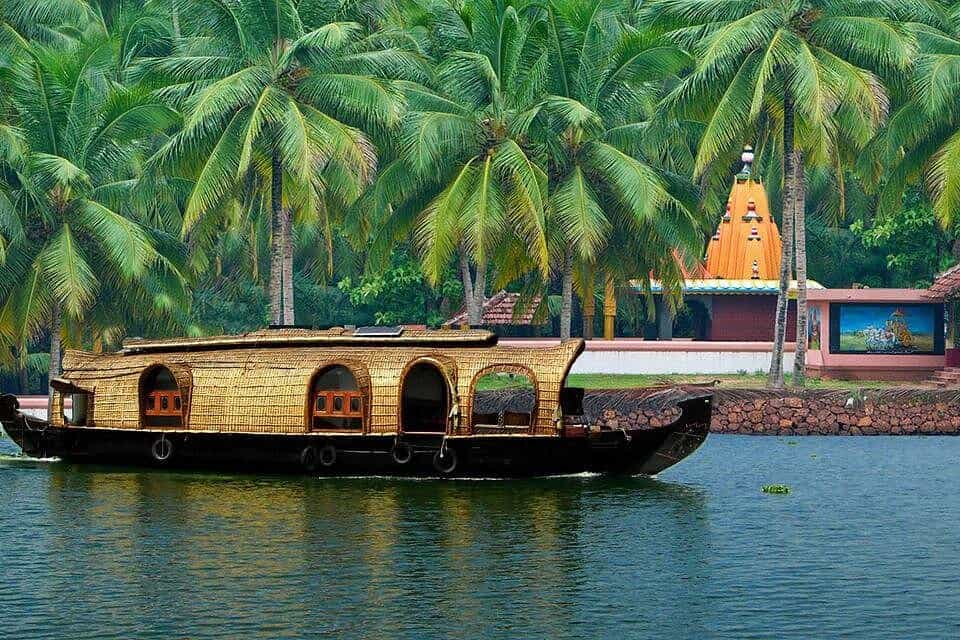
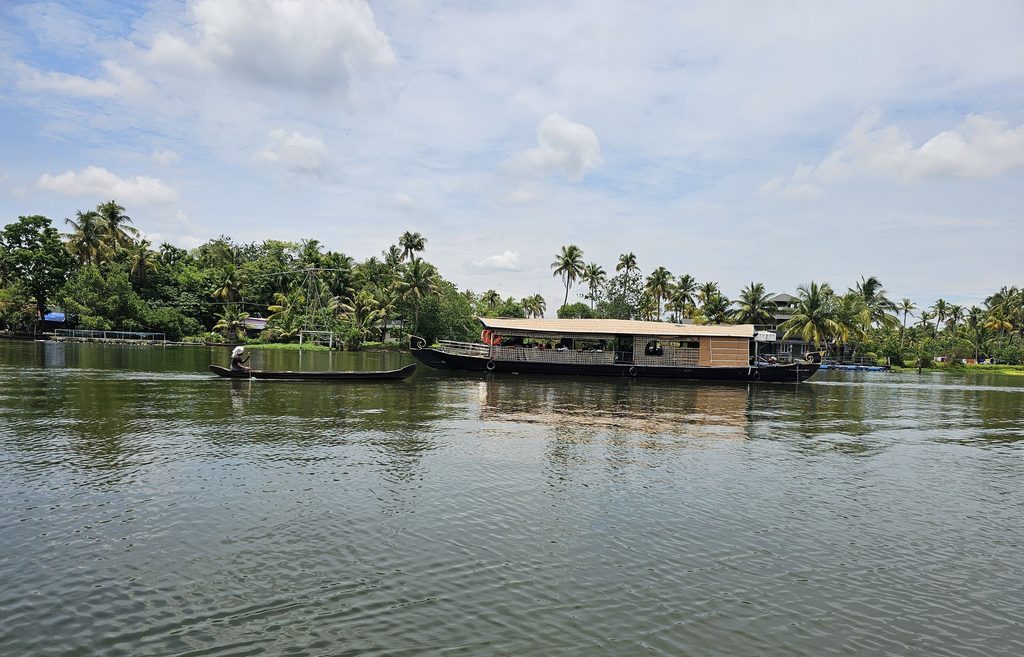
This is home to Kerala’s famous kettuvallam houseboats, including overnight stays with meals, bedrooms and open decks. The landscape is rural: canals, coconut palms, villages and paddy fields. Smaller eco boats run from here too.
Best for: the classic Kerala houseboat experience.
3. From Vaikom – quieter and more intimate
Vaikom offers a much quieter type of backwater experience, with smaller waterways, village life and traditional boats.
This is where I went.
I travelled in a small, non-motorised punting boat through narrow canals and quieter stretches of the backwaters, seeing toddy tappers, farmers and traditional village crafts along the way.
Best for: a slower, quieter experience focused on nature and everyday backwater life.
So although all three are described as “backwater cruises”, the experience can be very different depending on where you go.
Eco Boat vs Houseboat in Kerala: Which Is Better?
There are also very different types of boats to choose from:
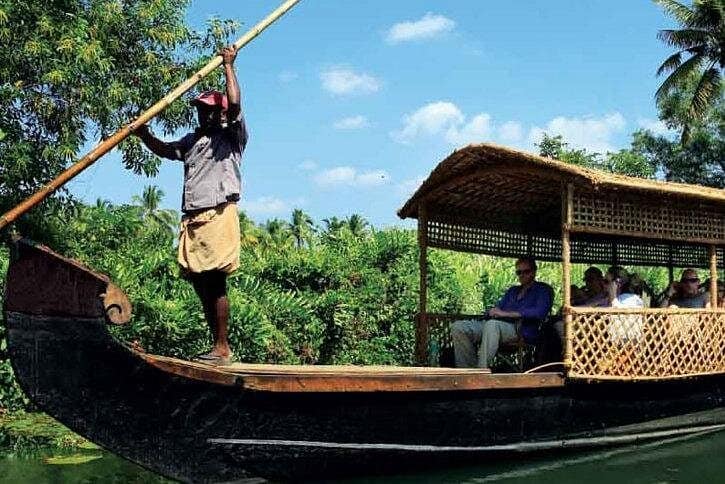
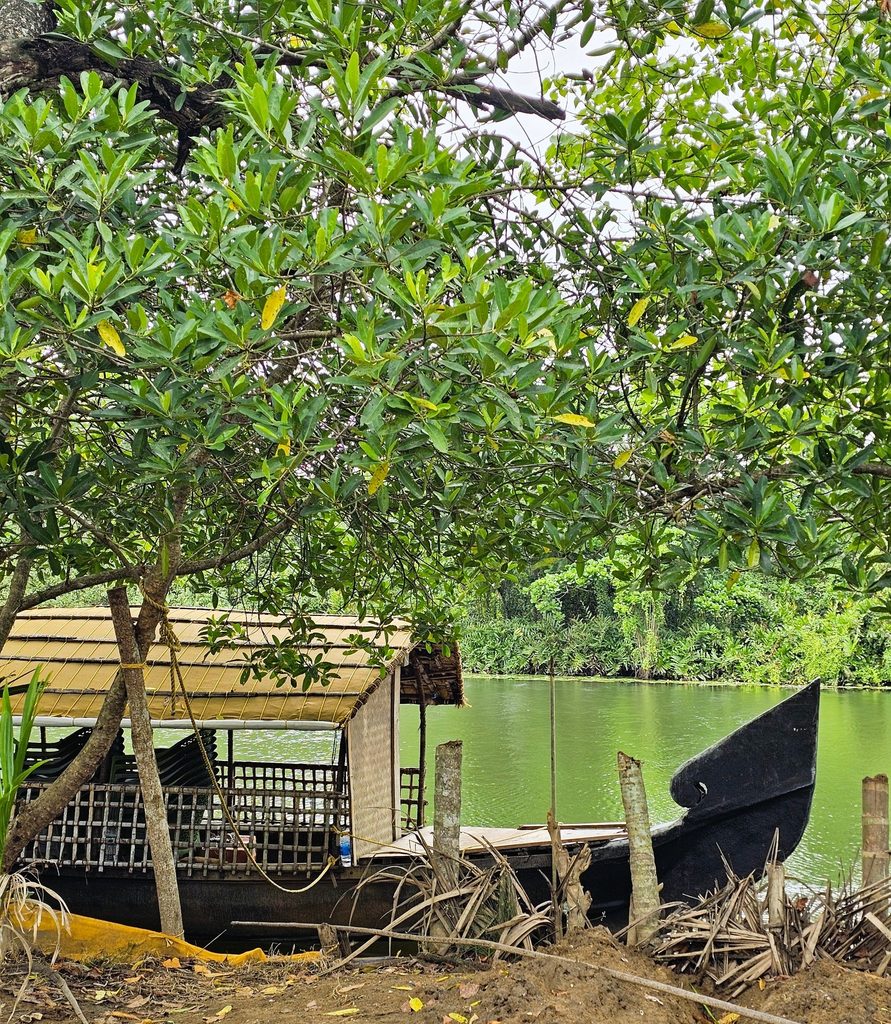
- A traditional non-motorised boat, often described as ‘eco’ or ‘punting’. This means a boat with no engine, moved by a punt (a long pole pushed into the riverbed by hand, much like in Venice), run by a local family business. Ours also stopped to pick plastic out of the water.
- A motorised boat or houseboat can travel much further and usually offers more facilities, space and onboard comforts.
Neither is necessarily the right choice for everyone. It really depends on what you want from your backwater experience.
| Eco / non-motorised boat | Motorised boat / houseboat |
|---|---|
| Small and intimate | Usually larger |
| Very quiet | Engine noise |
| Slow pace | Can cover more distance |
| Closer to nature and village life | More facilities and comfort, e.g. air-conditioning |
| Can enter smaller waterways | Better suited to larger waterways |
| Fewer passengers | Can accommodate larger groups |
| Suits a slower, immersive experience | Suits seeing more of the backwaters, including overnight stays |
My Vaikom Eco Boat Cruise Review
I booked the Backwater Village Eco Boat Cruise with Lunch through Viator.
I was picked up in central Fort Kochi at 9am, along with three other people. You can either be picked up from your hotel or go to office in Fort Kochi.
We travelled for around an 1.15 hr to Vaikom by car.
When we arrived, we were given some water, there was a washroom and a place to sit and we had a little time to wait while our boat was prepared.
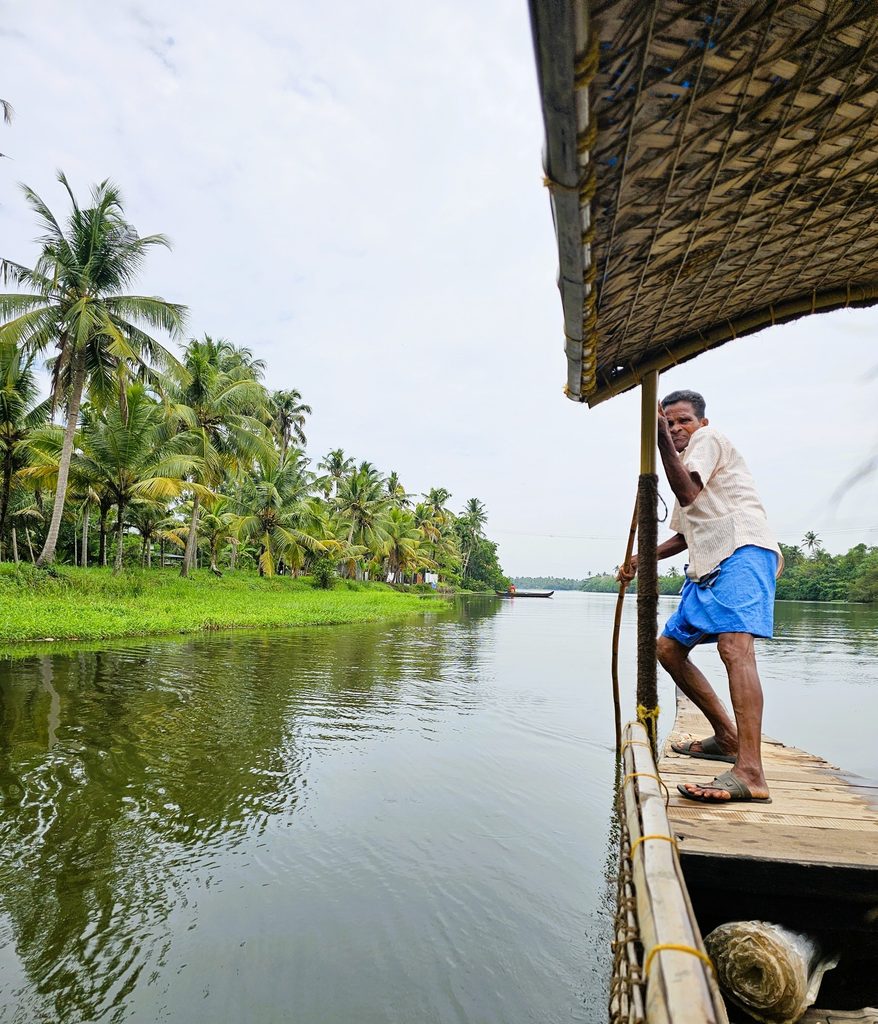
There were only four of us, so we had a small traditional, non-motorised boat to ourselves.
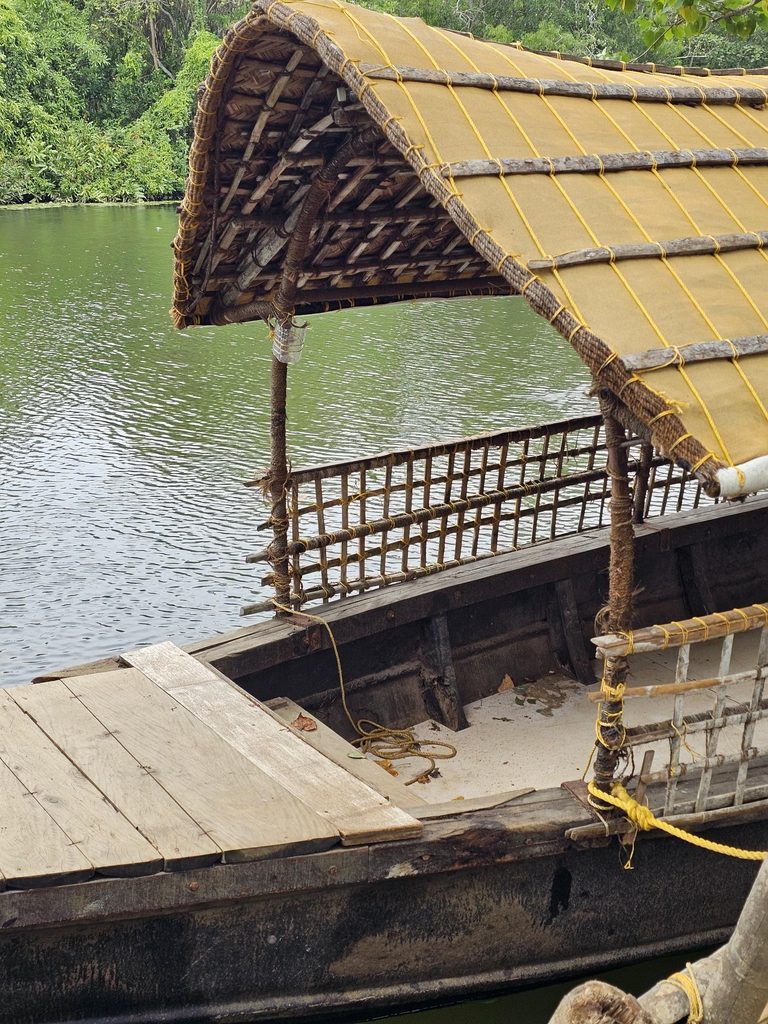
A slow journey through the backwaters
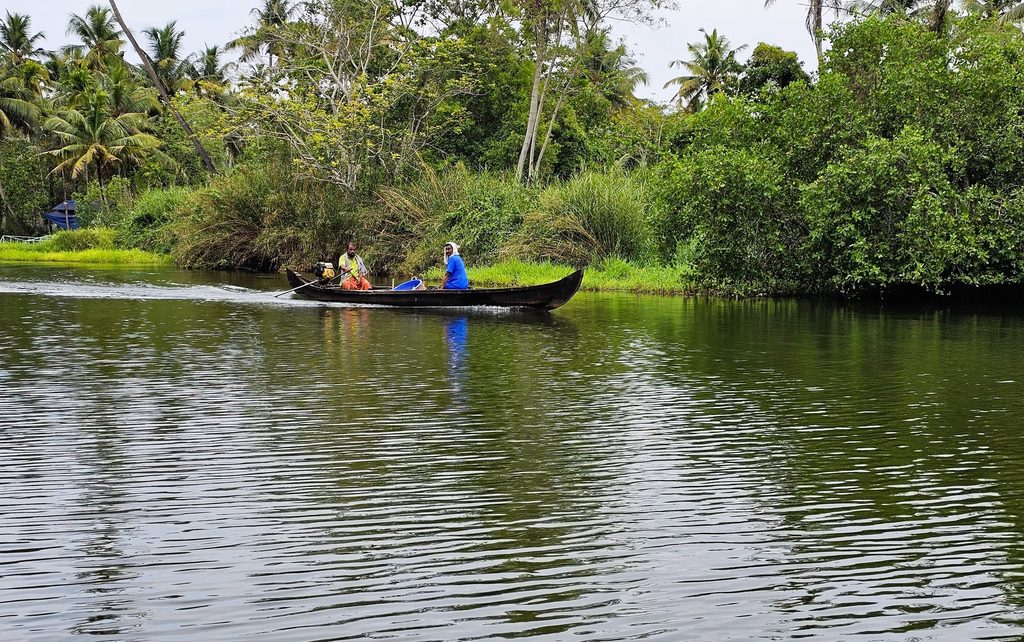
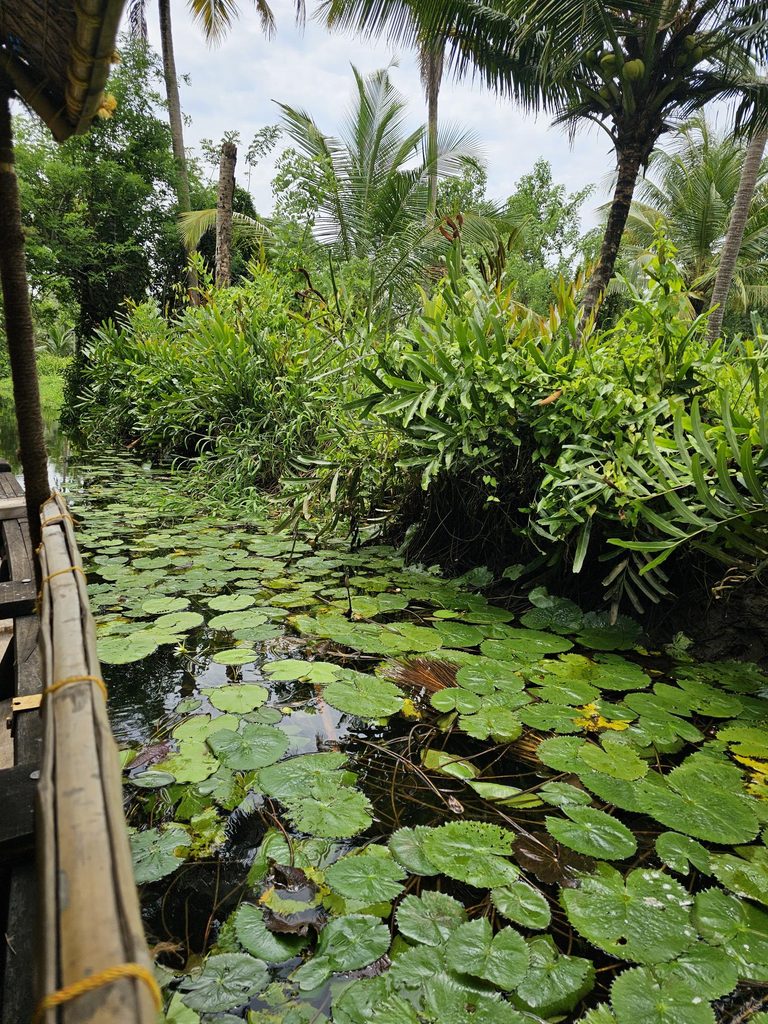
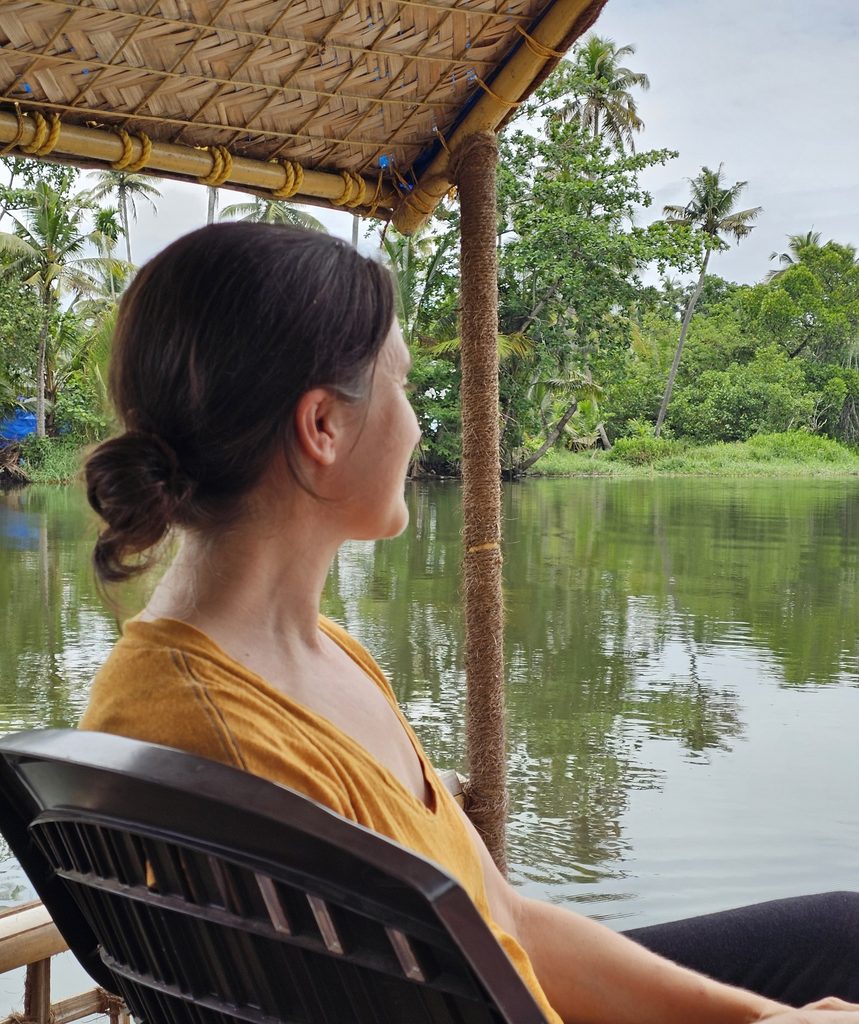
Once we set off, the pace was gentle. Our small punt moved through wider stretches of water first, then into narrower canals. There was no engine, no background music and very little noise at all, just the soft sound of the punt dipping into the water with each stroke.
It created a beautiful sense of quiet and presence.
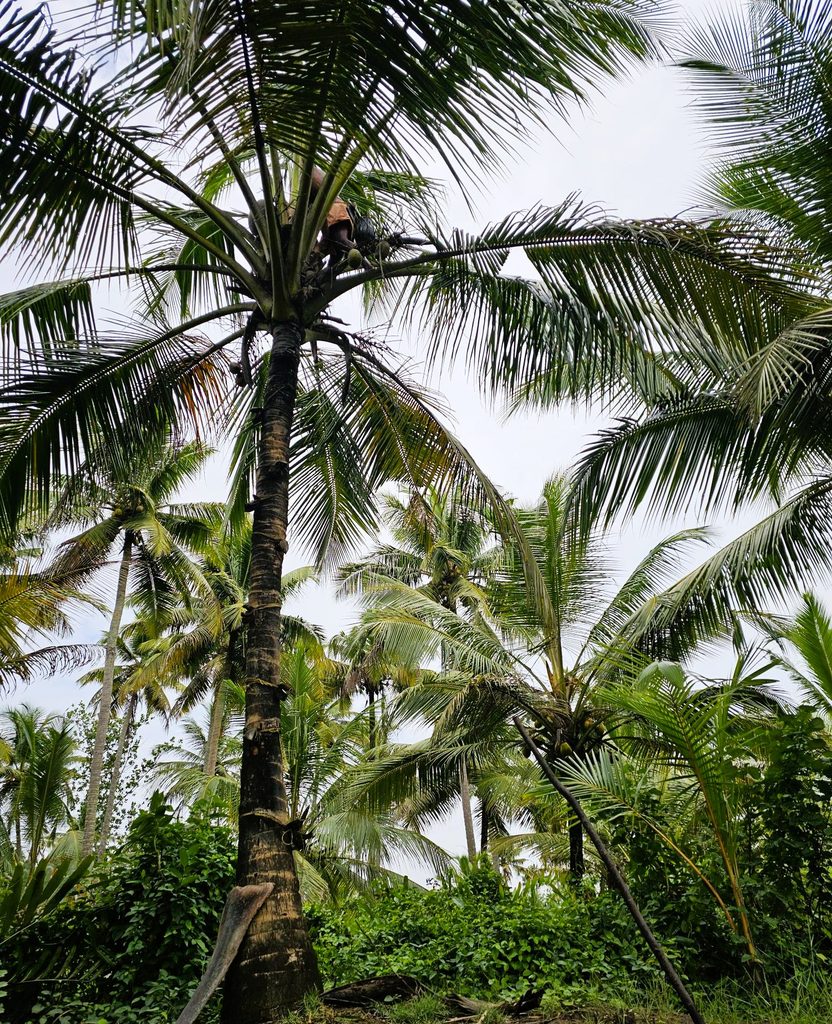
The landscape unfolded slowly around us: lush green trees lining the banks, lily pads floating on the surface, dragonflies moving through the air, the occasional fish popping out of the water. We passed toddy tappers at work and farmers with small boats loaded with crops, all going about their everyday lives.
That’s what I loved most. There was nothing to do but observe. To listen. To watch the water, the trees and the people living around us.
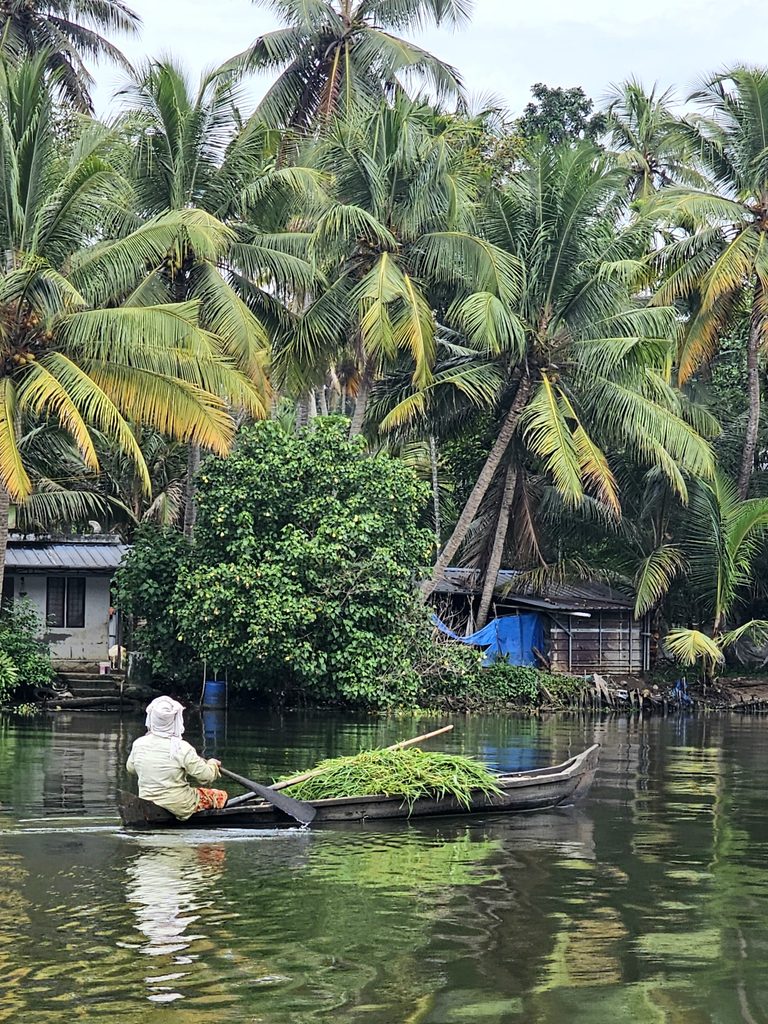
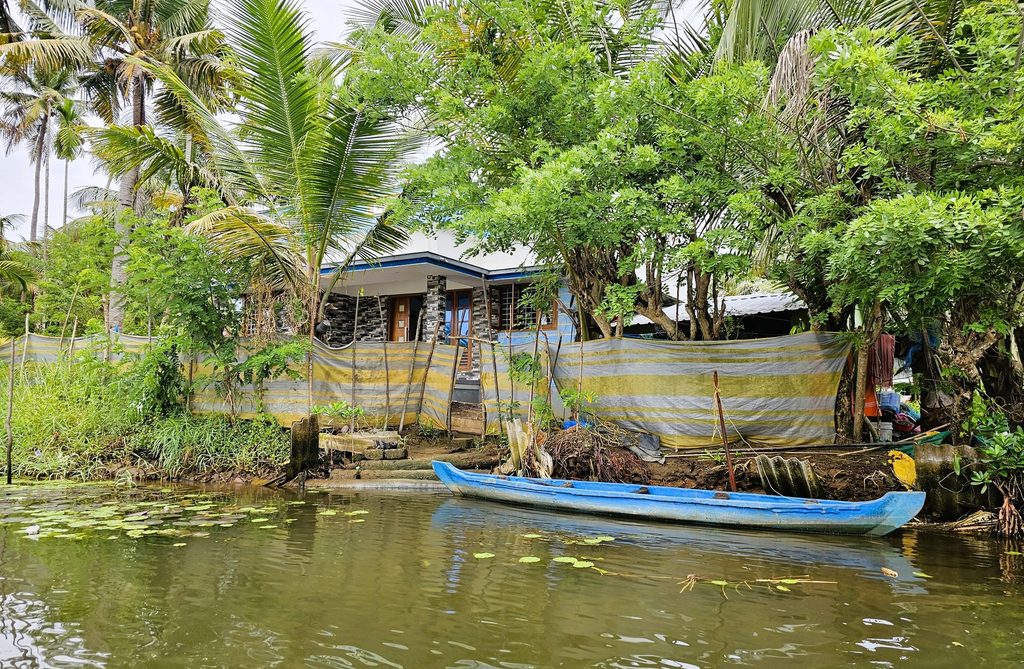
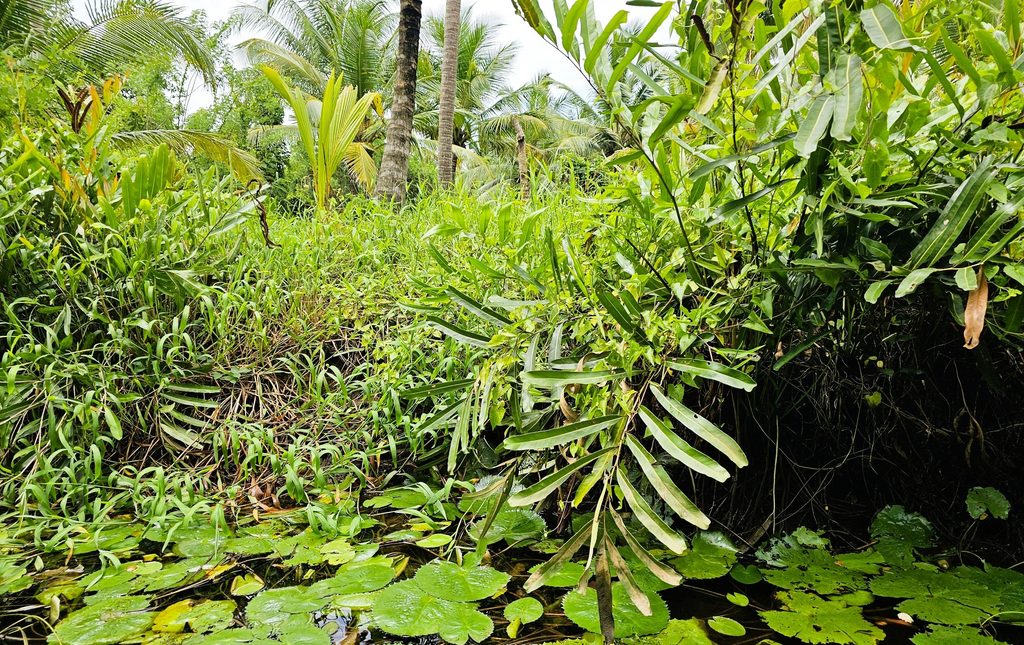
Family run business & female guide
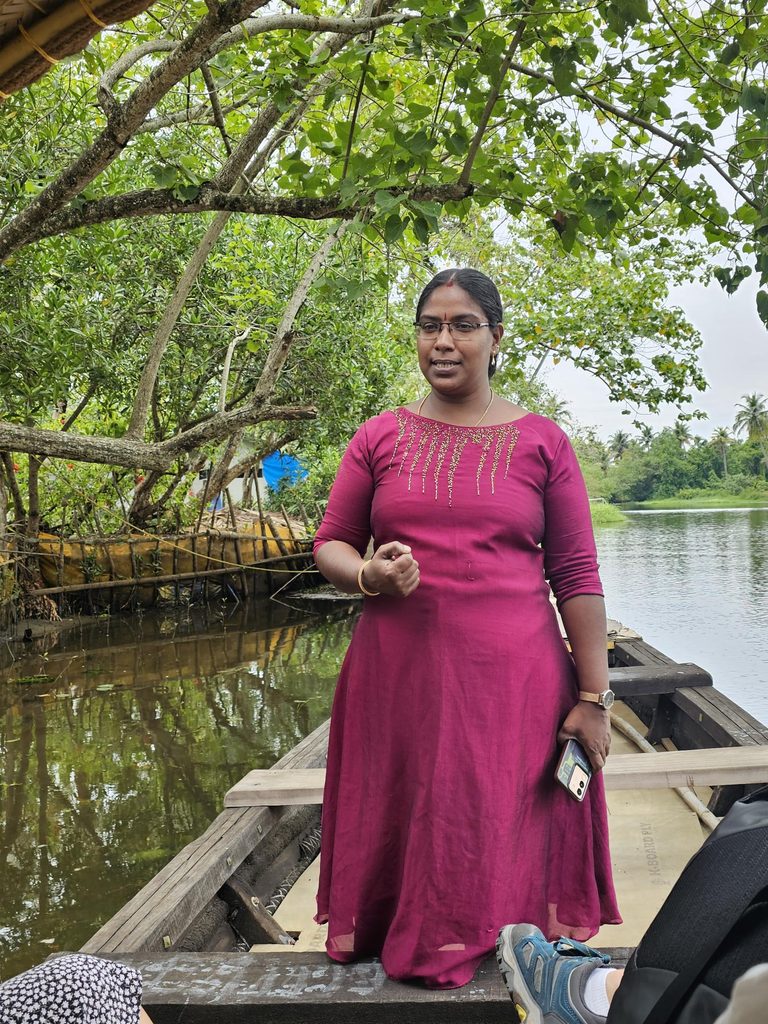
Our boat was part of a family-run business, and our guide was a woman. She told us how much she loved the work, especially because it let her care for her children. I really liked having a female guide. It added another lovely dimension to the day, and it felt good to support a local business.
She pointed out trees and plants and explained how people here make a living. We also made a few unexpected stops. At first I assumed she was about to show us something, but I soon realised she was collecting plastic from the water. It was such a simple thing, but it said a lot about her care for the place.
➜ Learn more about this backwater eco cruise here.
A glimpse of traditional Kerala village crafts
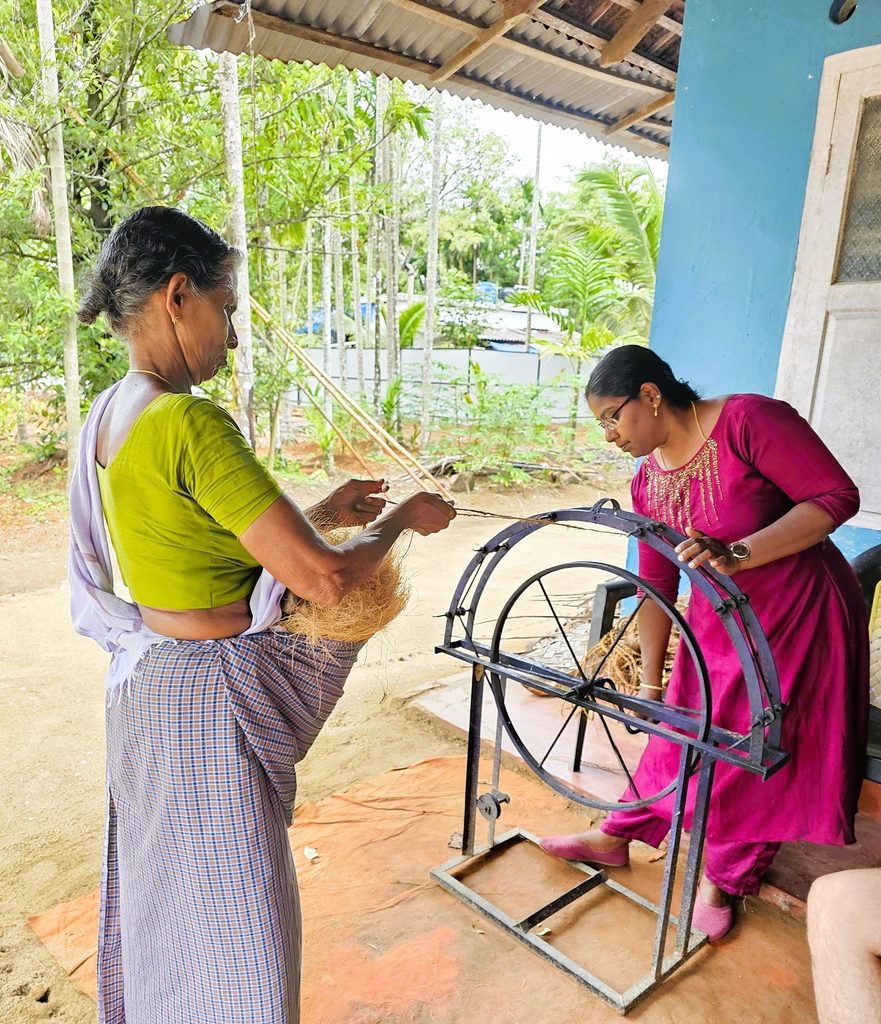
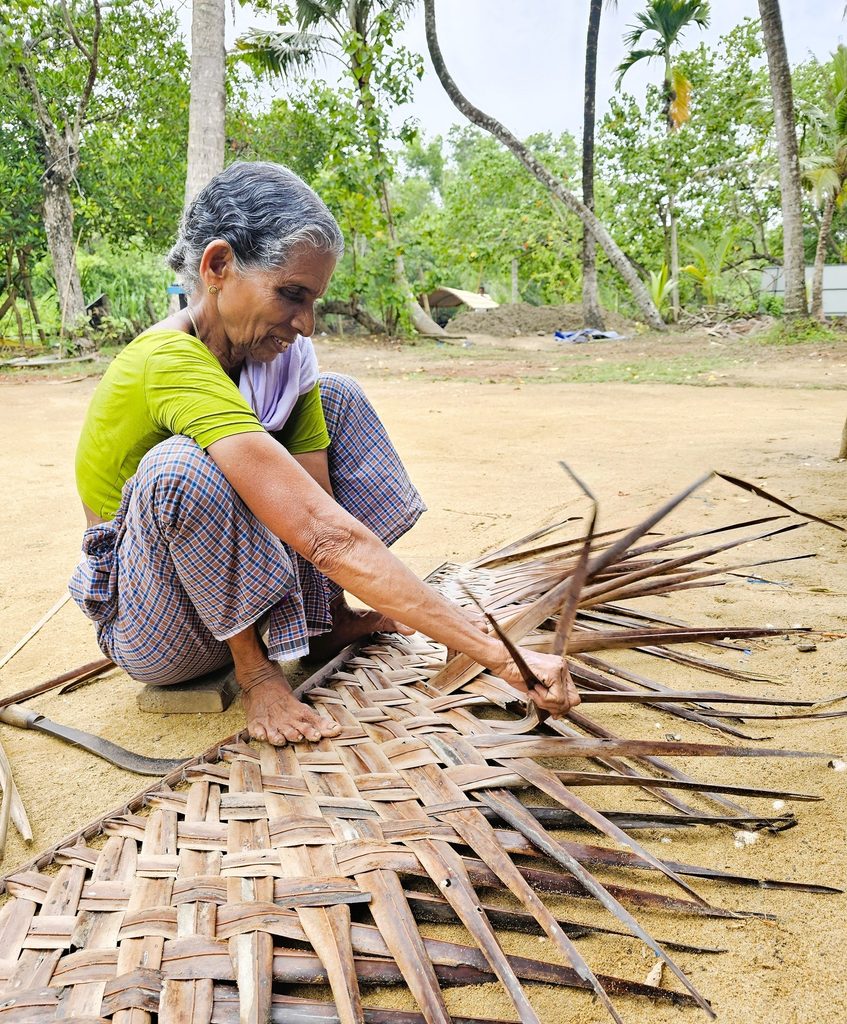
Halfway through, we stopped to see rope making and thatching. I’m not always sure how I feel about activities that have become tourist demonstrations. But the woman showing us explained that she had spent years doing this work in a factory for little pay, and that demonstrating it to visitors now gave her a better income. I saw it differently after that.
The skills were beautiful to watch, and it was a reminder that the backwaters aren’t simply a scenic backdrop. They’re a living landscape where traditional skills and livelihoods are still part of everyday life.
The cruise lasted about 2.5 hours.
A traditional Kerala lunch
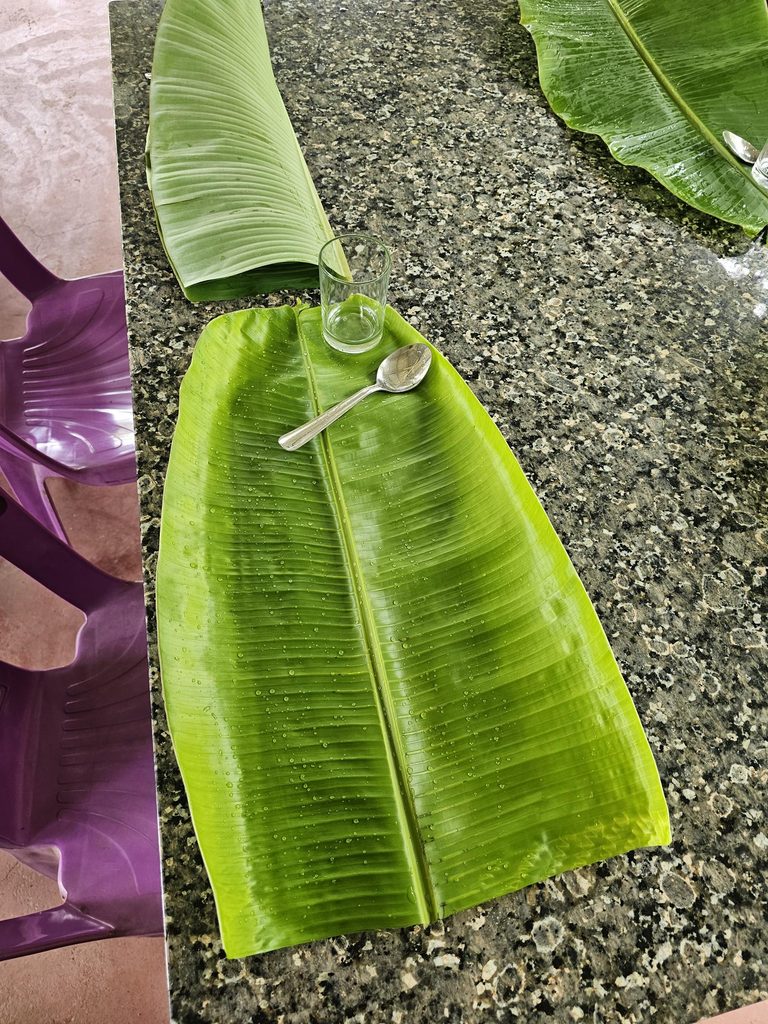
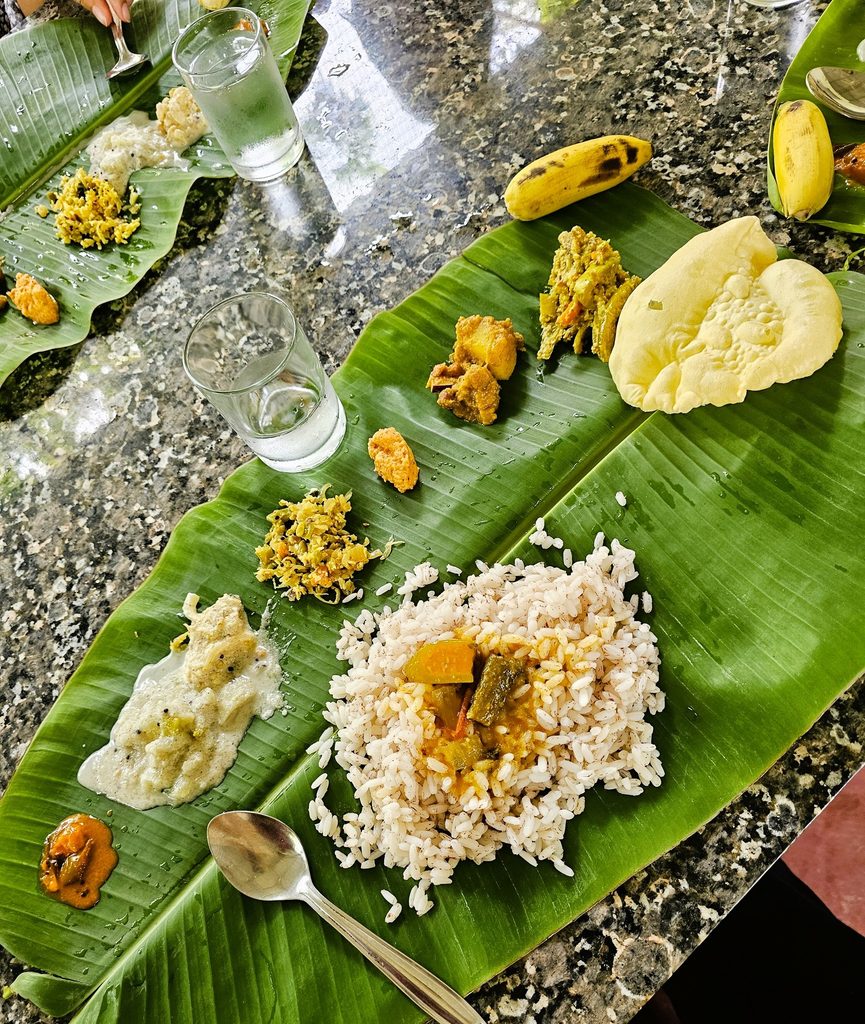
The cruise finished with a delicious Kerala lunch served on a banana leaf.
Rather than simply being handed a plate of food, we were talked through the different dishes and some of the Ayurvedic thinking around the flavours and ingredients.
There was a lovely variety of flavours and really good! I was quite surprised because when it said lunch on the advertisement, I was thinking soggy sandwiches!
Afterwards, we were driven back to Kochi Fort and dropped off at our hotels.
Eco boat vs motorised houseboat: which should you choose?
If you’re trying to decide between the two, I’d think less about which is the “best” and more about how you want to experience the Kerala backwaters.
A small non-motorised eco boat might suit you if you want:
- a quieter experience
- a slower pace
- fewer people
- closer contact with nature
- smaller canals and waterways
- an intimate experience
- time to simply sit and observe
- a more peaceful experience
A motorised houseboat might suit you if you want:
- to cover more distance
- a larger and more comfortable boat
- onboard facilities
- food and drinks onboard
- a longer houseboat experience
- more of the classic Kerala houseboat experience
The motorised option may also make more sense if seeing as much of the backwater network as possible is important to you.
The eco boat is more about slowing down and being immersed in the experience.
Would I choose an eco boat again?
When I returned to my Airbnb, my hosts were surprised I’d travelled all the way to Vaikom to take a cruise. They told me I could have taken a boat much closer to Kochi, with food and drinks included, music, and a much faster ride through the waters.
But I didn’t regret the journey at all.
For me, the point wasn’t to see as much of the backwaters as possible. It was to slow down enough to actually experience them.
I travel with changing energy and a chronic health condition that is better when my nervous system is calm, so I really value experiences that give me this. I could simply sit, watch the landscape unfold and let the pace of the boat set the pace of the morning.
My small eco boat cruise was very different from the image I’d had of a Kerala houseboat trip. There was no luxury boat, no overnight stay and no big distances covered. Instead, there was a tiny boat, a handful of people, a knowledgeable local guide, traditional village life, beautiful waterways and several hours of moving slowly through the landscape.
And that’s precisely why I loved it.
➜ Book the cruise I went on here.
My verdict: a backwater experience I’d happily repeat
If you’re looking for a peaceful way to experience the Kerala backwaters, particularly if you’re travelling solo, prefer a slower pace or simply want to spend a few hours immersed in nature, a small non-motorised eco boat could be a lovely option.
However, I would also love to try the traditional Alleppey Houseboat tour one day and who knows even take an overnight cruise (which I love the idea of!)
Is a Kerala Backwater Cruise Safe for Solo Women?
I did this trip on my own and it worked well. Hotel pick-up meant I didn’t have to work out the journey to Vaikom, and with only four of us on the boat, it felt more like a small group than a tour.
I felt completely safe and never awkward about being on my own. I shared the boat with a French couple and another solo traveller, a German man. We chatted a little along the way, but there was also a mutual respect for the quiet. Everyone seemed to want to enjoy the peace, so nobody felt they had to make conversation. Having a female guide made it even easier to relax.
Booking the Vaikom Eco Boat Cruise on Viator
I booked through Viator, which I find very straightforward and reassuring to use. I received a booking confirmation straight away, and the boat company then sent WhatsApp messages with the trip details, including the pick-up arrangements.
Everything ran smoothly on the day. I was picked up in Fort Kochi at 9am as planned, and being able to ask questions on WhatsApp made the whole thing feel easy.
Accessibility and things to know
The trip is a long morning: about 1 hour 15 minutes each way by car, plus around 2 hours 30 on the water. At the start there was a washroom and somewhere to sit while the boat was prepared.
The ground around the landing was uneven, so wear sturdy, flat shoes. Getting into the boat took a bit of care, but I was given help. The seats were regular plastic ones with back support but no cushions, so they’re basic rather than plush. If you tend to get uncomfortable sitting for a couple of hours, a small cushion could be worth bringing.
FAQs
Is Vaikom worth the journey from Kochi?
For me, yes. It’s about 1 hour 15 minutes each way by car, but hotel pick-up from Fort Kochi meant I didn’t have to organise it, and the quiet canals and village life were worth it. If you’d rather stay closer to the city, there are cruises around Kochi, though I haven’t tried them.
What’s the difference between Vaikom and Alleppey backwaters?
Alleppey is known for its motorised houseboats and overnight stays, with rural scenery of canals, palms and paddy fields. Vaikom is quieter, with smaller waterways, traditional boats and everyday village life.
Can you do a backwater cruise as a day trip from Kochi?
Yes. My trip left Fort Kochi at 9am and got back around 2.30pm, about 5.5 hours in total including the cruise and lunch. There are also longer day trips.
Is it safe for solo women?
I felt completely safe. There were only four of us on the boat, and our guide was a woman.
Do I need to book in advance?
Yes, at least a day in advance via Viator or during peak times, I’d suggest several days in advance as backwater cruises are popular.
Explore all Viator Tours in Kochi
As a female solo traveller, I frequently use Viator or Get your Guide to book experiences and tours. I feel confident in the quality, organisation and payment.
Want to find out more about Kochi?
➜ Read this article: Kochi Solo Travel for Women: A Guide for Midlife Travellers
Looking for a hotel in Fort Kochi?
Eighth Bastion – CGH Earth (£££) A stylish CGH Earth property with a strong sense of place, combining Fort Kochi’s heritage with contemporary comfort.
Old Harbour Hotel (£££) Has a beautiful garden and pool that make a lovely retreat from the heat of Fort Kochi, whilst being centrally located next to the harbour.
Abad Bungalow (££) A charming heritage property in a great location for exploring Fort Kochi.
The Fort Bungalow (£) A characterful heritage-style option in the heart of Fort Kochi.
About the Orchids to Olives Wellbeing Collection
Wellbeing Places on Orchids to Olives highlights destinations and retreats that feel particularly supportive for midlife women — especially those seeking calm, nature, and space to rest.
Many readers are navigating menopause, chronic health conditions or life transitions, so these places are chosen for their gentle pace, safety for solo travellers, and environments that allow the nervous system to soften.
Join the Orchids to Olives monthly newsletter for gentle travel inspiration
For restorative destinations and thoughtful solo travel ideas if you’re navigating low energy, recovery, or chronic illness.
Other India Posts
Munnar to Thekkady in 6 nights: 3 Very Different Kerala Stays
Akanta Ayurveda & Yoga Resort Review: A Solo Traveller’s Experience in Cherai, Kerala
Kochi Solo Travel for Women: A Guide for Midlife Travellers
Slow & Cultural Women-Only Tours in India with SheFarer
Visiting Rishikesh as a Midlife Woman with Chronic Illness: A Realistic Guide
10-Day Pranayama Retreat in Rishikesh, India – Review of Yoganga Healing
Nirvana Naturopathy & Ayurveda Retreat and Hospital (Near Mumbai): My Honest Review
The Best Exotic Marigold Retreat – A Midlife Women’s Wellness Retreat in Rajasthan, India
Slow & Cultural Women-Only Tours in India with SheFarer
Ashiyana Yoga Retreat Goa Review: A Midlife Woman’s Experience of Rest, Yoga & Slow Living
Wellbeing Places
Explore all Wellbeing Place Guides
Gentle & Chronic Illness Solo Travel guides
Solo Travel to Morocco with a Chronic Illness: A Midlife Woman’s Guide
Solo Travel to Penang: A Safe, Affordable Island for Midlife Women with Chronic Illness
Travelling Solo with Functional Neurological Disorder (FND): From Fear to Freedom
Solo Travel with Chronic Illness: How to Reclaim Yourself at Midlife
The Unexpected Benefits of Travelling Solo with a Chronic Health Condition