Visiting Rishikesh as a Midlife Woman with Chronic Illness: A Realistic Guide
What’s it like to visit Rishikesh in India, as a midlife woman with chronic health challenges?
My honest opinion after a six week stay
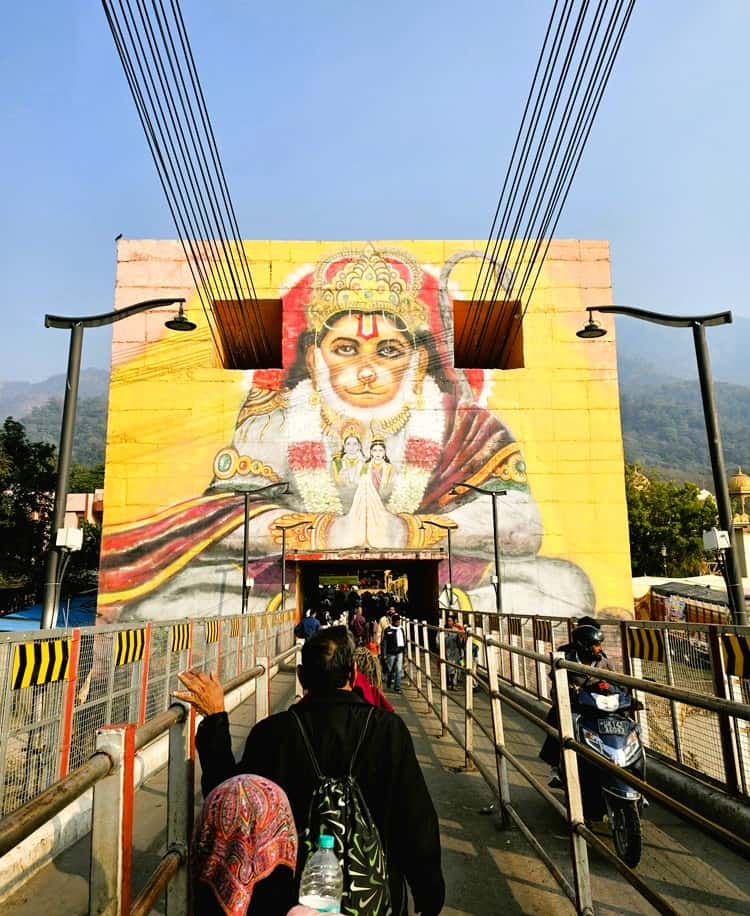
For many travellers, Rishikesh in India – often described as the ‘yoga capital of the world’ – conjures up images of yoga mats at sunrise, saffron-robed sadhus, and the sacred waters of the Ganges River flowing through the Himalayan foothills.
Rishikesh has drawn seekers, teachers and travellers for decades.
For midlife solo women travellers — especially those of us navigating chronic illness, fatigue, recovery, burnout or life transitions — an important question is: beyond its reputation, is Rishikesh actually a place where the body can slow down and the nervous system can soften?
The answer is nuanced. In many ways, Rishikesh offers a unique atmosphere that can feel deeply restorative: yoga classes throughout the day, meditation, riverside walks and cafés where travellers linger over herbal tea and smoothie bowls. Yet it is also lively, busy and sometimes chaotic in ways that can surprise first-time visitors (it did me).
If you arrive expecting a silent retreat in the mountains, you may feel overwhelmed. But if you approach Rishikesh as a vibrant spiritual town where moments of calm can be found within the energy, it can be a fascinating and rewarding place to spend time.
I spent 6 weeks in Rishikesh and this post draws on that experience.

In this guide, you’ll find:
- Yoga in Rishikesh & how it feels as a midlife woman
- Ways to explore wellbeing in Rishikesh
- Wellbeing Centres and Ayurveda
- Ashrams
- My own thoughts on spirituality in Rishikesh
- Festivals
- The Beatles Ashram
- How easy is it to meet other midlife women in Rishikesh?
- How does it feels to be a midlife woman in Rishikesh?
- Cafes & Restaurants
- Where to stay in Rishikesh
- Accommodation
- Is Rishikesh safe for solo female travellers?
- Transport
- Accessibility & things to be aware of if you have a chronic illness
- Poverty
- Best time to go (weather)
Important note: As always, this post shares my own perspective on what Rishikesh is like as a midlife woman with a chronic health condition (FND). Of course, everyone’s health needs are different, so it’s important to adapt ideas to what feels right for you.
Yoga Classes in Rishikesh
How could I not start a blog post on Rishikesh with yoga?
One of the most appealing aspects of Rishikesh is that yoga is available almost everywhere (if you like yoga that is). Many studios and ashrams offer drop-in classes, making it easy to practise without committing to a structured course.
There is EVERY style of yoga imaginable: Hatha, Ashtanga, Aerial, Kundalini, Yin, Vinyasa and more.
You could begin the day with Hatha, try restorative Yin in the afternoon and pop to an evening meditation session.
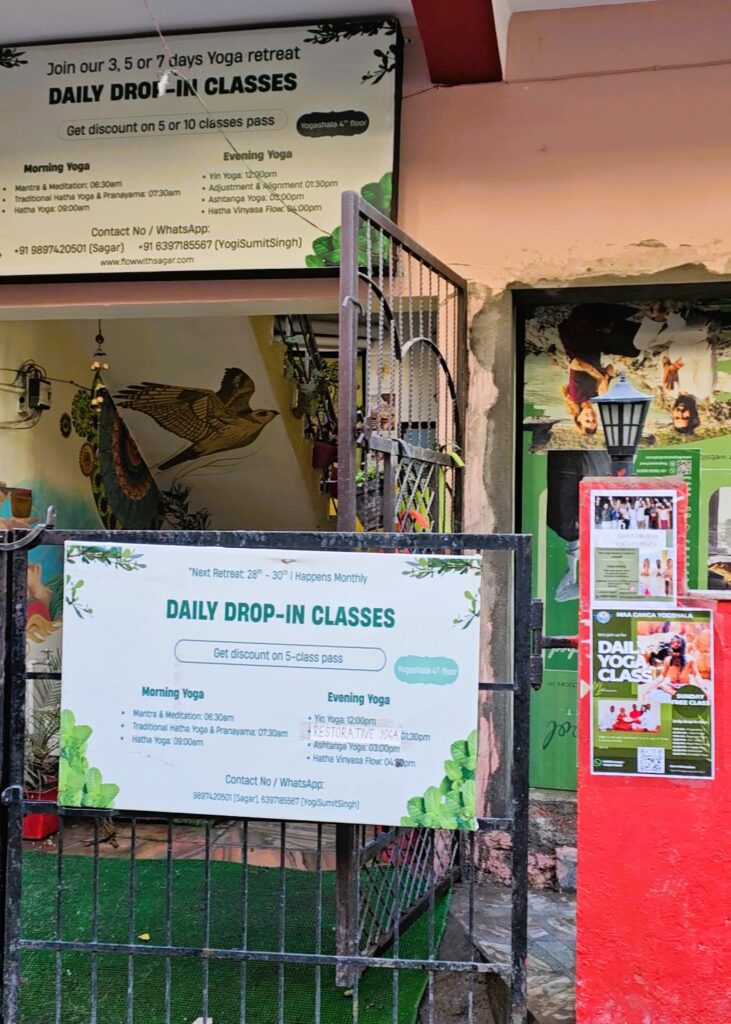
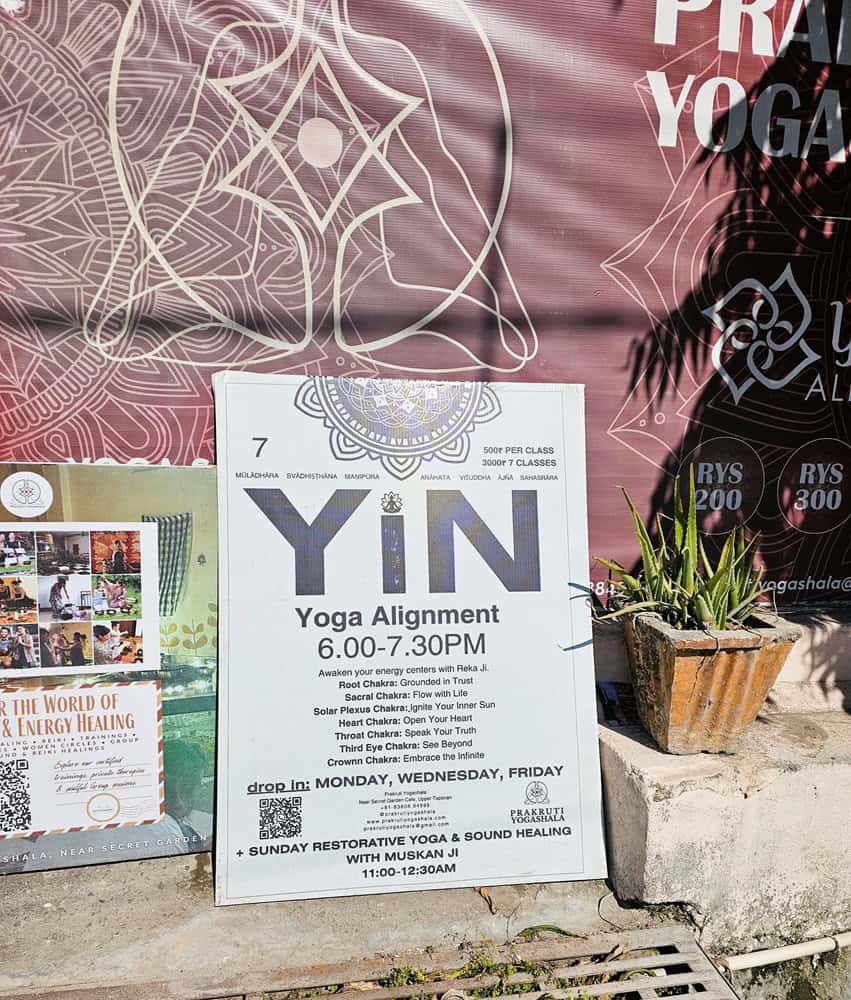
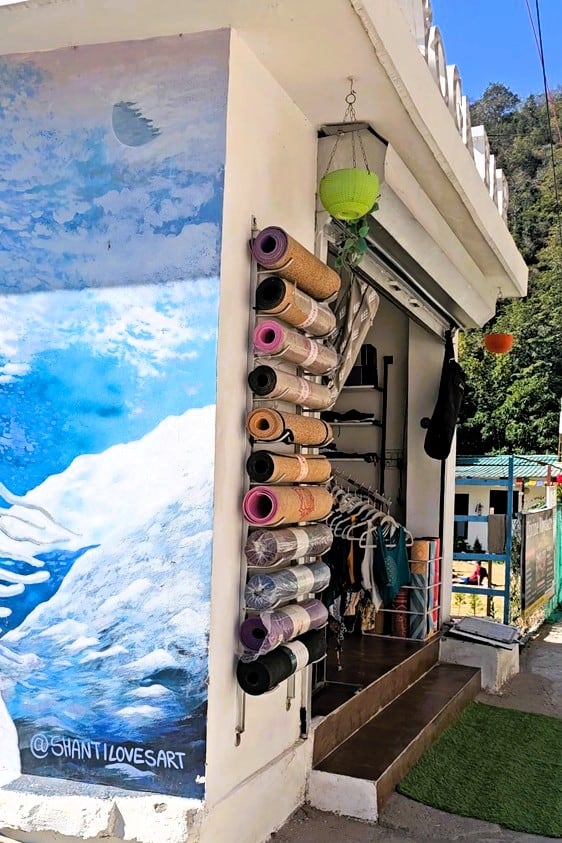
Classes take place throughout the day across the town and so it’s easy to explore different studios and find teachers whose style resonates.
For women who prefer to move slowly and listen to their bodies, this flexibility can be ideal. You can drop in when the mood takes and skip a day when you need rest.
Before arriving, I knew Rishikesh was famous for yoga, but I still wasn’t quite prepared for the sheer number of yoga schools! You can barely walk ten metres without seeing signs advertising classes. Posters line the streets, banners hang from balconies and every other person you meet seems to be a yoga teacher.
The choice is pretty phenomenal!
Key features of yoga in Rishikesh:
- 100s of drop in classes
- variety of styles
- ability to pick and choose
- all levels
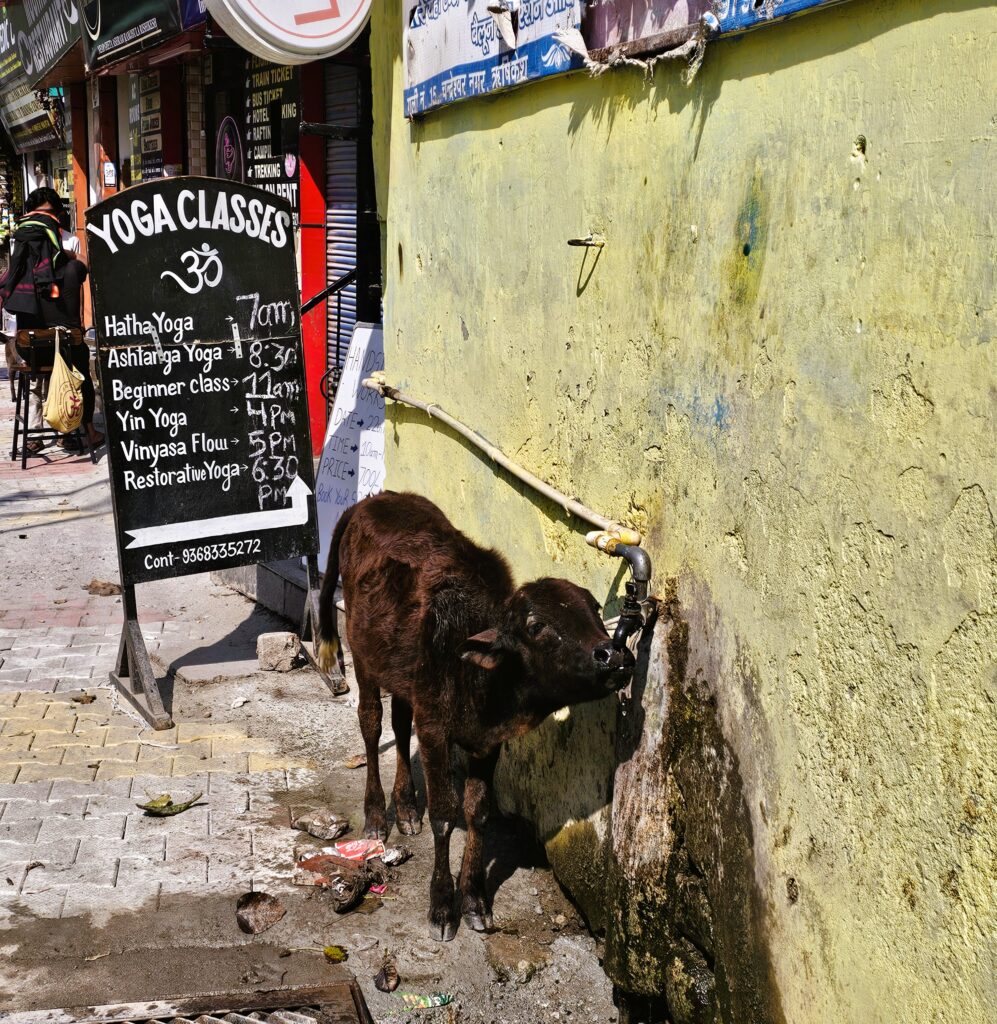
Well known yoga schools in Rishikesh
Some well known schools include Yogkulam, Vinyasa Yogashala, Himalayan Yoga Association, Arogya Yoga School, Swasti Yoga Centre and Aadi Yoga School.
Many travellers simply wander through town and try a class that appeals to them or, like me, follow word-of-mouth recommendations.
My experience at Swasti Yoga Centre
One school I tried was Swasti Yoga Centre, after several people recommended the teacher Surinder.
His 9:30am class is very popular. I was advised to arrive early if I wanted a space, so at 8am I went along and placed my mat in the studio before heading to a nearby café for a light breakfast and coffee. When I returned later, the room was completely full with about 50 students!
Despite the size of the class, the session was very focused and well led. It was easy to understand why his classes are so well regarded. Surinder seemed remarkably aware of what was happening across the room. He moved quietly between students, occasionally offering gentle adjustments or guidance where needed.
I would say that, generally, I prefer smaller classes and I’m always slightly surprised by my own subtle tendency to compare myself to others, despite reminding myself not to let my ego get involved! However, there can still be that quiet internal push to do a little more.
At the same time, I also noticed that pushing myself slightly actually felt good. It reminded me that stepping a little outside our comfort zone can be positive – as long as it comes from a curiosity of where my body can go (rather than comparison).
This was the only yoga class I tried during my time in Rishikesh, as yoga also formed part of the pranayama retreat, I attended during my stay. Even so, it offered a helpful glimpse into the vibrant yoga culture that runs through the town.
What was it like to attend a yoga class in Rishikesh as a midlife woman?
Before attending the class, I wondered if I might feel a little out of place – perhaps surrounded by ultra-flexible 20-somethings and I actually felt quite nervous.
What I actually found was a much broader mix of people. There were men and women of different ages and abilities.
I didn’t feel out of place at all; however, I do practice yoga regularly. If I didn’t, I think I may of felt a little overwhelmed and whilst I am in no doubt that the teacher would have been supportive, I did feel there was a certain standard of knowledge within the room. Personally, if I were a complete beginner I would seek out a beginner’s class – of which there are plenty.
For women managing chronic health conditions or fluctuating energy levels, the ability to choose different class styles and move at your own pace can make practising yoga in Rishikesh feel both accessible and supportive.
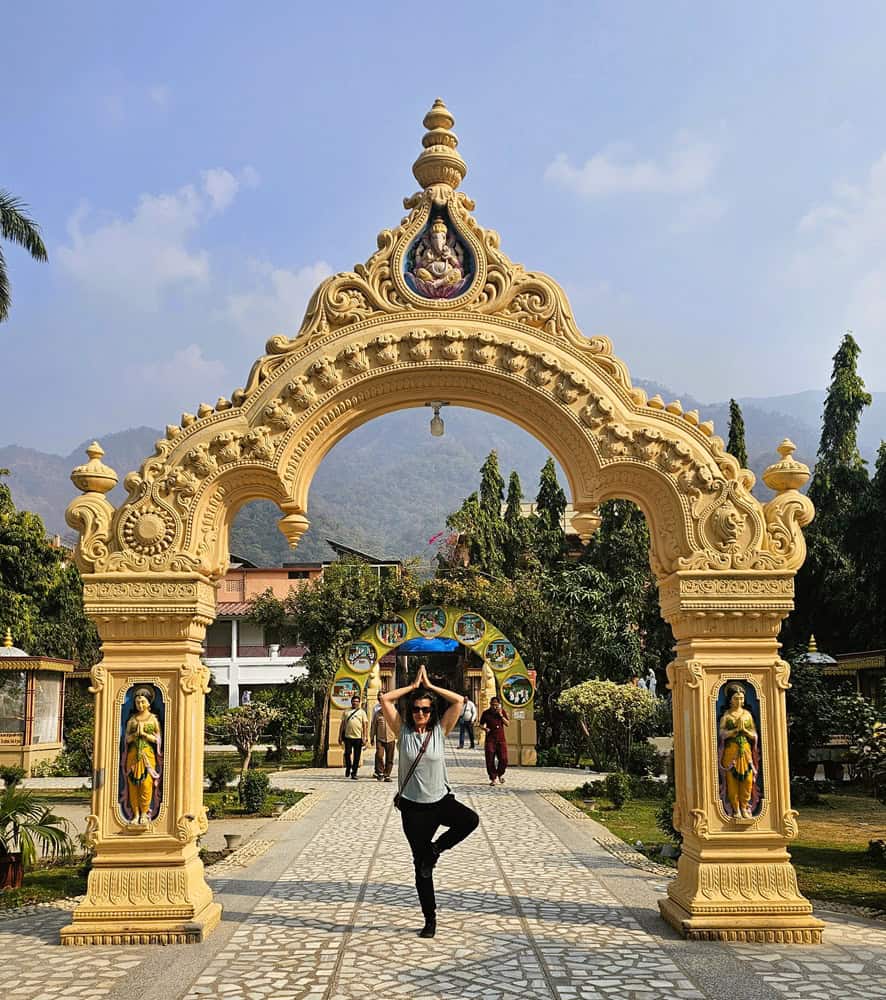
Exploring spirituality & wellbeing in Rishikesh
Beyond yoga classes, Rishikesh offers a huge range of short workshops and wellbeing experiences.
Think of a spiritual or wellbeing practice…. Rishikesh will probably have it!
These might include:
- Pranayama (breathing practices)
- Meditation sessions
- Sound healing
- cacao rituals
- Ecstatic dance
- Healing circles or sharing circles
- Philosophy talks
- Yoga Nidra
- Chanting, mantra workshops, and Kirtan
If you’re someone who is curious about holistic wellbeing and spiritual traditions, this variety makes Rishikesh feel like an open learning environment where you can explore whatever resonates with you.
In many ways, it reminded me of visiting Ubud in Bali several years ago — another place often considered something of a spiritual mecca.
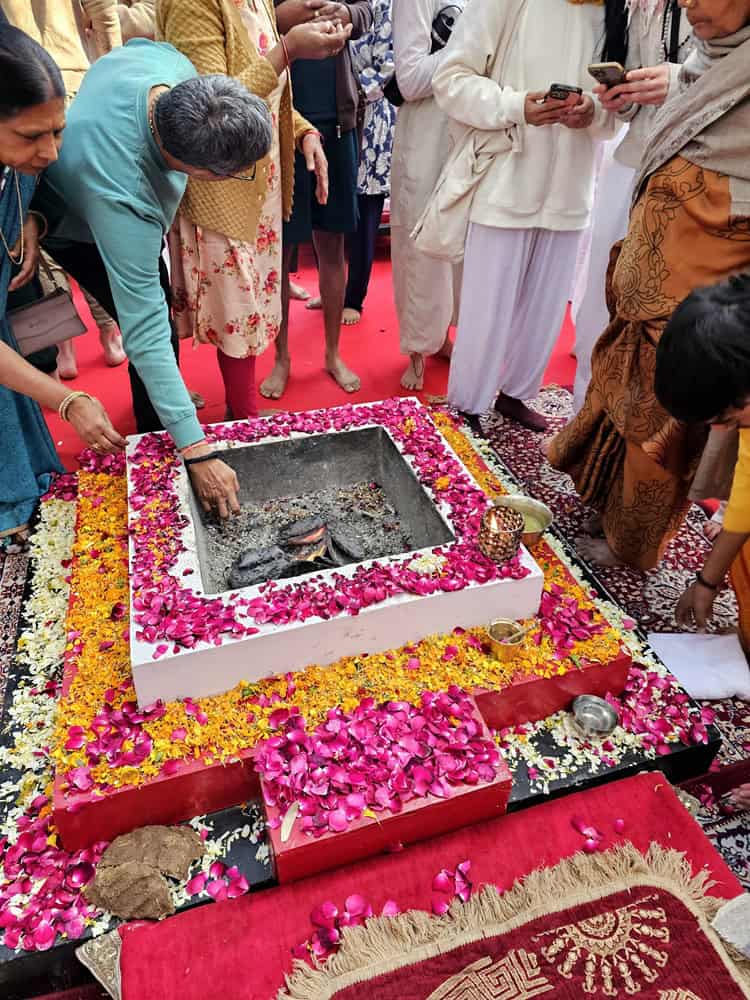
My 10 day Pranayama Retreat with Yoganga Healing
During my time in Rishikesh, I attended a ten day pranayama retreat focused on traditional yogic breathing practices.
The retreat group was very small – just 4 us (aged 45 to 65) – which created a quiet, personal environment where we could move slowly and explore the practices in a more focused way with wonderful teachers. This was a really wonderful experience and deepened my yoga and pranayama practice.
A structured retreat offers a very different experience from drop-in classes, allowing for deeper immersion, consistency and a slower more intentional pace. This can feel particularly supportive if you’re seeking rest, healing or nervous system regulation.
If you’re curious about pranayama or considering a retreat like this, you can read more about my full experience in my separate post.
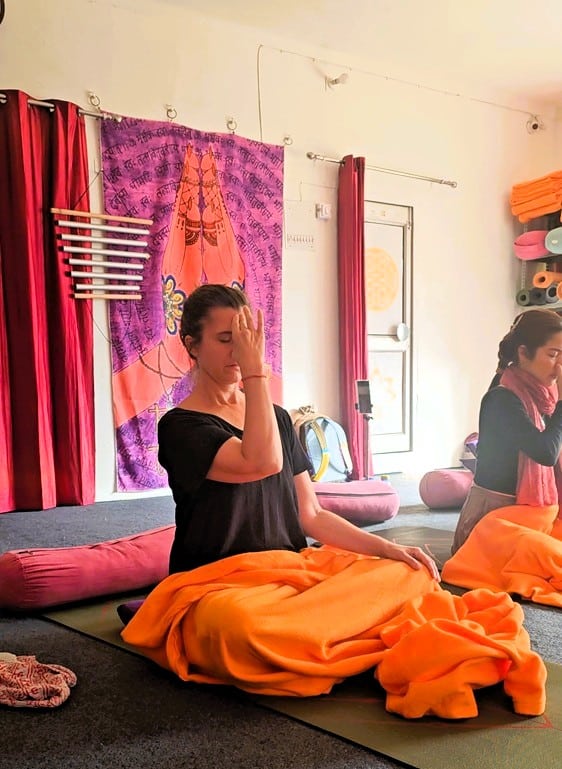
Rishikesh Annual Kirtan Festival
While I was in Rishikesh, I went to the Rishikesh Kirtan Festival, which takes place for about a month each year.
I absolutely love Kirtan. I first discovered it while travelling in Sri Lanka and I’ve been hooked ever since.
Kirtan is a form of devotional chanting where musicians sing mantras and the audience joins in. The music slowly builds, often with harmonium, drums and clapping gradually building into a powerful shared rhythm that draws everyone into the experience.
The Kirtan festival is wonderful and completely free! Women can choose beautiful sarees to wear, and there’s also henna, face decorations, food, and of course hours and hours of Kirtan.
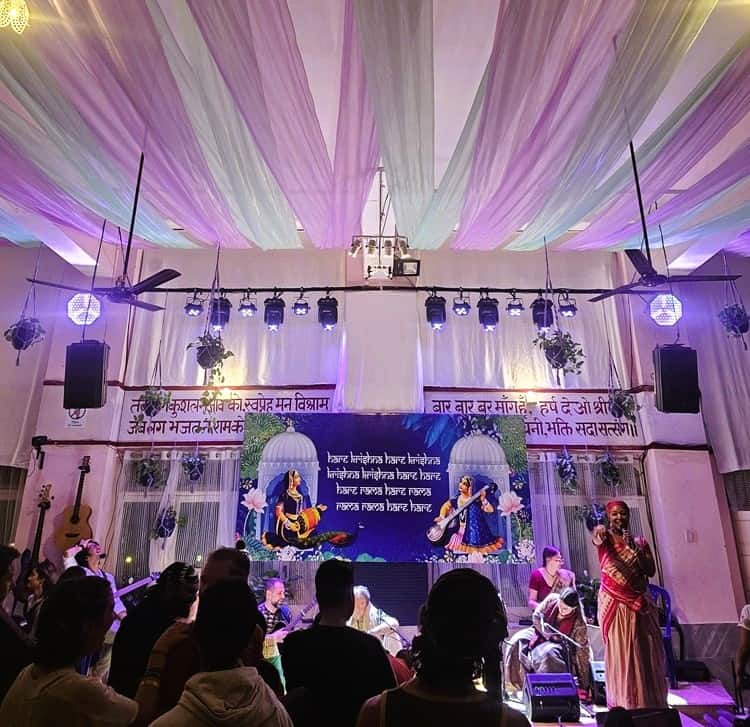
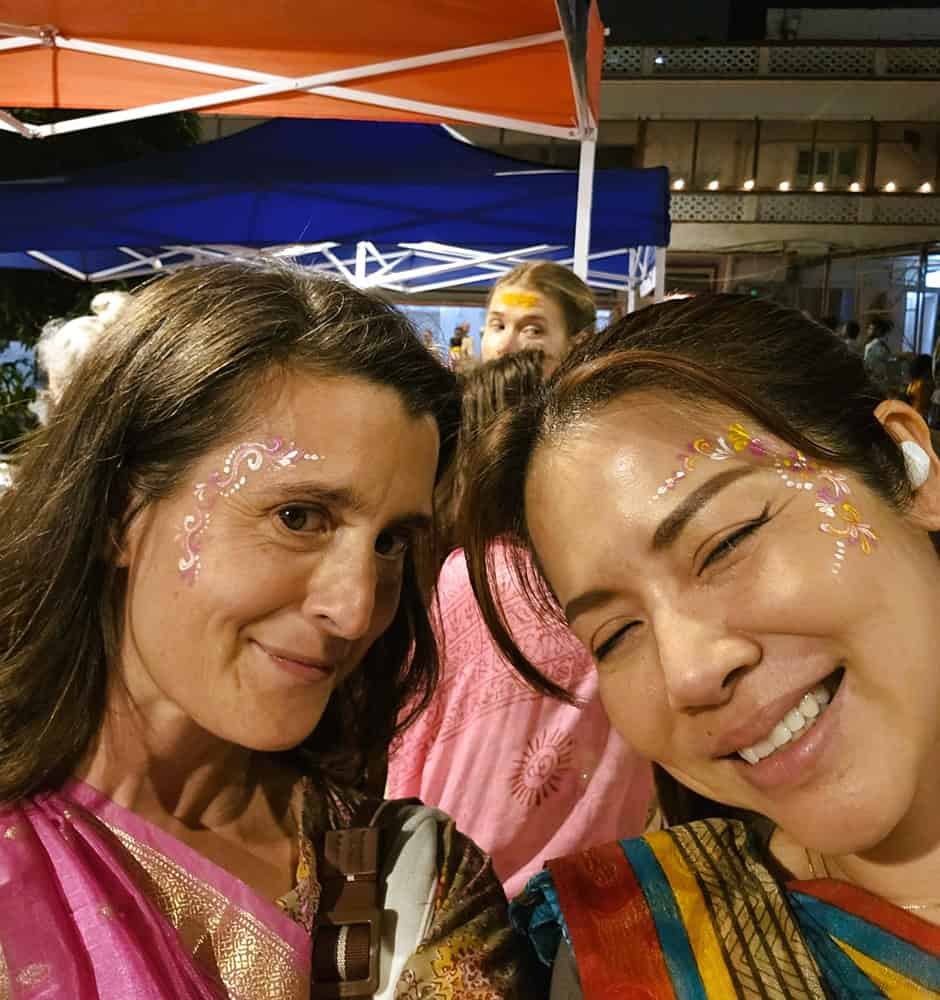
During the slower parts of the chanting, I sometimes just sat and listened. At one point, I felt a beautiful sense of expansion – almost like I softened into a space beyond myself.
It was blissful – I could feel tears in my eyes.
As the music slowly built, it becomes impossible to not stand up – dance, chant, clap – the whole place felt alive with joy and freedom.
For a woman navigating stress, burnout, or chronic illness, experiences like this in Rishikesh can feel immensely freeing — lifting you out of your usual thoughts for a while, yet somehow leaving you feeling more deeply connected to yourself.
A reminder that travel can open the door to unexpected moments of joy and connection.
Wellbeing Centres and Ayurveda in Rishikesh
Wellbeing centres are scattered throughout Rishikesh, offering treatments such as:
- Ayurveda
- naturopathy
- Reiki
- Sound healing
Ayurveda is India’s traditional system of medicine and many travellers combine yoga with restorative treatments.
There’s a wide range of options, from simple Ayurvedic pharmacies and small treatment rooms to luxury Ayurveda wellbeing spas and retreats.
During my stay, I had a consultation with an Ayurvedic doctor at Yog Vashishth Hotel, on the recommendation of a friend. The consultation cost around 1,000 rupees, and I was given herbal remedies to help with a slightly unsettled stomach and to support nervous system balance.
Also, one of the women on my pranayama retreat, recommended Shanti Makaan for soothing professional treatments.
The presence of Ayurveda in Rishikesh reminded me of Sri Lanka, where Ayurvedic medicine is also deeply woven into everyday life. I’ve written more extensively about Ayurveda and wellbeing traditions in Sri Lanka in this post here.
If you are seeking rest and nurturing, these centres can offer a gentle opportunity to slow down, focus on self-care, and explore traditional healing practices.
Well-Known Ayurvedic Retreats Around Rishikesh
For a truly restorative experience, Rishikesh offers several well-established all-inclusive Ayurvedic retreats where you can combine yoga, meditation, and personalised therapies with a focus on rest and healing.
These centres provide full programmes that support the body and nervous system, making them ideal for anyone navigating stress, burnout, or chronic health conditions.
Some notable options include:
- Ananda in the Himalayas – A renowned luxury wellness retreat set in the Himalayan foothills, offering personalised Ayurveda programmes, Panchakarma treatments, yoga, meditation and therapeutic spa therapies within a peaceful forested estate overlooking Rishikesh.
- Veda5 Ayurveda & Yoga Retreat – A well-established Ayurvedic and yoga retreat offering Panchakarma, meditation, yoga classes and customised Ayurvedic meals, with accommodation designed to support rest and detoxification in a natural Himalayan setting. I visited Veda5 in Goa, which was a positive experience.
- Vileen Rishikesh – A boutique luxury Ayurvedic retreat offering personalised Panchakarma programmes, yoga, meditation and wellness therapies in a tranquil hillside environment designed to support deep relaxation and healing.
Ashrams
Spiritual traditions remain an integral part of daily life in Rishikesh.
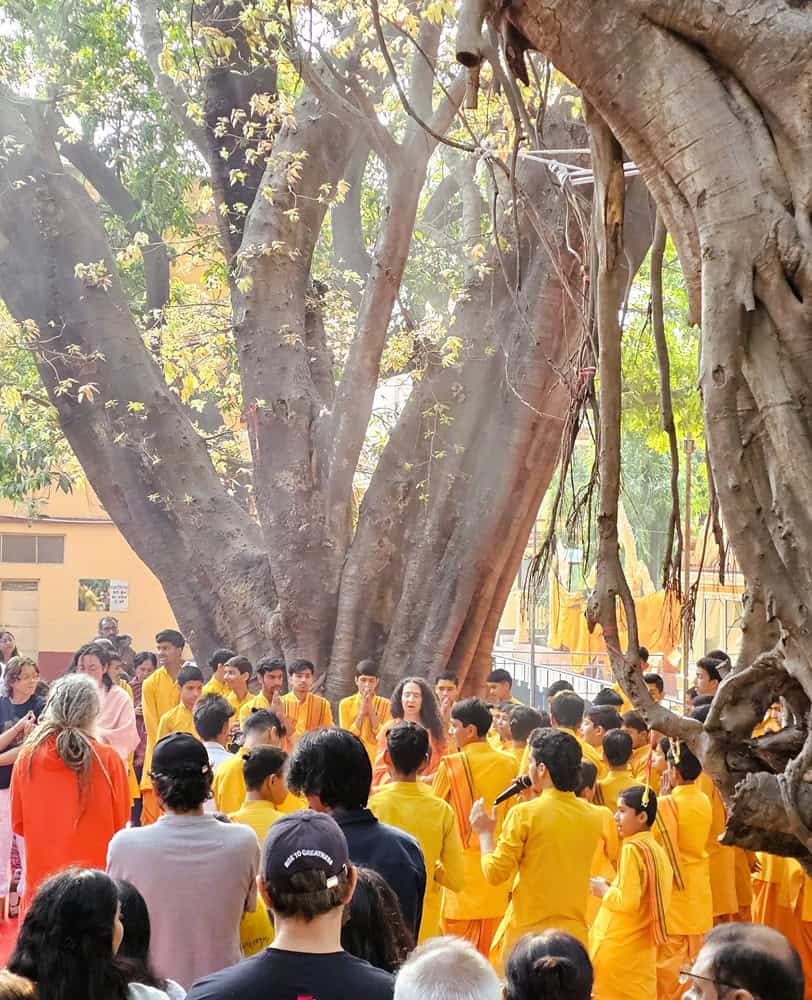
Many ashrams offer meditation, spiritual talks, yoga classes and a variety of other classes.
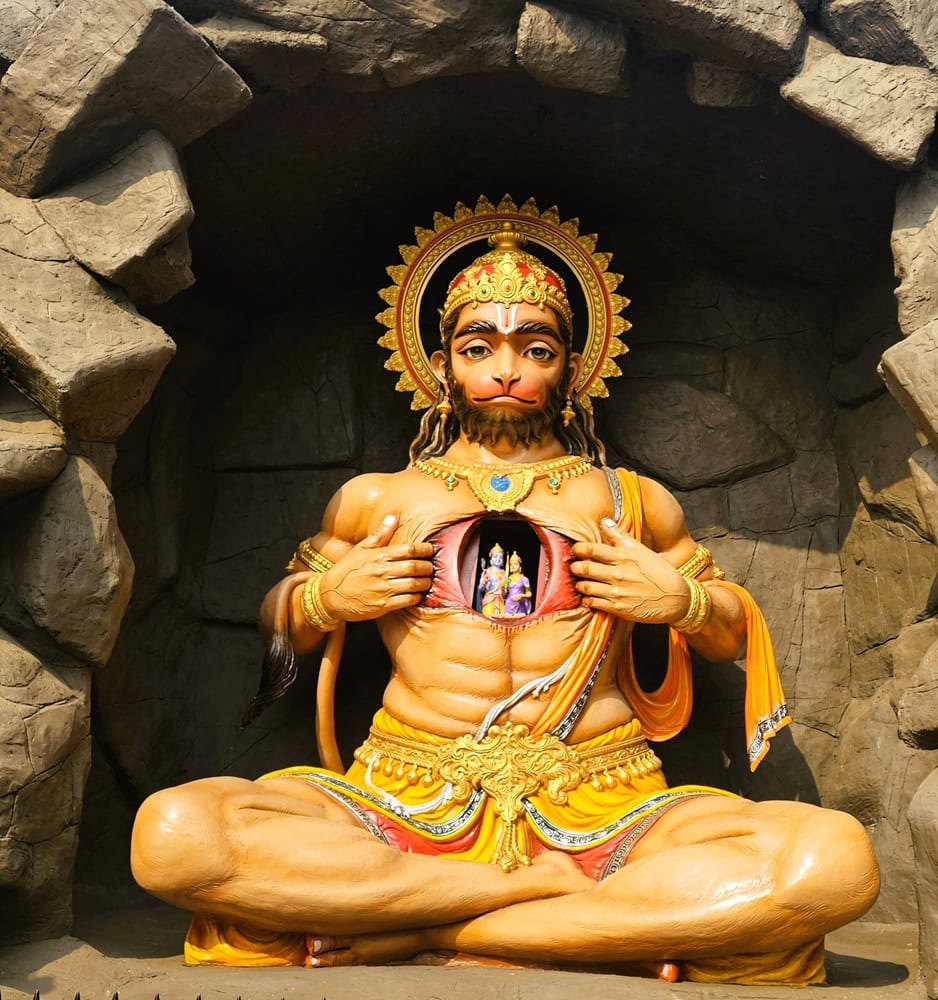
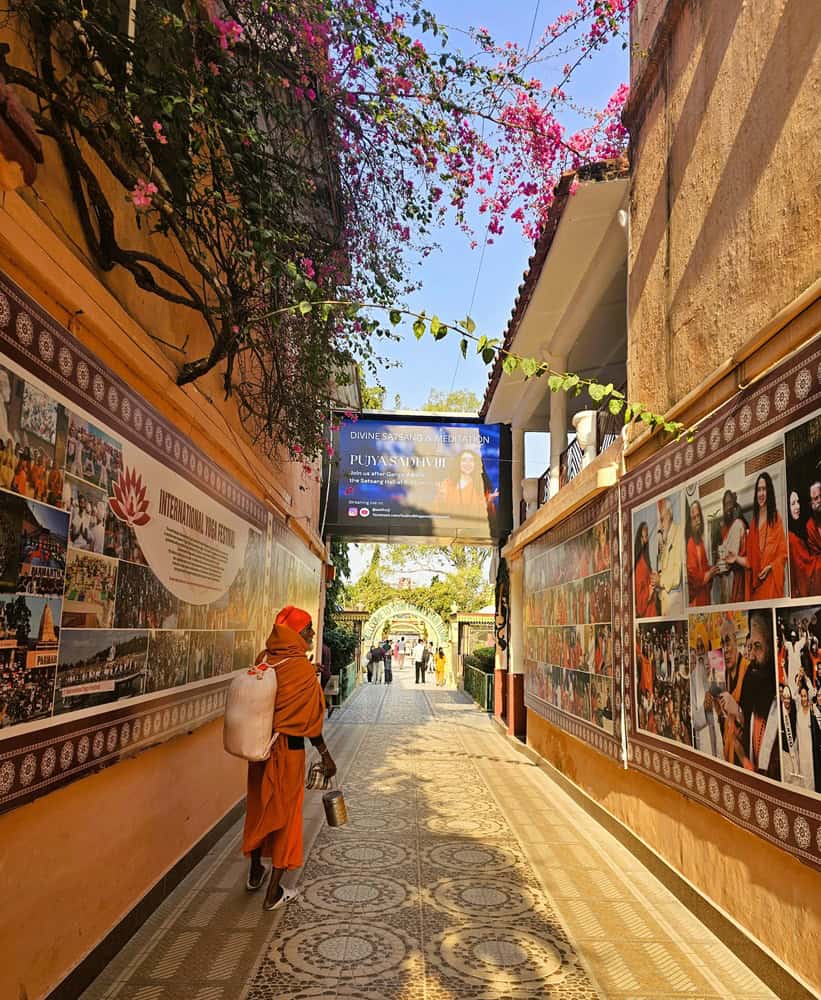
One of the most well-known ashrams in Rishikesh is Parmarth Niketan Ashram, which welcomes international visitors and offers programmes in English. It also hosts the annual International Yoga Festival, drawing teachers and students from around the world.
For travellers interested in spiritual culture, Rishikesh provides many opportunities to observe or participate at their own pace, allowing each person to engage in a way that feels comfortable and respectful.
Evening Aarti on the Ganges: what to expect
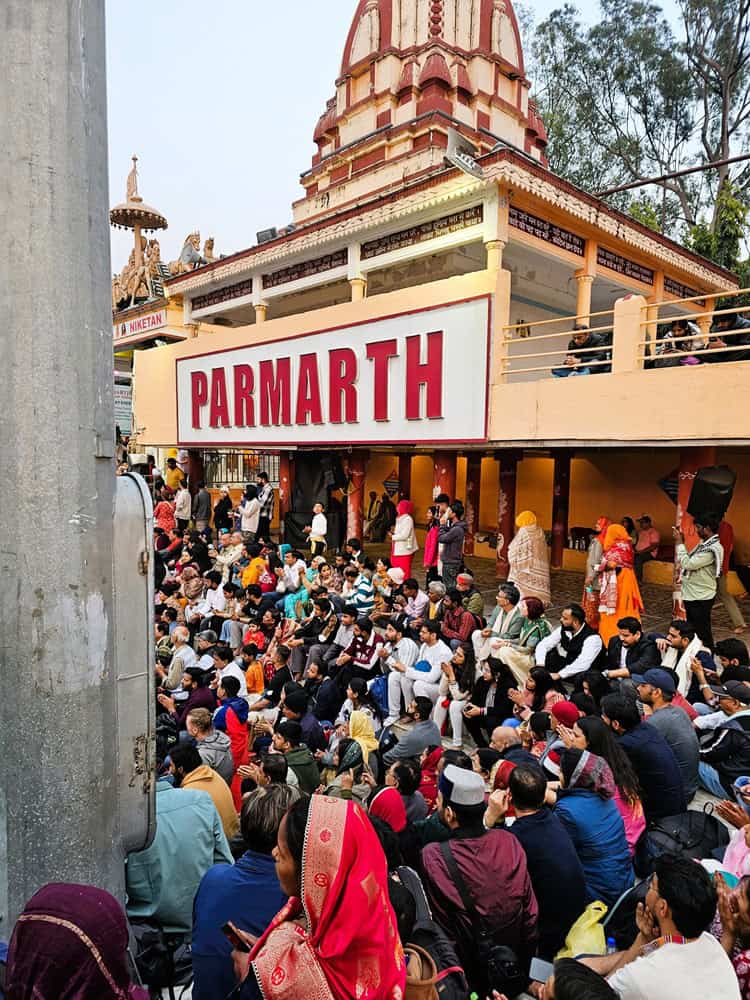
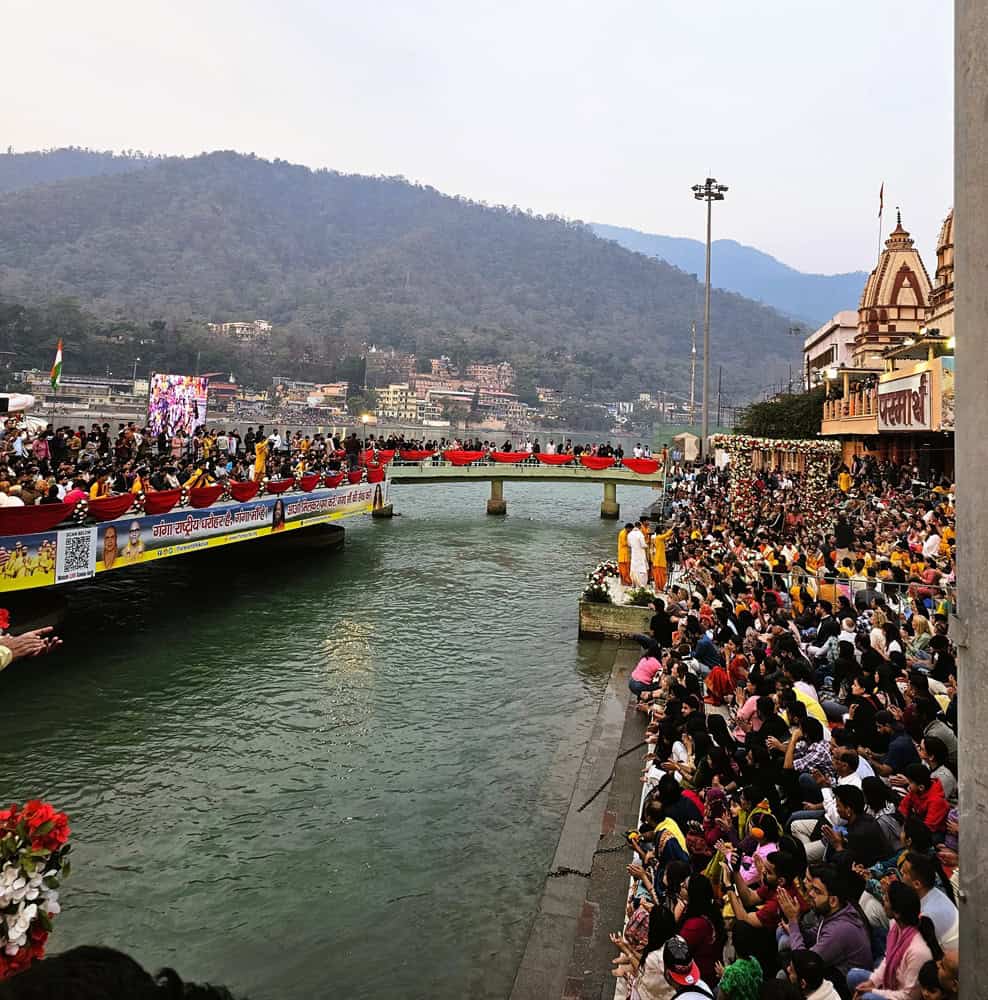
Attending an evening aarti along the banks of the Ganges River is a beautiful experience in Rishikesh.
Ceremonies typically takes place at sunset, when priests, visitors and students gather to offer light, flowers and chanting in honour of the river. It’s a peaceful yet vibrant atmosphere.
One of the most accessible places to experience this is at Parmarth Niketan Ashram ghat, where the evening aarti is well organised and welcoming to international visitors.
A few helpful things to know:
- Arrive early: The ceremony is popular, so arriving 20–30 minutes before sunset allows you to find a comfortable place to sit.
- Seating: Most people sit on steps or mats close to the river. If sitting on the ground is uncomfortable, it is usually possible to stand at the back.
- Crowds: The atmosphere on the streets around the ashram can get very busy, particularly during peak travel seasons, but the ceremony itself is peaceful.
Even if you simply sit quietly close by and observe – the combination of music, flower offerings and the flowing river is really lovely.
My own thoughts on spirituality in Rishikesh
For me, spirituality has never been about rituals or formal practices. It has always felt more connected to the quieter moments – the spaces where awareness deepens and the mind begins to settle.
In Rishikesh, there are countless opportunities to explore spiritual traditions – yoga classes, chanting, meditation, ceremonies – I see these as pathways. Ways of gently moving into greater awareness, into stillness and into peace.
Some of my most meaningful moments were very simple. Sitting with my feet in the Ganges, watching the water, as I sprinkled in flower offerings or pausing between activities to look at to the mountains.
Rishikesh seemed to hold space for that kind of quiet connection. For me, it felt less about doing and more about allowing – allowing myself to slow down, notice more, and reconnect with what feels steady inside.
Cafés and Restaurants in Rishikesh
One aspect of Rishikesh that surprised me was the café culture. For some reason, I wasn’t expecting it, but I needn’t have worried. Because the town attracts travellers from around the world — as well as yoga students, retreat-goers and long-term visitors — there is a wonderfully varied café and restaurant scene.
You’ll find plenty of:
- Indian food, of course!
- Freshly made juices and smoothies
- Healthy salads and nourishing bowls
- Herbal teas, chai and fresh coffee
- South Indian dishes
- International food, including Israeli, Italian and Middle Eastern influences
- Breakfasts such as eggs, pancakes and granola
- Plenty of options for those looking for lighter or more health-conscious meals
Rishikesh is a vegetarian city, meaning meat and alcohol are not served in most areas. This makes it particularly easy for visitors to find nourishing, plant-based meals and lighter options that support rest and recovery.
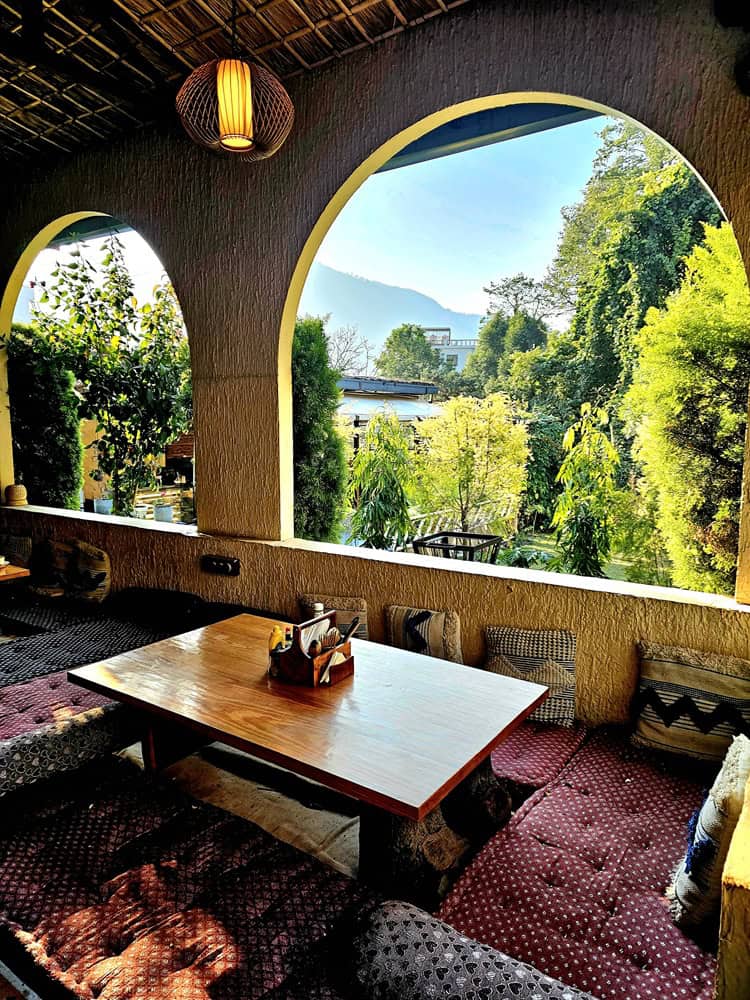
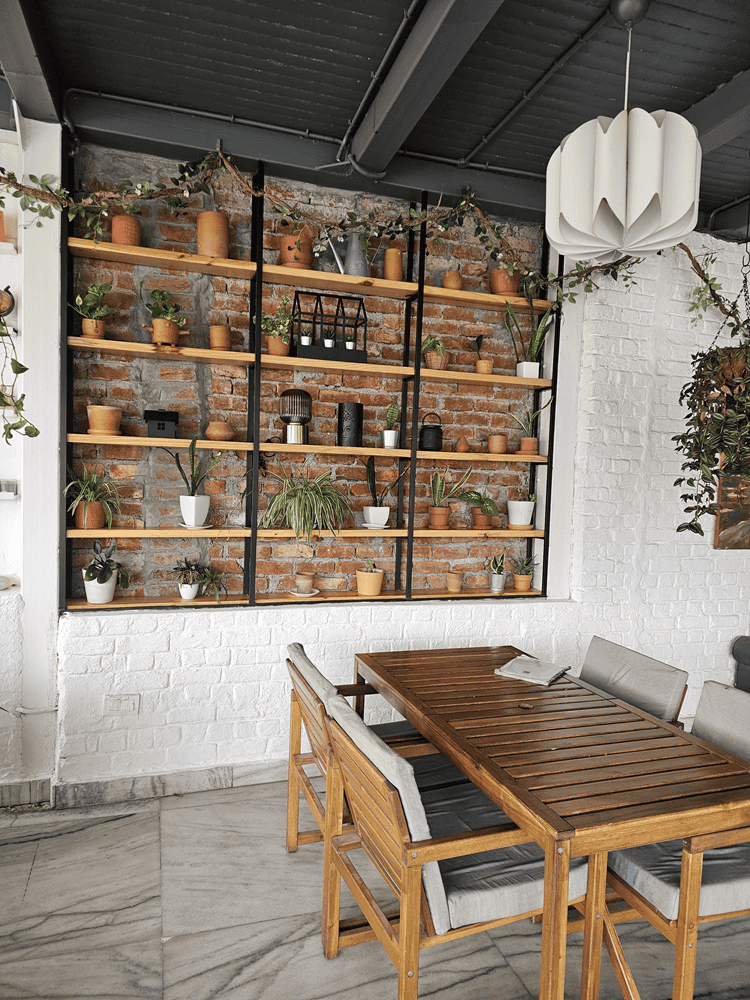
Many cafés have relaxed terraces overlooking the river or surrounding hills, making them pleasant places to spend time reading, journaling, or simply watching the world go by.
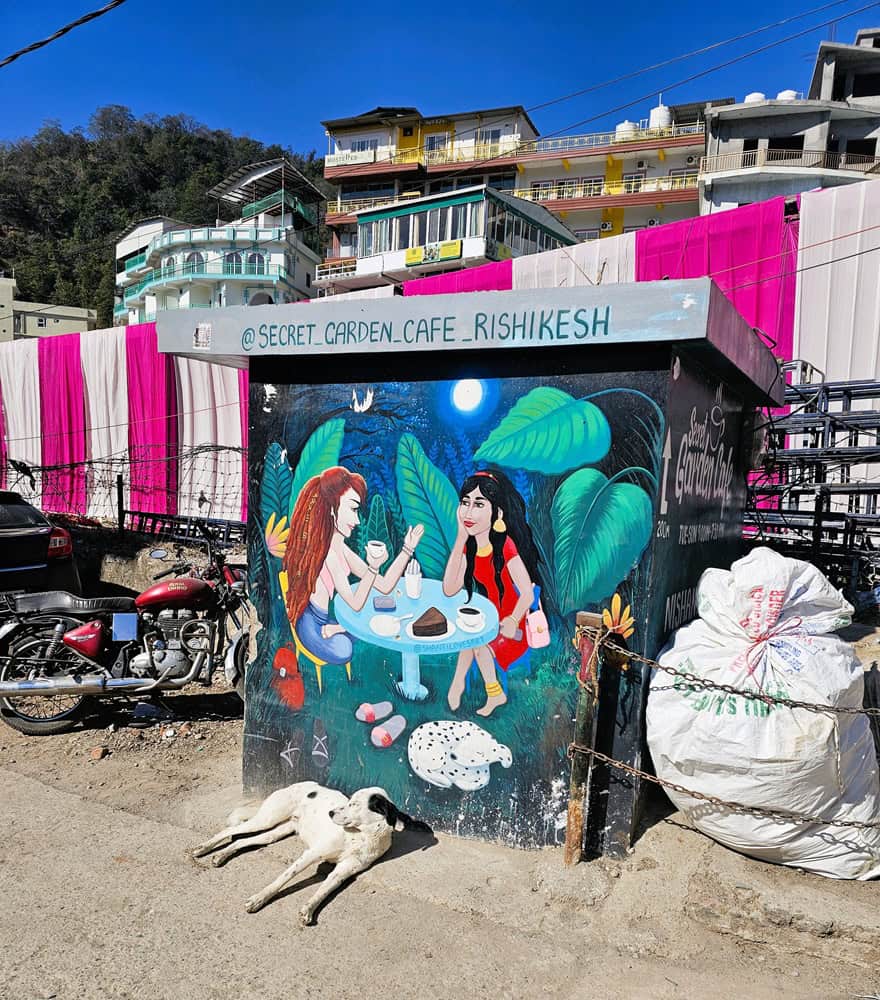
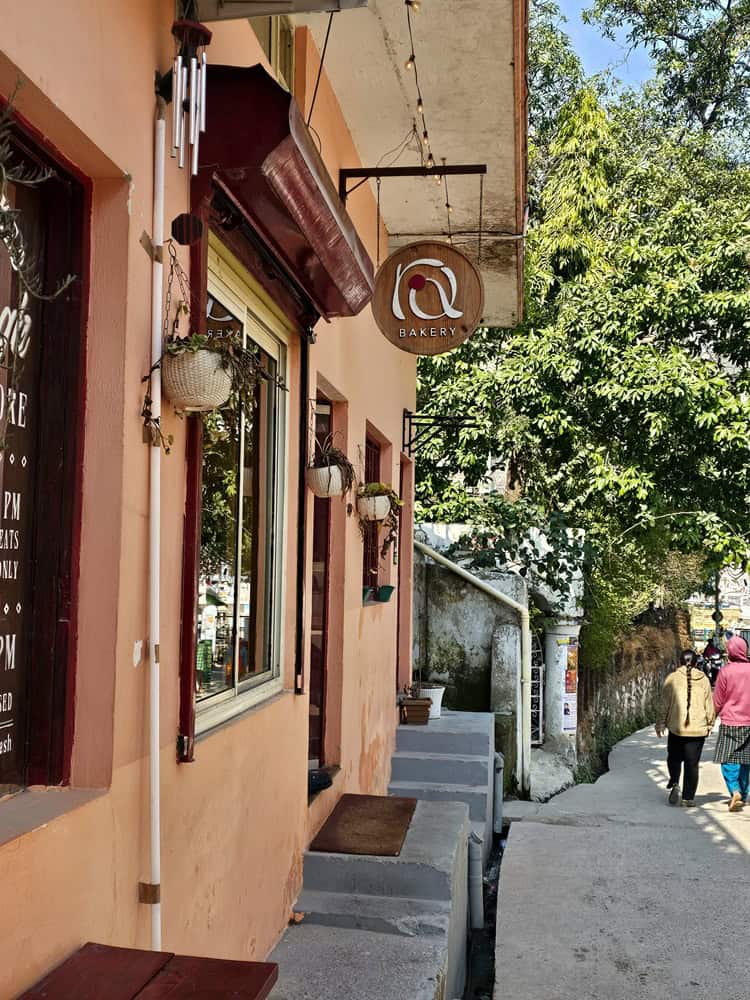
Some of my favourite cafés included: Soul Kitchen Café, Café Aum, Ganga View Café, Secret Garden Café, beMonk Café, Aarocana Café, Pure Soul Café and RA Bakery.
Festivals in Rishikesh
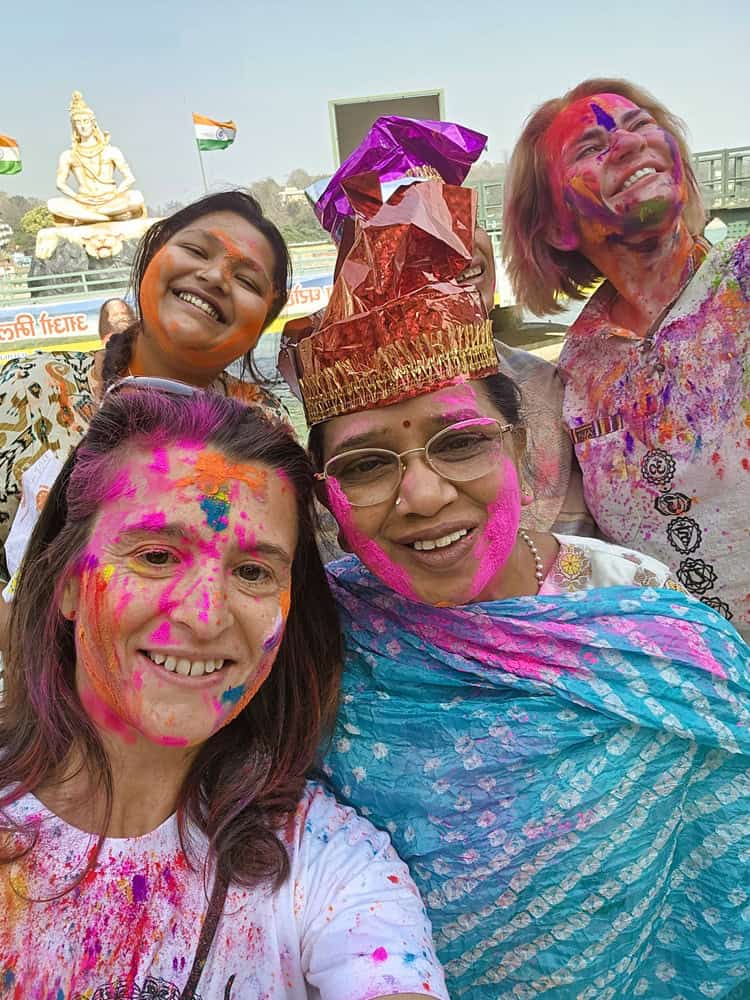
There seems to be some kind of celebration every other week in India and during my stay in Rishikesh it was Holi.
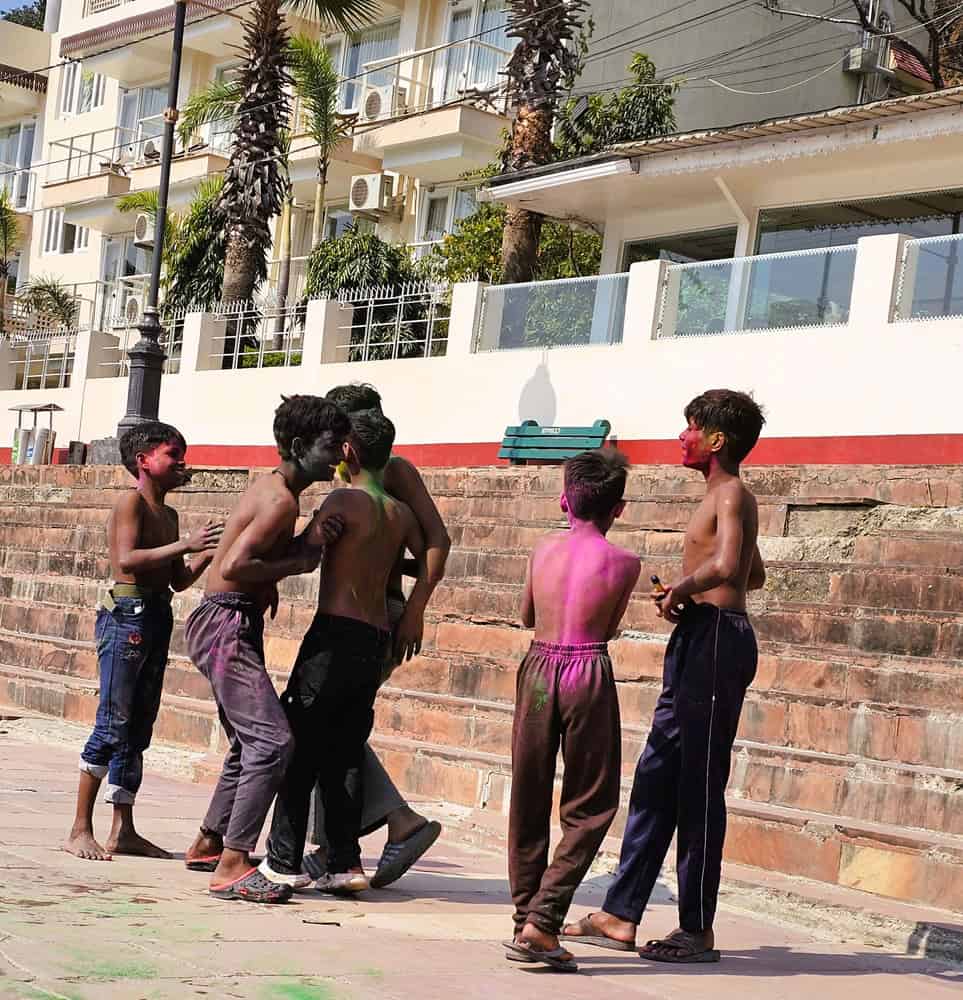
Holi is vibrant, joyful and wonderfully chaotic. Throughout the day, people gather in the streets throwing brightly coloured powders at each other. There’s a wonderful sense of playfulness and community.
I had been warned that Holi can become very intense, and was advised to avoid the streets after midday — so that’s exactly what I did. I went out early, first heading to Parmarth Niketan Ashram to watch the spiritual side of the celebrations, before walking down towards the Ganges River.
The first person to place coloured powder gently on my cheeks was a young girl and her mum. Gradually, more and more people arrived — and with them, more and more colour. It was so much fun!
If you’re planning a visit to Rishikesh, it’s worth checking whether your stay coincides with a major festival such as Holi. For some travellers, it can be a highlight — but for others seeking deep rest and quiet, it may be something to plan around.

Visiting the Beatles Ashram: A Peaceful and Unexpected Highlight
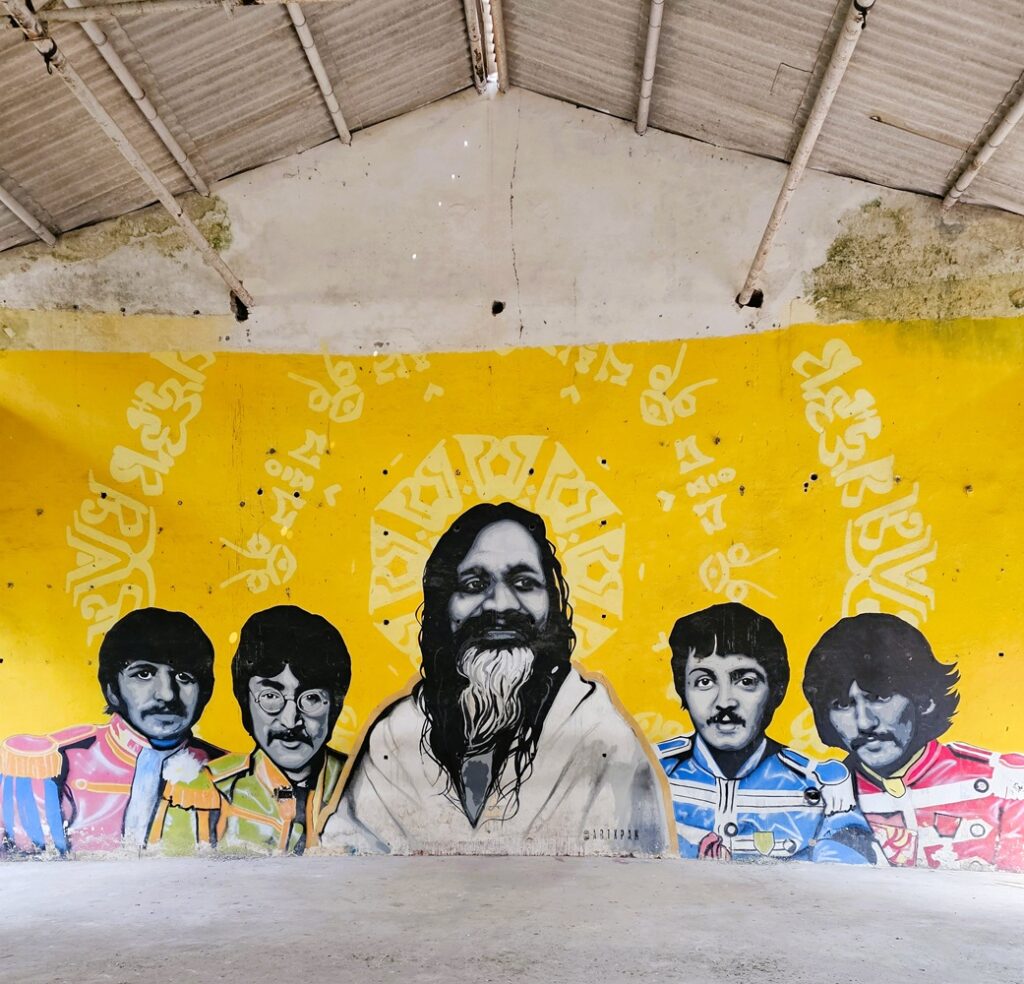
One place I nearly didn’t visit was the Beatles Ashram, but I’m very glad I did, as it turned out to be one of the highlights of my time in Rishikesh.
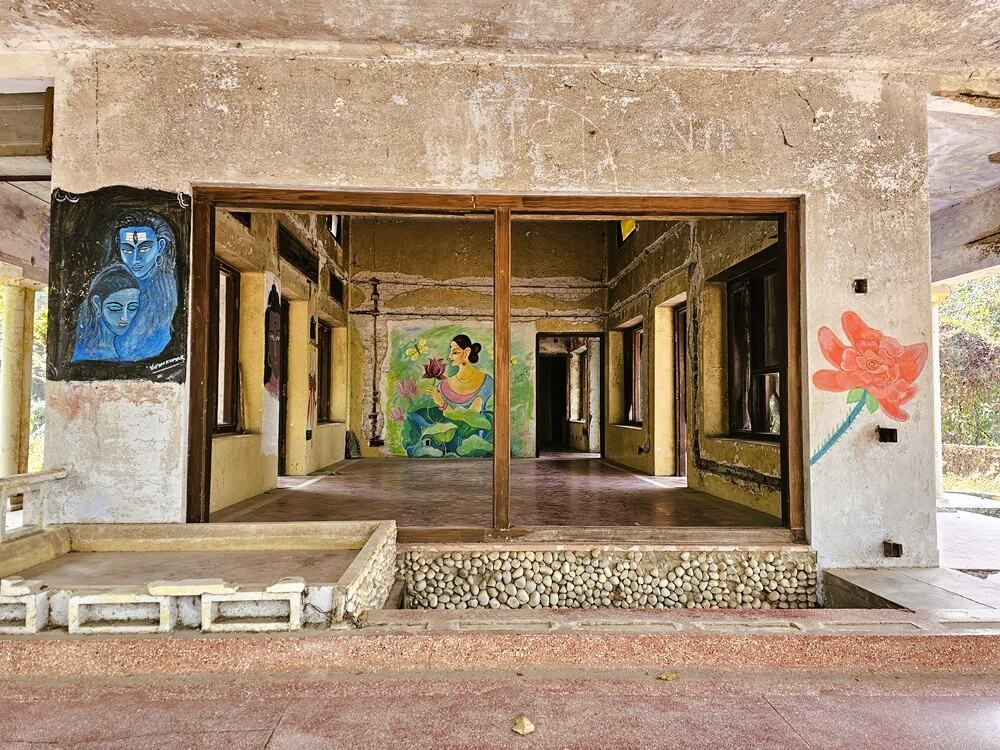
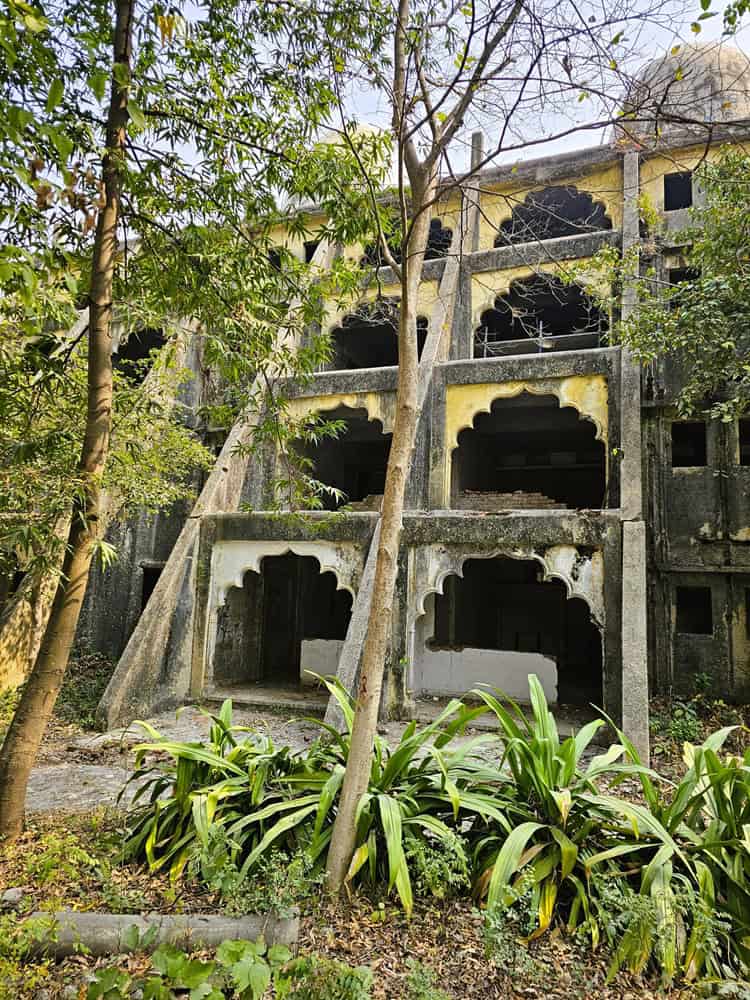
Also known as the former Maharishi Mahesh Yogi Ashram, this now-abandoned site gained worldwide recognition after The Beatles stayed in 1968 to study meditation.
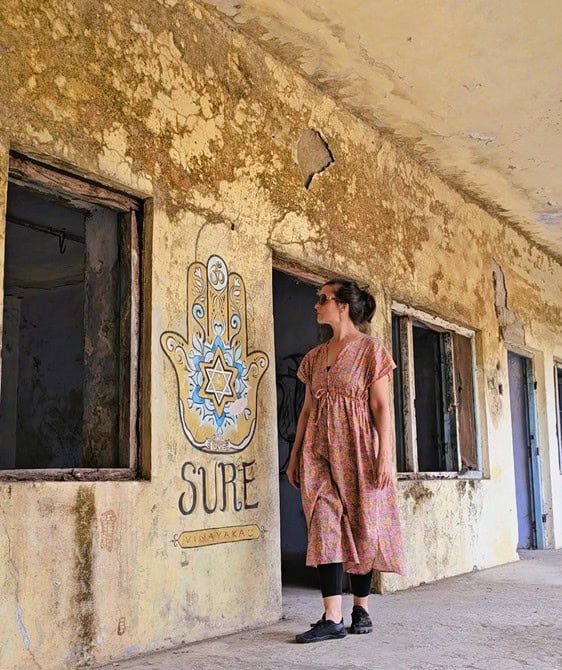
Abandoned in the late 1970s, nature slowly reclaimed the ashram buildings. Walking through the grounds, you pass derelict teaching rooms, guest quarters, and temple spaces, now crumbling beneath creeping greenery.
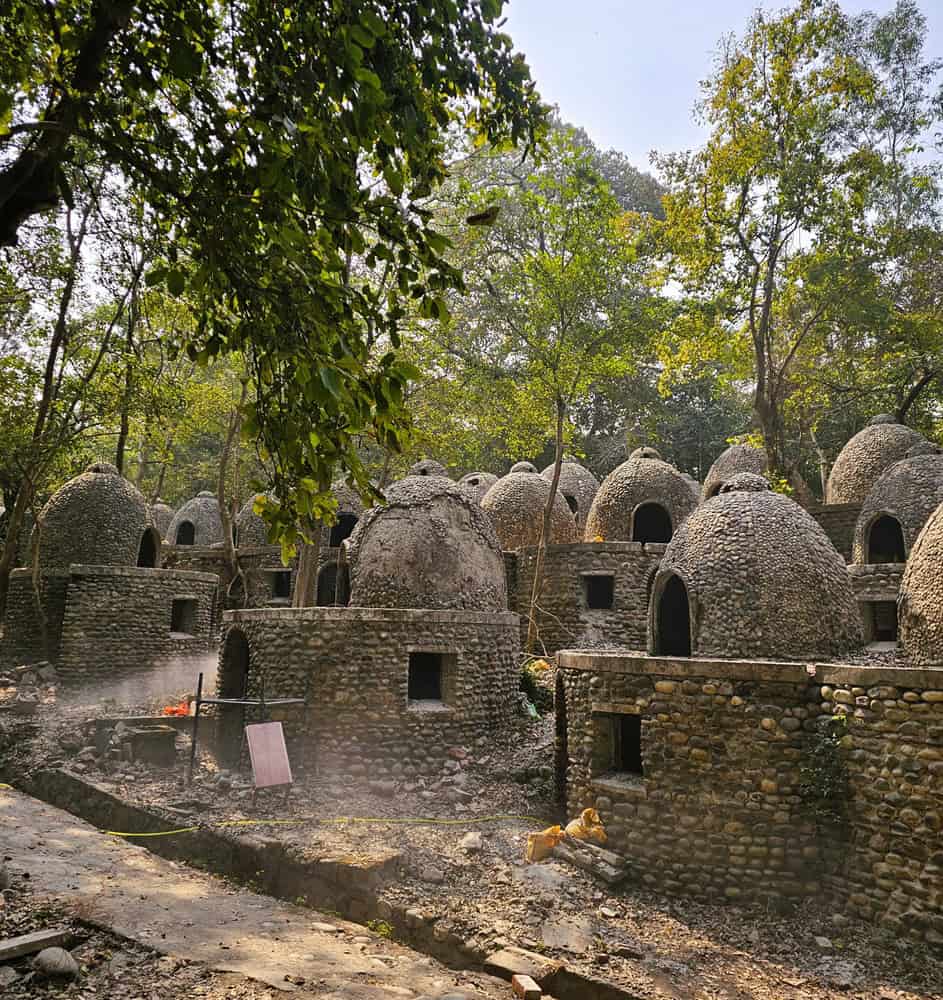
One of the most remarkable features is the collection of meditation huts — hundreds of small domed structures where guests once retreated into silence. Seeing so many of them scattered across the hillside felt quite incredible.
An unexpected peace emerged as I wandered the grounds. The atmosphere felt calm with a sense of nostalgia and history that made it feel truly special.
A gentle, reflective space that feels slightly removed from the busier areas of town.
It does involve a fair amount of walking, so allowing time to explore slowly can make the visit more enjoyable.
How easy is it to meet other midlife women in Rishikesh?
I think for midlife solo women travellers, one common question is whether it will feel easy to meet people — or whether the experience might feel isolating.
During my time in Rishikesh, I attended a 10-day retreat, which naturally created opportunities to connect with others. Spending time together in classes, meals, and shared routines meant friendships formed quite easily over those days.
However, outside of the retreat setting, Rishikesh generally felt like a very easy place to meet people – in fact one of the easiest places I’ve been.
Conversations often began naturally in cafés, during yoga classes, or while attending talks and workshops. People seemed very open to talking and sharing experiences, and it was common to see familiar faces reappearing in different places around town.
Will I feel at ease as a midlife solo traveller in Rishikesh?
The great thing about Rishikesh, is there was a noticeable mix of ages. While there were certainly younger travellers, I also saw many midlife visitors and beyond — including women travelling solo, people attending wellness or yoga retreats, and lifestyle travellers staying for longer periods.
Rishikesh felt like a place that attracts people at different stages of life, many of whom are seeking rest, reflection, or a change of pace.
Overall, it felt like a place where connection was available when wanted, but solitude was equally respected – something that can feel particularly reassuring when travelling alone.

Which are the best areas to stay in Rishikesh as a solo female traveller?
Rishikesh has several distinct neighbourhoods where travellers tend to stay.
Choosing the right area can make a significant difference to your experience — especially if you are managing fatigue, mobility challenges, or fluctuating energy levels. Some areas are lively and convenient, while others are quieter but require more walking on steep terrain.
Ram Jhula Area — Central and Lively
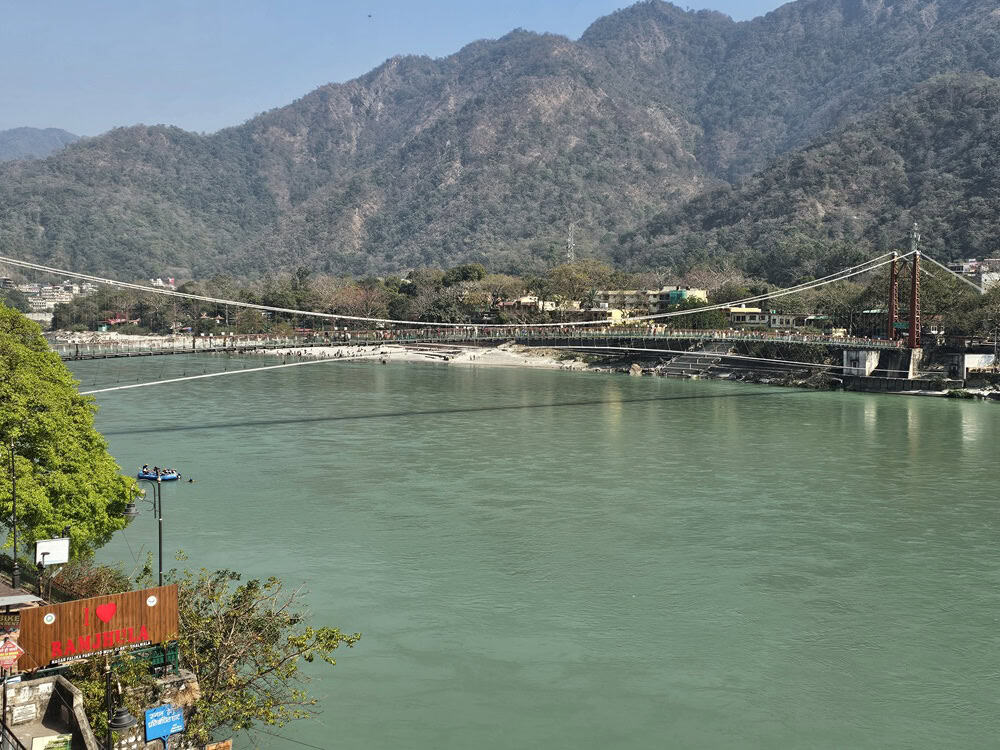
Located near the well-known Ram Jhula Bridge, this area sits close to several ashrams and spiritual centres.
It tends to be lively throughout the day, with shops, temples, and cafés creating a busy and energetic environment.
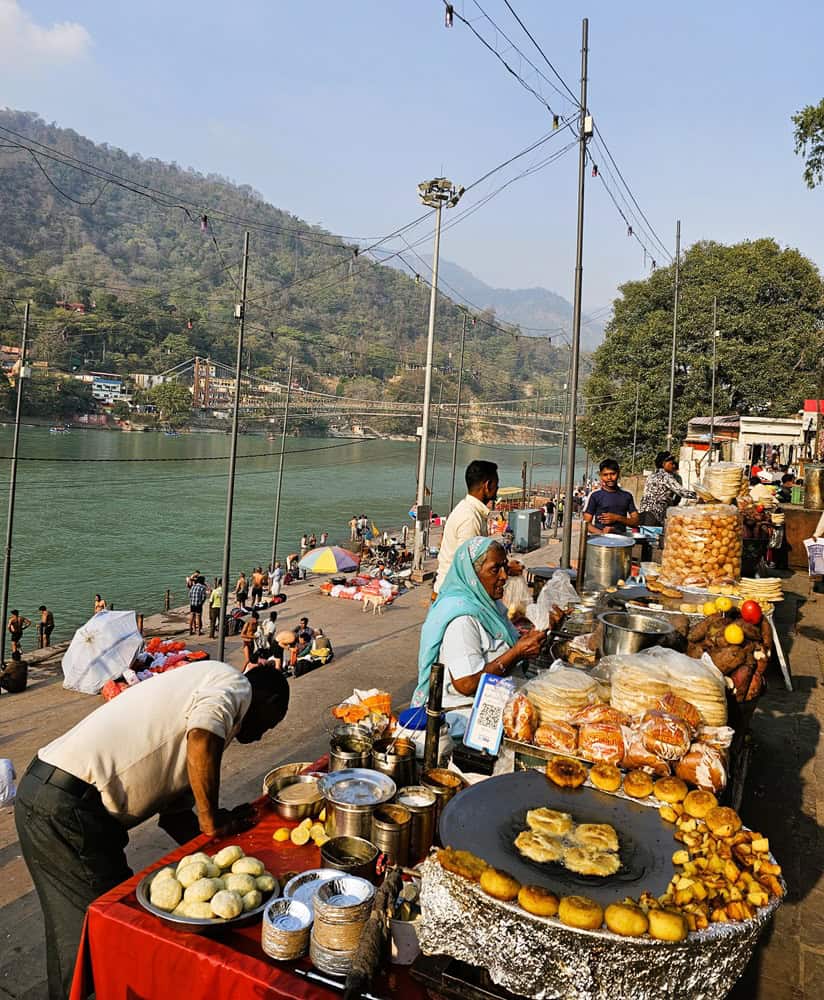
Swarg Ashram Area — Traditional and Spiritual
The Swarg Ashram Area is one of the older spiritual districts, known for its traditional ashrams and temples.
This area can feel calmer than some café-heavy neighbourhoods, though it still attracts many visitors. It may suit travellers interested in spending more time around spiritual centres and quieter riverfront spaces.
Jonk Village — Convenient and Well Connected
Jonk Village sits close to the river and offers easy access to both Tapovan and the Ram Jhula area.
It provides a mix of cafés, guesthouses, and yoga schools, making it a practical choice for travellers who want to stay somewhere central while still having a variety of options nearby.
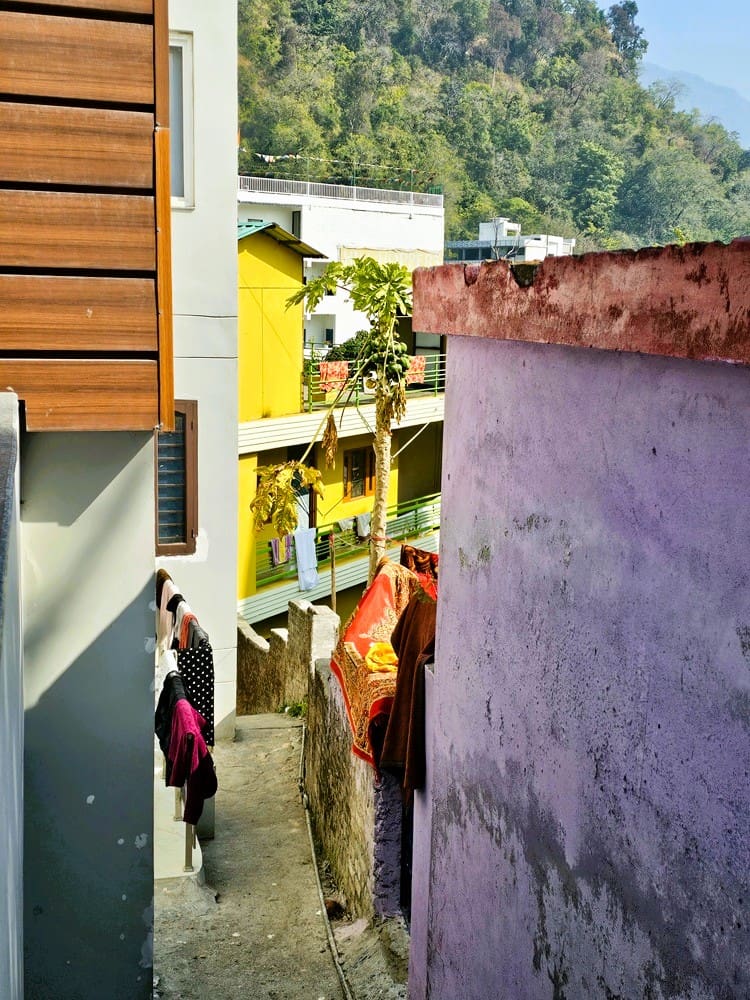
Upper Tapovan — Quiet but Steep
Upper Tapovan is where more apartments and longer-stay accommodation can be found, making it a popular choice for visitors planning to stay for several weeks or months.
However, this area involves steep uphill walking, which can be challenging if you’re managing fatigue, mobility issues or balance difficulties.
I stayed here for three weeks and found it quite hard going on my knees, particularly as I was recovering from a knee operation — not my cleverest choice!
There is also very limited public transport in this area. Tuk-tuks generally do not travel into Upper Tapovan, and most transport options involve scooter taxis or renting a scooter or car. In my case, I often had to walk all the way down to the main road in Lower Tapovan just to find a tuk-tuk or other transport.
However, it is a lovely area, with some really nice cafés and quieter surroundings compared to the busier lower areas. If you don’t mind hills, it can feel peaceful and residential, particularly for longer stays.
Lower Tapovan – A Popular and Practical Choice
Lower Tapovan is one of the most popular areas for international visitors in Rishikesh and offers a wide range of cafés, yoga schools, and guesthouses within relatively short walking distances.
For many travellers, this area strikes a good balance between convenience and atmosphere. The terrain here is generally more manageable than higher hillside areas, making it a sensible choice for those who prefer easier access to daily essentials.
However, I was told that noise in this area can sometimes be an issue, particularly along the main roads where traffic, scooters, and general activity continue throughout the day. Choosing accommodation set slightly back from the main streets may help reduce noise levels and create a more restful environment.
Accommodation Choice in Rishikesh: Hotels, Apartments, Homestays
Accommodation in Rishikesh ranges from very simple homestays to comfortable hotels and guesthouses and luxury hotels.
However, one thing that surprised me was how limited apartments can be in the central areas of town.
In neighbourhoods such as Jonk Village and around Ram Jhula, accommodation tends to be hotels, hostels or homestays rather than private apartments.
By contrast, apartments are more plentiful in the area of Tapovan, particularly in the upper parts of the neighbourhood.
➡ Look for accommodation here.
My accommodation experience & lessons learned
Four locations, four very different experiences…
1. Tapovan
When I first arrived in Rishikesh, I was keen to stay in an apartment while still being central, but it proved to be far from straightforward.
I began in Upper Tapovan, but the steep hills and lack of public transport made it hard going on my knees and left me feeling quite isolated. I also found my apartment to be noisy with resident renovations.
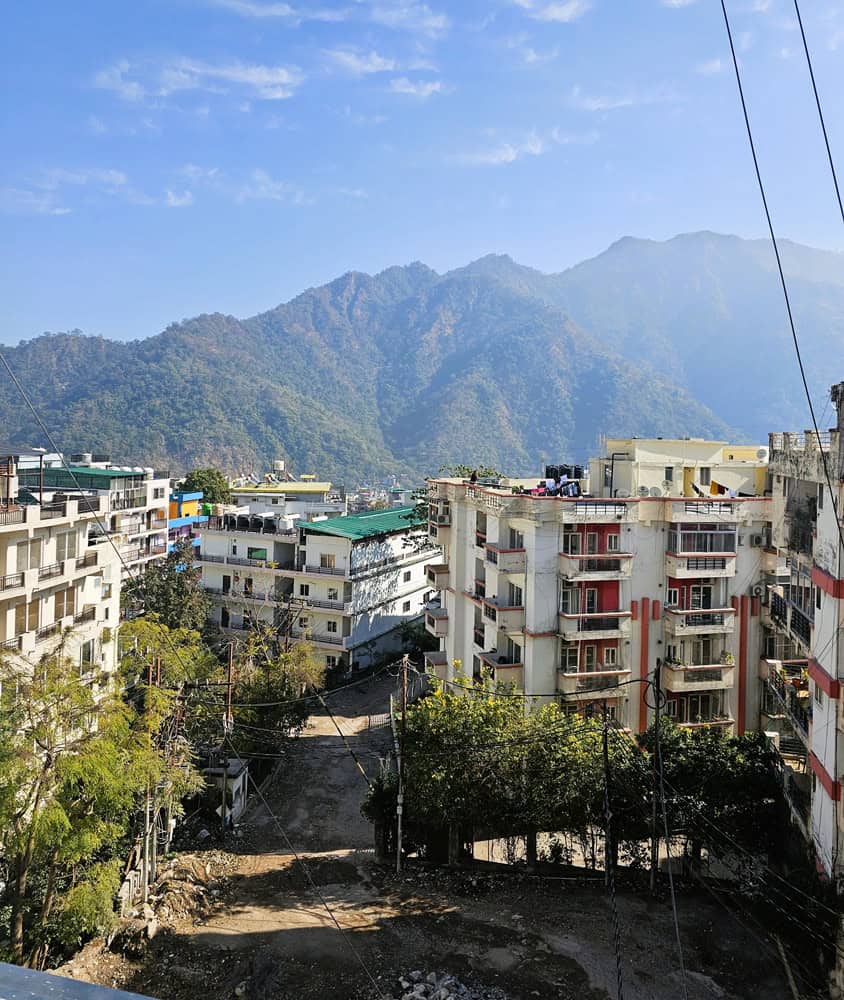
Looking back, I would choose my accommodation more wisely if I were returning to Tapovan. These are some of the Tapovan options I would consider at different price points:
↦ Budget — The Moksham
A well-reviewed budget option in Upper Tapovan. I walked past this one a few times during my stay and it looked appealing. The hills are still steep, although they become a little easier further down in Tapovan.
↦ Mid-range — Vedas Tapovan
A well-reviewed and good-value option in lower Tapovan, with cafés, restaurants and the river within easy reach. If, like me, you find the steeper roads of Upper Tapovan challenging, its location could make it a more practical choice while still keeping you in the heart of the Tapovan area.
↦ Higher-end — Aloha on the Ganges
A beautiful riverside resort in the wider Tapovan area, around 1 km from Laxman Jhula. With the Ganges, pool, spa and peaceful surroundings, it could be a lovely option if you’re looking for a more restorative stay rather than being right in the centre of Tapovan.
2. Central Rishikesh – Swarg Ashram (my favourite)
I then moved to Yog Vashisht Hotel which was in a much more central location. It was just a five-minute walk down to the Ganges, shops, Parmarth Niketan Ashram and plenty of yoga schools nearby. Yet once inside the hotel, it felt like a welcome breath of fresh air away from the crowds and hustle and bustle of Rishikesh.
For me, Yog Vashisht Hotel offered a lovely balance — close enough to walk to everything I wanted, while still giving me somewhere peaceful to retreat to.
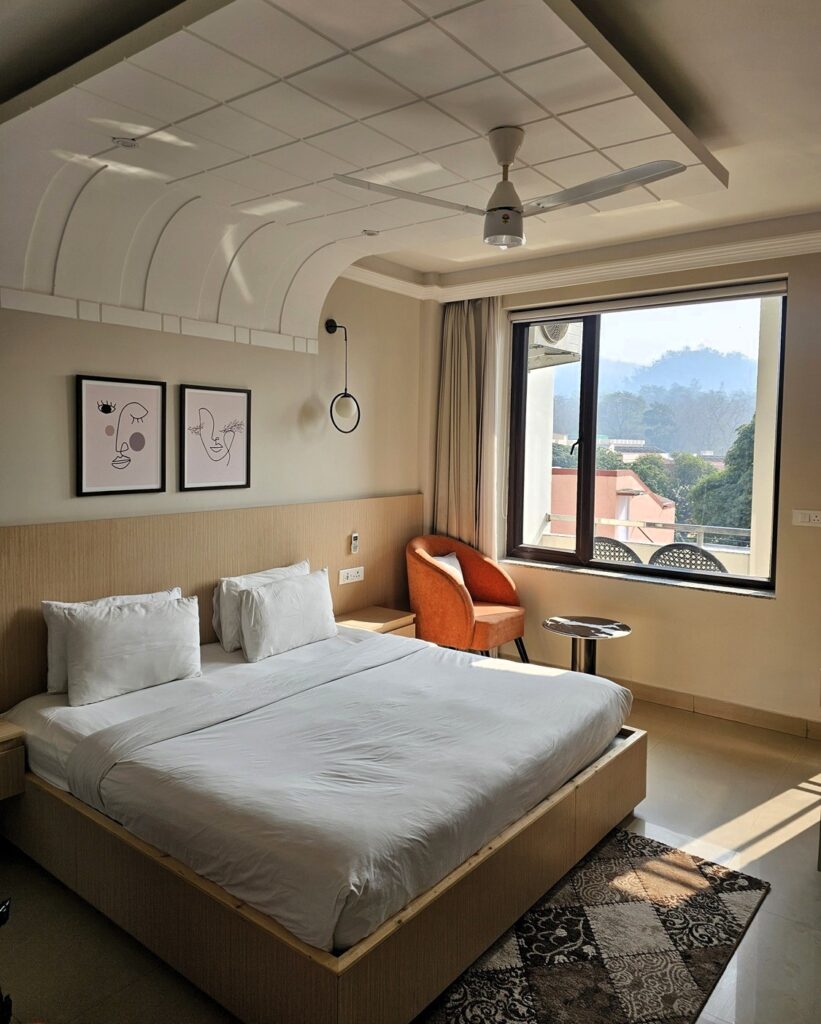
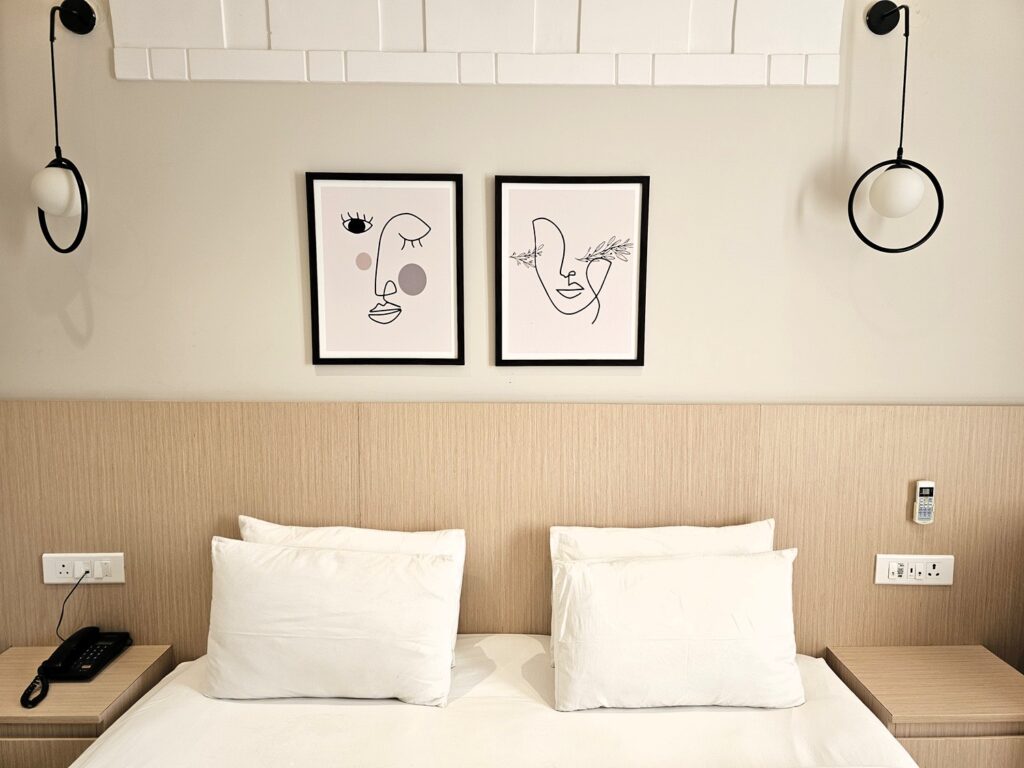
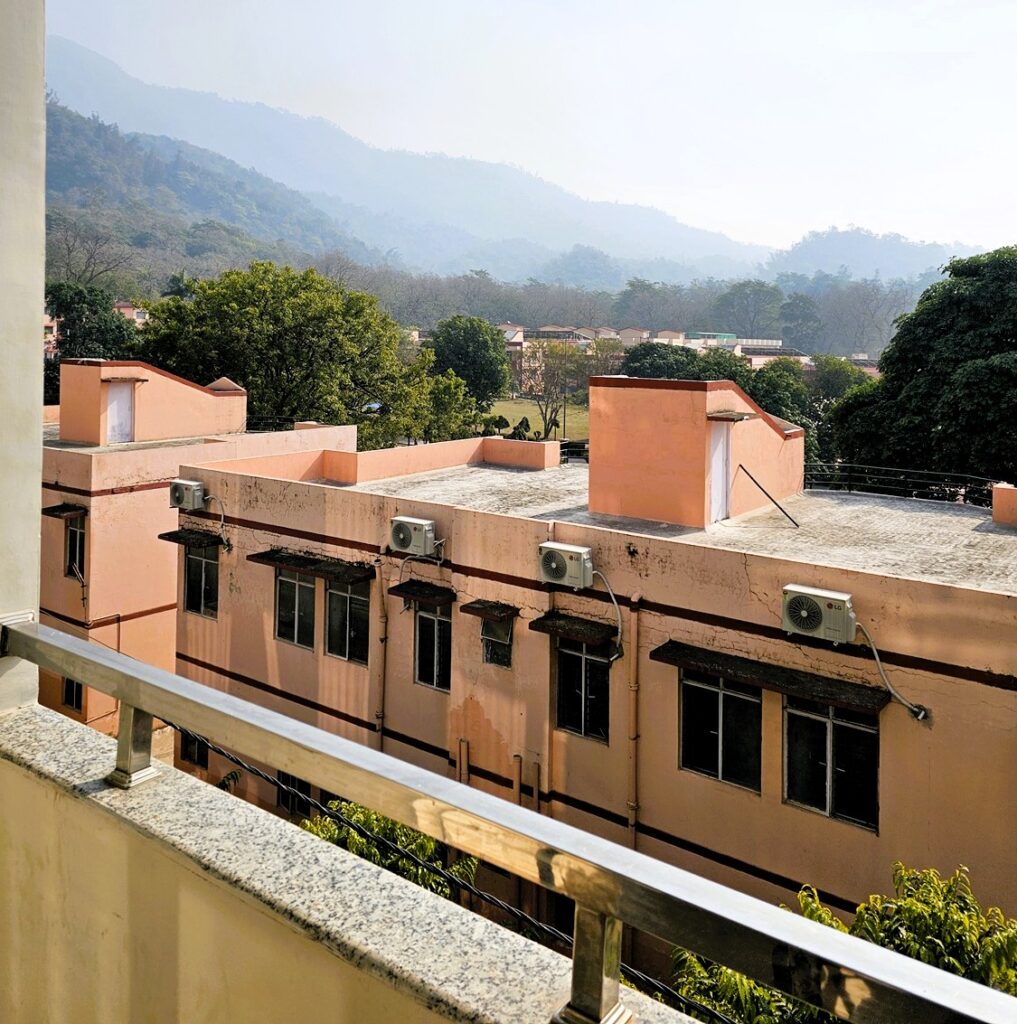
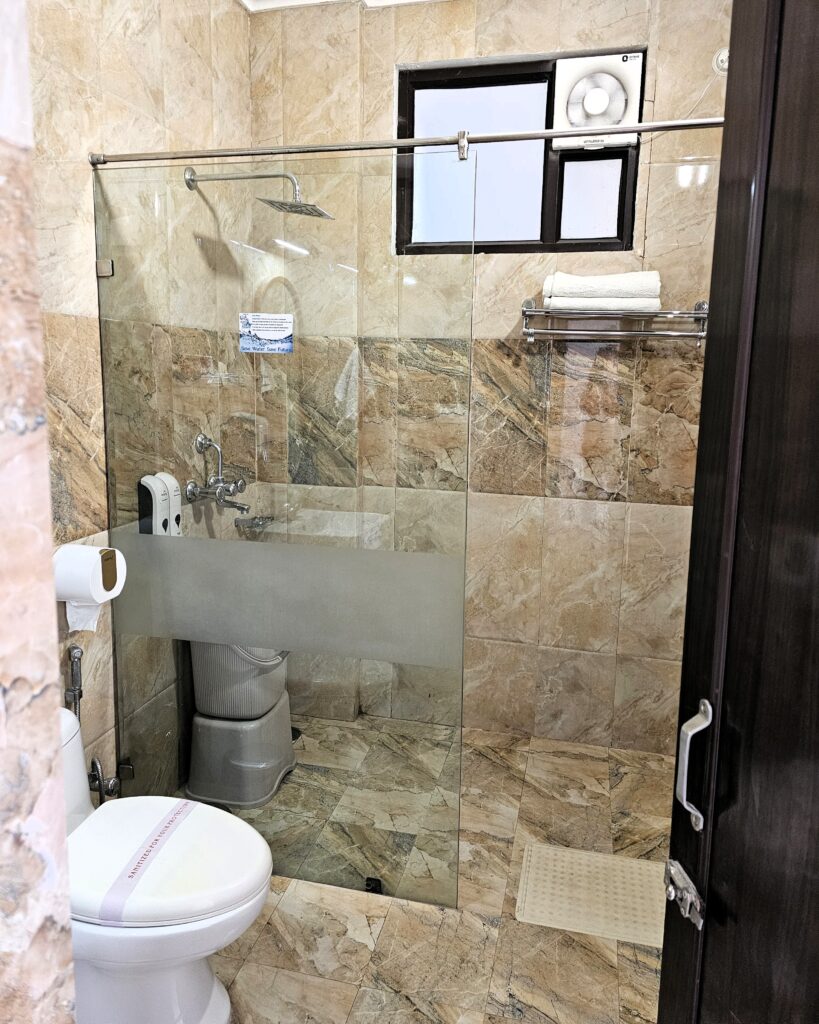
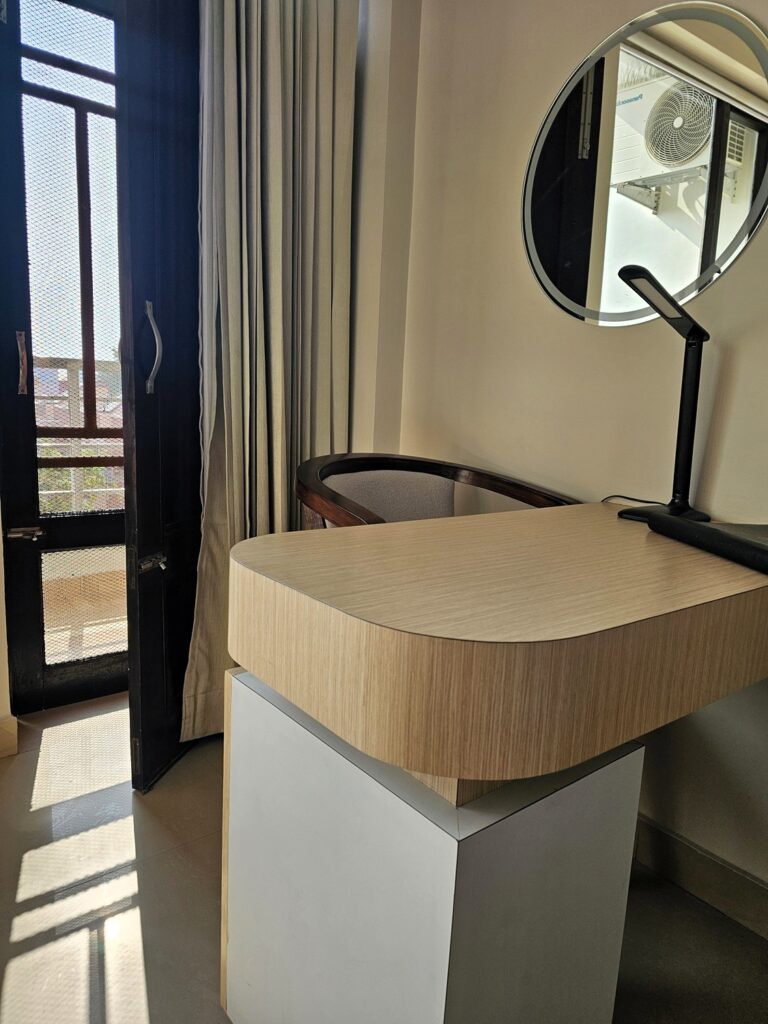
I really liked this hotel a lot- it was stylish, clean, quiet and central. It also has a nice restaurant on the top floor with European choices if you’re needing a curry break. It’s a popular choice with international visitors.
↦ Discover Yog Vashisht Hotel here.
3. Central Rishikesh – Ram Jhula
I also stayed in a very basic homestay near Soul Kitchen (a lovely vegan cafe), which cost around ₹1,000 (around £9) a night. It certainly wasn’t glamorous, and initially I wasn’t particularly keen on it. However, its location was excellent if you were attending a retreat, which I was, and many yoga students choose accommodation in this area because of the proximity and affordable prices.
One of my yoga teachers pointed this out to me when he showed me the accommodation. He said that it suited the spiritual purpose of being there — it was almost a blank canvas, without the distractions or expectations that can come with more luxurious surroundings. I hadn’t thought about it in that way before, but I came to understand what he meant.
There’s a range of homestays in this area.
4. Janki Bridge
Later, I moved once more to an Airbnb apartment near Janki Bridge, it was central, within a gated community, and overlooked a small garden, which gave it a lovely sense of space and calm.
I really liked the apartment, although it wasn’t always as quiet as I had hoped. Nearby temples and ashrams meant that chanting, bells and music could sometimes be heard throughout the day and night!
Looking back, if I were to visit Rishikesh again, I would probably forgo an apartment altogether and choose a comfortable, centrally located hotel instead. Food is inexpensive and widely available, so having kitchen facilities felt less important than I originally thought and hardly cooked!
An important word about accommodation in India
My experience of accommodation in India is that you do need to do your research carefully. During my time in Rishikesh, I spent a whole day looking at different apartments advertised on Airbnb, many of which were described as “luxury” and they most definitely were not!
Personally, I recommend that if you are planning a longer stay in Rishikesh, just book a few nights somewhere initially and then take your time to look around once you arrive. You may find that an area or property you hadn’t considered suits you much better once you’ve experienced Rishikesh for yourself.
Is Rishikesh safe for solo female travellers?
In general, I found Rishikesh felt safe as a solo female traveller. The town attracts a large number of solo women, yoga students and retreat participants, which helps create an environment where solo travel feels normal and accepted.
However, like anywhere, it’s important to remain aware of your surroundings and take sensible precautions.
Some things that helped me feel more comfortable included:
- choosing accommodation in central, well-populated areas (eventually!)
- avoiding walking alone late at night in quiet areas
- prearranging a reliable scooter taxis or tuk-tuks after dark if distances felt uncomfortable
- dressing respectfully in line with local customs
- keeping valuables secure and staying aware in busy areas. I have a Pacsafe bag, so I know my valuables are safe.
Overall, I would describe Rishikesh as a place where many solo female travellers feel comfortable, especially if they approach the experience with realistic expectations and basic travel awareness.
Transport: getting around Rishikesh
I found getting around Rishikesh to be a bit of a faff! You have:
- tuk tuks – these are shared, unless you want to pay a lot more for single use. It can take a long time for a tuk tuk to fill up before the driver will leave, I once waited nearly 45 minutes. They aren’t available over the river in Jonk Village and Swarg Ashram, or in Upper Tapovan.
- scooter taxis – the main way to get around is by scooter taxi, and whilst nippy for sure, also not ideal. Helmets? Of course not.
- rent your own scooter – a lot of travellers rent their own scooter, but personally this isn’t something I’d feel comfortable with.
- Uber – Uber can be useful for longer distances. However, cars can’t cross the pedestrian bridges, and I also couldn’t get the app to work reliably in Upper Tapovan.
- taxis — useful for longer distances and reasonably priced. However, like Ubers, cars can’t cross the pedestrian bridges, so not useful for in and around Rishikesh.
Mostly, I walked and took tuks tuks between Tapovan and Ram Jhula.
If you’re managing fatigue or mobility limitations, it’s worth factoring in the transport limitations here. Staying central, within walking distance of the places you plan to visit most often , can make a significant difference to how manageable your stay feels.
Tours in Rishikesh
If you’d like to explore beyond the cafés, yoga studios and ashrams, there are plenty of organised tours and experiences available in and around Rishikesh. These can be particularly useful if you’re travelling solo and would rather join an organised experience than arrange everything yourself.
↦ Discover Tours & Experiences here
Travelling with a chronic health condition: things to be aware of
While Rishikesh offers many appealing aspects, I think it’s important to approach the town with some realistic expectations.
Some things to be aware of:
Noise — I felt that no matter where I was, there was some kind of noise, often music or chanting from temples, sometimes starting early in the morning and continuing into the evening. At first it seems nice, but after a while I found it quite irritating!
It’s also worth being aware that renovation and building work seems common especially in Upper Tapovan where there’s lot of new apartment blocks going up. I also often heard loud music from neighbouring properties. Quiet spaces can be harder to find than you might expect.
If quiet is important to you, it may be worth requesting a room away from the road or higher up in the building. The quietest place I stayed was Yog Vashishth Hotel.
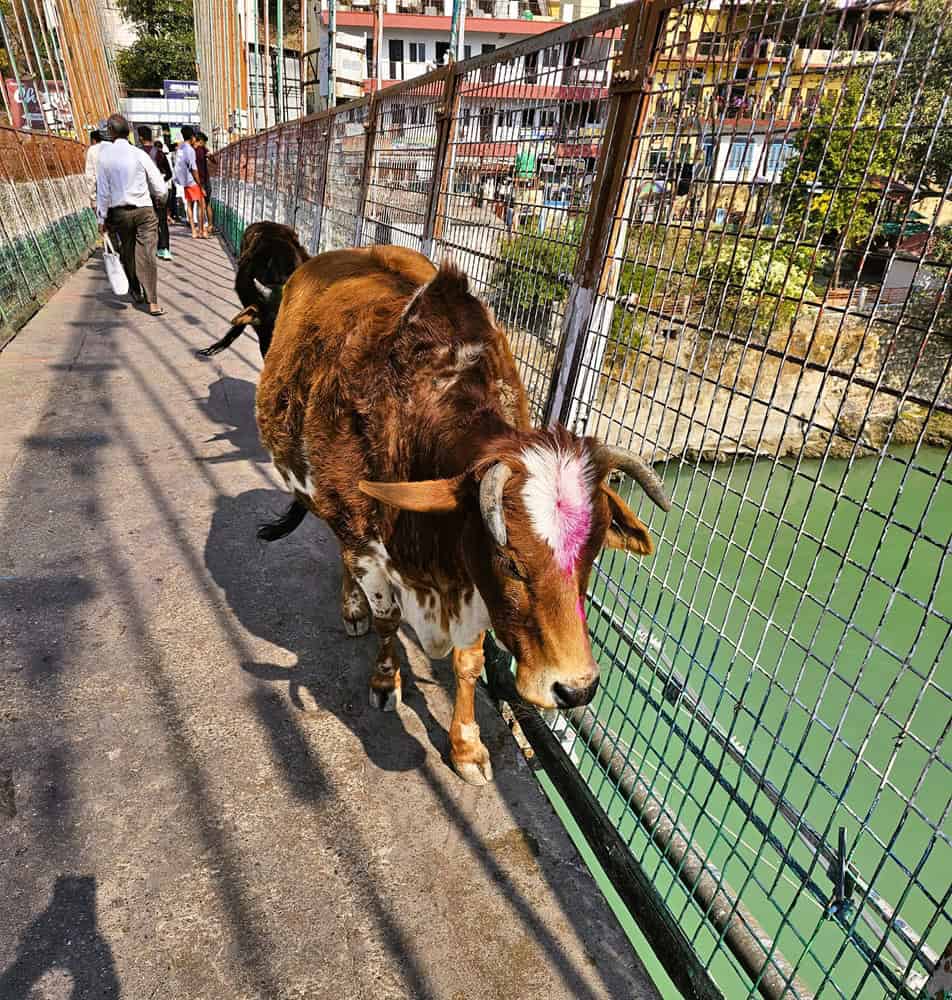
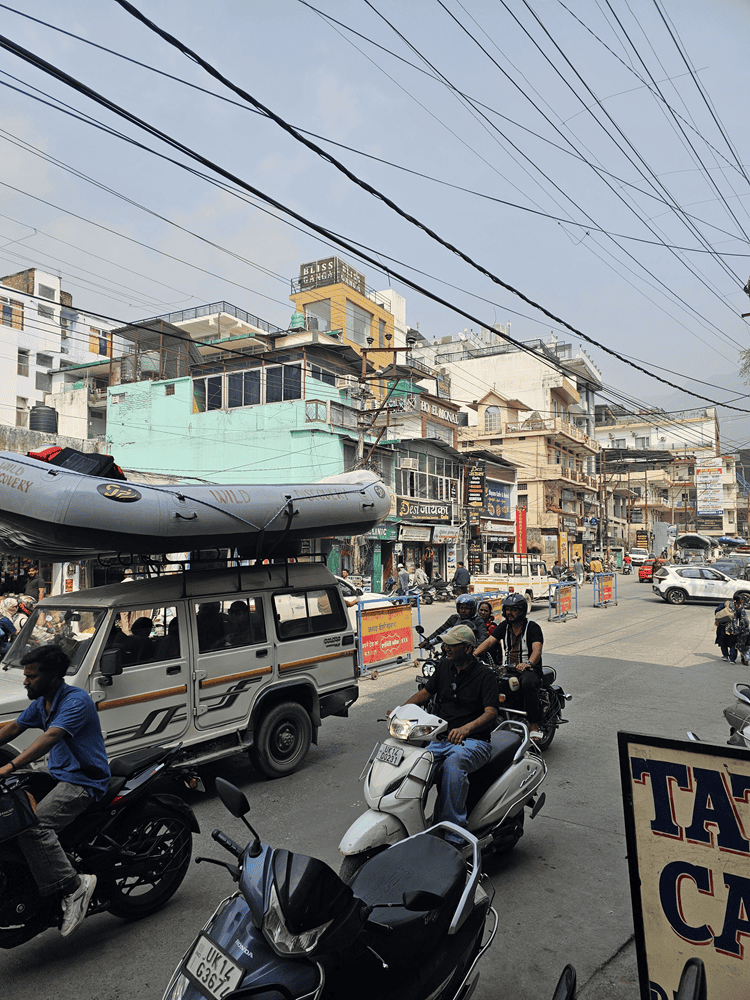
Crowded — The streets can feel busy and chaotic, with scooters, cows, horses and people sharing the same narrow spaces.
Disorientating for first-time visitors — The layout can feel confusing at first, with winding lanes, limited signage, and landmarks that aren’t always obvious.
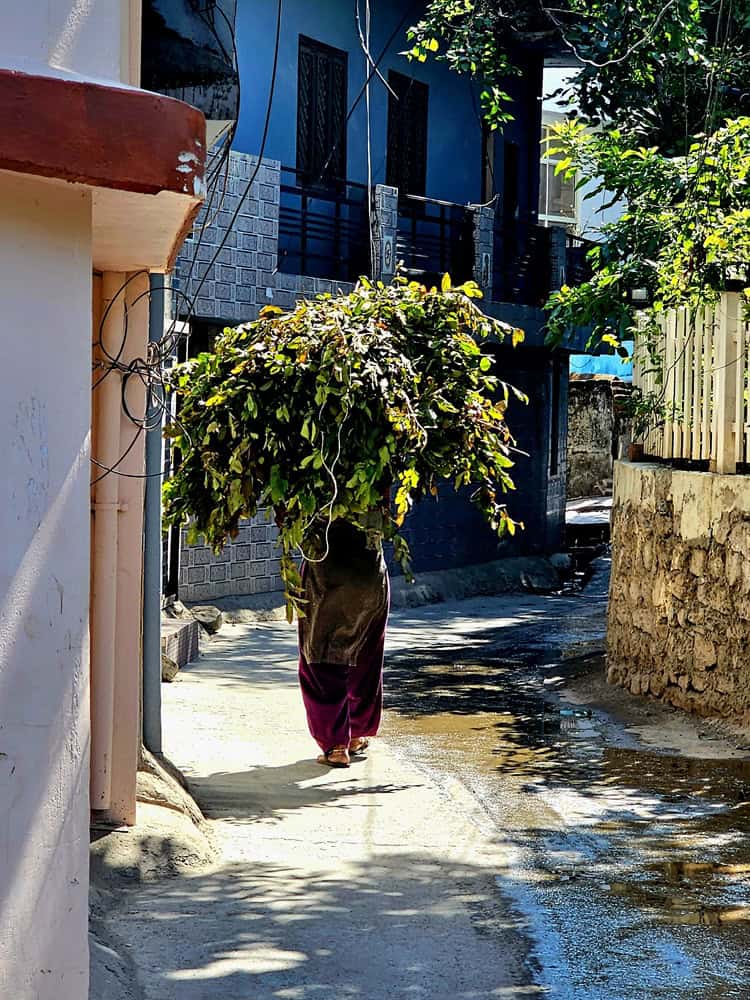
Uneven underfoot — Pavements are often broken, uneven, or completely absent in places.
Cows everywhere — You will encounter cows wandering freely through the streets — and, inevitably, plenty of cow dung along the way.
Mobility considerations — The uneven pavements, traffic, and cows require constant attention when walking. I found myself watching where I stepped most of the time, which could feel tiring, particularly in the heat or on days when my energy levels were lower. If you have balance issues, joint pain, or fatigue, this is something worth factoring into your plans.
General Accommodation Accessibility – Accessibility in hotels varies widely in Rishikesh, and it’s important not to assume step-free access. Many properties have stairs at entrances, multiple levels without lifts, and uneven pathways leading to rooms or reception areas.
If mobility is a concern, it’s worth contacting your accommodation directly before booking to ask about lift access, the number of steps, and how far rooms are from the entrance. Choosing a ground-floor room, if available, can make a significant difference.
I found that location mattered just as much as the hotel itself — staying close to the places I visited regularly helped reduce unnecessary walking and conserve energy.
Poverty in Rishikesh
Poverty in Rishikesh is visible, and it is not unusual to be approached for money, particularly around the ghats and bridges. You may encounter people with visible disabilities asking for alms, and some beggars can be persistent. Along the banks of the Ganges, flower sellers – often young children – tend to approach visitors repeatedly.
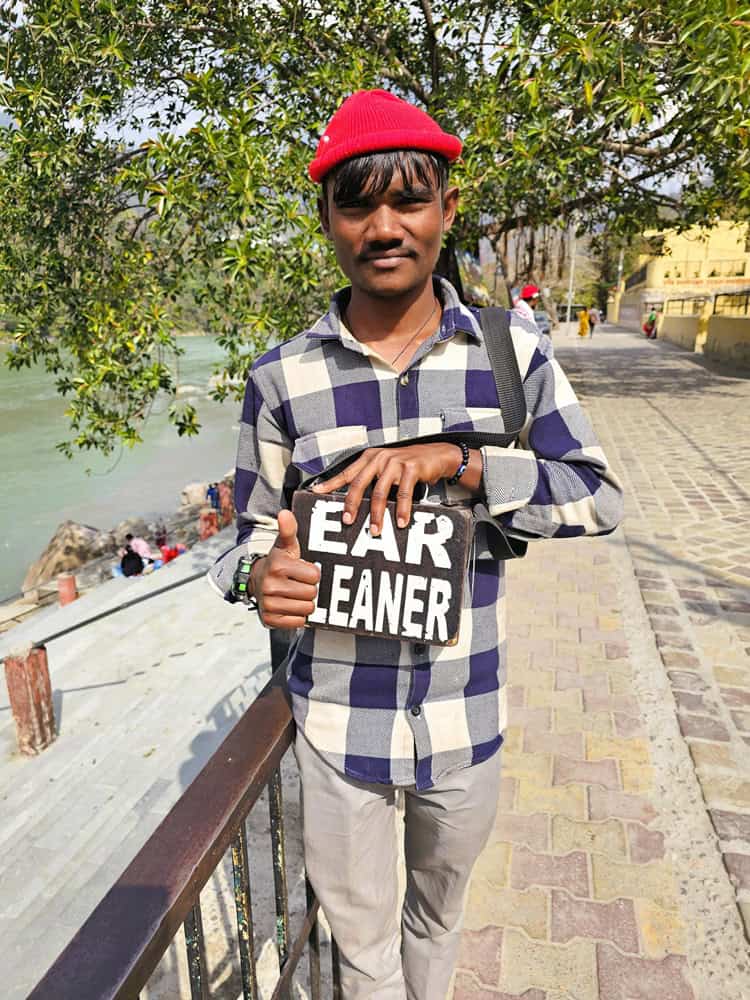
I found it helpful to think in advance about how I wanted to respond. Personally, I chose to buy a small flower offering every other day. At other times, such as when approached by the traditional ear-cleaning men, I didn’t want the service but gave a small amount of money in exchange for taking a photograph.
It helped me feel that my responses were thoughtful rather than reactive, while still respecting my own boundaries.
I called these boys above, the business men. I saw them most days trying to sell flowers by the Ganges. One boy was very insistent, to the point where I had to completely ignore him on one particular day. The next day, he came up to me and asked if I remembered him – I said of course and laughed! I asked him why he wasn’t at school and he said because he was a business man and showed me his wilting yellow marigolds. That’s the reality of some kids life here.
Best time to Visit Rishikesh (weather and seasons)
Another important factor to consider when visiting Rishikesh is the time of year.
When I first arrived, I was surprised by how cold it felt, particularly in the mornings and evenings — and especially in Upper Tapovan. Many buildings are not designed for colder temperatures, so accommodation can feel quite chilly during the winter months.
At the time, I had to make do with a tiny heater and several blankets on my bed. This was not ideal for me, as I am very sensitive to the cold, and my Functional Neurological Disorder (FND) symptoms are triggered by lower temperatures.
At other times of the year, heat and humidity can become more of a concern. Warmer months can feel intense, particularly during the middle of the day, so pacing activities and staying well hydrated becomes especially important.
If travelling during cooler months, it may be worth checking whether your accommodation provides adequate heating or bringing warm sleepwear. During hotter months, access to fans or air conditioning can make a significant difference to comfort and sleep quality.
For many travellers, the months of March to April and October to November are often considered more comfortable, with milder temperatures during the day and cooler evenings.
My Final Thoughts on Rishikesh
Rishikesh is a unique destination. I’ve never been anywhere else like it. It has a very special energy.
It is not a silent sanctuary hidden away from the world. Rather, it is a vibrant spiritual town where travellers, cows, yoga students, pilgrims and locals all move through the same lively streets.
For midlife solo travellers seeking rest and healing, the experience may depend largely on expectations. If you arrive looking for quiet corners within the vibrant energy — a yoga class in the morning, a walk beside the Ganges River, a peaceful café in the afternoon — you will find moments of calm that feel deeply restorative.
It offers a place where slowing down, reflecting, and reconnecting with yourself feels not only possible, but encouraged.
I feel strongly that each place we visit gives us something new, and Rishikesh most definitely did. It deepened my meditation practice and offered moments of stillness where clarity and awareness felt effortless and beautifully present.
Would I visit again?
❤️ Absolutely!
🌟FAQs: Visiting Rishikesh as a Midlife Woman with Chronic Illness
Is Rishikesh suitable for midlife women travelling solo?
Yes. The town attracts travellers of all ages. Women 50+ are very visible here.
Can midlife women make friends easily in Rishikesh?
Absolutely. Retreats, yoga classes, and cafés provide natural spaces to meet other travellers, and many midlife women are present, creating a welcoming community.
Is Rishikesh safe for solo female travellers?
Generally, yes – especially in central areas and during daylight. Take the normal sensible precautions.
Is Rishikesh accessible for people with mobility issues or chronic illness?
Rishikesh is not fully accessible. Pavements are uneven, steps are common, and some areas have steep hills. Centrally located accommodation and shorter outings make travel more manageable.
How many days should I plan for?
It depends on your purpose. 3–7 days is typical. Longer stays are common for retreats or wellness programmes. If managing fatigue or chronic illness, allow extra time for a slower pace.
Do I need to book yoga classes in advance?
Many studios allow drop-in classes, but popular teachers or retreats may require early arrival or advance booking.
Can Rishikesh support recovery from stress or burnout?
Yes. Yoga, meditation, Ayurveda, and slower-paced routines can support rest and reflection.
Where should I stay in Rishikesh as a solo woman?
Lower Tapovan, Ram Jhula, and Jonk Village are central, lively, and convenient. Upper Tapovan is quieter and peaceful but involves steep hills and limited transport.
Staying online
Wi-Fi is common in hotels and cafés, but for reliable internet on the go, I personally use airalo eSIM which works well in India and many other countries.
You can also pick up a physical local SIM in mobile shops and at the airport.
🌍 Quick Tips
- Airport Transfers: I often use booking.com airport transfers
- Stay Connected: Get Airolo eSIM
- Currency: Rupees. I recommend using Wise
- Guided Tours: See some great tours here
- Book Flights: I always use Skyscanner
- Best Insurance for pre-existing conditions: See here
Join the Orchids to Olives monthly newsletter for gentle travel inspiration
For restorative destinations and thoughtful solo travel ideas if you’re navigating low energy, recovery, or chronic illness.
Related Blog Posts: Chronic Illness Travel
Chronic Illness Travel Insurance: Comparing Staysure & Avanti for Pre-Existing Conditions
Travelling Solo with Functional Neurological Disorder (FND): From Fear to Freedom
Solo Travel with Chronic Illness: How to Reclaim Yourself at Midlife
The Unexpected Benefits of Travelling Solo with a Chronic Health Condition
A Destination Checklist for Women Traveling Solo with a Chronic Health Condition
On being a Digital Nomad with MS: An inspiring interview with Monica Lynne
My descent into darkness and healing
Popular India Posts
10-Day Pranayama Retreat in Rishikesh, India – Review of Yoganga Healing
Nirvana Naturopathy & Ayurveda Retreat and Hospital (Near Mumbai): My Honest Review
The Best Exotic Marigold Retreat – A Midlife Women’s Wellness Retreat in Rajasthan, India
Let’s keep in touch.
Join me for all the latest blog posts, reviews and updates.
Orchids to Olives
Journeys of self-discovery, wisdom, healing and friendship