Where to See the Whirling Dervishes in Istanbul: My Hodjapasha Review
Whirling Dervishes at Hodjapasha: One Hour of Stillness in Old Istanbul
serene beauty & almost other-worldly
Disclosure: I paid for this activity myself and the views are my own. This post contains affiliate links, which means I may earn a small commission if you book through them, at no extra cost to you. Last updated: 16/10/26
Personally Reviewed
(by Jenny)
Wellbeing places I’ve visited myself, with detailed personal insights and experiences.
At a Glance: Whirling Dervishes at Hodjapasha
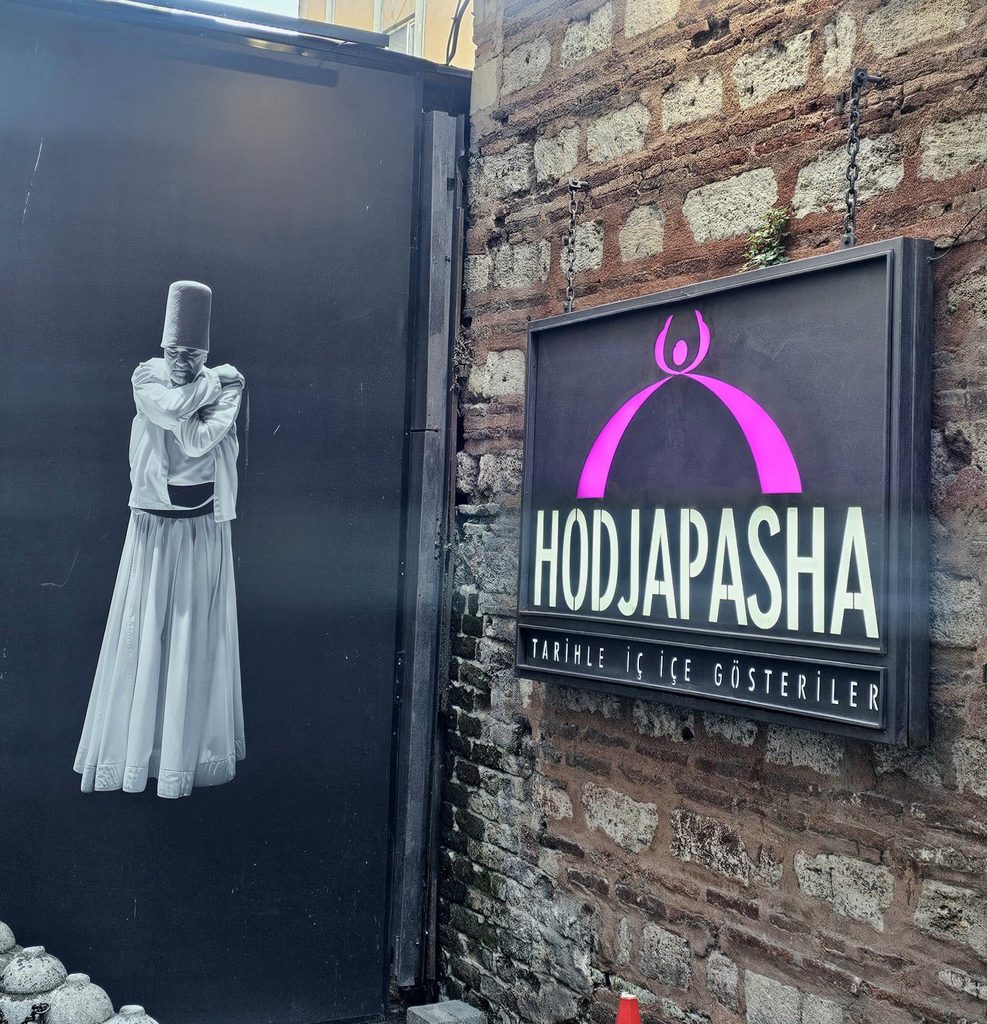
- Venue: Hodjapasha Culture Center, Hocapaşa Hamamı Sokak No. 3, Sirkeci, Fatih, Istanbul
- Nearest tram stop: Sirkeci
- Start time: 7 pm daily, with an additional 5 pm session on selected days
- Duration: approximately one hour
- Photography: not permitted during the ceremony
- Accessibility: the theatre is not suitable for wheelchair users
- Book: Get Your Guide, Viator or the official Hodjapasha website
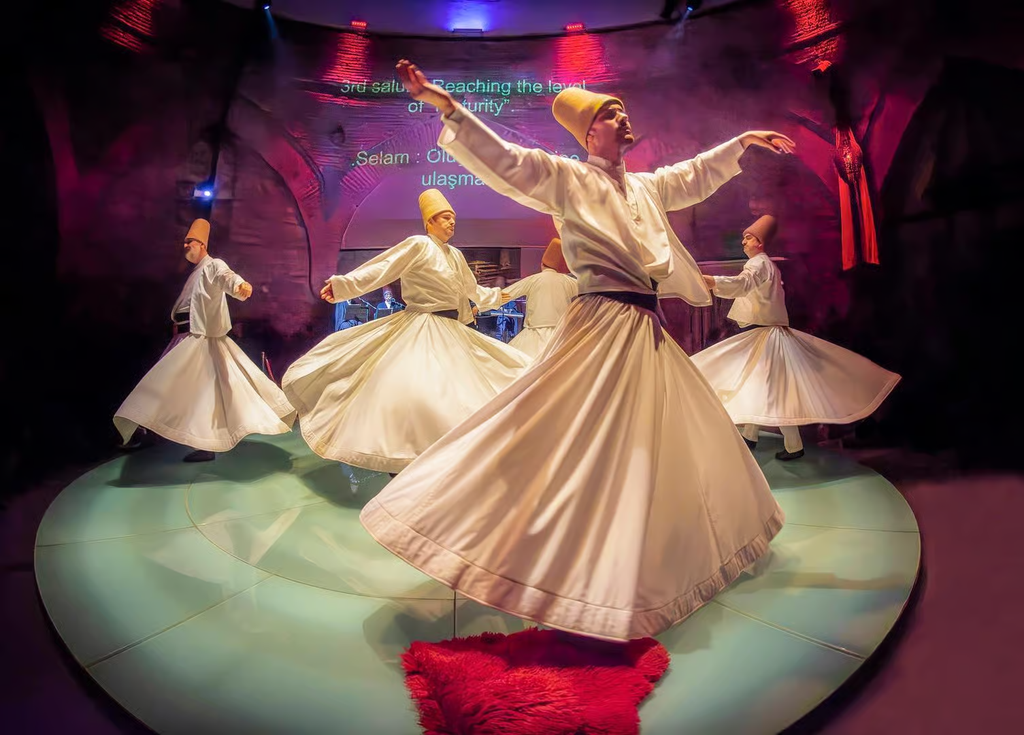
Watching the Whirling Dervishes was something I really wanted to do on my trip to Istanbul. I was drawn to the idea of witnessing this ancient spiritual practice, but I wasn’t quite prepared for how beautiful and moving the experience would be.
It turned out to be one of the most special and unique experiences of my time in Istanbul.
If you’re visiting the city and looking for something beyond its famous mosques, palaces and bustling streets, attending a Sema ceremony is well worth considering.
This is my review of the Whirling Dervishes show at Hodjapasha Culture Centre in Istanbul, including what the evening was like, whether I think it’s worth it, and the practical details you need to book.
My Verdict:
Is the Hodjapasha Whirling Dervishes Show Worth It?
- Rating: 5/5
- In one line: A mesmerising and deeply atmospheric experience.
- Best for: anyone curious about Sufi spirituality and traditional music
- Not ideal for: anyone expecting a conventional dance show, or wheelchair users, young children
The Orchids to Olives approach to reviews
As a midlife solo traveller with chronic health issues and variable energy, I consider practical things such as accessibility, comfort, safety, noise, food and how physically demanding a place is — as well as how easy it is to rest, recharge and feel at ease there.
My reviews are based on my own experience, so what works for me may not work for everyone. My aim is to give you enough information to decide whether a place might work for you too.
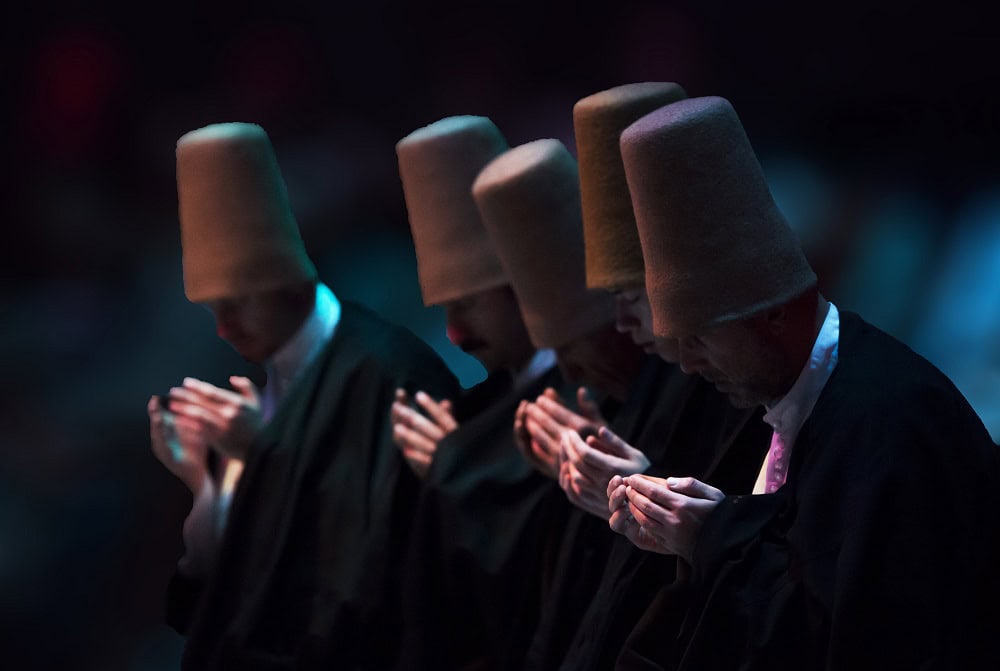
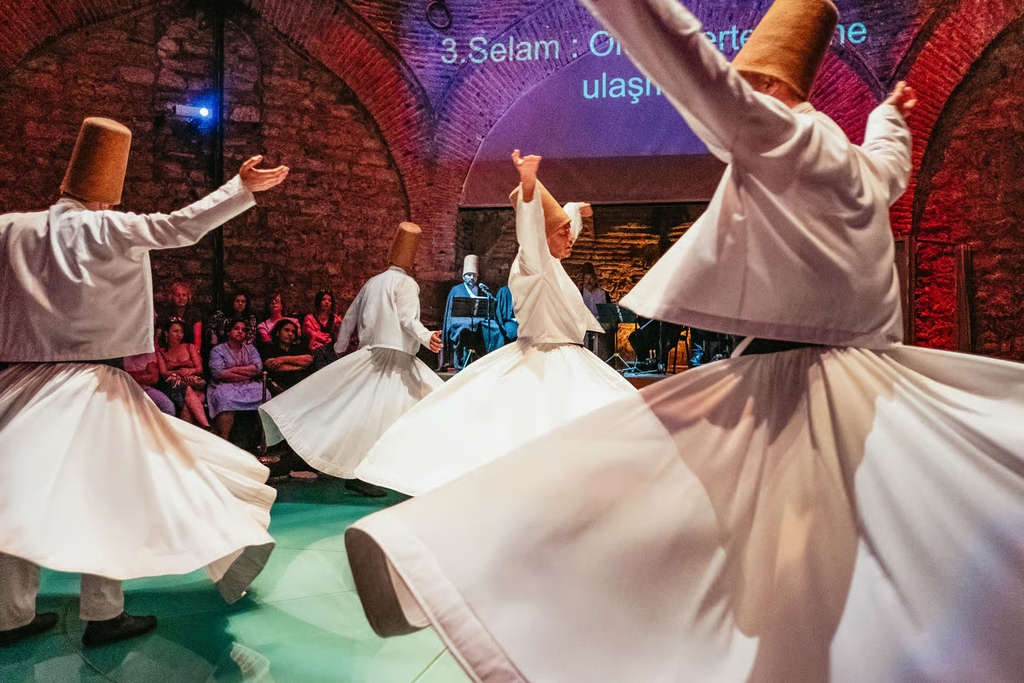
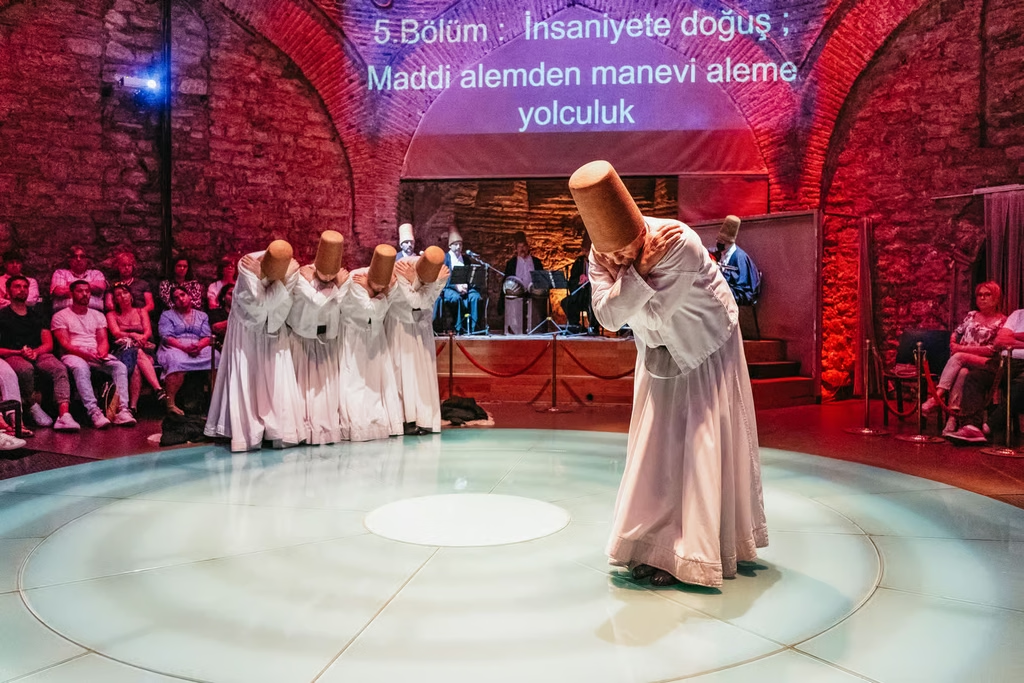
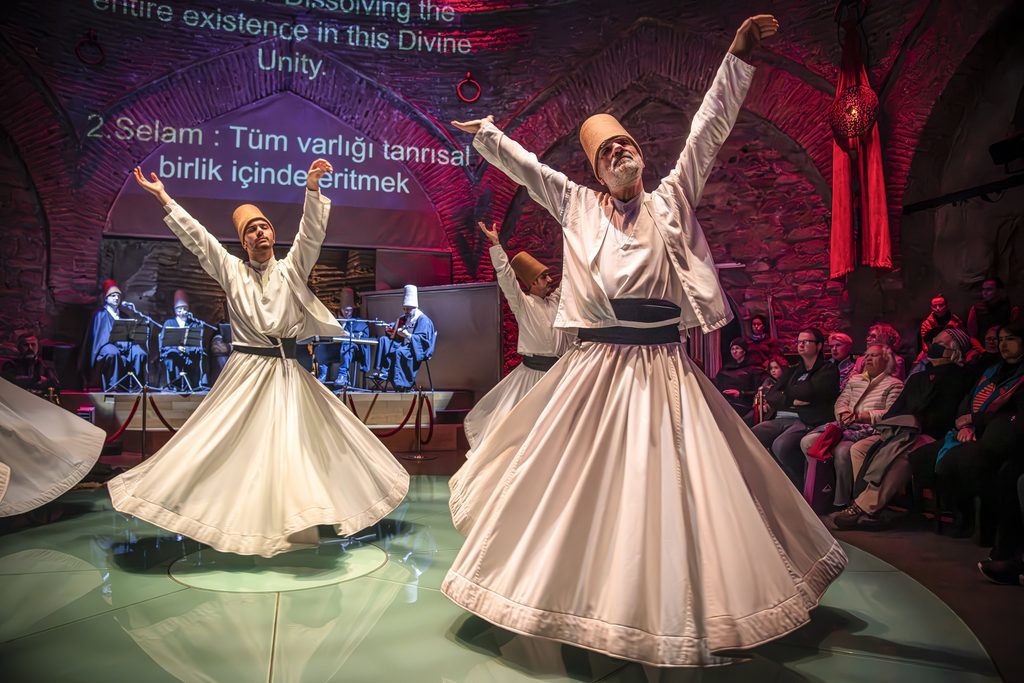
Note: photos of the Whirling Dervish are courtesy of Hodjapasha Cultural Centre, as photos were not permitted of the ceremony.
Hodjapasha Culture Centre: Location and Atmosphere
Hodjapasha Culture Centre is tucked away in the historic Sirkeci area of Istanbul’s old city. It’s housed in a restored 15th-century Ottoman Turkish bath, giving the venue a fascinating history of its own.
It’s centrally located, close to Sirkeci tram stop and within walking distance of many of Istanbul’s historic sights, including Hagia Sophia and the Blue Mosque.
I’d booked my ticket through Get Your Guide, which made it easy to arrange in advance. As this is a popular experience, booking ahead is a good idea. I tend to book most of my travel experiences through either Get your Guide or Viator as I know they are reliable.
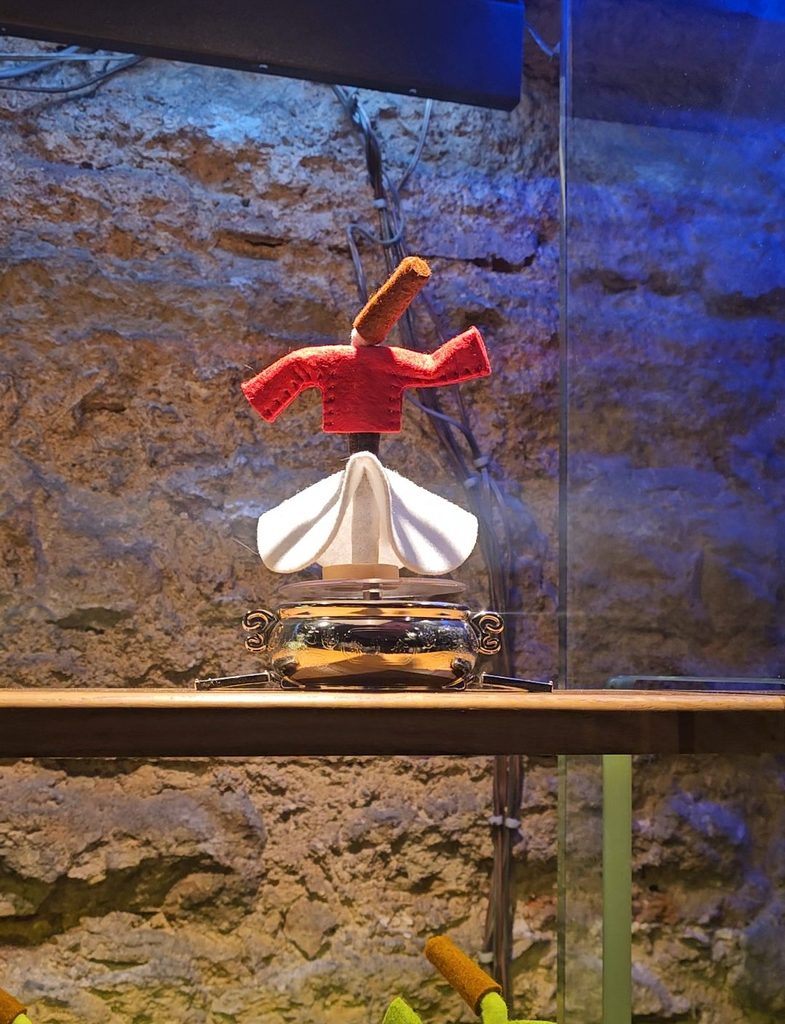
On arrival, I first wandered through a small exhibition introducing the history and traditions of the Whirling Dervishes. There were displays about their clothing, musical instruments and spiritual practices, alongside information about Rumi, the Persian poet and spiritual teacher whose teachings inspired the Mevlevi Sufi order.
It was a useful introduction to what I was about to see, but I also found the exhibition itself calming. There was a sense of quiet respect among everyone who entered, as though we all understood that we were about to experience something very special.
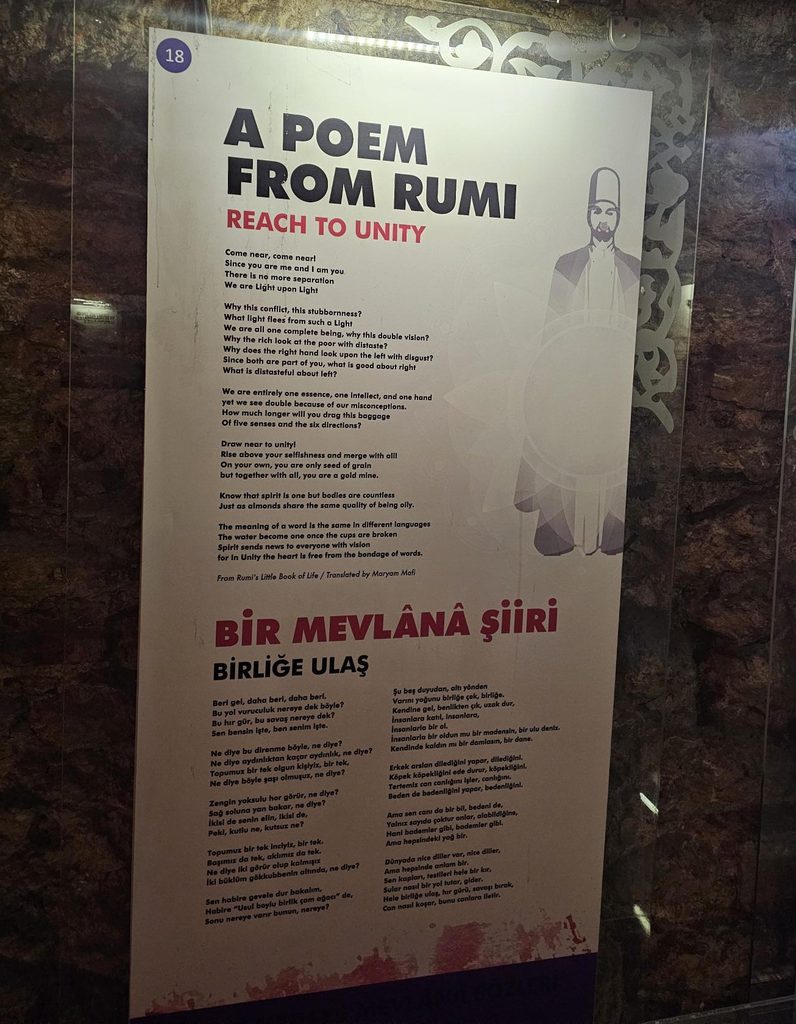
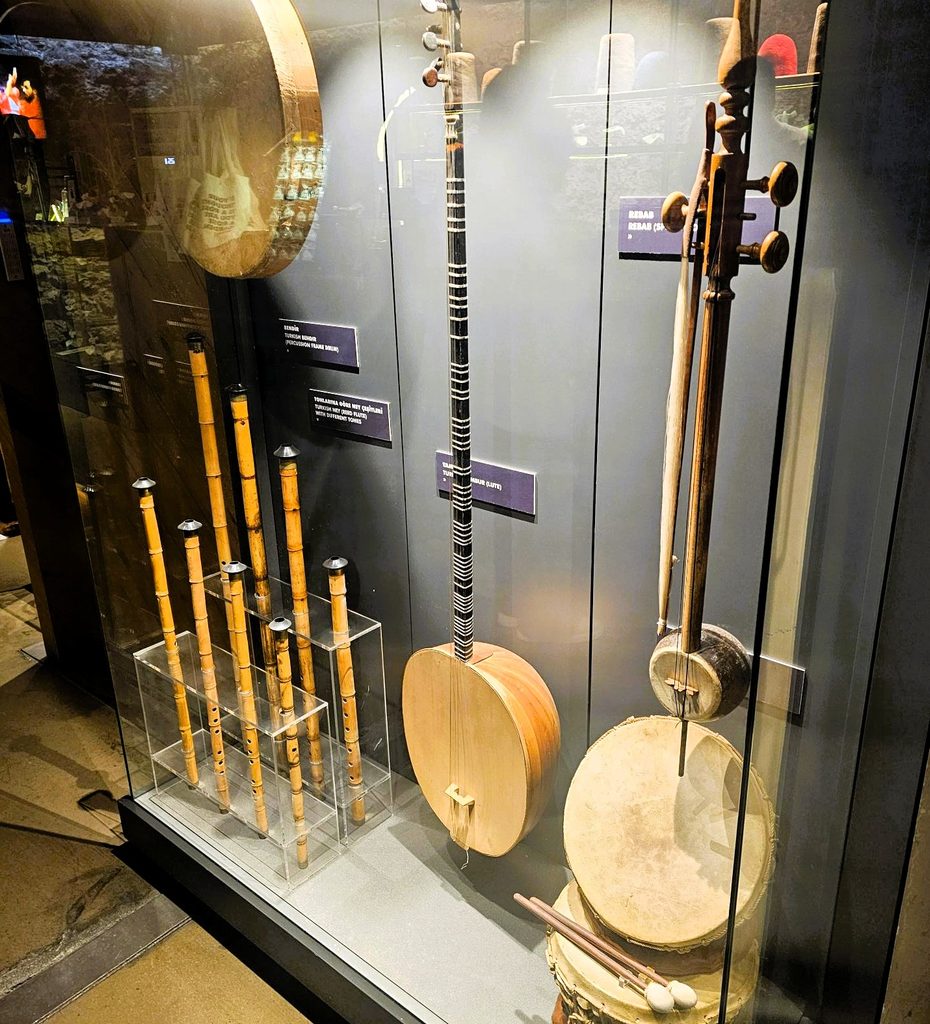
What Is the Sema Ceremony? (Whirling Dervishes Explained)
The Sema ceremony is a spiritual ritual practised by the Mevlevi order of Sufism, a mystical tradition within Islam associated with the teachings of Mevlana Rumi.
The whirling represents a spiritual journey towards divine love and truth. The movements, music and rituals each have symbolic meaning, and the ceremony follows a particular sequence.
The Mevlevi Sema ceremony was recognised by UNESCO as Intangible Cultural Heritage in 2008, reflecting its importance as a living spiritual and cultural tradition.
Inside the Atmospheric Old Turkish Bath
Entering the theatre was an experience in itself.
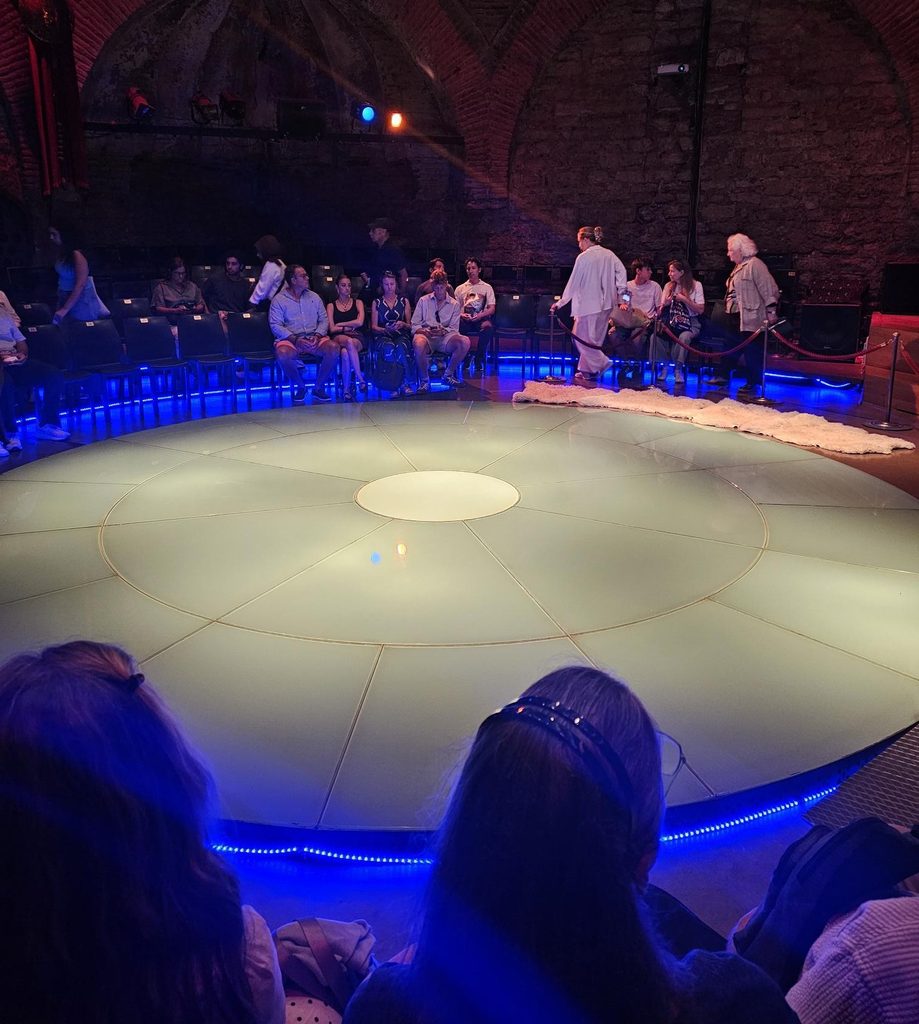
The room was circular, with low lighting that created an intimate, almost otherworldly atmosphere. Knowing that I was sitting inside a historic Turkish bath added to the feeling that I had stepped away from the busy streets outside and into another time.
It felt peaceful and contemplative.
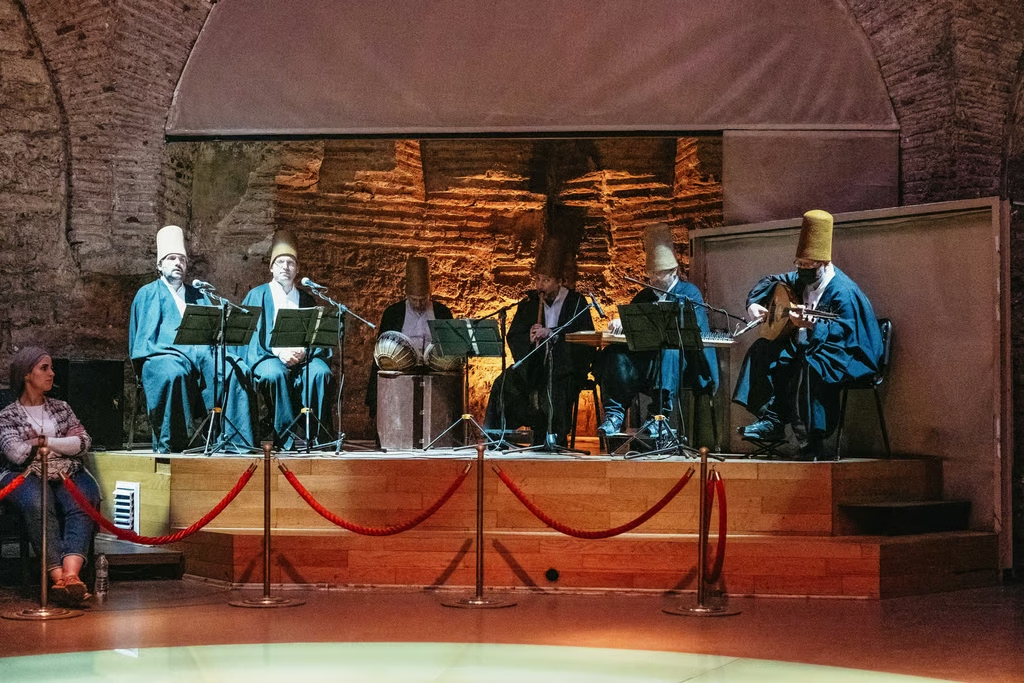
Then the musicians began to play, and a hush seemed to descend over the audience.
The atmosphere changed. People settled into silence, and all attention turned towards the ceremony.
Watching the Whirling Dervishes at Hodjapasha
The ceremony began with a series of symbolic gestures and moments of stillness. The dervishes moved through what I understood to be a ritual sequence of greetings, prayers and contemplation before the whirling began.
Then, one by one, they slowly started to turn.
I found it mesmerising.
There was something extraordinary about watching each dervish gradually gather momentum, their white robes flowing around them as they turned. Their arms opened, one hand raised towards the sky and the other directed towards the earth, in a gesture traditionally associated with receiving and passing on divine grace.
They seemed to find their own rhythm, almost as if an unseen force were gently guiding them into motion.
I sat watching, completely absorbed.
What struck me most was the combination of movement and stillness. From the outside, the whirling looked physically demanding, yet there was an effortless calm and concentration about the way the dervishes moved.
After several minutes, they would pause and return to a series of symbolic gestures before beginning another round. The ceremony continued through these distinct stages, with the music carrying everything forward.
Each time the whirling began again, I found myself drawn further into the experience.
The flowing white garments, the circular movements, the music and the stillness of the audience came together to create something quite beautiful.
I felt a sense of awe, peace and otherworldliness. It was difficult to put into words, but I remember feeling that I was witnessing something much bigger than a performance.
It was one of those travel experiences that reminds you how much there is to discover beyond the places we visit and the sights we photograph.
→ Buy tickets here from Get Your Guide.
Is It a Real Ceremony or Touristy?
Clearly, the performance at Hodjapasha is designed for visitors, but the Sema itself is a genuine spiritual practice rooted in the Mevlevi Sufi tradition.
I found the atmosphere respectful and the experience mesmerising. While it is presented as a cultural performance, I felt there was something deeply meaningful about witnessing this ancient tradition in person.
Is the Hodjapasha Whirling Dervishes Show Worth It? My Thoughts
I came away feeling that this was a very special way to experience another aspect of Turkish culture.
The Sema ceremony isn’t a conventional dance show, and I think it’s worth knowing that before you go. It’s a spiritual ritual with deep religious and cultural significance, accompanied by traditional music and performed in a setting that lends itself to quiet contemplation.
For me, that was precisely what made it so memorable.
Istanbul can be an intense city to explore, with busy streets, crowds and so much to see. Spending an hour in a peaceful, atmospheric space, simply sitting and observing, offered a very different experience.
As someone who enjoys discovering places and experiences that encourage me to slow down and be present, it was a highlight of my trip.
You don’t need to be religious or have an in-depth knowledge of Sufism to appreciate the beauty of the ceremony. However, taking a little time to understand its meaning beforehand will give you a greater appreciation of what you’re witnessing.
If the opportunity arises to see the Whirling Dervishes in Istanbul, I’d recommend making time for it. For me, it was much more than another activity to tick off a travel itinerary.
It was an experience I was genuinely glad I’d made time for.
Pros and Cons of this experience
Pros
- Atmospheric setting inside a restored 15th-century Ottoman Turkish bath
- Central location in Sirkeci, close to Hagia Sophia and the Blue Mosque
- A small exhibition beforehand that introduces the history and traditions
- Calm and contemplative, a break from busy Istanbul
- Comfortable to attend as a solo traveller
Cons
- Not a conventional dance show, so manage your expectations
- No photography or video during the ceremony
- Not suitable for wheelchair users
- Late entry is restricted, so you need to arrive early

Quick Links for Istanbul
- Top rated Free walking tour (you choose what to pay): use Free Tour
- Guided tours and experiences: use Viator or Get Your Guide
- Istanbul E-pass: Get Istanbul E-pass with Skip the Line
- Airport Transfers: Private Transfer to/from Sabiha & Istanbul Airport
- Top rated Istanbul food tour: Guided Food Tour with 20+ Tastings on 2 Continents
- Top rated Turkish bath experience:Cagaloglu Hamam
- Bus tour: Istanbul: Bosphorus Open-Top Bus Tour, Sunset to City Lights
- Money: use Wise for ease for transferring currencies
- Stay Connected: get Airolo eSIM
For all my useful Travel Resources – see here.
A Book to Read Before Visiting Hodjapasha
A few weeks before arriving in Turkey, I’d read The Forty Rules of Love by Elif Shafak. This fascinating fictional novel weaves together the story of Rumi, how he became a Sufi poet, and the beginnings of his spiritual connection with the whirling practice of Sema.
Having read it shortly before my trip, I was particularly curious to see the ceremony for myself. It added another layer of meaning to the experience.
If you’re curious about Rumi and the spiritual traditions behind the Whirling Dervishes, I’d recommend it as a fascinating read.
Hodjapasha Tickets, Times and Tips (FAQ)
Where is Hodjapasha? Hodjapasha Culture Center is at Hocapaşa Hamamı Sokak No. 3, Sirkeci, Fatih, Istanbul. It’s in the historic old city, close to Sirkeci tram stop and within walking distance of Hagia Sophia and the Blue Mosque.
How do you book tickets? I booked through Get Your Guide.
Tickets are also available directly through the official Hodjapasha website and Viator.
How much does it cost? Ticket prices vary according to the date, booking platform and ticket type. Check the current price when booking rather than relying on older prices. I paid around £24.
What time does it start? The main Sema ceremony is currently scheduled for 7 pm daily, with an additional 5 pm session available on selected days. Check the schedule for your chosen date before travelling.
How long does it last? Allow approximately one hour for the experience, including the introduction, music and ceremony.
When should I arrive? Arrive about 30 minutes before, this will give you enough time to look at the exhibition. Seating is allocated according to booking order, and late entry is restricted to avoid disturbing the ceremony.
Can you take photographs? No. It’s an ideal opportunity to put your phone away and concentrate on the experience itself.
Is the venue accessible? The official venue states that the theatre is not suitable for wheelchair users. If you have mobility or balance difficulties, it’s worth contacting the venue before booking to discuss the access arrangements.
Is it suitable for solo travellers? Yes, if you’re interested in Turkish culture, spirituality and traditional music, this is an experience you can enjoy on your own.
Would I recommend it? Absolutely. If you’re looking for a distinctive cultural experience in Istanbul, the Whirling Dervishes at Hodjapasha are worth considering. Go with an open mind, take a little time to learn about the Sema ceremony, and allow yourself to experience it without expecting a conventional performance.
Join the Orchids to Olives monthly newsletter for gentle travel inspiration
For restorative destinations and thoughtful solo travel ideas if you’re navigating low energy, recovery, or chronic illness.
Popular Blog Posts
Retreat Posts
Akanta Ayurveda & Yoga Resort Review: A Solo Traveller’s Experience in Cherai, Kerala
Veda5 Wellbeing Retreat Goa Review: 48 Hours of Yoga and Ayurveda – Orchids to Olives
10-Day Pranayama Retreat in Rishikesh, India – Review of Yoganga Healing
Nirvana Naturopathy & Ayurveda Retreat and Hospital (Near Mumbai): My Honest Review
Ashiyana Yoga Retreat Goa Review: A Midlife Woman’s Experience of Rest, Yoga & Slow Living
The Best Exotic Marigold Retreat – A Midlife Women’s Wellness Retreat in Rajasthan, India
Gentle & Chronic Illness Solo Travel guides
Solo Travel to Morocco with a Chronic Illness: A Midlife Woman’s Guide
Solo Travel to Penang: A Safe, Affordable Island for Midlife Women with Chronic Illness
Travelling Solo with Functional Neurological Disorder (FND): From Fear to Freedom
Solo Travel with Chronic Illness: How to Reclaim Yourself at Midlife
Wellbeing Places
Explore all Wellbeing Place Guides
About the Orchids to Olives Wellbeing Collection
Wellbeing Places on Orchids to Olives highlights destinations and retreats that feel particularly supportive for midlife women — especially those seeking calm, nature, and space to rest.
Many readers are navigating menopause, chronic health conditions or life transitions, so these places are chosen for their gentle pace, safety for solo travellers, and environments that allow the nervous system to soften.