Tbilisi Balneological Resort Review: My Experience and Is It Worth It?
Wellbeing at Tbilisi Balneological Resort
Sulphur Baths, Massage & Physiotherapy
Disclosure: I paid for this stay myself and the opinions are my own. This post contains affiliate links, which means I may earn a small commission if you book through them, at no extra cost to you. Visited: October 2026. Last updated: 20/11/26
Tbilisi Balneological Resort Review: My Experience and Is It Worth It?
While looking into wellbeing in Tbilisi, I came across somewhere that immediately caught my interest: Tbilisi Balneological Resort.
An extensive range of spa and wellness experiences and traditional sulphur baths sit alongside medical services, physiotherapy and rehabilitation.
In this review I cover what the resort offers, what I tried and what I thought.
At a Glance: Tbilisi Balneological Resort
- Location: Old Town Tbilisi, Georgia
- Type of place: day spa and medical centre
- The feeling of the place: clinical with comfortable massage rooms
- My visit: 10 sessions over 5 weeks from October 2026, including a doctor’s consultation, an ultrasound and a ten-session physiotherapy programme, booked via WhatsApp.
- Best for: anyone wanting either one off wellbeing therapies such as hot stone massage or a structured treatment programme.
- Not ideal for: anyone expecting a luxury spa atmosphere
- Language: English is limited. My doctor spoke little English but fluent Russian, while my physiotherapist spoke excellent English.
- Suitable for midlife solo women: yes, I felt comfortable at the resort.
- Accessibility: treatment rooms are on different floors. Some are downstairs and others upstairs, and there is no lift, so stairs are unavoidable for some treatments.
- Would I return? yes, for treatments. For sulphur baths, I’d choose another bathhouse.
- Website: balneo-resort.ge

The Orchids to Olives approach to reviews
Places are chosen with midlife solo women and women living with chronic health conditions in mind. Every place is considered by how easy it is to rest, recharge and let the nervous system settle. Practical things matter too: accessibility, comfort, safety, noise, food, and how physically demanding a place is.
Reviews are based on personal experience, so what works for one person may not work for everyone. The aim is to give you enough information to decide whether a place might work for you too.
What is Tbilisi Balneological Resort?
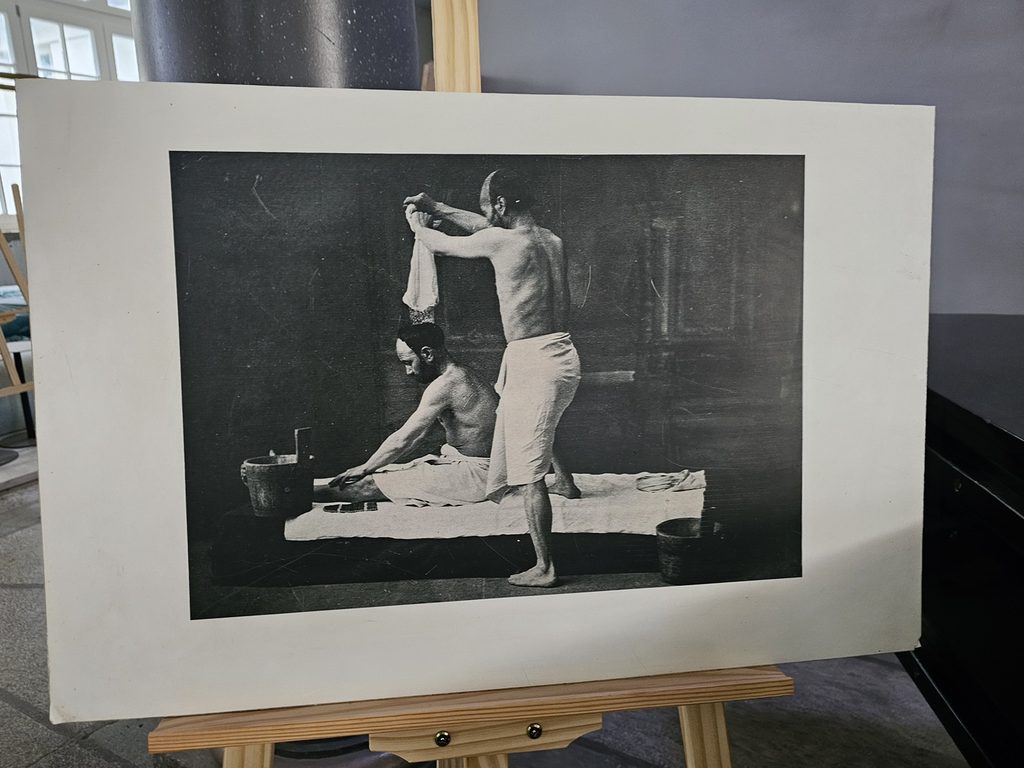
Tbilisi has a long association with its natural sulphur springs, which have played an important role in the city’s history and identity. Balneotherapy, the use of mineral waters for therapeutic purposes, is part of this wider tradition.
Founded in 1938, Tbilisi Balneological Resort brings this tradition together with medical consultations, rehabilitation and a wide range of wellness treatments. Unlike a conventional spa, where the focus is usually on relaxation and pampering, it has a distinctly therapeutic dimension, and traditional baths and mud applications sit alongside physiotherapy, massage and specialised water treatments.
It offers an interesting insight into Georgia’s approach to wellbeing, where traditional therapies, conventional spa experiences and medical services exist side by side.
What treatments are available?
The resort combines spa treatments with medical and rehabilitation services.
Massage and body treatments: Options include traditional, Thai, hot stone and mud massage, as well as body scrubs and facials. These are the more familiar spa experiences if you simply want to relax.
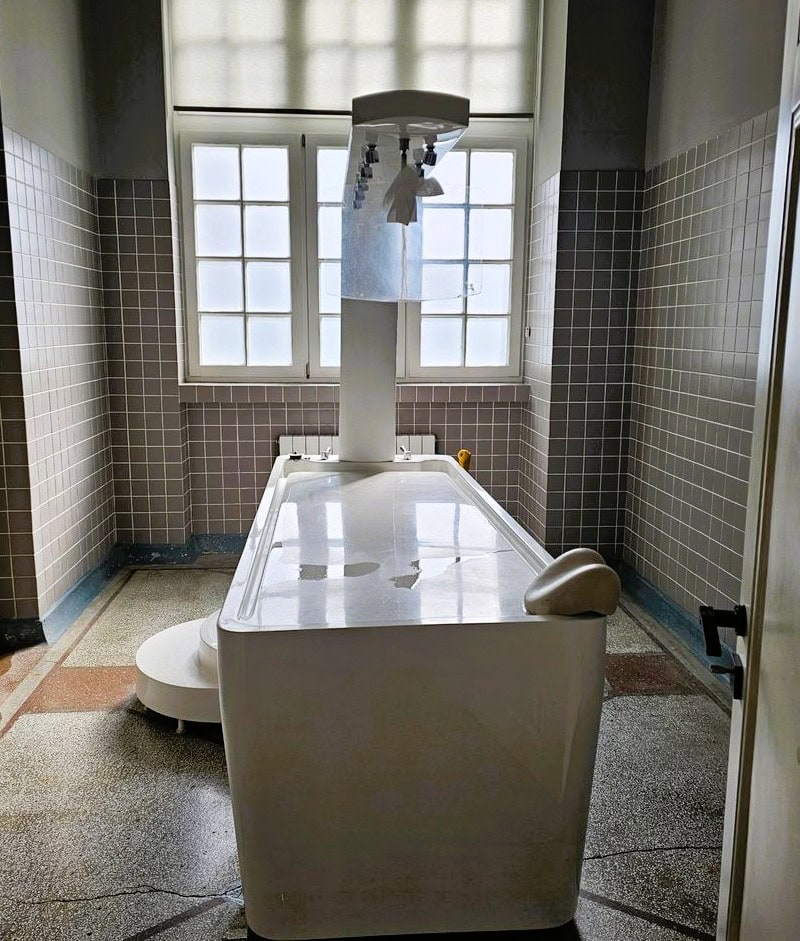
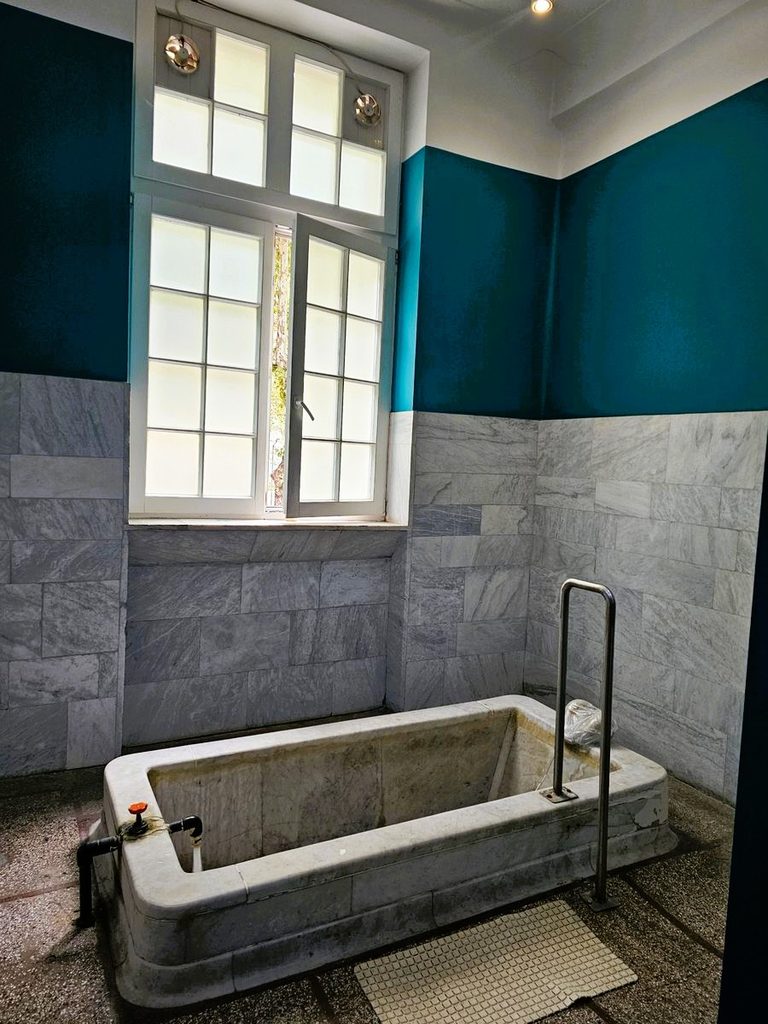
Baths and showers: The resort is situated in the sulphur bath area of the old town and thus has naturally hot sulphur baths. There are several types of sulphur bath, plus circular showers and charcot showers. I tried one of the private sulphur baths.
Mud therapy: Mud applications and mud massage are both available. I had mud applied to my feet as part of my treatment programme.
Water exercise: Group sessions such as aqua aerobics take place in the large sulphur pool.
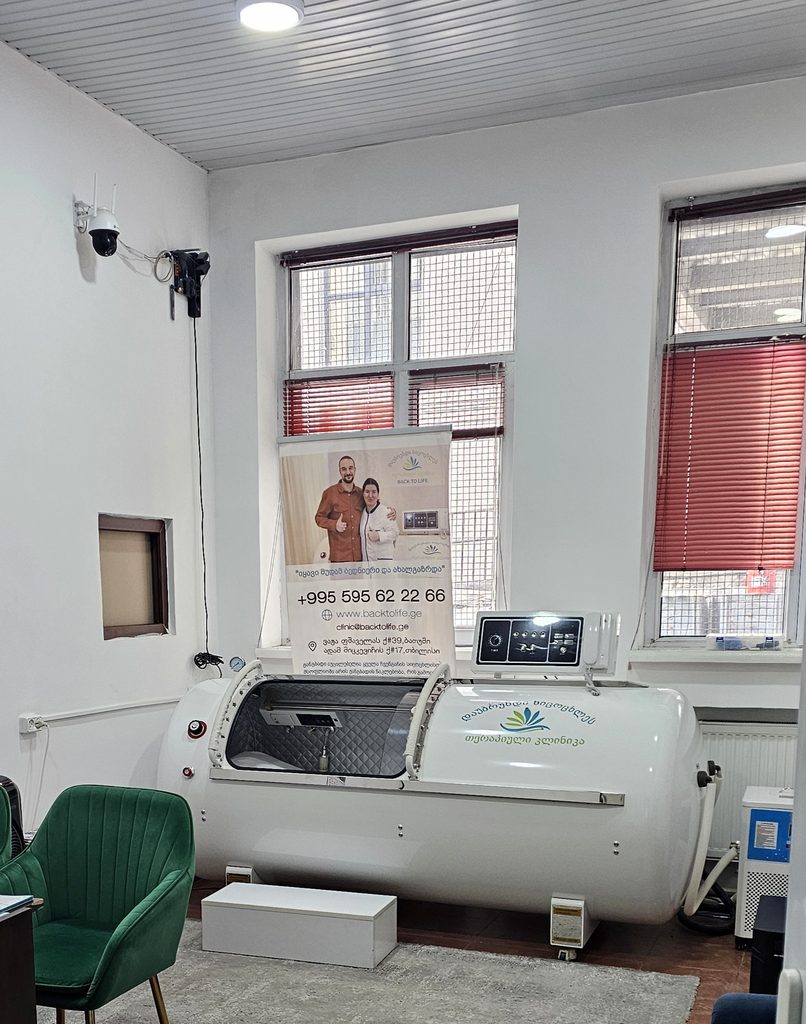
Oxygen therapy: The resort has a hyperbaric oxygen chamber, where you lie inside a sealed chamber and breathe in oxygen under increased pressure
Medical services and rehabilitation: You can see a doctor for a consultation who will then design a programme based on your health needs.
You can visit for a one off spa treatment, a traditional bath or opt for a structured programme of care.
My Experience at Tbilisi Balneological Resort
Here is how my visit went, from the first consultation to the treatments.
Seeing the doctor and getting an ultrasound
I have lived with Functional Neurological Disorder (FND) for the past four years. At its worst, I experienced significant leg heaviness, numbness and balance issues. Thankfully, these symptoms have improved over recent months.
More recently, I developed posterior tibial tendonitis, which was affecting my foot and walking. Having already seen a physiotherapist in the UK, I was familiar with the condition and had exercises to follow. However, I had planned to have some additional treatment while in Tbilisi, so I made an appointment at the resort and saw a doctor.
She spoke little English, but we managed to communicate sufficiently for my particular problem. The consultation was reasonably straightforward, although I did wonder how difficult it might have been to explain more complex or less familiar conditions, such as FND. I don’t know whether other doctors at the resort speak English, so this is worth bearing in mind if you are considering visiting.
She promptly arranged an ultrasound of my feet. This confirmed the issue, and a treatment programme was recommended.
My physiotherapy programme: ten sessions
I was prescribed ten sessions, which initially felt like quite a commitment. However, I decided to go ahead.
My programme included:
- Medical massage
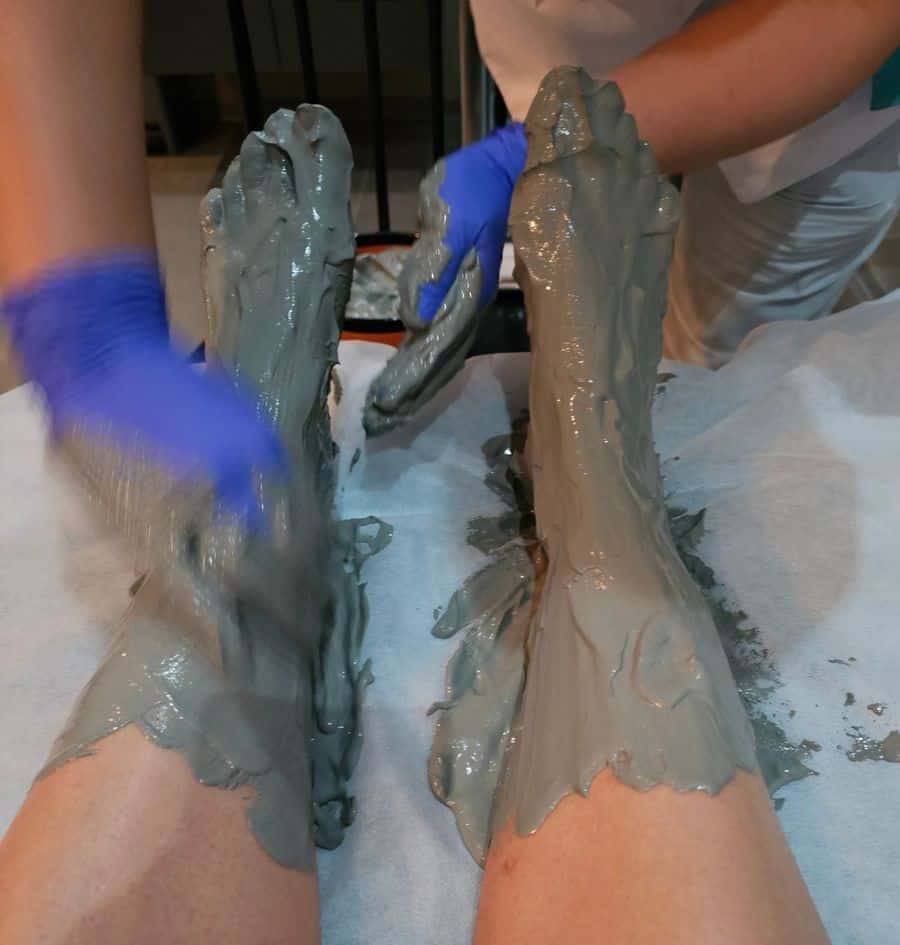
- Mud applications to my feet
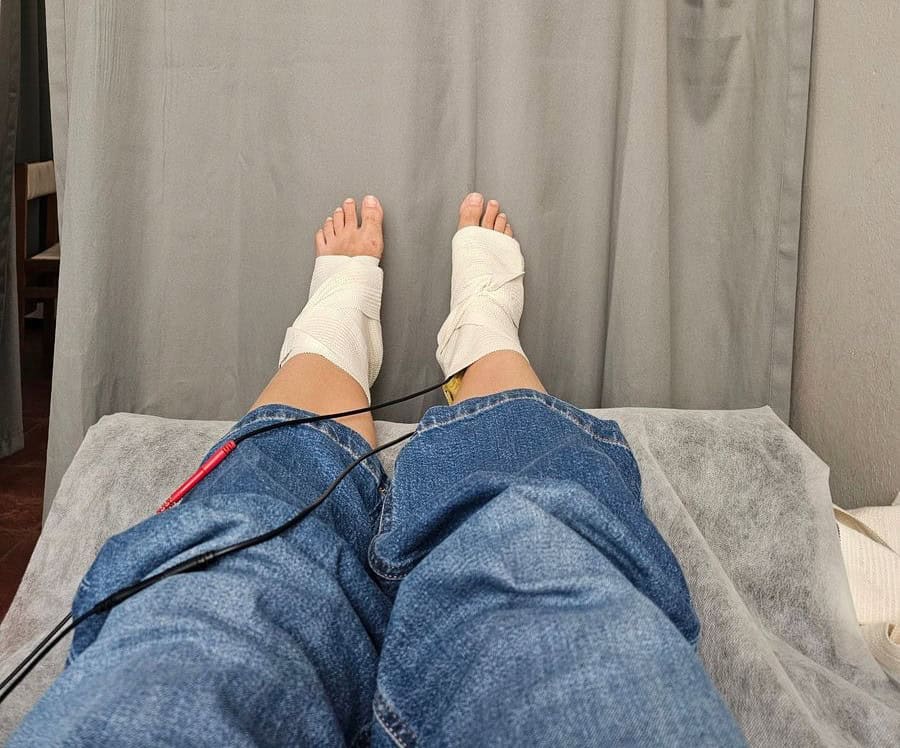
- Electrical treatments as part of physiotherapy
Mud therapy: why it’s prescribed and how it felt
Mud therapy, also known as peloid therapy, is a traditional part of balneotherapy and is often prescribed alongside physiotherapy and massage for muscle, joint and tendon problems. The idea is that the warm mud helps ease pain and stiffness before or alongside other treatment.
In my case, therapeutic mud was applied to both feet in each session. I loved how it felt: warm, cosy and soothing.
I’d had full-body mud packs at other spas before, and they were incredibly relaxing. The warmth and moisture often sent me to sleep. This was a more targeted version, but the same comforting warmth was there.
The medical massage
The medical massage was particularly memorable!
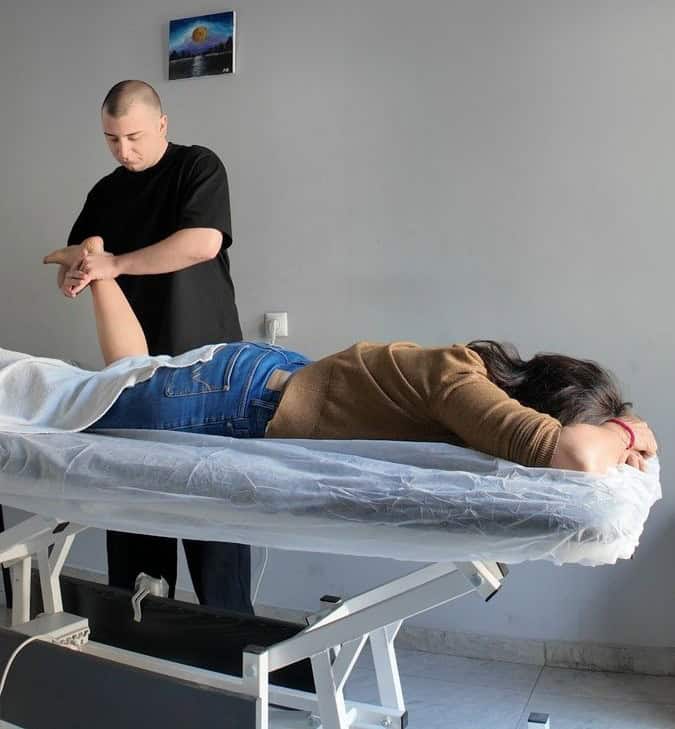
This was not a gentle relaxation massage. It was very deep, targeted and therapeutic, and I found it particularly effective for the discomfort I was experiencing.
My physiotherapist spoke excellent English and was both attentive and knowledgeable. I was impressed by his understanding of the problem and by how he responded to my ongoing progress.
One of the most encouraging aspects of the experience was that I would often walk out of a session feeling almost normal. I found that quite remarkable, particularly given how much my foot had been bothering me.
Electrotherapy
Each session also included electrical treatment as part of the physiotherapy. Electrodes were attached to my feet and secured with bandages. I’m not sure exactly what type of machine it was, but it felt similar to a TENS machine, with a mild tingling sensation. I did ask, but it was lost in translation! It was painless and easy to tolerate. Each session lasted about
Did it help?
I certainly felt that the treatments helped with my foot symptoms. The medical massage was particularly beneficial for me, and the improvement I experienced after sessions was encouraging.
I was also continuing the exercises from my UK physiotherapist, so I can’t say how much of the improvement came from the treatments alone. I also wouldn’t claim that the tendonitis was cured, but I was pleased with the experience and felt that pursuing the treatments had been worthwhile.
The sulphur baths: my verdict
While visiting the resort, I also tried one of its sulphur baths. Like the other two bathhouses I’d visited in Tbilisi, this was a private bathing experience.
However, I have to say I wasn’t quite as impressed with this one.
For me, the water simply wasn’t hot enough. One of the things I particularly enjoy about Tbilisi’s sulphur baths is immersing myself in the hot mineral water and allowing the warmth to help me completely unwind. Here, I didn’t get quite the same feeling of relaxation.
It’s obviously a personal preference, but having experienced two other sulphur bathhouses in the city, I found this one less memorable from a relaxation perspective.
→ Read about my sulphur baths at Chrelo Abano & Bath House No.5
The facilities and atmosphere
Tbilisi Balneological Resort doesn’t feel like your average spa.
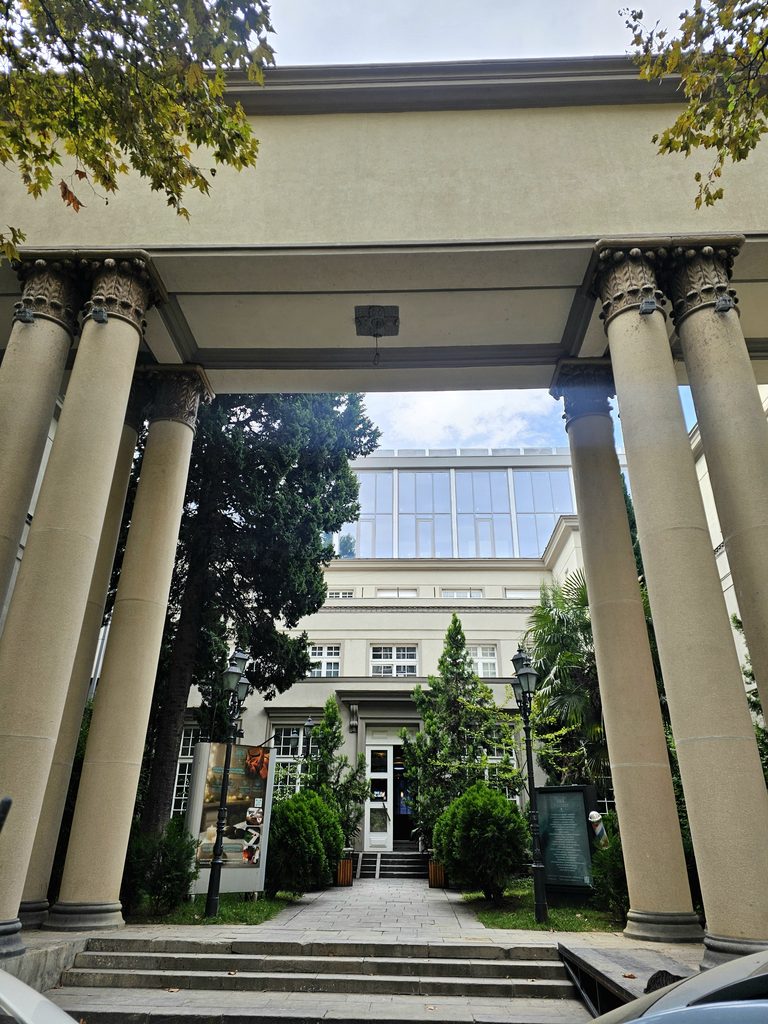
The building itself is huge, and inside you’ll find long, clinical corridors. When I visited in October, it was quite cold inside, which didn’t exactly add to the welcoming atmosphere. Overall, it felt much more like a hospital or medical institution than a relaxing wellness centre.
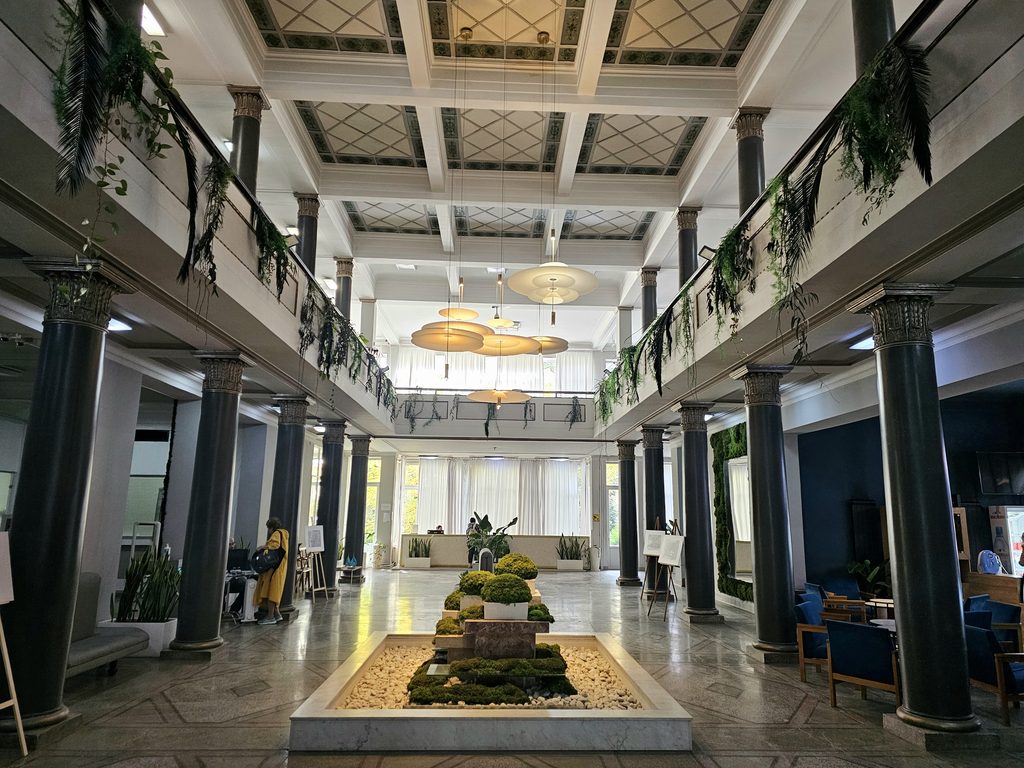
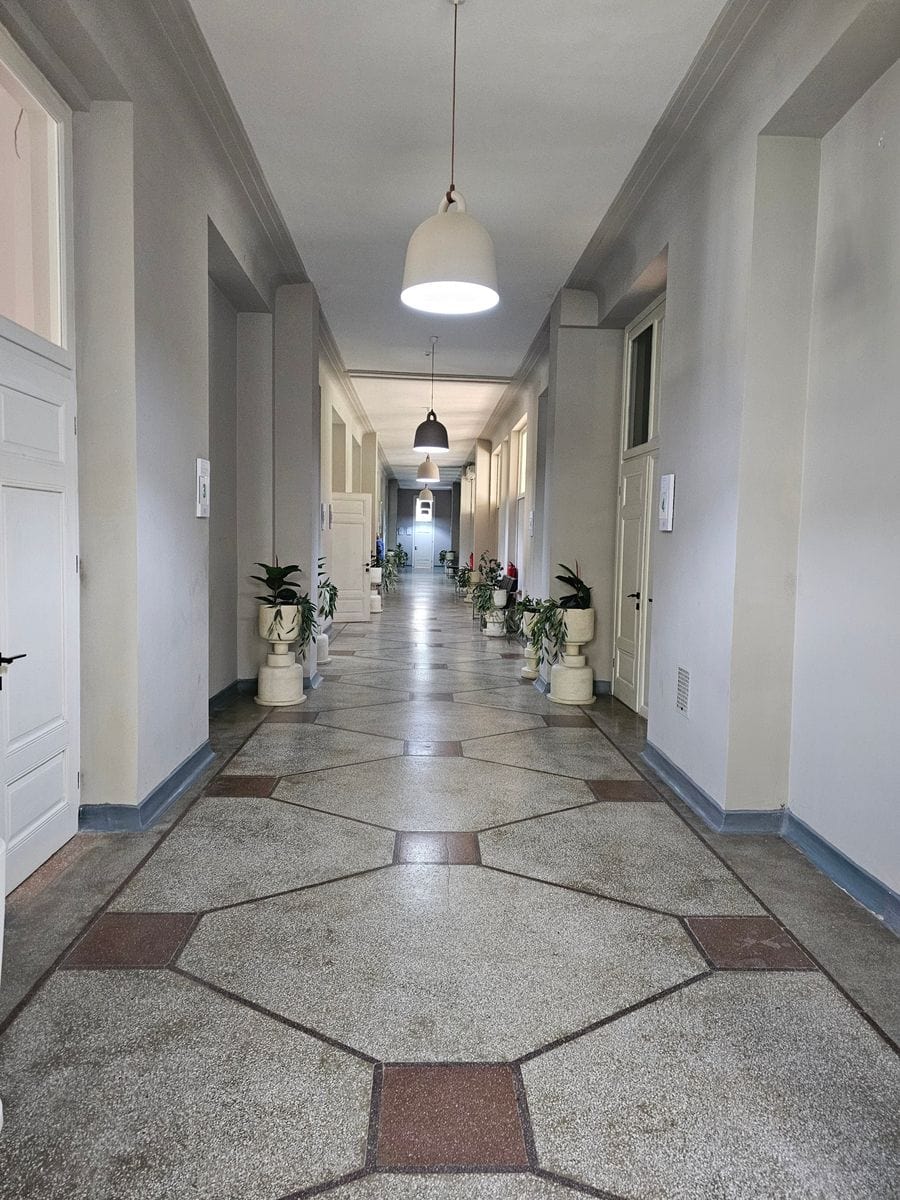
The rooms containing the baths were also quite dated and, for me, didn’t feel particularly inviting or comforting. If you’re expecting beautifully designed spa interiors, soft lighting and a luxurious atmosphere, this probably isn’t the place. I’d personally recommend seeking out sulphur baths at Chrelo Abano or one of the other bathhouses.
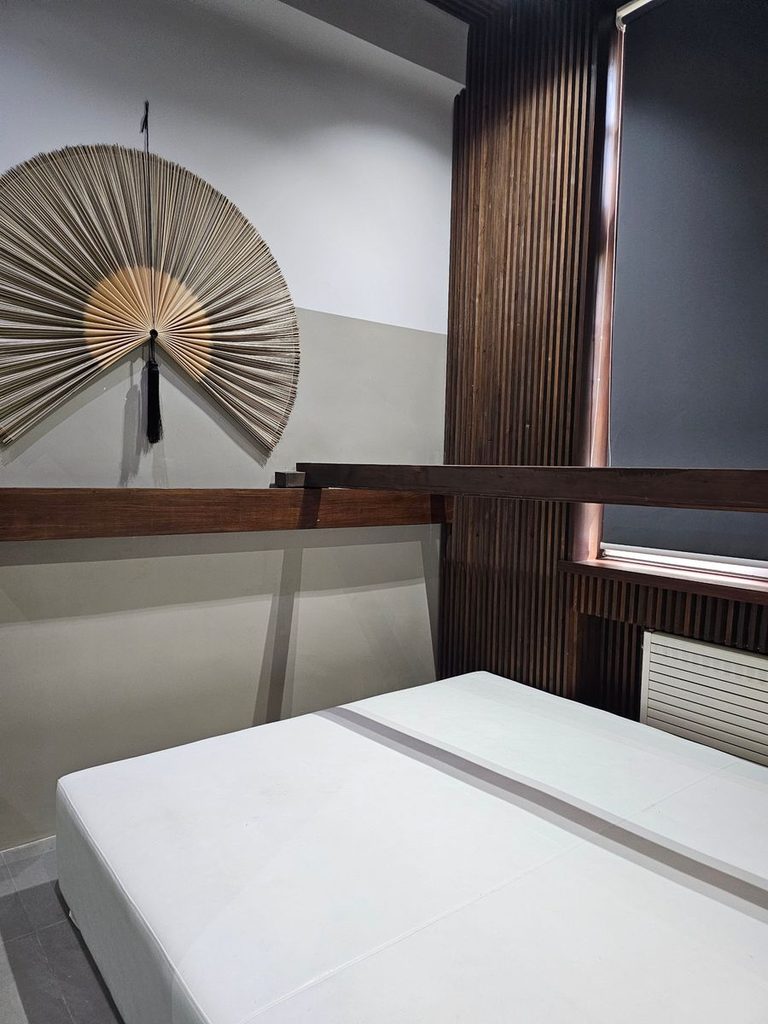
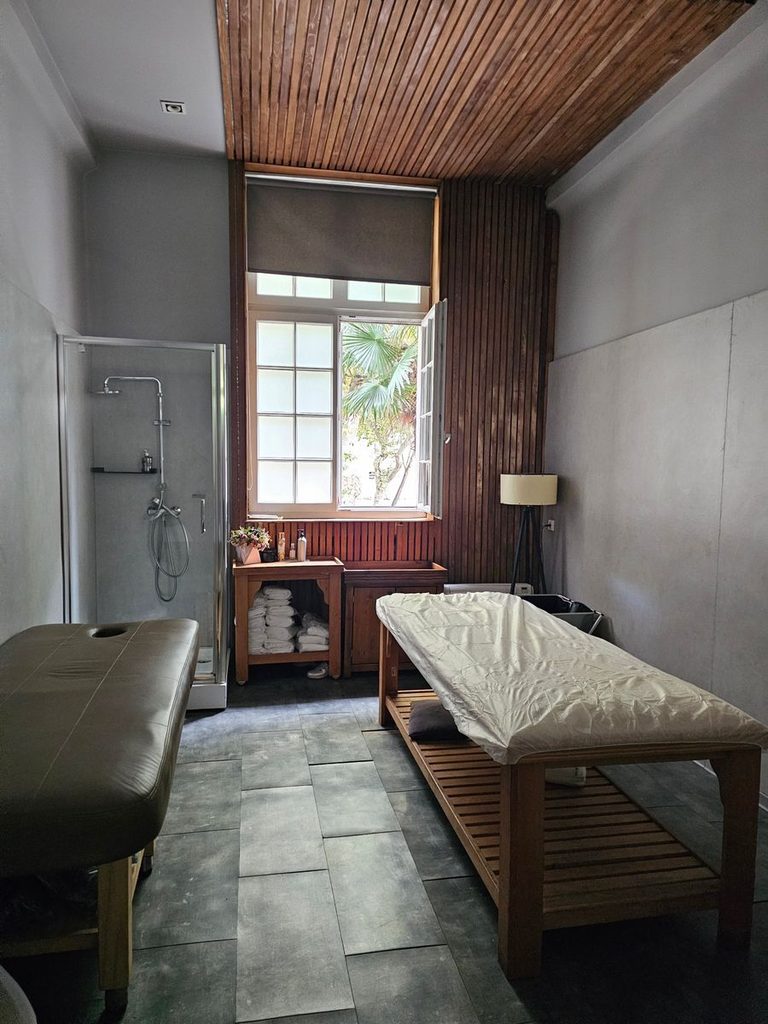
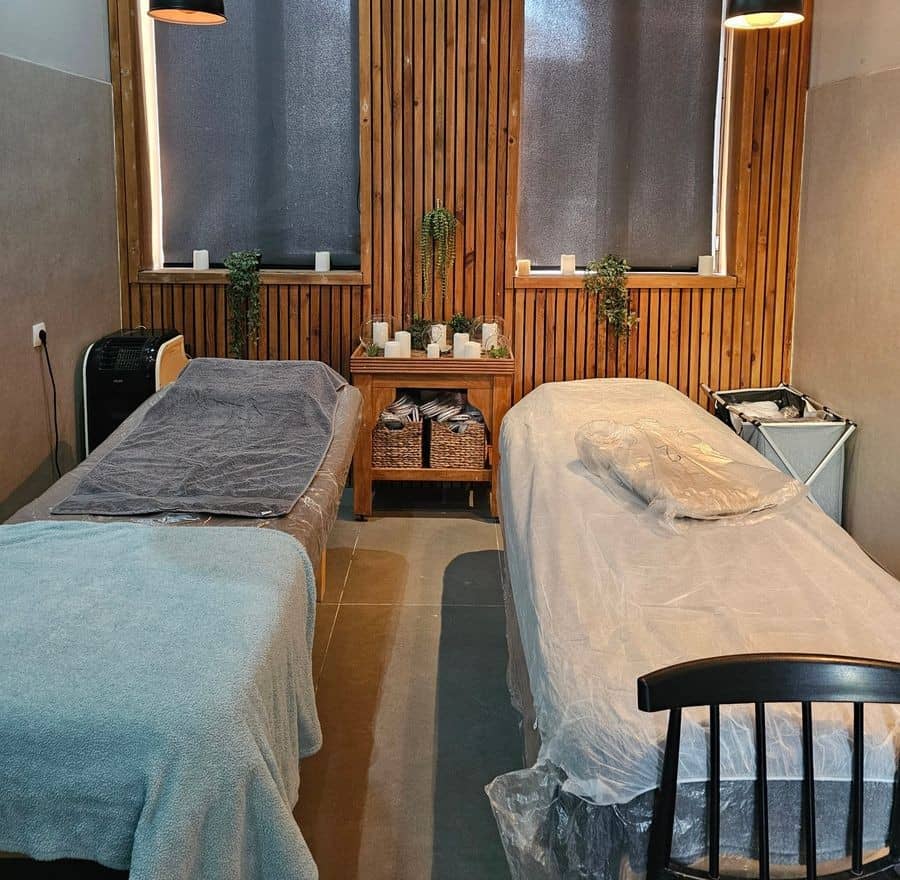
There was, however, a noticeable contrast when it came to the massage rooms. These were much more in keeping with what you might expect from a traditional massage space, providing a more comfortable and relaxing environment. If I were booking a massage, I’d be happy with these rooms.
When I visited, there also seemed to be quite a lot of refurbishment work taking place around the resort. It gave me the impression that things were evolving, and I could see considerable potential here.
With Tbilisi attracting increasing numbers of international visitors, I can imagine the Balneological Resort becoming an important focal point for therapeutic treatments and wellbeing in the city.
The staff and language
I found the staff pleasant, although English was limited during my visit. My physiotherapist was the exception: he spoke excellent English, was attentive and knowledgeable, and made the treatment experience particularly positive.
My experience of communication was therefore mixed. If you’re visiting for medical consultations or treatments, it may be worth checking language arrangements beforehand, particularly if you need to explain a specific health condition.
How much does it cost?
These are the approximate prices I paid when I visited in October:
- Doctor consultation and ultrasound: 100 GEL (approx. £30)
- Medical massage: 48 GEL (approx. £14)
- Mud treatment: 58 GEL (approx. £17)
- Physiotherapy: 48 GEL (approx. £14)
- Private sulphur bath: 39 GEL (approx. £11.50)
Prices and exchange rates change, so check directly with the resort before booking.
Recommended Tbilisi Hotels
Looking for a hotel in Tbilisi?
These are hotels I have personally stayed at and recommend:
Old Tbilisi
Blue Fox Hotel (££)
Chugureti
Design Hotel & Private Spa (£)
Bellhop Hotel (£)
Vera
Stamba Hotel (££) – I didn’t stay here, but visited and it’s beautiful. It’s on my list of places to stay next time.
Is Tbilisi Balneological Resort worth visiting?
What I particularly liked was the combination of traditional therapeutic treatments and medical services. It offers something quite different from the city’s more conventional spas and private sulphur bathhouses. I think it suits two kinds of visitor:
- If you want a spa treatment: You don’t need to see a doctor first. You can simply book a massage, facial or one of the more unusual treatments.
- If you want to combine spa and medical care: This is where the resort really stands out. If you’re interested in physiotherapy, rehabilitation or therapeutic massage, you can see a doctor, get a diagnosis and follow a structured programme in one place. Be clear about your medical needs when booking, especially if your condition is complex or you need English, as my doctor spoke little English.
Quick Links for Tbilisi
- Free walking tours (you choose what to pay): use Free Tour
- Guided tours and experiences: use Viator or Get Your Guide
- Book accommodation: use booking.com
- Book Flights: I like to use Expedia
- Book buses and trains: Use Tre
- Best Insurance for pre-existing health conditions: See here
- Airport Transfers: click here to pre-book airport transfers
- Money: I use Wise for ease for transferring currencies.
- Stay Connected: get Airolo eSIM or buy a local sim card, they’re very cheap.
See all my travel resources here.
Practical information: booking, language and location
Location: 9 Vakhtang Gorgasali Street, Abanotubani, Old Tbilisi, Tbilisi, Georgia.
The resort is within the historic Old Town, close to the traditional sulphur bath district. It’s accessible by taxi or public transport, with Avlabari metro station nearby. You can also walk from the Old Town, depending on where you’re staying.
Opening hours: Open daily, Monday to Sunday, 10:00 am–9:00 pm
Website: https://balneo.ge/
Making an appointment: You can contact Tbilisi Balneological Resort via WhatsApp to arrange an appointment. However, don’t expect an immediate response! It took me three attempts before I managed to get through to someone. My advice is to be persistent if you don’t hear back straight away.
Medical disclaimer: This article is based on my personal experience. It is intended for information and general interest only and should not be taken as medical advice or a recommendation for any particular treatment, hospital or healthcare provider. Everyone’s medical needs and experiences are different. Always seek advice from a suitably qualified healthcare professional about your own health and treatment options.
Frequently asked questions
Can you stay at Tbilisi Balneological Resort?
No. Despite the name, it’s a day spa and medical centre with no accommodation. You book treatments and go home or back to your hotel afterwards.
Do I need a doctor’s appointment to visit Tbilisi Balneological Resort?
No. You only need to see a doctor if you want medical treatment such as physiotherapy or rehabilitation. If you simply want a massage, facial or other spa treatment, you can book it directly.
How much do treatments cost at Tbilisi Balneological Resort?
Costs vary depending on the treatment. You can ask for an up to date price list.
Do they speak English at Tbilisi Balneological Resort?
Not reliably. English was limited during my visit. My doctor spoke little English but fluent Russian, while my physiotherapist spoke excellent English. If you need to explain a specific health condition, check language arrangements before you go.
How do I book an appointment?
You can contact the resort via WhatsApp. Don’t expect an instant reply: it took me three attempts to get through, so be persistent.
Is it a normal spa?
No. It feels more like a combination of a medical institution with spa.
Is Tbilisi Balneological Resort accessible?
Partly. Treatment rooms are on different floors, some of them upstairs, and there is no lift. The building is large with long corridors. If stairs are difficult for you, ask when booking where your treatment will be.
Can tourists use Tbilisi Balneological Resort?
Yes. Anyone can book spa treatments, and visitors can also see a doctor for a consultation and treatment programme, as I did.
About the Orchids to Olives Wellbeing Collection
Wellbeing Places on Orchids to Olives are places that feel particularly supportive for midlife women, especially those seeking calm, nature and space to rest.
Many readers are navigating menopause, chronic health conditions or life transitions, so these places are chosen for their gentle pace, safety for solo travellers, and environments that allow the nervous system to settle.
Join the Orchids to Olives monthly newsletter for gentle travel inspiration
For restorative destinations and thoughtful solo travel ideas if you’re navigating low energy, chronic health issues or simply want a gentler way to travel.
Georgia Posts
Tbilisi Solo Travel for Women Over 50: A Slow-Travel Guide
Tbilisi Sulphur Baths: Chrelo Abano vs Sulphur Bathhouse No. 5 (Solo Traveller Review)
Wellbeing Places
Explore all Wellbeing Place Guides
Gentle & Chronic Illness Solo Travel guides
Solo Travel to Morocco with a Chronic Illness: A Midlife Woman’s Guide
Solo Travel to Penang: A Safe, Affordable Island for Midlife Women with Chronic Illness
Travelling Solo with Functional Neurological Disorder (FND): From Fear to Freedom