6 Mind–Body Books That Changed How I Live With Chronic Illness and FND
The books I turned to when doctors couldn’t give me answers
These 6 books changed the way I understood chronic illness
Disclosure: This post contains affiliate links, which means I may earn a small commission if you buy through them, at no extra cost to you. Last updated: 26/12/25.
Living With an Unexplained Neurological Condition – FND
Faced with a chronic neurological condition that doctors struggled to explain, I was left searching for meaning as much as answers.
Eventually, I was diagnosed with Functional Neurological Disorder (FND) — a condition that is still poorly understood, often associated with stress or trauma, and offers few clear treatment pathways.
When Depression Came Before Answers
My symptoms appeared in the aftermath of a sudden and unexpected breakup. I fell into a deep depression, struggling with a body that seemed to be betraying me and a heart that had been deeply shaken.
At that point, I was simply trying to survive. I needed something to help me stay present, to get through the days, and to find a way out of the darkness I found myself in.
Depression and Turning to Spiritual Books for Support
I turned to spiritual teachings to help me endure the darkest days, finding presence and relief — sometimes only for brief moments — but enough to offer glimmers of light that gradually helped me find a way through. These experiences also became the foundation of what I believe will be a long-lasting spiritual practice.
During this time, I devoured books that explored presence, awareness, and the mind beyond the body. They didn’t directly address physical healing, but they helped me endure being in my body. For a while, that was enough and all I could manage.
I’ve explored these books in another post.
➡️ See Post on spiritual books that helped me through depression
This way of thinking wasn’t entirely new to me. I’ve practiced yoga, breathwork, and other mind–body techniques for many years.
But it’s a whole different matter when your body and mind are no longer just subjects of practice — when they are communicating urgent messages you can’t ignore. That’s when I began to turn more seriously to books on the mind–body connection.
Stress, Trauma, and the Nervous System
As I slowly found more emotional ground, I began to reflect more honestly on what had been happening in my life.
It became difficult to see my symptoms as entirely separate from the shock of that loss — or from the years of accumulated stress that came before it: a difficult 20 year marriage that ended when I was 40, juggling being a mother with different jobs, long-standing self-doubt and anxiety, and the effort of holding things together for far too long in silence.
I didn’t arrive at the idea of stress lightly, nor did I see it as blame. Instead, I became curious.
If the nervous system holds memory, experience, and threat, what happens when it has been carrying too much for too long?
And if stress played a role in my neurological condition, how could I support myself in the process of healing?
Understanding the Mind–Body Connection
That curiosity led me to books exploring the mind–body connection. They didn’t offer simple explanations or quick fixes, but they gave me language, perspective, and a framework that felt compassionate rather than reductive.
These books have helped me make sense of my experience and have deeply shaped how I understand — and live alongside — my physical condition today.
There are many books written on similar themes, but these are the ones I’ve found particularly helpful. They’ve offered hope — not in the sense of promises or cures — but in giving me a way forward in how I relate to and work with my body.
The 6 Mind–Body Books That Helped Me Most
These are the books that have helped me make sense of my body, nervous system, and the mind–body connection.
I often return to them for guidance and insight — and I hope you find something helpful for your own journey.
This post contains affiliate links to Amazon & Bookshop
Bookshop.org – supports independent booksellers globally
The Myth of Normal: Trauma, Illness and Healing in a Toxic Culture — by Gabor Maté
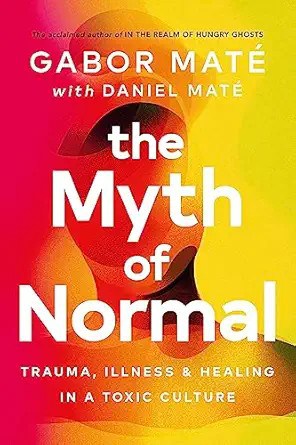
The Myth of Normal was the first book I read and it fundamentally shifted how I understand health and illness. Gabor Maté explores how chronic stress, trauma, and disconnection are woven into everyday life — and how our bodies often carry the cost of adapting to environments that aren’t truly supportive.
What resonated most for me was the way Maté reframes illness as a response to prolonged pressure. Rather than asking “What’s wrong with you?”, he invites the question “What happened to you?” — a perspective that felt both validating and compassionate.
The Myth of Normal isn’t a book about quick fixes or curing disease. It’s an invitation to look honestly at the social, emotional, and relational contexts we live within, and how these shape the nervous system over time. I found it especially helpful in making sense of how long-term stress and self-suppression can quietly influence physical health.
Recommended if: you’re living with chronic illness or burnout and want a broader, humane understanding of stress, trauma, and the mind–body connection — without blame or simplistic answers.
📖 Buy The Myth of Normal on BookShop
📖 Buy The Myth of Normal on Amazon
A Therapeutic Tool – Compassionate Enquiry
Reading The Myth of Normal also led me to explore Gabor Maté’s therapeutic approach, Compassionate Enquiry.
I found it especially helpful in gently exploring the roots of personal patterns and beliefs, while remaining present with what was arising in the moment.
It offered a way of meeting difficult thoughts, emotions, and bodily responses with curiosity and compassion
My Compassionate Enquiry therapist Lizzie Reumont is featured on the Orchids to Olives Nomadic Wellbeing Services.
When the Body Says No — by Gabor Maté
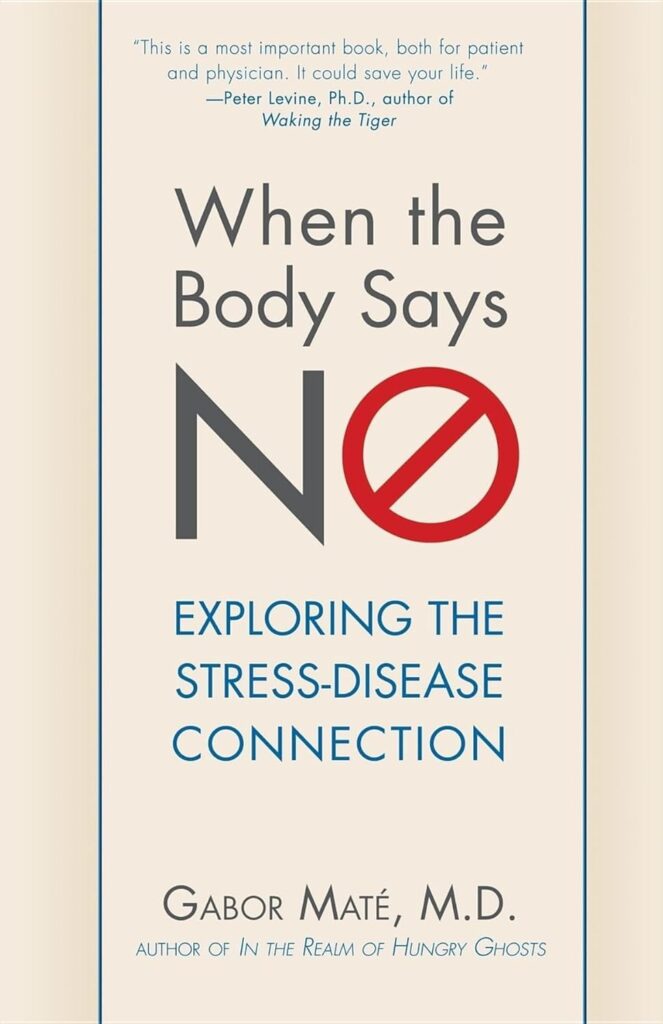
When the Body Says No explores how chronic stress, emotional suppression, and long-term patterns of self-sacrifice can influence physical health.
I found Gabor’s discussion of why women are disproportionately affected by autoimmune conditions particularly striking — including illnesses such as multiple sclerosis. This perspective helped me contextualise my own symptoms within broader social and emotional patterns, rather than seeing them as isolated.
Rather than offering blame or simplistic explanations, When the Body Says No invited a deeper curiosity: how lifelong patterns of coping, caregiving, and emotional restraint might quietly shape the nervous and immune systems over time.
This book may resonate if you’re living with chronic or unexplained symptoms and are beginning to wonder whether your body may be responding to years of accumulated stress rather than a single event or diagnosis.
📖Buy When the Body Says No on BookShop
📖 Buy When the Body Says No on Amazon
Cured: The Life-Changing Science of Spontaneous Healing — by Jeffrey Rediger, M.D
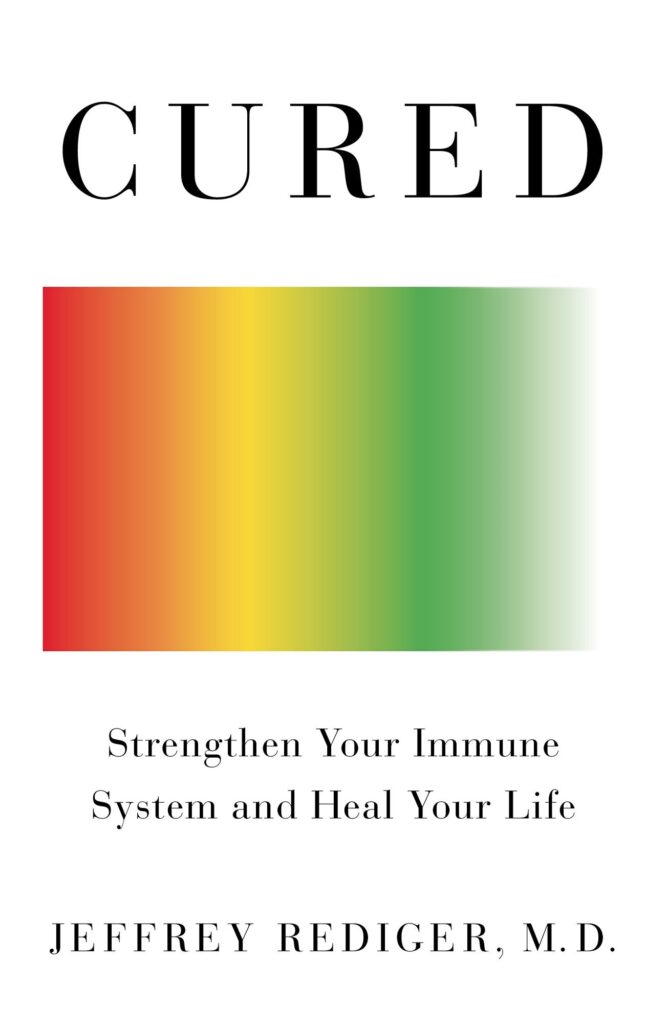
This is actually one of my favourite books – it’s fascinating. I am currently rereading.
Cured explores cases of unexpected healing through the lens of neuroscience, psychology, and medicine, without dismissing complexity or uncertainty. What I appreciated most about this book is its balance — it doesn’t promise cures, nor does it reduce healing to positive thinking alone.
Rediger looks at what seems to change in people who experience profound shifts in their health: identity, belief systems, emotional processing, purpose, and nervous system regulation. Reading this helped me see healing less as something to force and more as something that can emerge when internal conditions shift — sometimes subtly, sometimes dramatically.
For me, Cured offered reassurance that the body is not fixed or broken, but responsive. It strengthened my sense of possibility — not in the sense of guarantees, but in understanding that change can happen in ways medicine doesn’t yet fully measure.
This book may be especially meaningful if you’re living with chronic or unexplained illness and want a scientifically grounded exploration of healing that leaves room for hope, complexity, and individual experience.
You Are the Placebo — Dr. Joe Dispenza
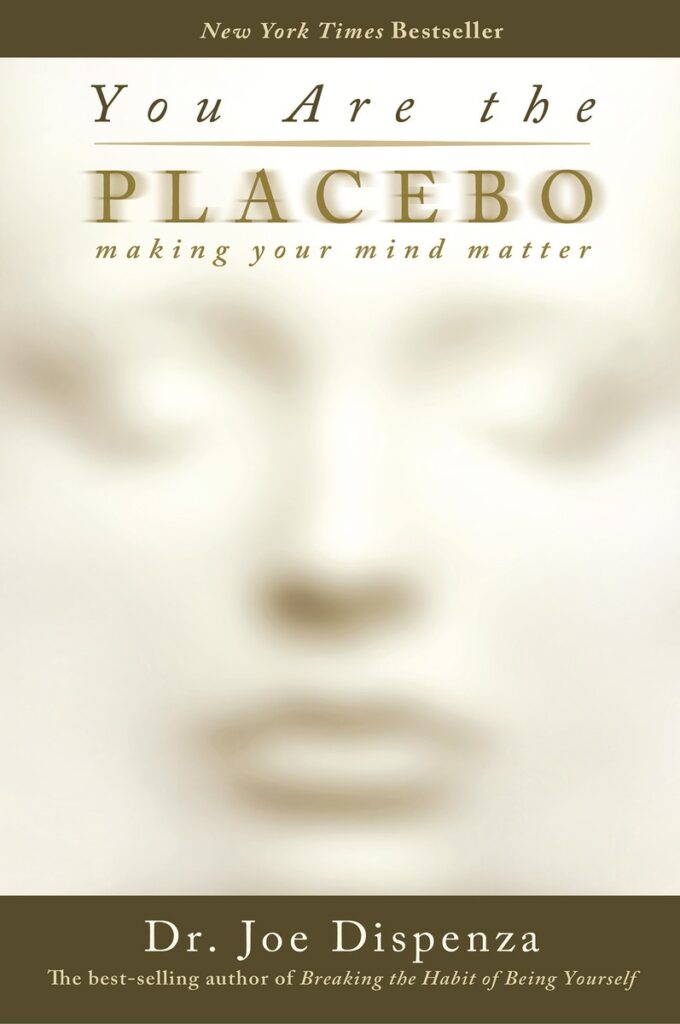
In You Are the Placebo, Joe Dispenza explores the idea that the mind — especially our expectations, beliefs, and internal narratives — can meaningfully shape our experience of health and illness.
He combines neuroscience, his own personal story of declining major back surgery in favor of mind‑focused practices and case studies to show that belief itself may contribute to measurable changes in the body.
What I love about You Are the Placebo is how it encouraged me to pay attention to the relationship between my thoughts, emotions, and physical experience. It invites reflection on how habit, self-talk, and awareness influence the nervous system and our sense of what’s possible.
It expanded my thinking about self‑agency in relation to my physical symptoms and has helped me to be significantly more conscious of repetitive, potentially harmful thoughts to my body’s healing process and how to change them.
This book may resonate if you’re interested in how belief, expectation, and attention can influence bodily experience — especially when approached with nuance and self‑compassion rather than pressure for dramatic results.
📖Buy You Are the Placebo on Bookshop
📖 Buy You Are the Placebo on Amazon
Accompanying Meditation
Joe Dispenza also provides an audio meditation to complement the book’s teachings. I’ve found it very helpful to listen to regularly — it reinforces the practices and ideas in the book and offers a practical way to engage with the concepts in daily life.
Anatomy of the Spirit: The Seven Stages of Power and Healing by Caroline Myss
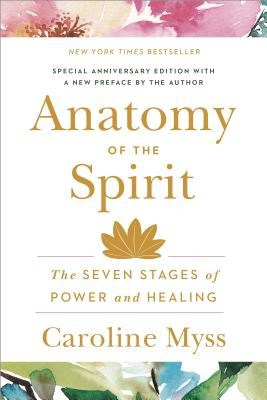
Anatomy of the Spirit explores the connection between our emotional, psychological, and spiritual lives and how they may influence physical well-being. Caroline Myss presents a model of the seven energy centers – chakras, drawing on ancient wisdom and modern insights to help understand patterns of energy, health, and imbalance.
For me,Anatomy of the Spirit offered a practical way to understand the chakra system and work with energy, which resonates deeply with me as I am fascinated by energy work and reiki.
It also highlighted the spiritual dimension of healing — how cultivating awareness, presence, and alignment in mind, body, and spirit can support personal empowerment and resilience. It reinforced the importance of inner awareness and conscious self-care.
This book may resonate if you’re interested in exploring how emotional, spiritual, and energetic patterns interact with physical health, and in cultivating a more conscious, empowered relationship with your body and spirit.
📖Buy Anatomy of the Spirit on Bookshop
📖 Buy Anatomy of the Spirit on Amazon
Beating Multiple Sclerosis: Empowering Stories of Self‑Healing and Thriving by Agota Nawroth
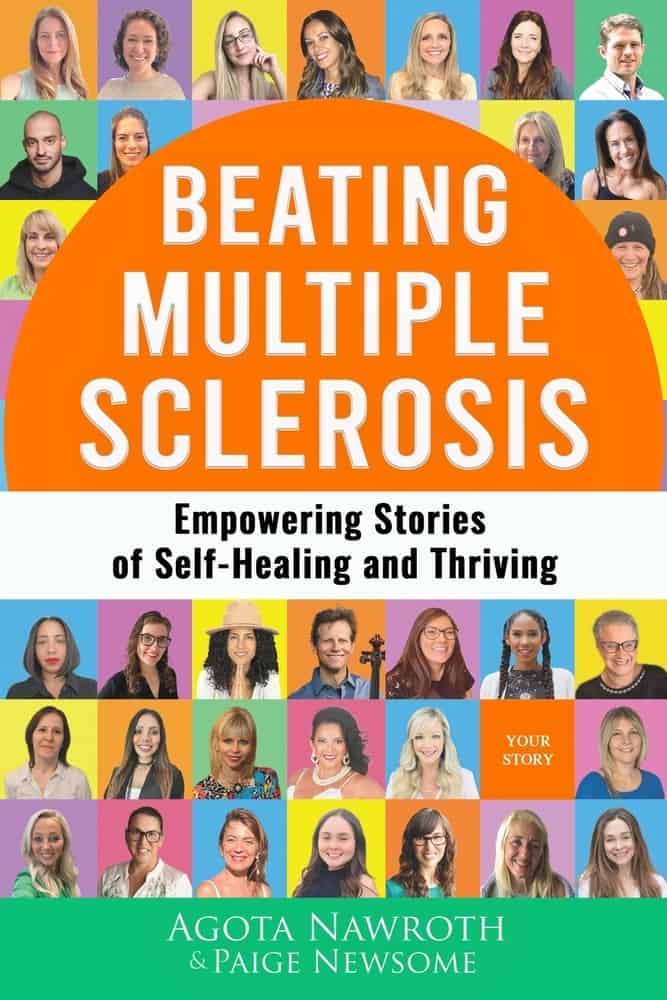
For a long time, I thought I might have multiple sclerosis — my symptoms and the lack of clear answers from doctors made the possibility feel very real. I read Beating Multiple Sclerosis because regardless of whether at some point down the road I was diagnosed with MS or not, I wanted to do the very best for my body. I told myself that, regardless, adopting these mindsets, dietary approaches, and practices could only be beneficial and help me in the long run.
What resonated most was the book’s emphasis on personal agency — the ways in which mindset, lifestyle, and self-awareness can influence how we live with chronic conditions. Like other books I’ve mentioned, such as Cured, it isn’t about promises or cures, but about understanding your own capacity to respond, adapt, and create space for wellness, no matter the diagnosis.
This book may resonate if you’re living with MS, another chronic condition, or simply want inspiration from stories of resilience, self-discovery, and empowered living.
📖Buy Beating Multiple Sclerosis on Bookshop
📖 Buy Beating Multiple Sclerosis on Amazon
Final Thoughts
There are many books on healing and the mind–body connection, and I expect I’ll read more. But these are the ones that truly resonated with me — offering insight, perspective, and hope for living with a chronic condition.
I hope they may inspire or support you in your own journey.
I’d love to hear from you: have you read any of these, or are there other mind–body books that have inspired or supported you? Please share your thoughts in the comments below.
Blogs in the making
Join my monthly newsletter on wellbeing places for midlife travellers, interviews with solo travellers who have chronic health issues & much more…
Sign up for all updates & blog posts
Related Blog Posts:
Spiritual Books That Supported Me Through Depression and Change
Travelling Solo with Functional Neurological Disorder (FND): From Fear to Freedom
My descent into darkness and healing
Happy Stones: unique cottages in Sri Lanka’s sublime hill country
A Budget Ayurvedic Retreat in Sri Lanka for the Ultimate Detox: Nature Lanka
What happens in a Moroccan Hammam?
Dar Al Hossoun’s earthy Hammam & Spa in Taroudant
I’d Love to Hear From You!
Are you a midlife traveller who loves to travel solo? Or are you thinking about it? Do you have a favourite wellbeing place? Feel free to share your thoughts or experiences in the comment section below.
If this post resonated with you, please consider sharing it with someone who might need this kind of encouragement.
Let’s keep in touch.
Join me for all the latest blog posts, reviews and updates.
Orchids to Olives
Journeys of self-discovery, wisdom, healing and friendship