Solo Travel to Morocco with a Chronic Illness: A Midlife Woman’s Guide
Moroccan Journeys
Finding Ease and Adventure as a Solo Traveller with Health Challenges
This post contains affiliate links. If you purchase through these links, I may earn a commission at no extra cost to you. Thank you for your support.
What would it feel like to wander colourful medinas, honouring your body every step of the way?
Imagine pausing in a sunlit courtyard, the scent of spices drifting through the air, feeling both the thrill of discovery and the calm of listening to yourself.
Morocco can be done your way – a vibrant tapestry where adventure and self-care walk hand in hand.

This guide will show you how Morocco can be a wonderful destination for midlife women – whether you’re managing a chronic health condition, navigating the changes of menopause, or simply seeking a gentler pace of travel.
Contents
- Can I really manage Morocco?
- Why Morocco Works for Midlife Women with Chronic Illness
- “But Isn’t Morocco Non-Stop Hassle?”
- Travelling to Morocco with Functional Neurological Disorder (FND)
- Where I’ve Travelled in Morocco (Taroudant, Marrakech, Ouarzazate, Essaouira)
- How to Choose Your Destinations in Morocco
- Accommodation
- Transport
- Activities
- Hammams: A Very Moroccan Wellness Ritual
- Massage & Wellness Treatments
- Herbal Remedies
- Food in Morocco
Can I really manage Morocco?
Morocco is a country that awakens the senses: vibrant souks alive with colour, ornate palaces steeped in history, and sweeping desert landscapes.
Wellness weaves quietly through daily life — from the ritual of mint tea to the restorative tradition of hammams that invite pause and self-care.
But if you’re a woman in midlife living with a chronic health condition and/or menapause, you might wonder: can I really manage Morocco? Will the heat, the pace, or the crowds be too much?
The good news is, you don’t need boundless energy or perfect health to enjoy Morocco. With thoughtful planning, a gentle pace, and permission to travel at your own rhythm, Morocco can be both enriching and manageable.
This guide shares the insights and choices that helped me enjoy my Moroccan journeys with confidence
Shape your journey with care, and Morocco will meet you just as you are
Why Morocco Works for Midlife Women with Chronic Illness
- Close to Europe ✈️
If you’re travelling from the UK or mainland Europe, flights are short — often under 4 hours. That means less travel fatigue and more energy for your first days on the ground. - Flexible pace
Morocco offers a spectrum of experiences to match your energy levels. You can soak up the buzz of the medinas, then retreat to the calm of a riad courtyard, a coastal town, or a peaceful garden. - Warm hospitality
Moroccan culture is rooted in generosity and kindness. As a 50 year old solo traveller, I often found people happy to help. That made navigating health challenges feel less stressful. - Wellness woven in
From hammams and soothing spa treatments, to mint tea Morocco naturally invites you to pause, replenish, and slow down.
Important note: As always, this post shares my own perspective on why Morocco can be a good destination if you’re managing health issues. Of course, everyone’s health needs are different, so it’s important to adapt ideas to what feels right for you.
“But Isn’t Morocco Non-Stop Hassle?”
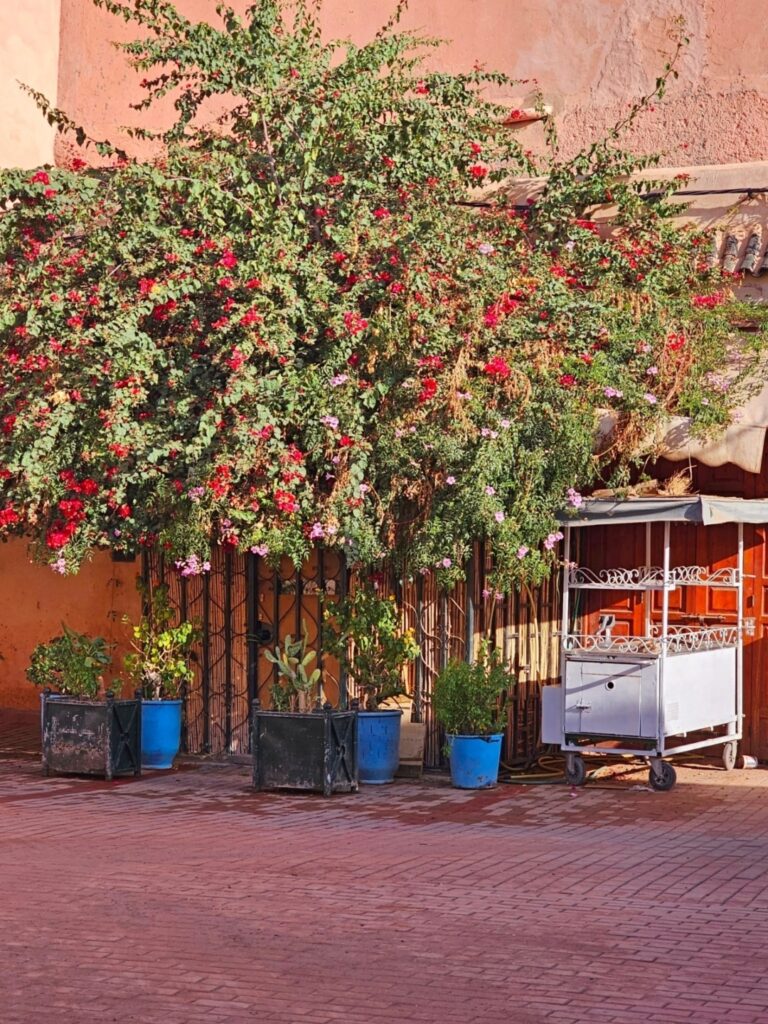
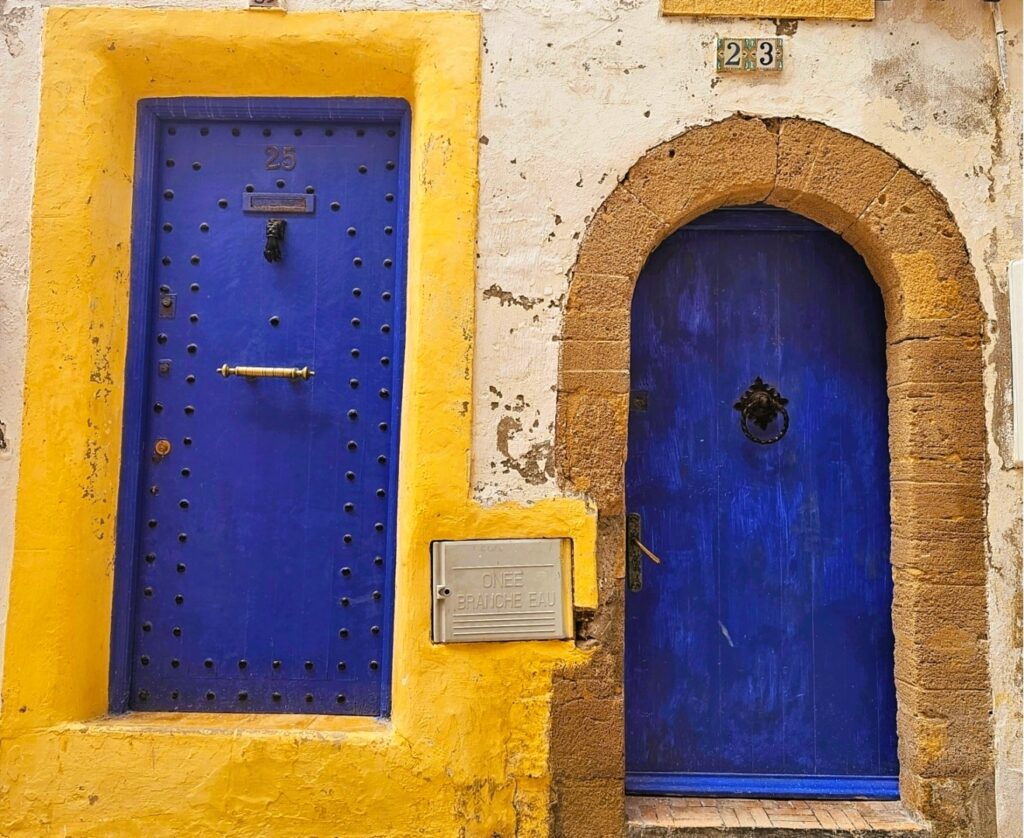
I’d read this too before travelling — that Morocco could feel overwhelming with constant hassle. But my own experiences were very different.
Most of the time, I found the atmosphere relaxed and easy-going. A polite smile, a gentle “no, thank you,” and walking away from shop owners sent the right message. Or simply ignore them, I know it feels rude, but honesty in busy places shop owners are used to it.
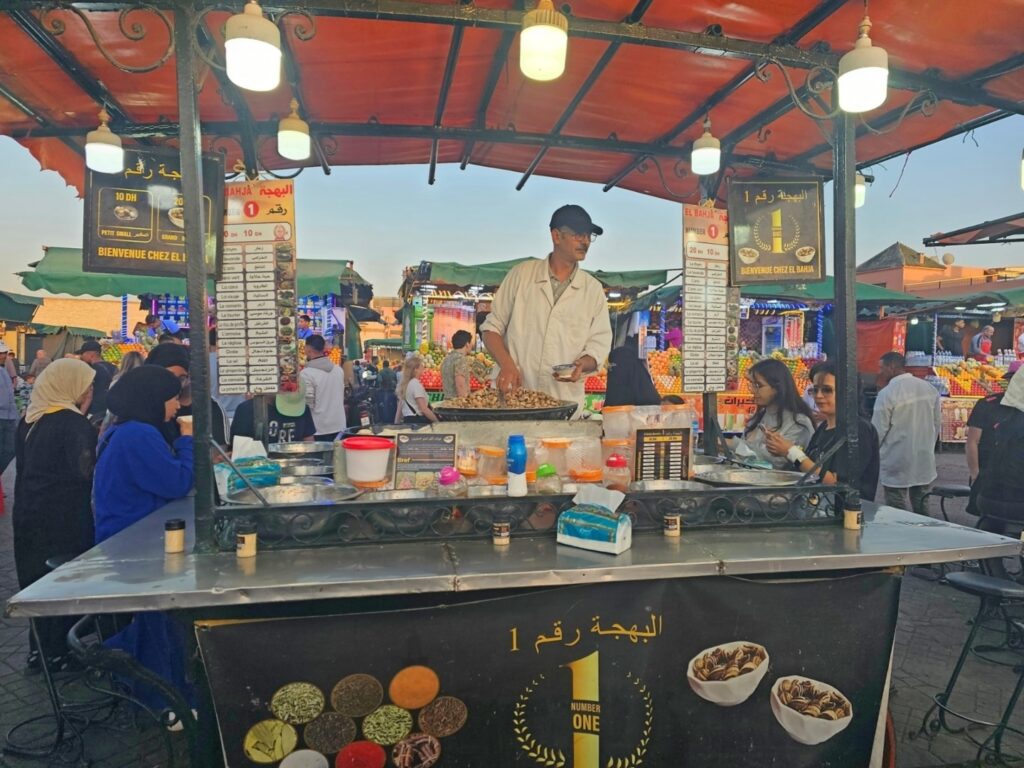
The only time the attention felt a little too much was around some of the street food stalls in Marrakech’s central Djemaa el-Fna square, so I simply avoided eating there and found quieter spots instead.
Maybe it’s my age, or the fact I travelled at a gentler pace, but overall Morocco didn’t feel stressful.
Travelling to Morocco with Functional Neurological Disorder (FND):
My Experience as a Midlife Solo Woman
For the past three years, I’ve been travelling while living with Functional Neurological Disorder (FND).
Learning how to explore the world slowly, taking my health into consideration, with rest built in, has been both a challenge and a joy. I’ve learnt a lot about myself and slow travel.
Morocco has become a destination I treasure — so much so that I’ve visited twice in a year:
- Two months solo in Taroudant, Marrakech & Ouarzazate.
- Two weeks with a friend in Essaouira & Marrakech
These trips taught me that Morocco can be a wonderful and accessible place for women in midlife who live with chronic health conditions. But it does require mindful planning and self-kindness.
Where I’ve Travelled in Morocco
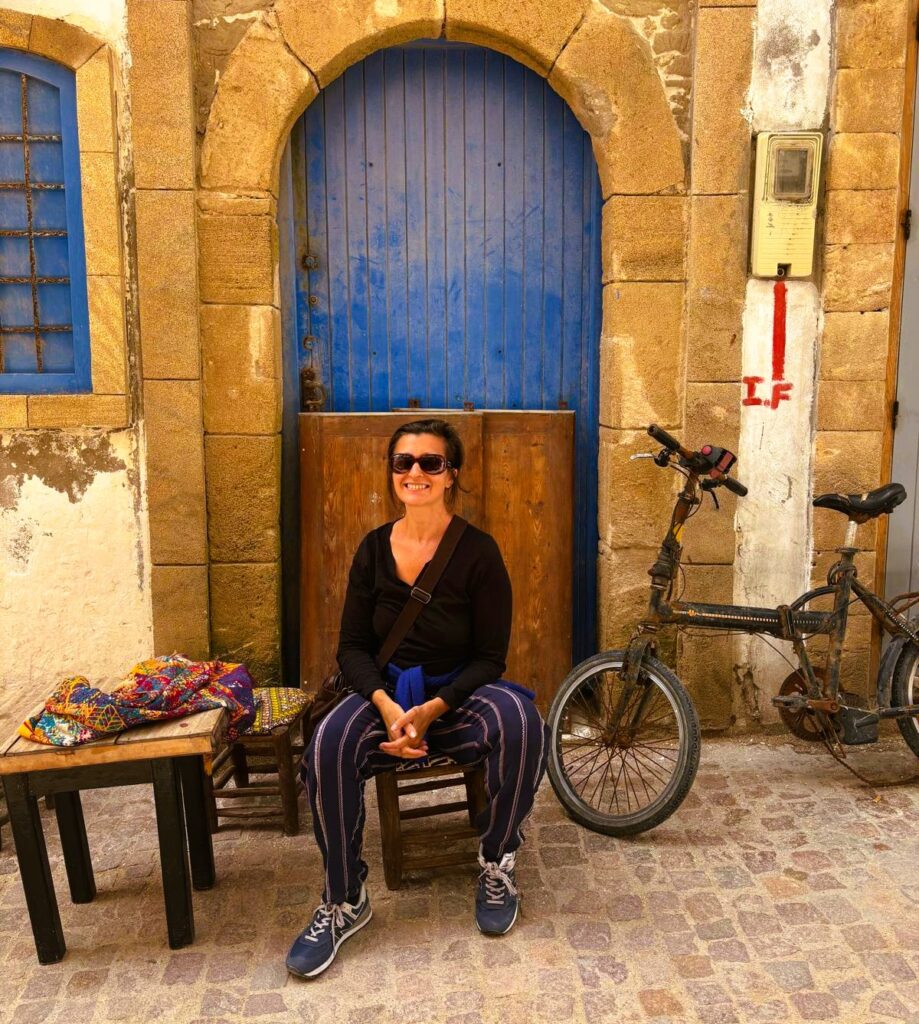
This post offers insight into what it’s like travelling in Morocco generally with a chronic illness (rather than a detailed city-by-city guide). So far, my own experience is limited to four southern locations: Taroudant, Marrakech, Ouarzazate, and Essaouira which I’ll refer to throughout the post, but the general advice would be the same for the rest of the country.
I hope to explore more of this vibrant country soon, but here’s a brief overview of what I’ve discovered so far about each of these destinations:
Taroudant: My Gentle Introduction to Morocco
Taroudant was my very first Moroccan stop — and I’ll admit, I was nervous. Travelling with health issues can feel daunting, and I’d read plenty about Morocco being challenging for solo women. Part of me wondered if it might be a bad idea.
Since my legs are sensitive to cold (due to FND), I knew I wanted to avoid the chill of northern Morocco in autumn, so I focused on the south. After lots of research (and reassuring chats with a friend who had spent a lot of time in Morocco), I decided on Taroudant — and ended up staying for a whole month.
Taroudant is a smaller, calmer city compared to Marrakech: easy to navigate, less overwhelming, and wonderfully slow in rhythm. It gave me a gentle, confidence-building introduction to Moroccan life. The city is very much “off the tourist trail” — a working town with an authentic, everyday feel.
That said, there isn’t a huge amount to do. Most travellers spend only a day or two here, and if I hadn’t been working alongside my stay, I think I might have gotten a little restless. But as a soft introduction into Morocco, it was exactly what I needed: calm, manageable, and deeply reassuring.
➡️ Read: Warm & Welcoming Taroudant
Marrakech: Vibrant, Exciting, and Manageable
Marrakech is vibrant, stimulating, and sometimes a little overwhelming — but oh my goodness, I loved it! The colours, the chaos, the energy… it’s intoxicating. It’s everything you imagine it to be, and then some.
In Marrakech, I quickly learned the importance of balance. Staying in a riad with a peaceful courtyard became my sanctuary. After wandering the souks or soaking up the atmosphere in Jemaa el-Fnaa, I could retreat, rest, and reset — and that made all the difference.
Alternatively, visiting one of Marrakech’s calmer gardens provided a quiet breathing space (see Activities later in the post).
Marrakech will always be lively — but with a peaceful base and regular pauses in these gentler spots, it becomes a city you can truly savour.
Ouarzazate: Gateway to the Desert
Ouarzazate is often described as the gateway to the desert — and that’s exactly what it is. A base.
The wide streets and sunshine made it manageable for slower days, but to be honest, I didn’t enjoy it. I found the town itself rather dull, and I couldn’t wait to leave. I stayed longer than I would have liked because I couldn’t cancel my accommodation, which was a lesson in planning flexibility!
Most travellers use Ouarzazate as a springboard — for desert adventures, visiting Aït Ben Haddou, or joining tours. That part is brilliant. But I wouldn’t choose to make it my main base for a long stay again.
Essaouira: Restorative Coastal Charm
Essaouira completely stole my heart. The sea breezes, the coastal walks, the fresh fish, the slower pace — it was exactly what I needed. It feels almost like a French seaside town blended with Moroccan charm.
The medina is gorgeous, filled with cafés, restaurants, boutiques, and yoga studios. It feels boho, Mediterranean, and Moroccan all at once, with a relaxed, creative energy.
I travelled here with a friend, which was wonderful, but I’d return in a heartbeat solo. Essaouira feels safe, easy, and deeply restorative — the kind of place where you can truly breathe.
Morocco: A Rich Tapestry of Sights, Scents, and Sounds
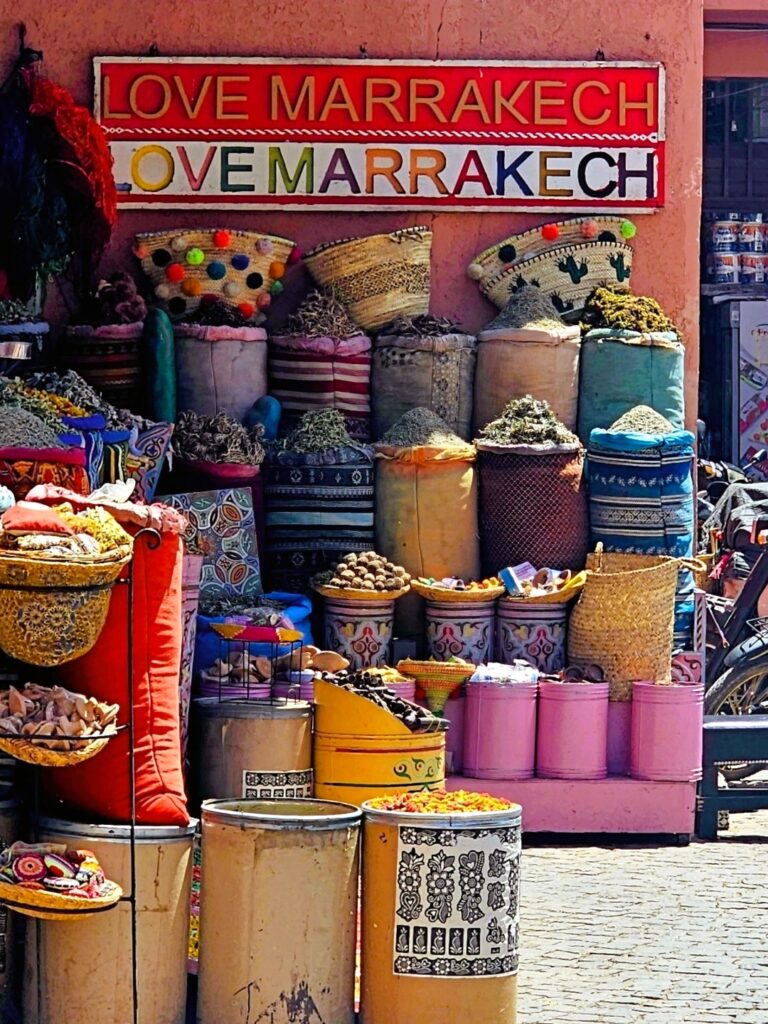
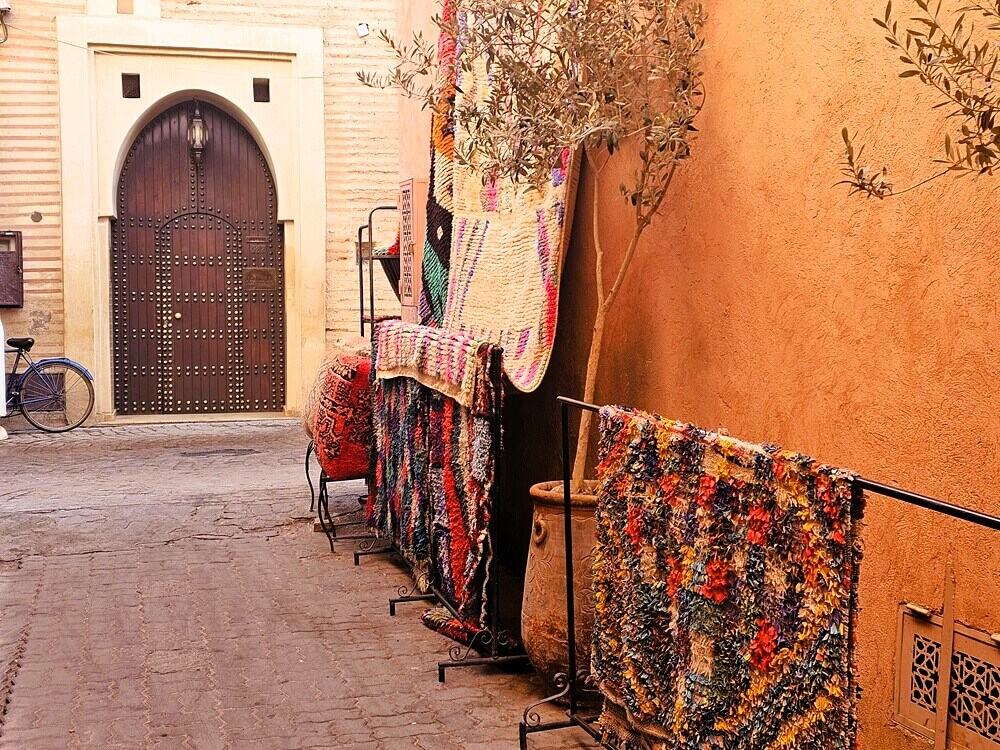
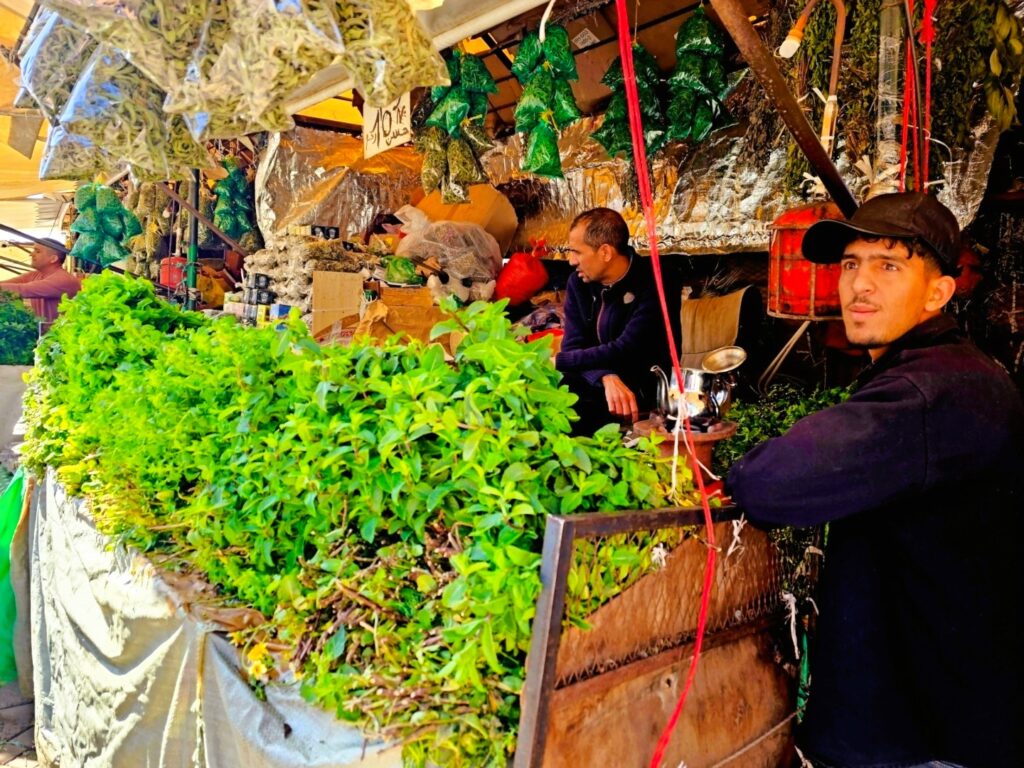
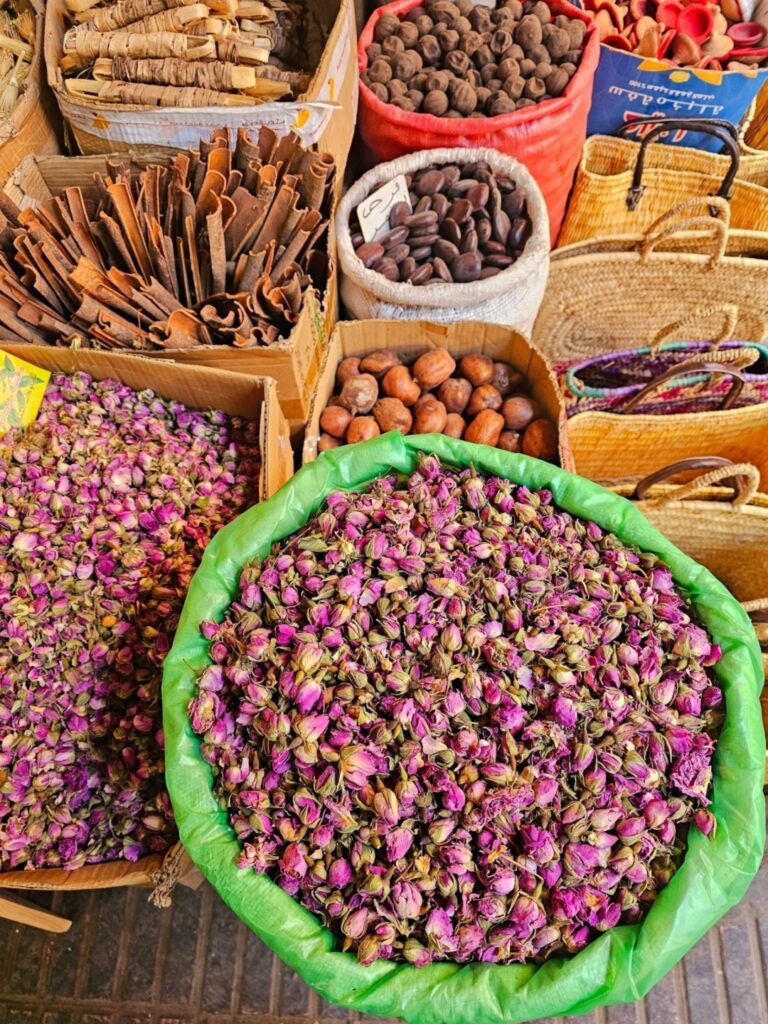
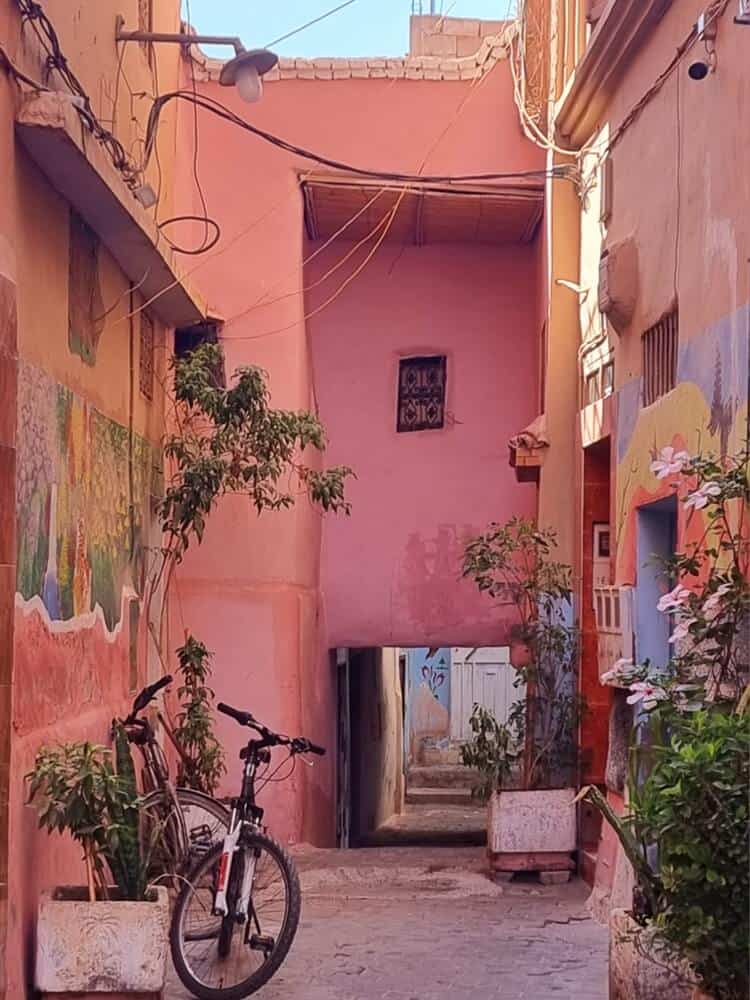
A Quick-Glance Guide: Why Morocco Works
Here’s a quick guide to why Morocco is a good destination for safe, accessible, and wellness-focused travel (if you don’t want to read the whole post) .
| Reason | Why It Works |
| Close to Europe | Short flights (under 4 hours from UK/EU) to reduce travel fatigue |
| Flexible pace | Combine lively cities with calm towns or nature spots to match your energy. |
| Wellness | Hammams & spa treatments encourage rest and rejuvenation. |
| Diverse destinations | From medinas to deserts, mountains to coast, you can choose experiences that suit your pace. |
| Gentle seasons | Spring and autumn offer warm, manageable weather — perfect for health-conscious travel. |
| Food options | Moroccan cuisine offers gentle, aromatic dishes, plus gluten free, vegan etc. |
| Accommodation variety | Riads for charm, hotels for comfort, apartments for independence — choose what fits your needs. |
| Transport | Plenty of transport options make exploring easier and less stressful. |
| Plenty of activities | Cultural tours, medina strolls, gardens, coastal walks, desert excursions, and gentle hikes let you explore at your own pace. |
How to Choose Your Destinations in Morocco:
Key Considerations for Solo Travelers
Morocco is diverse — bustling cities, desert landscapes, mountains, and relaxed coastal towns. Choosing the right destinations can make a huge difference for solo women traveling with chronic health conditions, helping you balance adventure with comfort.
Here are some key factors to keep in mind when initially planning your Moroccan journey:
1. Pace & Crowds
- Cities like Marrakech and Fes are vibrant and exciting but can be overwhelming due to crowds, noise, and sensory stimulation. (A few days in Marrakech and I needed a break!)
- Smaller towns such as Taroudant or coastal Essaouira offer a calmer rhythm.
- The Atlas Mountains feature stunning, evocative landscapes and gentle outdoor experiences, with slower-paced villages and breathtaking scenery — perfect for nature lovers who want to explore without the hustle of city life.
- Consider planning a mix: one high-energy destination balanced with quieter stops for rest.
💡 Personal tip: I’ve found that a few days in Marrakech, followed by a peaceful stop by the sea — Essaouira or another coastal town — is perfect. Alternatively (or as well as) a jaunt through the Atlas Mountains allows you to visit scenic villages at a gentle pace, creating a well-rounded Moroccan experience without overexertion.
2. Accessibility
- Many Moroccan medinas (old towns) have narrow, uneven streets, which can be tricky if you experience fatigue or mobility issues.
- Traditional riads and dars (guesthouses) are full of charm but often lack lifts and may have steep stairs, so it’s worth checking accessibility before you book (see accommodation below).
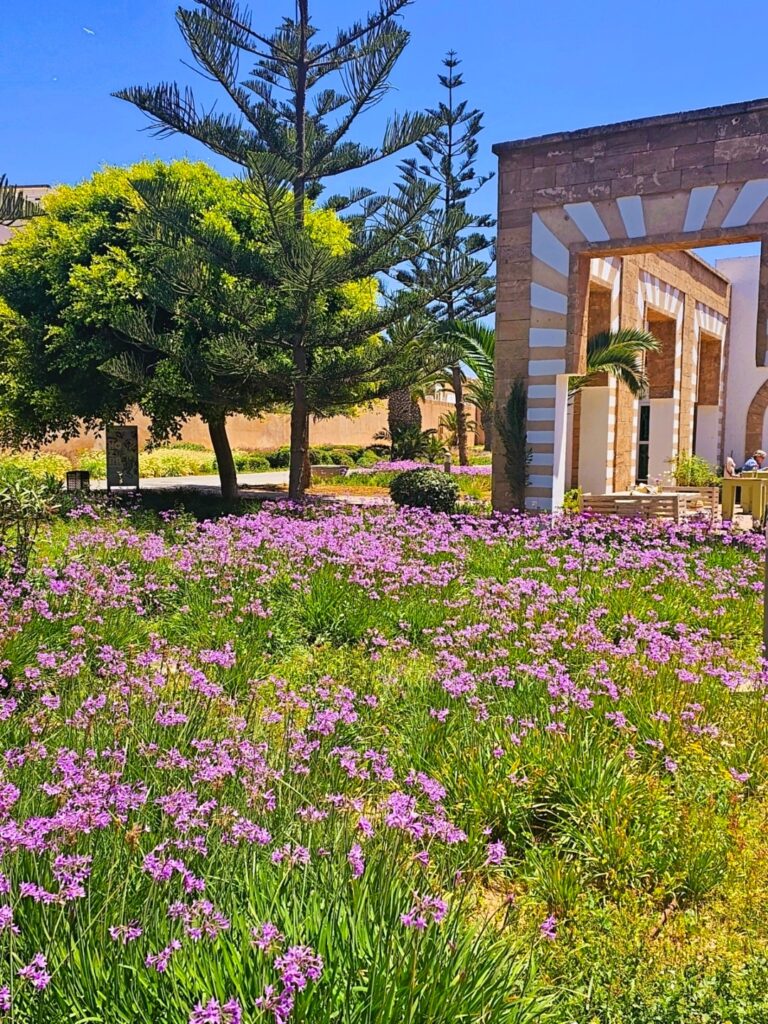
3. Weather: Best Times of Year to Visit Morocco (with Health in Mind)
- Spring (March – May) 🌿
- Pleasant, warm days without the intensity of summer heat.
- Blooming landscapes in the Atlas Mountains.
- Ideal for gentle sightseeing and coastal walks.
- Autumn (Sept – Nov) 🍂
- Similar to spring — warm but manageable temperatures.
- A good choice if you’re sensitive to the cold (this is when I chose the south, as northern Morocco cools quickly in autumn).
- Great balance between cultural exploring and relaxation.
- Winter (Dec– Feb) ❄️
- Coastal towns stay mild, but can be windy and rainy.
- Nights in the mountains can be very cold.
- Desert areas are beautiful but expect a big contrast: warm by day, freezing at night.
- Can work if you prefer cooler days, but pack layers.
- Summer (June – August) ☀️
- Inland cities like Marrakech and Fes, as well as the desert, can be extremely hot — often too much if you’re managing fatigue or heat sensitivity.
- Coastal towns (Essaouira, Agadir) are much more comfortable in this season.
If you’re balancing energy and health, I’d suggest spring or autumn as the sweet spot — warm enough for comfort but without extremes.
4. Health & Medical Access
Pharmacies: Well-stocked in larger towns and cities, with many familiar brands. Pharmacists are approachable, often speaking French or English.
Hospitals: Morocco has a public and private healthcare system. Public hospitals are affordable but often crowded and basic, while the private system offers modern clinics, shorter waits, and more French or English speaking doctors.
The best care is found in Casablanca, Rabat, and Marrakech. Remote areas may have very limited medical services. If you have a health condition that may require quick or specialist care, consider basing yourself in or near a larger city, and plan shorter trips into more remote areas.
✨ Gentle Reminder: Don’t forget travel insurance and check it covers Morocco’s private health care.
Review: Top Travel Insurance for Pre-existing Conditions
This guide explains how Staysure and Avanti offer travel insurance for chronic health conditions and over 50s at a reasonable price (UK only)
➡️ You can read my review here
5. Activities & Interests
- Decide what matters most to you: cultural immersion, desert adventure, coastal relaxation, or gentle walking tours.
💡Tip: Don’t try to see everything — Morocco is vast, and a slower pace ensures you enjoy each experience without overexertion.
6. Safety & Comfort
- Do your homework: As a solo woman, it helps to research which neighbourhoods feel safe and well-lit, particularly if you plan to be out in the evenings. Reading reviews on sites such as Booking.com from other solo women travellers can give valuable insights.
- Stay central: In larger cities like Marrakech or Fes, choose accommodation inside or near the medina or main squares. This reduces the need for long walks after dark and keeps cafés, restaurants, and transport close by.
🌸 My experience: I stayed in the medina in Marrakech and felt very safe in the evenings — the streets were bustling with people, and there was always a sense of energy and life around me. Choosing a lively, central base made solo exploring far more comfortable and reassuring.
Places like Essaouira generally have a more relaxed atmosphere. However, I’d personally still aim for a central location to feel secure in the evenings. The apartment I stayed at in Essaouira was in a quiet residential area, about a 30-minute walk from the centre. Had I been alone, I would have felt uneasy wandering back after dark. Next time, I’d definitely opt for a medina-based option if I was solo.
General Safety Tips
Safety Tips for Solo Women in Morocco
- Trust your instincts – If it feels off, leave or take a busier route. Locals are often helpful.
- Dress modestly – Cover shoulders/knees to respect customs and avoid attention.
- Stay central – Pick accommodation near medinas or squares to reduce walking at night.
- Keep valuables discreet – Small crossbody bag, no flashy jewellery, carry essentials only.
- Phone ready – Keep it charged, with local SIM or eSIM such as Airalo.
- Be polite but firm – A simple “no, thank you” is enough with vendors.
- Emergency numbers – Police: 19 | Ambulance: 150 | Fire: 15.
- Buddy up – Join other travellers for excursions/guided walks.
Download your Free sample Itinerary for Morocco
✨ Designed with you in mind:
- Women travelling solo
- Midlife explorers
- Gentle, restorative experiences for those managing chronic illness
Let’s Go Into the Heart of Morocco…
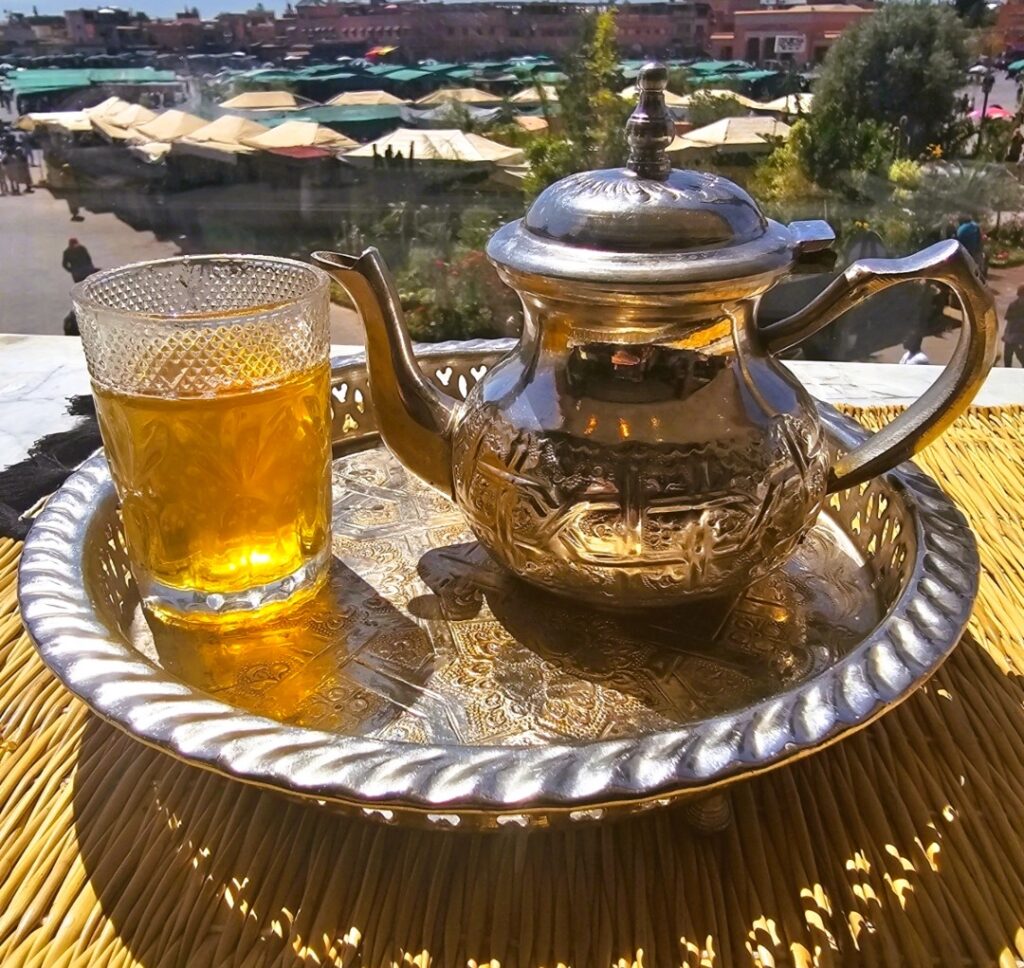
In the hush between mint tea and ocean tide, Morocco offers both its magic and the chance to find yourself.
Accommodation in Morocco: how to choose the right place for comfort and ease
Accommodation in Morocco varies widely — from traditional riads and dars to hotels and modern apartments. Choosing the right place can make a big difference to your comfort, energy, and overall experience, especially if you’re travelling solo with a chronic health condition.
Riads
Riads are traditional Moroccan houses with interior courtyards and often rooftop terraces. Riads vary greatly in size and style — many are beautifully restored and full of character.
Some Considerations:
- Accessibility: Most lack lifts and can have steep, winding staircases. Bathrooms may have steps or unusual layouts, and lighting can be dim.
- Design: Windows face inward to the courtyard, so people may walk past your door and noise travels easily.
- Temperature: Naturally cool in summer, but often chilly in winter — check if heating is provided.
🌸 My experience: I once stayed in a riad where even the bathroom had steps between the sink, toilet, and shower — charming but tricky! Riads are stunning and atmospheric, but they can be challenging for travellers with mobility issues or have noise sensitivities.
That said, their courtyards, terraces, and intimate spaces make them incredibly atmospheric and a memorable part of Moroccan life.
Just do your research and ask before you book if you are unsure of anything.
My Favourite: Riad Dar Aida in Marrakech
Riad Dar Aida is my favourite riad so far (in Morocco)
Beautifully designed, light, airy and quiet. It was very inviting — a peaceful retreat from the bustle of the medina. My favourite spot was a little couch just outside the bedroom, overlooking the inner courtyard, the perfect place to savor a slow, unhurried morning coffee.
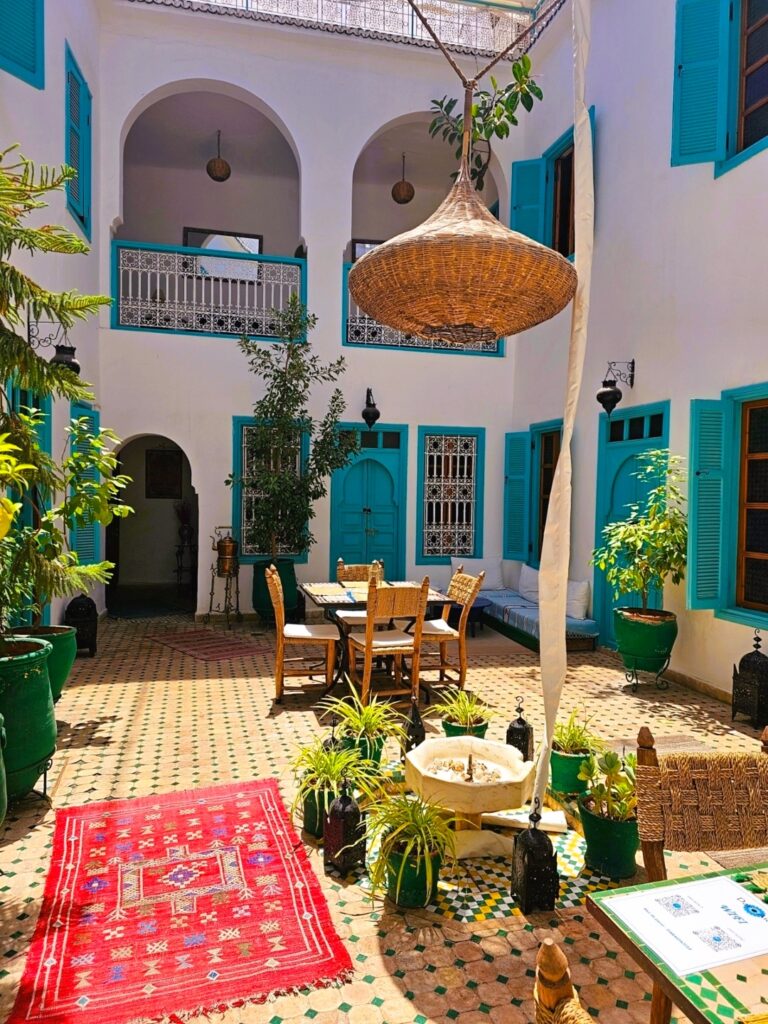
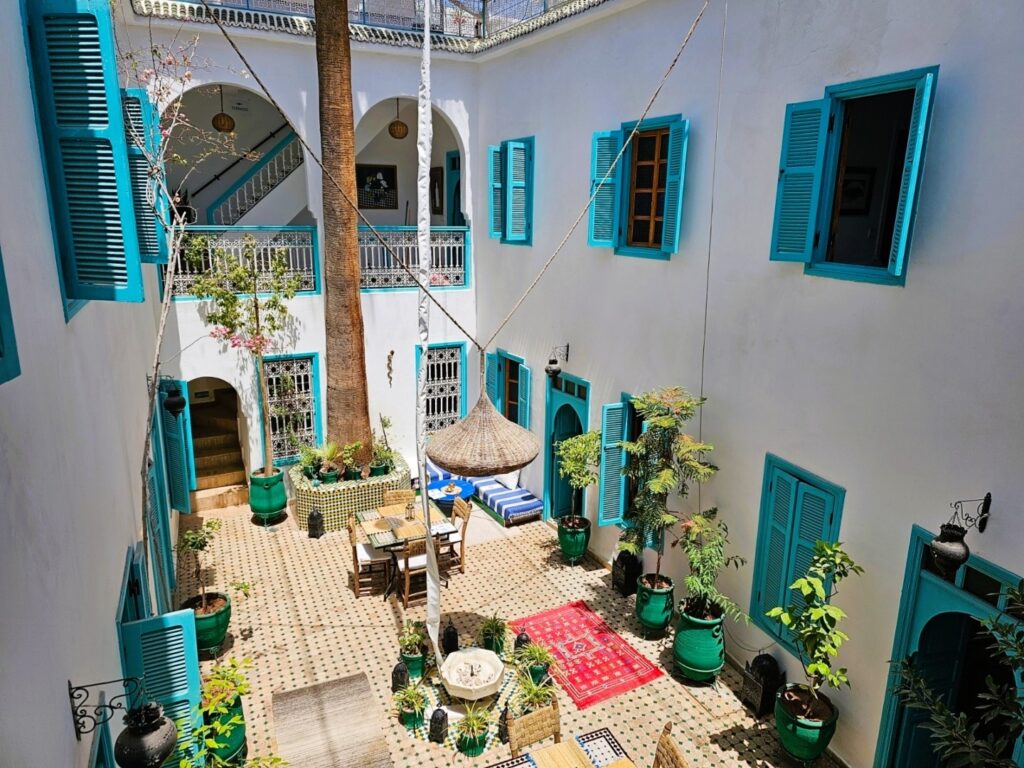
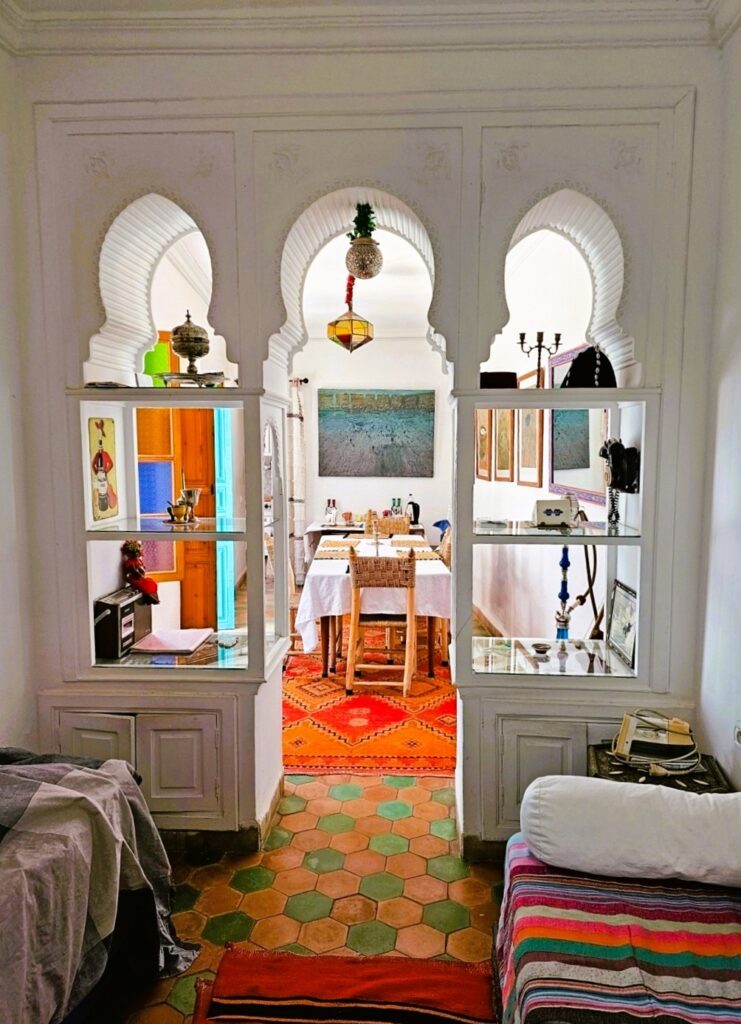
➡️ click here to read more about Riad Dar Aida
Dars
A dar simply means “house” in Arabic, and many have been converted into guesthouses or boutique stays.
Some Considerations:
- Layout: they often feature a central courtyard and rooftop terrace
- Facilities: sometimes offer kitchen access.
- Accessibility: they may lack lifts, have multiple floors, and noise can travel easily if windows face the courtyard.
Hotels
Hotels provide reliable comfort and accessibility. In Morocco they range from boutique city hotels, gorgeous luxury resorts to charming sustainable countryside eco-hotels.
- Pros: Lifts, heating, air conditioning, and well-lit, private rooms.
- Extras: Often include restaurants, wellness areas, parking, and concierge services.
Hotels are ideal if you prioritise ease, accessibility, and predictable comfort, especially after long days exploring medinas, souks, or desert landscapes.
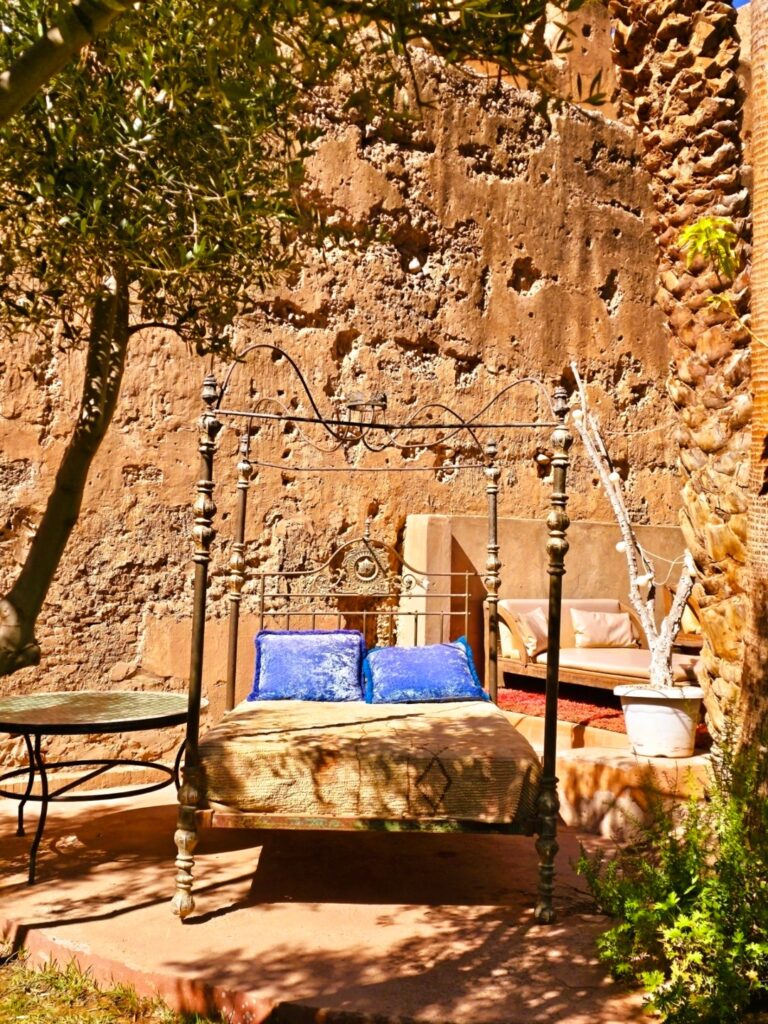
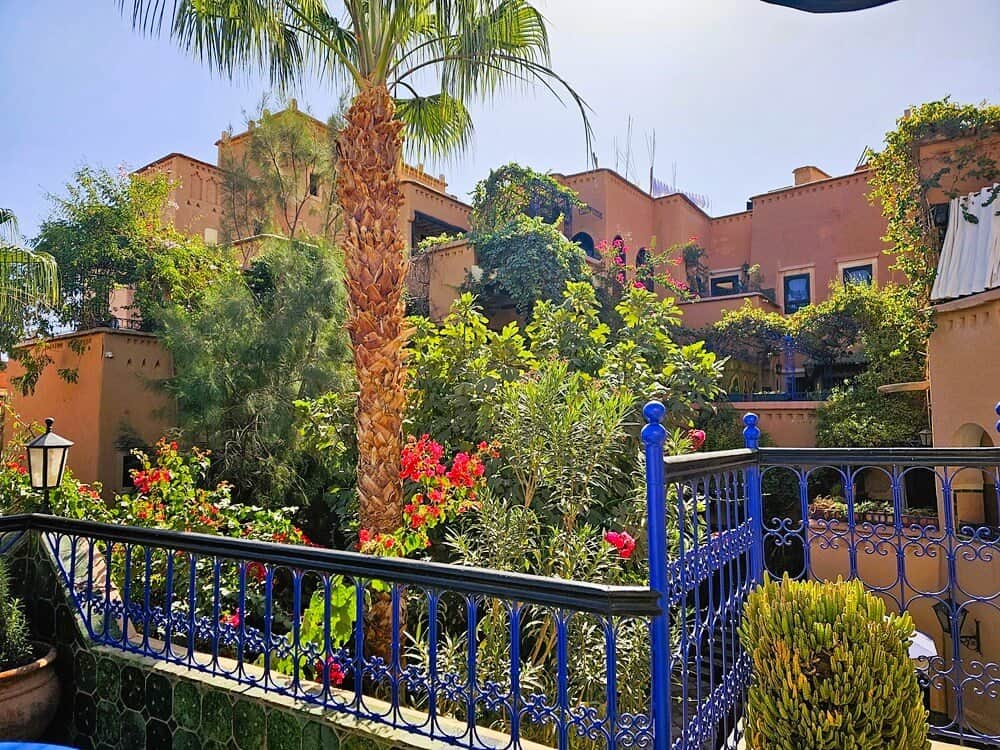
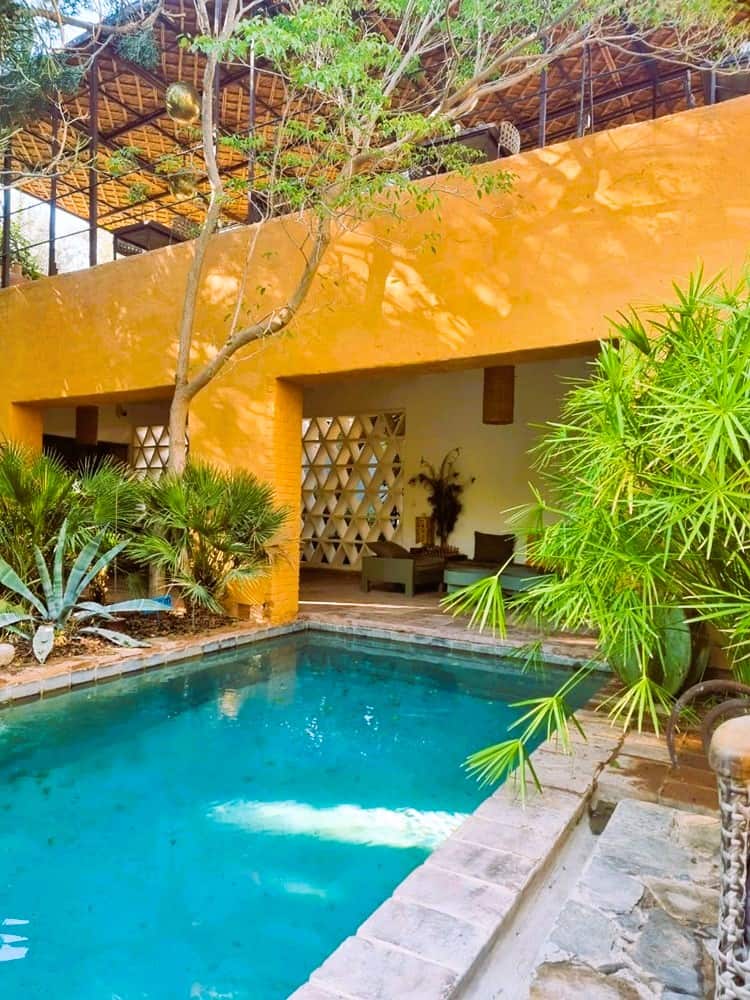
The photos below are of the hotels I’ve visited for hammams and spa treatments (but not stayed in as I prefer apartments). However, I’ve had the pleasure of enjoying the hotel grounds during my visit.
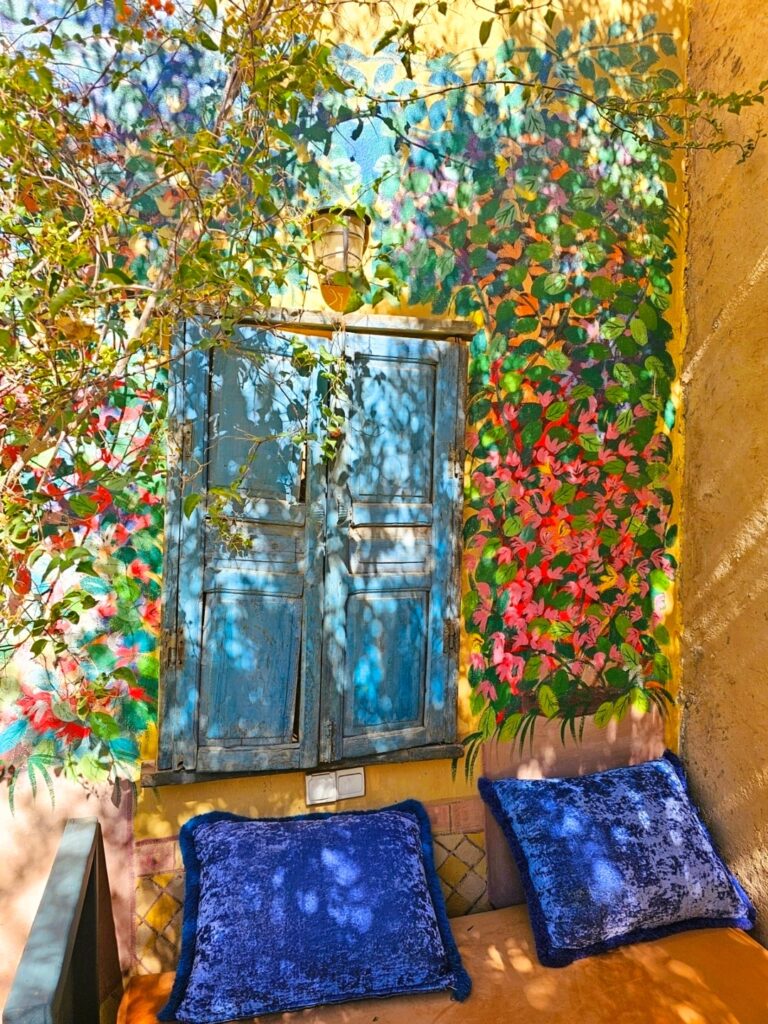
Apartments & Self Catering Villas
Self-catering units: either purpose-built modern apartments/villas or converted from traditional buildings.
- Pros: More space, kitchen facilities, and sometimes lifts or fewer stairs. Great for longer stays or if you need independence to manage meals and routines.
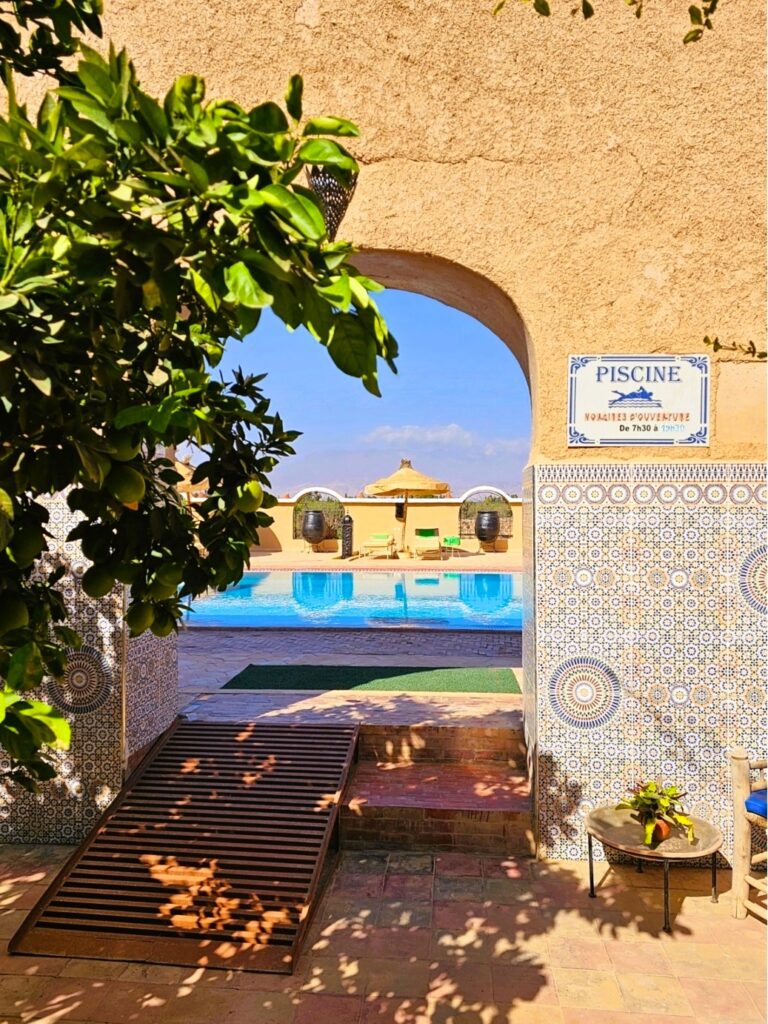
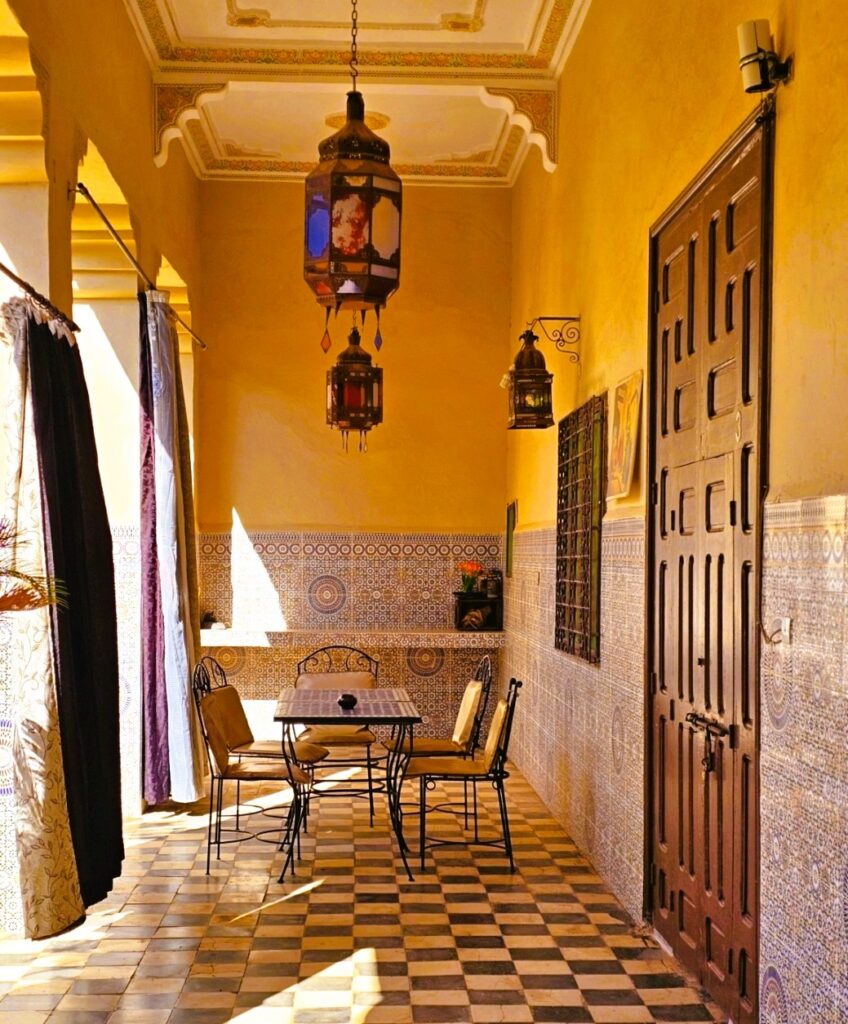
- Cons: Modern apartments may feel less “Moroccan” in style and can lack the social charm of courtyards or terraces. However, there are plenty of converted traditional buildings that still offer this charm (see photos below of Riad Elaissi).
Riad Elaissi – My friend, the Nomadic Herbalist visited with her mum, whilst I was staying in Taroudant. She stayed at the beautiful Riad Elaissi – self catering units in the heart of the Taroudant countryside. It oozed Moroccan charm and elegance. I had a lovely afternoon lounging by the pool (though I probably wouldn’t stay here as a solo traveller as it’s a bit out in the sticks and tricky to get taxis!)
💡 Personal tip: For me, apartments and villas are my top choice as I like to have a kitchen and workspace. However, I’d also combine it with a few days in a riad because they’re so gorgeous!
Review: Dar Naima in Taroudant
Sometimes it’s not just the place, but the people that truly add to the experience (especially when you’re alone).
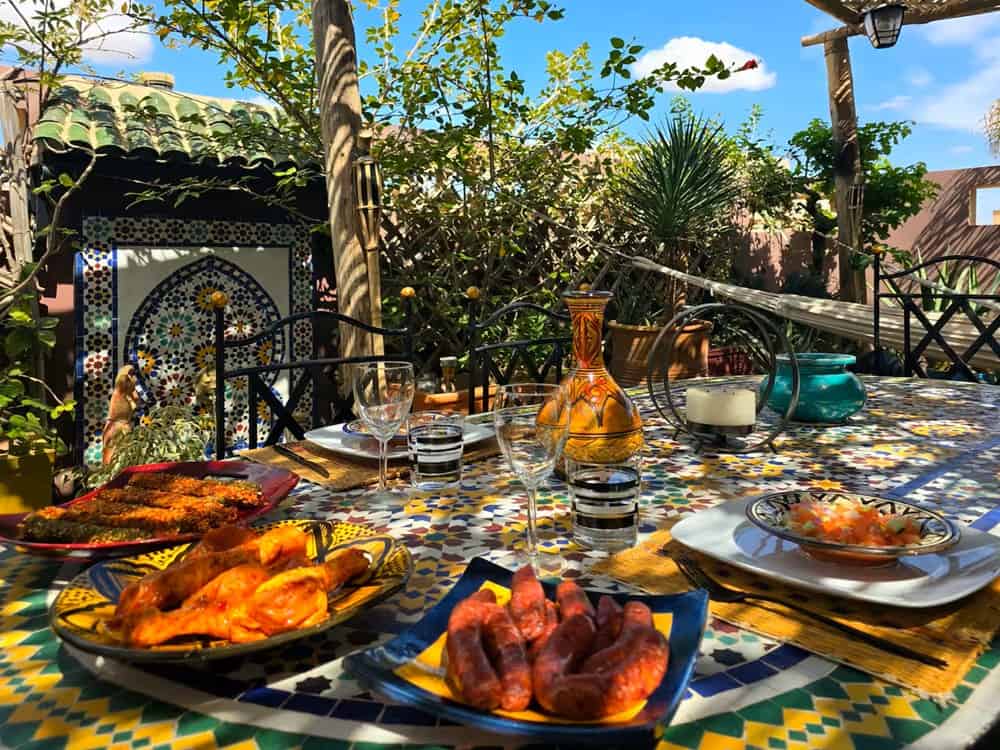
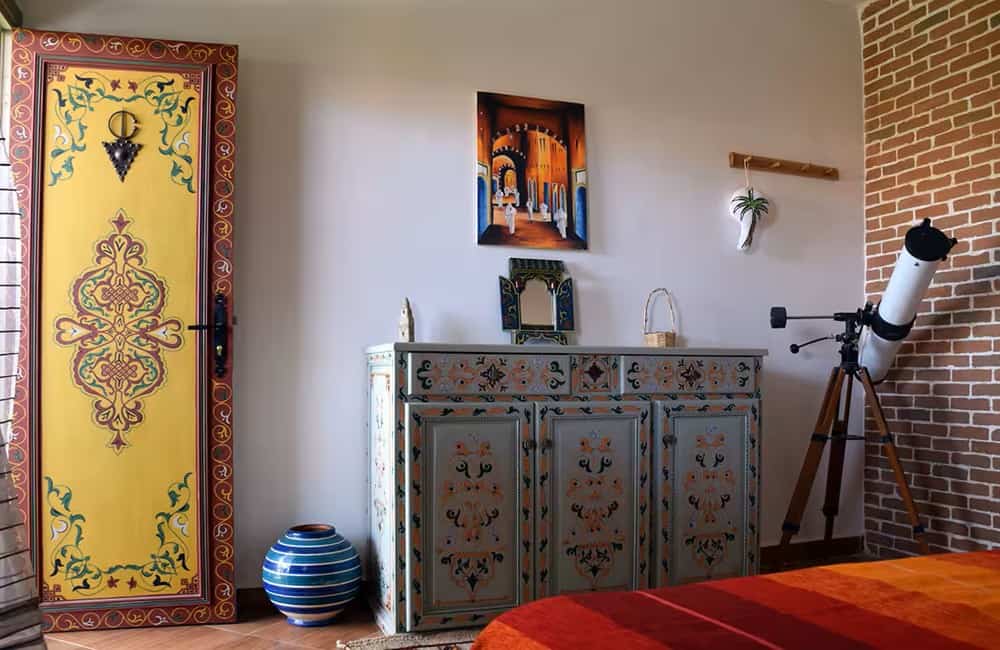
During my stay in Taroudant I stayed on a beautiful roof terrace garden suite and the hosts – Naima and Laurent – were real gems.
➡️ You can read my review here.
➡️ Click here for a full list of accommodation in Morocco.
Transport in Morocco
Getting around Morocco is easier than you might think, there are plenty of transport options.
1. Buses
- Morocco has an extensive bus network connecting cities and towns. Buses are comfortable, reliable, and ideal for longer distances, especially in the south where trains are limited.
- Book tickets in advance through reputable companies like 12Go
- Great for reaching smaller towns and scenic areas where trains don’t go.
🌸 One of my most memorable bus trips was from Ourzazate to Marrakech through the Atlas Mountains. The winding roads reveal incredible vast landscapes — snow-capped peaks, terraced valleys, and tiny Berber villages tucked into the hills.
2. Trains
- The train network is efficient for northern and central Morocco, including routes between Casablanca, Rabat, Fes, and Marrakech.
- Fewer options exist for southern destinations.
- Booking in advance is recommended, especially for high-demand routes.
- Companies like ONCF operate most major routes. You can book in advance through 12GO.
3. Petit Taxis
- Small city taxis that operate within city limits only. Perfect for short trips and very economical.
- Fares are typically around 2.20 MAD (~£0.20) per kilometre.
- Note: Drivers may pick up other passengers, which can slightly extend your journey.
- Easy to find near medinas, markets, or main squares.
🌸 Personal tip: Using petit taxis in cities made a big difference for me — I could explore without overexerting myself, and they’re easy to find near medinas or main squares.
4. Horse-Drawn Carriages (Caleches)
Yes, you can hire a horse drawn carriage!
In cities, horse-drawn carriages (called caleches) offer a slow, scenic, and low-effort way to see the city!
You can use them for:
- Gentle sightseeing: Sit back and enjoy the streets, squares, and historic architecture without walking long distances.
- Flexible routes: You can hire a carriage for a short ride around the medina or for longer city tours.
- Cultural experience: A traditional mode of transport adds a nostalgic, Moroccan charm to your trip.
- Easy to find: you’ll see the horse lining up!
✨ Tip: Agree on the price before your ride, and take a carriage for short distances rather than long distances (they are very slow and the horse needs a break!)
5. Shared Taxis (Grand Taxis)
- Ideal for slightly longer distances or intercity travel.
- Affordable, but expect multiple stops along the route.
- A good option for connecting towns without a bus or train line.
- Easy to find – usually near the medina, bus/train station.
6. Private Drivers
- Hiring a driver gives maximum comfort, flexibility, and minimal physical exertion.
- Helpful if visiting multiple towns or remote areas.
- Many drivers double as informal guides, pointing out sights along the way.
- Prices vary depending on distance and vehicle type.
- Can often be arranged through your riad, travel agencies, or apps like GetYourGuide.
7. Car Rental
- Provides complete freedom over your pace, stops, and comfort — ideal for rural areas or the desert.
- Driving in Moroccan cities can be challenging due to traffic, pedestrians, and roundabouts.
- Suitable for confident drivers who want to explore off-the-beaten-path locations.
- Discover Cars is a car rental comparison site that might be helpful.
I don’t drive so I haven’t done this! However, I have a couple of friends who have both hired cars in Morocco and have explored far and wide, including the Atlas Mountains. They both thoroughly love the experience and found it very freeing.
Activities in Morocco
Morocco offers something for everyone, depending on your interests: wandering through bustling medinas, exploring serene gardens, strolling along the coast, discovering desert oases, or enjoying gentle hikes in the Atlas Mountains.
Example activities:
Marrakech
- Medina strolls with breaks: Explore souks in short bursts; retreat to your riad or a quiet café when you need to rest.
- Museums: There’s an eclectic range of museums, from the Dar Si Said Museum to the Musée Yves Saint Laurent. They offer calm, culturally rich experiences. (note – if you want to book the Yves Saint Laurent Museum in Gardens you need to book online as tickets sell out.)
- Cooking classes: learn the art of cooking a delicious traditional tagine with mint tea.
- Explore gardens: Marrakech is home to some beautiful gardens.
Marrakech Gardens
- Jardin Majorelle — Yves Saint Laurent’s cobalt-blue garden, filled with exotic plants (entrance fee).
- Menara Gardens – one of Marrakech’s iconic landmarks — a vast olive grove with a tranquil reflecting pool, set against the dramatic backdrop of the Atlas Mountains (free).
- Cyber Park — a peaceful, shady green space with free WiFi, ideal for a quiet break (free).
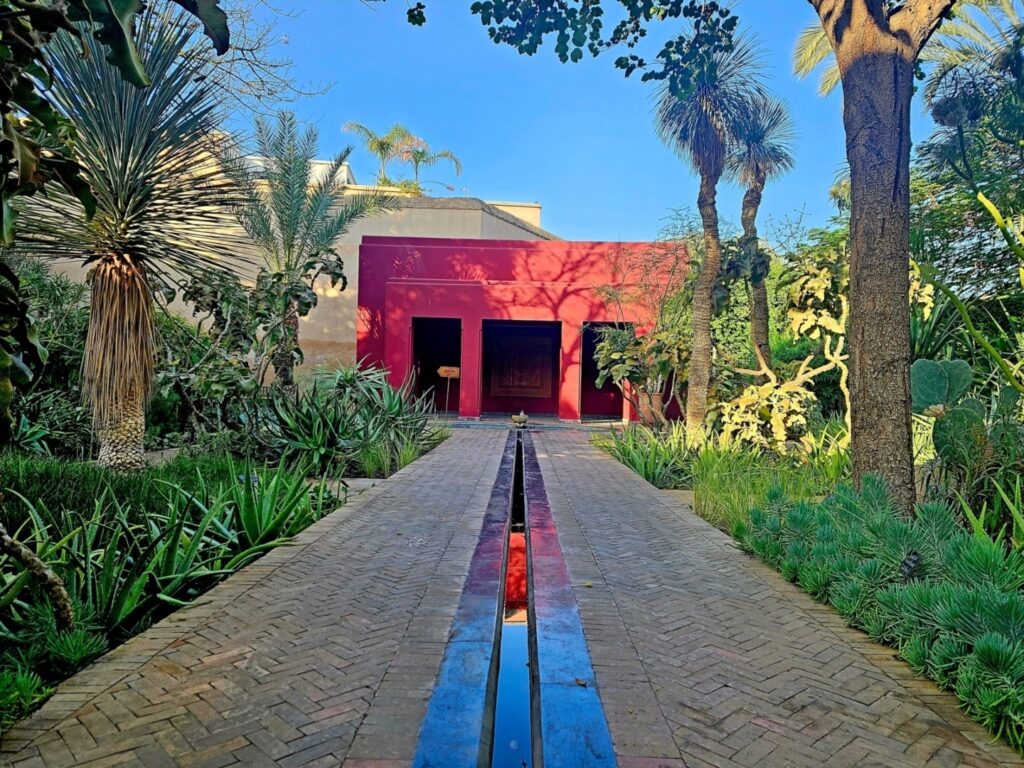
- Le Jardin Secret — a restored Islamic garden oasis within the medina walls (entrance fee) .
➡️ Read my review of Le Jardin Secret here
🌸 Personal Tip: Start your stay in Marrakech with a guided walking tour with Free Tour. I had a medina walking tour and as well as being very interesting, it helped me find my bearings and I felt much less overwhelmed and ready to explore alone.
➡️ Read my review of a Marrakech Walking Tour with Free Tour.
💡 Sneaky Tip: Grace and serenity (plus great coffee!) await at Les Jardins de la Koutoubia Hotel in the centre of Marrakech.
Les Jardins de la Koutoubia is a stunning hotel just off Jemaa el-Fnaa, with lush gardens and a swimming pool. Staying there? Well… let’s just say your wallet might need a holiday of its own!
The good news? You don’t need to be a guest to enjoy it. You can sip a coffee, have a meal, or simply relax in the gardens. It’s a peaceful oasis amid the bustling city — perfect for a gentle pause from the intensity that Marrakesh is!
Taroudant
- Explore the Medina and Souks: Taroudant has two main souks — one for Berber goods (spices, pottery, jewellery, leather) and one for everyday items. Much calmer than Marrakech, so browsing is easier and less overwhelming.
- Sunday souk: If timing works, the weekly markets outside the medina are lively, offering a real sense of local rhythms.
- Craft workshops: The town is known for leatherwork, ceramics, and intricate silver jewellery — some artisans welcome visitors to watch or learn.
- Nearby landscapes: Explore the Tiourt Oasis with its palm groves and traditional farming or take a gentle half-day trip into the foothills of the Anti-Atlas and the Souss Valley for wide views and a taste of rural Morocco.
- Visit a hammam: Local hammams are more authentic here (and less touristy), with both public and private options if you want a restorative soak and scrub. (see hammams below)
Taroudant is sometimes called “Little Marrakech”, but I have to say it’s really nothing like Marrakech — it’s far quieter, easier to navigate and lack the vitality of Marrakech.
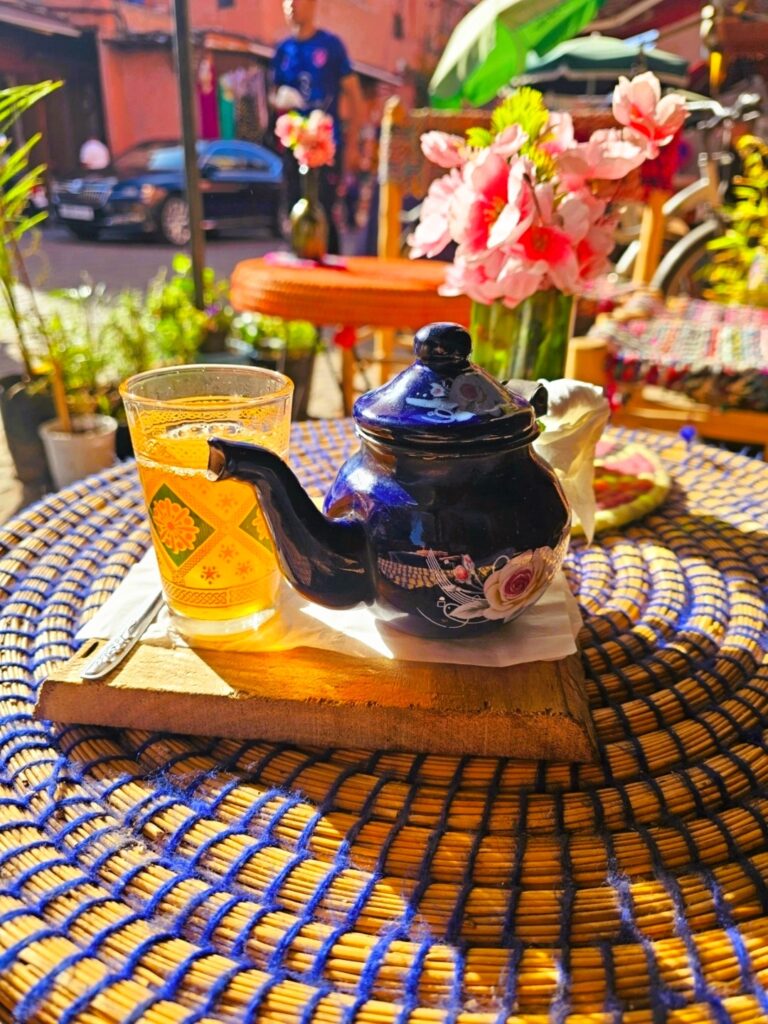
Essaouira
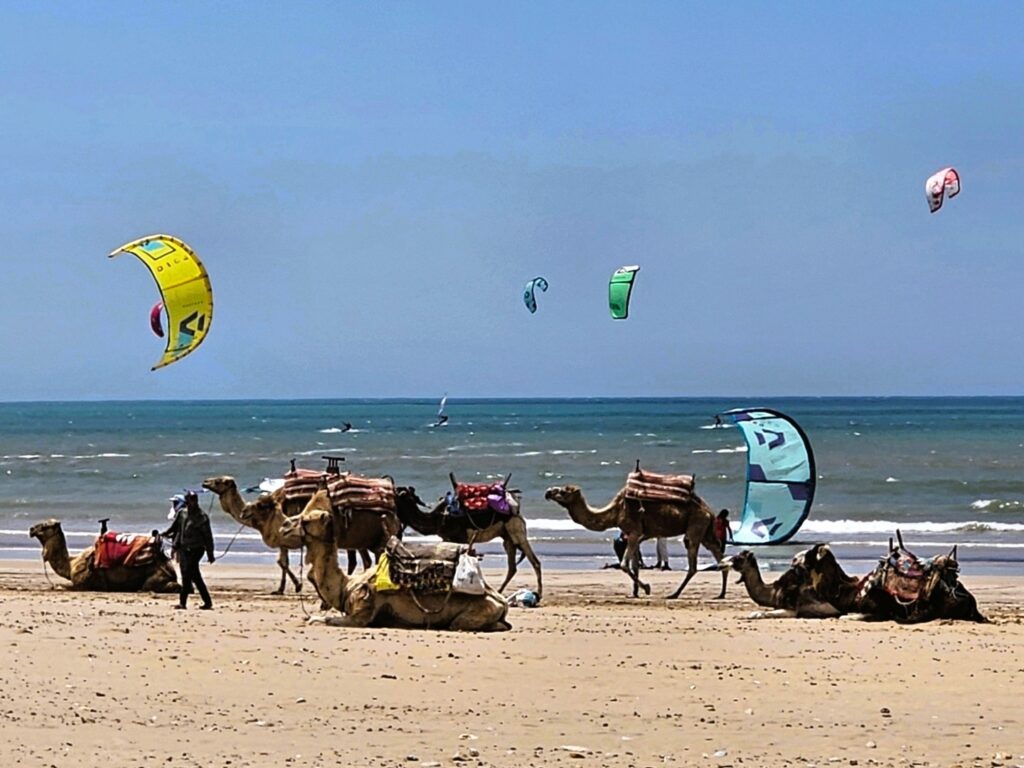
- Coastal promenade: The long seafront walkway is perfect for easy strolls, with ocean views, fresh breezes, and plenty of benches to pause and rest.
- Art galleries & workshops: The medina is dotted with small galleries and artisan workshops — intimate spaces where you can enjoy Moroccan art, woodwork, and crafts without feeling rushed.
- Fishing port: Life here unfolds at its own rhythm. You can watch the fishing boats return and the catch being sold from the comfort of a café terrace — no extra walking needed.
- Yoga & wellness: Essaouira has a relaxed, creative energy, with several riads and studios offering yoga classes, meditation, or spa treatments — perfect for gentle restoration.
- Slow food & fresh catch: The town is known for excellent seafood and slow meals by the sea; choose a terrace restaurant to soak in the atmosphere without needing to wander far.
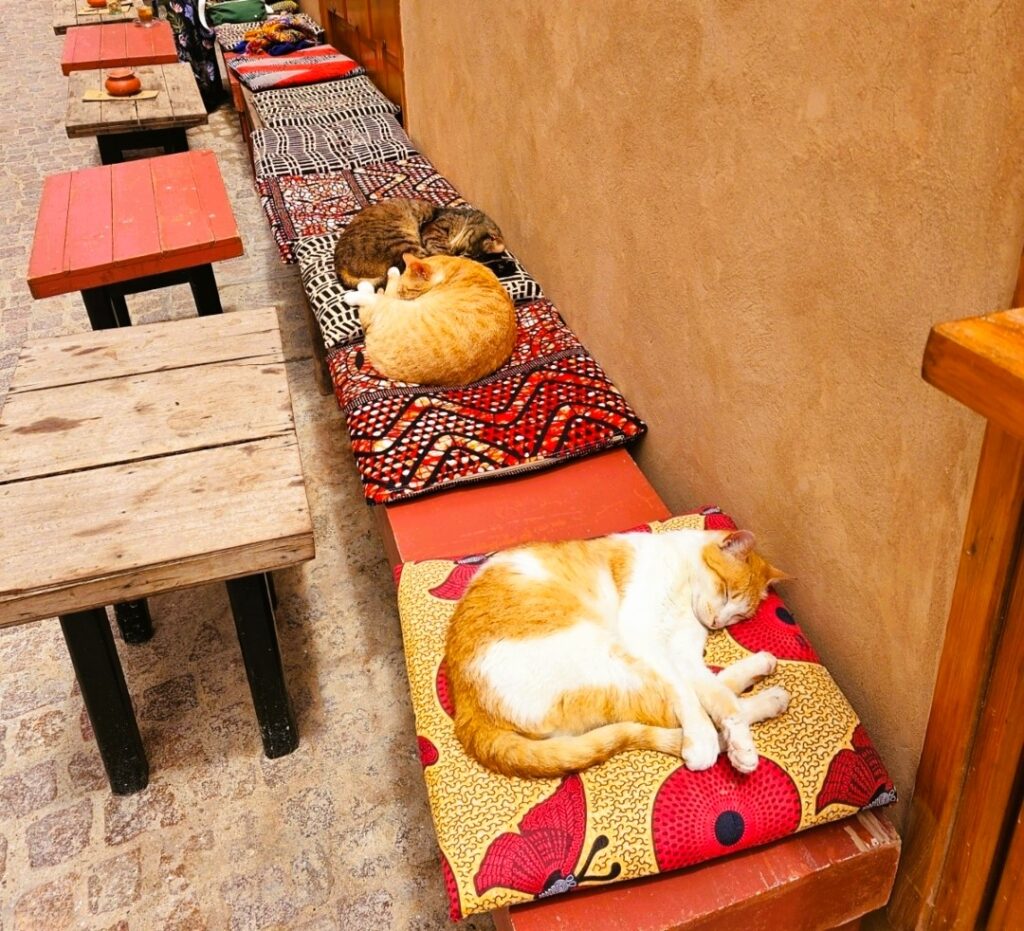
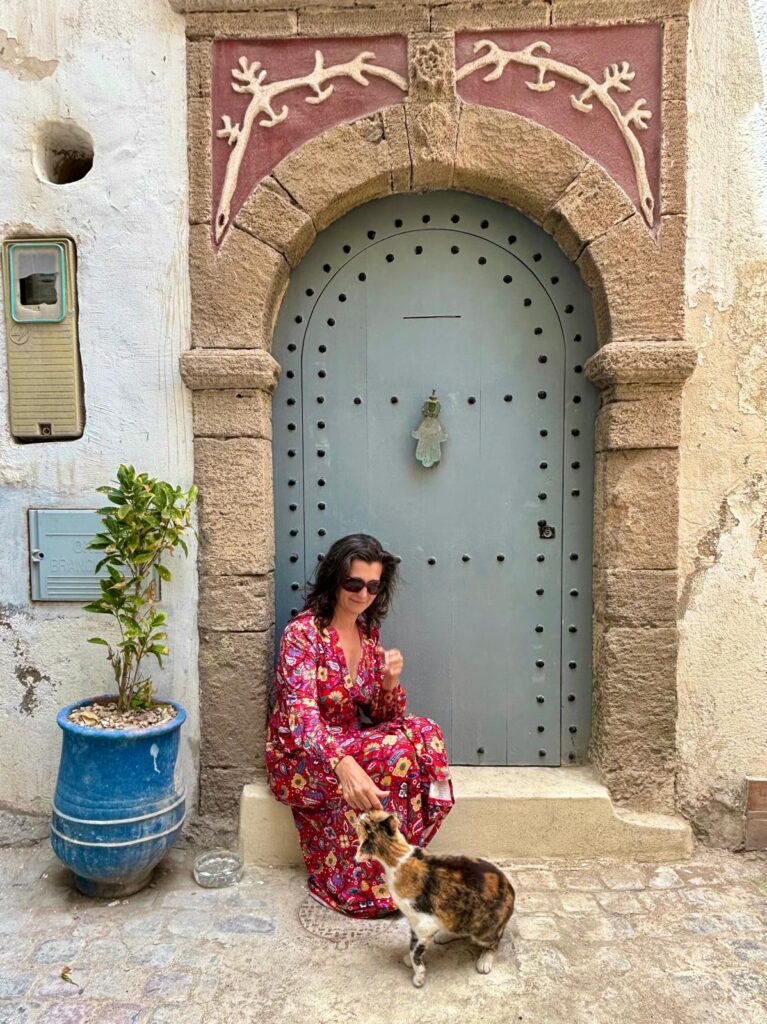
- Cuddle cats: cats are everywhere here, and they are well looked after by the locals. Lots of cuddle opportunities!
Essaouira combines sea air, artistic charm, and a slower pace — ideal for travellers who want rest mixed with light exploration.
Atlas Mountains
- Short village visits: Explore scenic Berber villages with minimal walking; hiring a driver or guide ensures comfort.
- Gentle hikes & nature walks: Low-impact routes provide fresh air, beautiful landscapes, and photo opportunities.
- Creative stops: Use the mountains for photography, painting, or sketching — perfect for low-energy exploration.
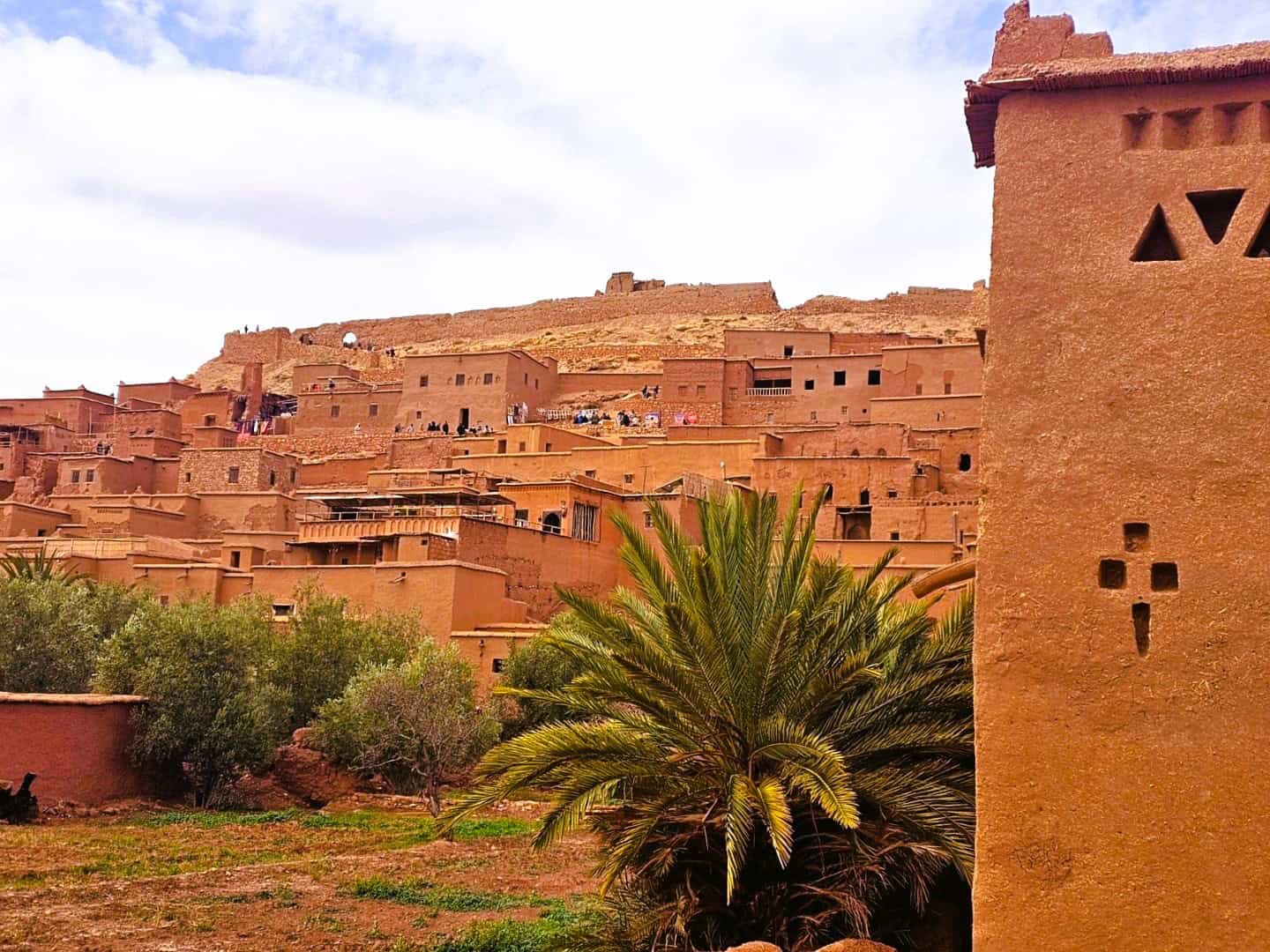
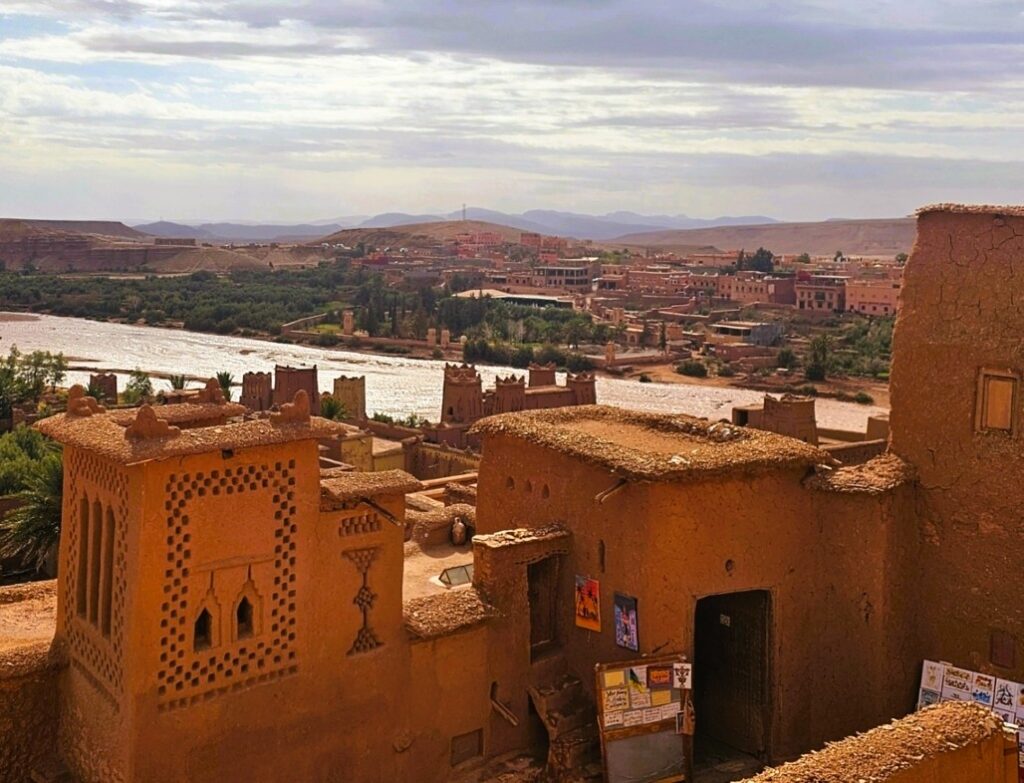
- Visit Ait Benhaddou – A UNESCO World Heritage site, an ancient fortified village sits at the foothills of the Atlas Mountains. Its striking earthen clay architecture has made it the backdrop for many films, including Gladiator.
💡 Personal Tip: If you plan to visit Ait Benhaddou, go early to beat the crowds. The village is steep with uneven paths, so it can be tricky if mobility is an issue. I didn’t make it to the top myself, but the experience was still incredible.
Desert Excursion
- Day trips & overnight tours: Visit Erg Chebbi or Erg Chigaga dunes with minimal walking. Many tours offer camel rides (short and gentle) or 4×4 desert drives, allowing you to experience the Sahara without exhaustion.
- Sunset & sunrise experiences: Desert landscapes are breathtaking at dawn or dusk; you can watch from a comfortable spot without trekking far.
- Overnight camps: Stay in tents with basic amenities or luxury glamping options for a restful night under the stars.
I planned to go to the desert, but then didn’t as it was late November and temperatures were dropping and having FND has made me incredibly sensitive to the cold! So, this is a trip for another time.
➡️ Learn more about desert tours here.
Top Tours in Morocco: A few examples
One of the best ways to explore, learn the local culture, and even meet new people is through a guided tour. They take the stress out of planning and let you enjoy the experience at your own pace.
💡 Tip: If you’re living with a chronic illness, it helps to check in advance whether the tour length, pace, and physical demands suit your comfort level. Don’t hesitate to ask providers about rest breaks, accessibility, or dietary needs — most are very accommodating.
Here’s an example of some great tours in Morocco:
Marrakech: Street Food Tour with a Local Guide
Marrakech: Ben Youssef, Secret Garden & Medina Guided Tour
Marrakech: Saadian Tombs, Bahia Palace, Medina and Souk Tour
Marrakech: Hot Air Balloon Ride with Traditional Breakfast
Essaouira: Sqala du Port, Medina Ramparts & Fish Market Tour | GetYourGuide
➡️ Click here for a full list of great Moroccan Tours
Free Tours
I also love joining Free Tours when exploring a new city. They’re a great way to get an insider’s perspective, meet other travellers, and discover hidden corners you might otherwise miss. The concept is simple: the tour itself is free, and at the end you tip your guide based on how much you enjoyed the experience.
Hammams: A Very Moroccan Wellness Ritual
You can’t visit Morocco without visiting a hammam!
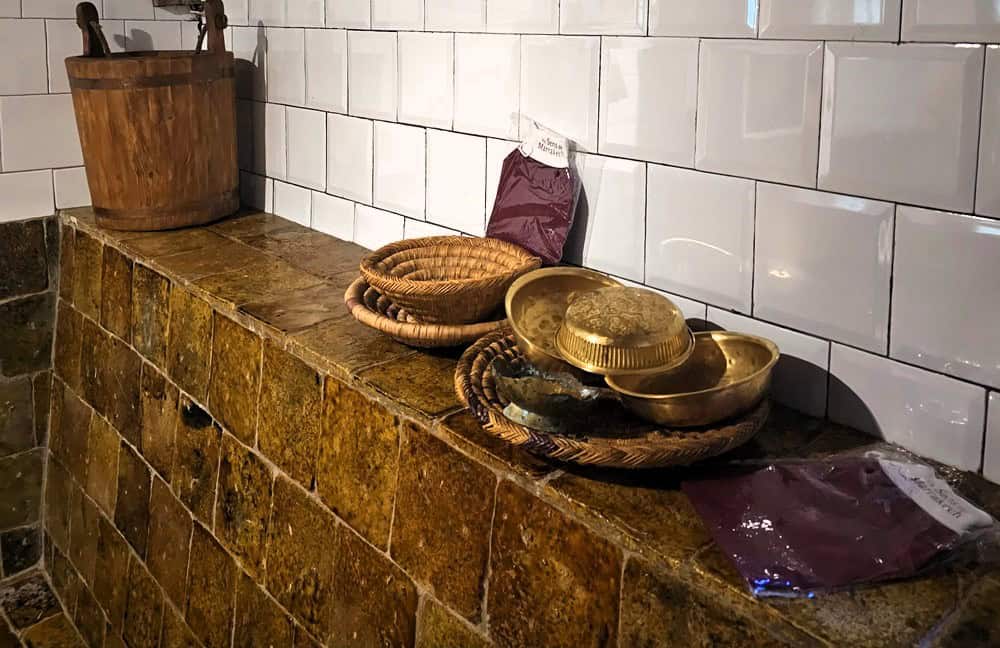
Hammams — traditional Moroccan bathhouses — are deeply woven into daily life and wellbeing culture. There’s usually one in every district, serving as a place not just for cleansing, but for relaxation, socialising, and self-care.
I’ll be honest — I got a little obsessed with them! Each hammam has its own character, and the experience can vary widely depending on the location.
- Public hammams: Local favourites, often larger, bustling, and communal. They offer an authentic glimpse into Moroccan life.
- Private hammams: Found in riads, hotels, or standalone spas, these offer a calmer, personalised experience. Ideal for solo travellers or anyone seeking a gentler, restorative session.
🌸 My Experience:
I’ve written four blog posts exploring different hammams — from a local neighbourhood public hammam to private pampering spa hammams.
Each visit revealed something new about myself. I was slowly emerging from depression, learning to embrace my body again, and healing from heartbreak.
The hammam experiences felt quietly intimate. Within the cocoon of warmth, surrounded by soothing scents and the ritual of cleansing, I sensed subtle shifts deep within me. Mentally, emotionally, physically — layers of tension and sadness gently melted away.
These visits became a piece of my healing journey, which I’ve come to realise involves many pieces — each experience, each moment, coming together to create a whole.
Gradually, I began to feel alive again, reawakening to my own presence, my senses, and a sense of joy that had felt very dormant.
🌸 Personal Tip: Try a hammam early in your stay — it’s a gentle way to settle into Moroccan life, restore energy, and care for your body after travel. And like me, if you love it may you may want more of them!
Hammam Reviews
Private Hammams
I love hammams – when they are done well they are superb: immersive, intimate, invigorating, grounding, softening….Read my reviews and personal accounts of how private hammams have helped me on my healing journey.
Dar Al Hossoun’s earthy Hammam & Spa in Taroudant
Hotel Riad Dar Daif- a grounding hammam and exquisite massage in Ouarzazate
Other Hammam Blog Posts:
What happens in a Moroccan Hammam?
My first public hammam (surprising, naked and swift) – it was an experience!
❤️
Massage & Wellness Treatments
Morocco isn’t just about hammams — there’s a growing culture of wellness and massage treatments, especially in larger cities, coastal towns, and higher-end riads or spas. These experiences can be a wonderful way to restore energy, ease tension, and care for your body while travelling.
Types of Treatments You’ll Find:
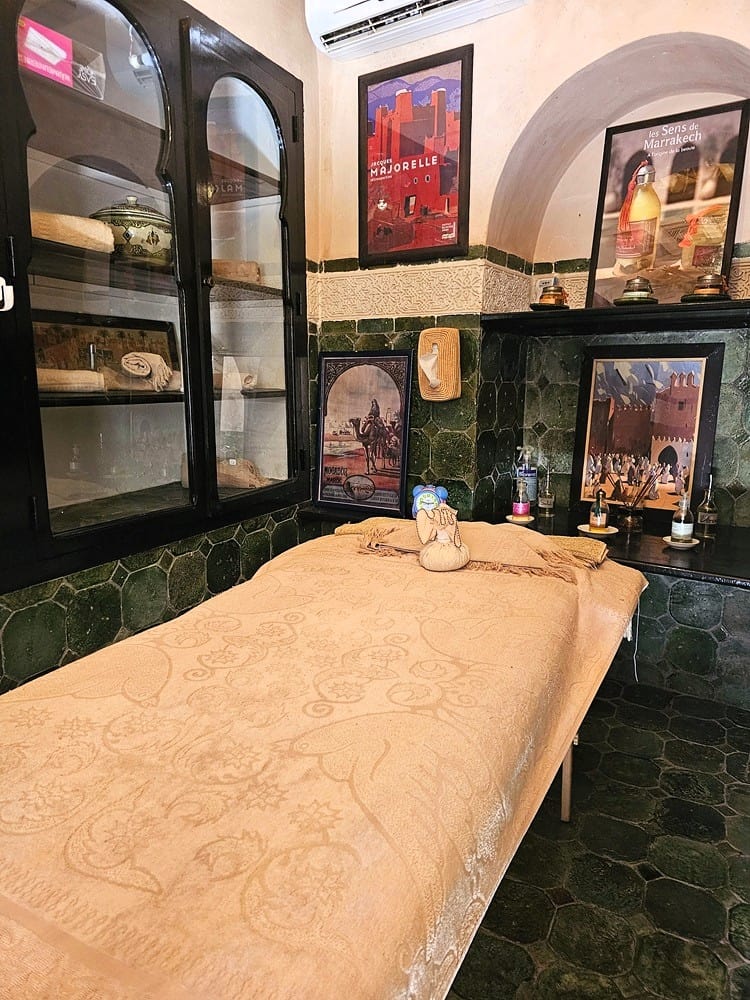
- Traditional Moroccan massages: Often use argan oil, sometimes combined with gentle stretching or light pressure. These are deeply relaxing and can be tailored to your comfort level
- Reflexology and foot massage: Popular in spa settings, often using essential oils and soothing techniques to relieve stress and improve circulation.
- Modern wellness therapies: Many hotels and private spas offer aromatherapy, hot stone massages, and body scrubs — a blend of Moroccan tradition and contemporary techniques.
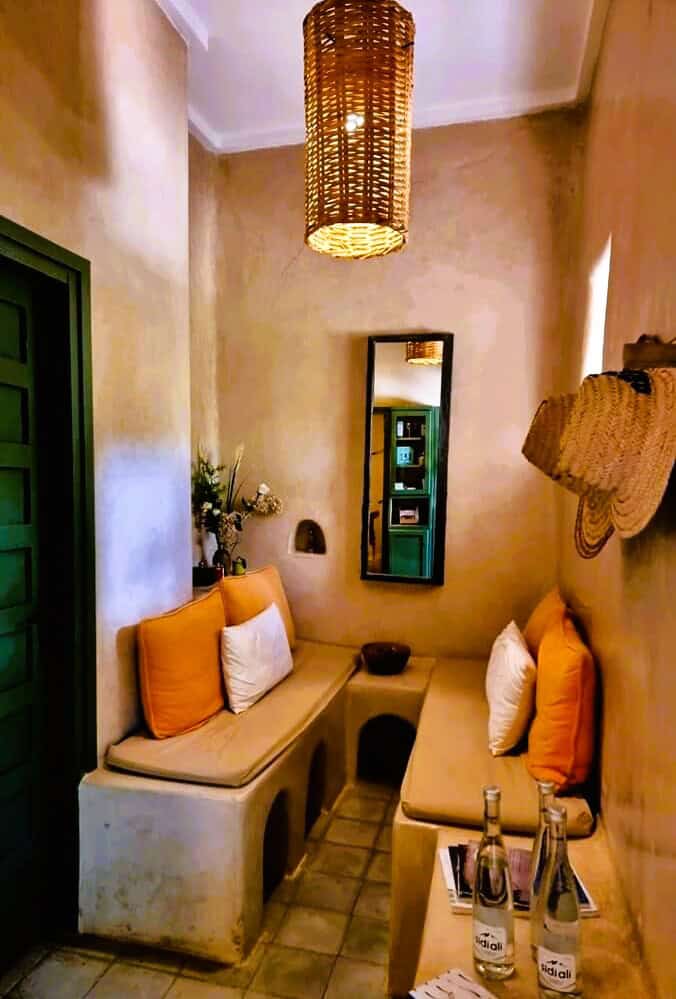
🌸My experience: I had some beautiful massages following my hammams. Each session felt like a gentle reset, complementing the restorative rituals of the hammam
Practical Tips for Travellers with Chronic Conditions:
- Communicate your needs: Let your therapist know about any health conditions, sensitivities, or pain points — most are happy to adapt pressure, techniques, or oils.
- Start gently: If you haven’t tried Moroccan massage before, begin with shorter sessions to gauge how your body responds.
- Combine with hammams or herbal treatments: A massage after a hammam or herbal steam can amplify relaxation and support wellbeing.
🌸 Personal tip: Treat these sessions as part of your journey — not just a luxury, but a way to reconnect with your body, ease travel fatigue, and nurture yourself in a mindful way. I now see wellbeing treatments as an integral part of my travels. They became moments of pause, care, and self-discovery — experiences I carry with me long after leaving Morocco.
Herbal Remedies in Morocco 🌿
Morocco has a rich heritage of natural and herbal healing practices that remain a vibrant part of daily life. While it isn’t a formalised system like Ayurveda in India or Traditional Chinese Medicine, these traditional remedies are widely respected and woven into Moroccan culture.
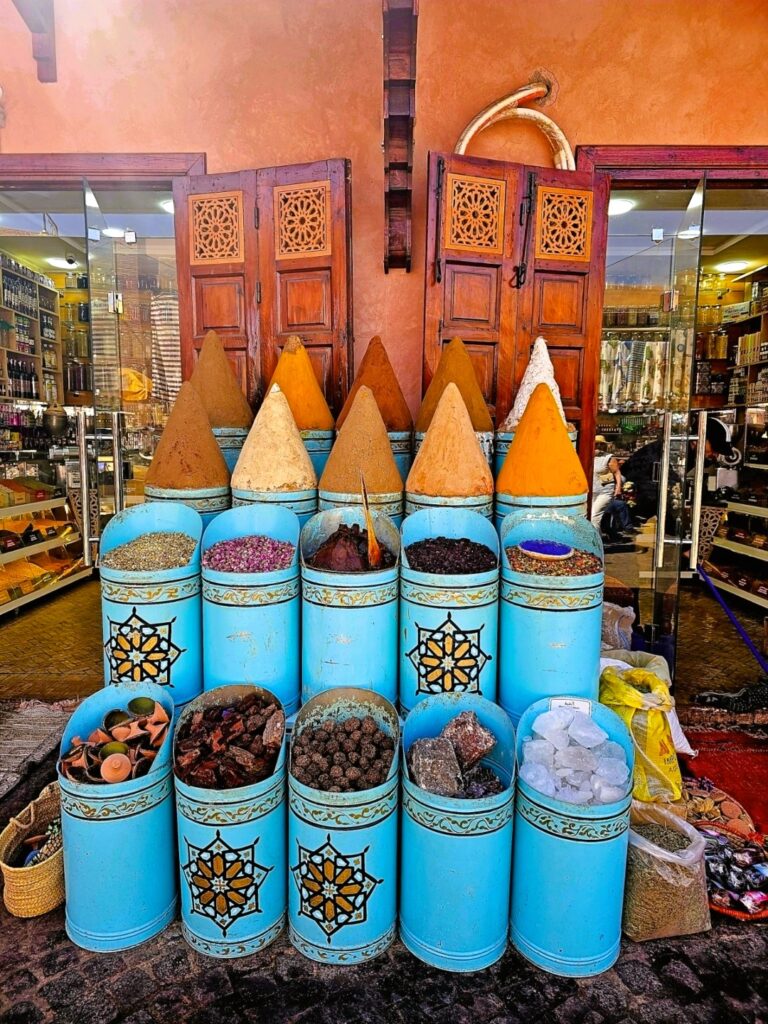
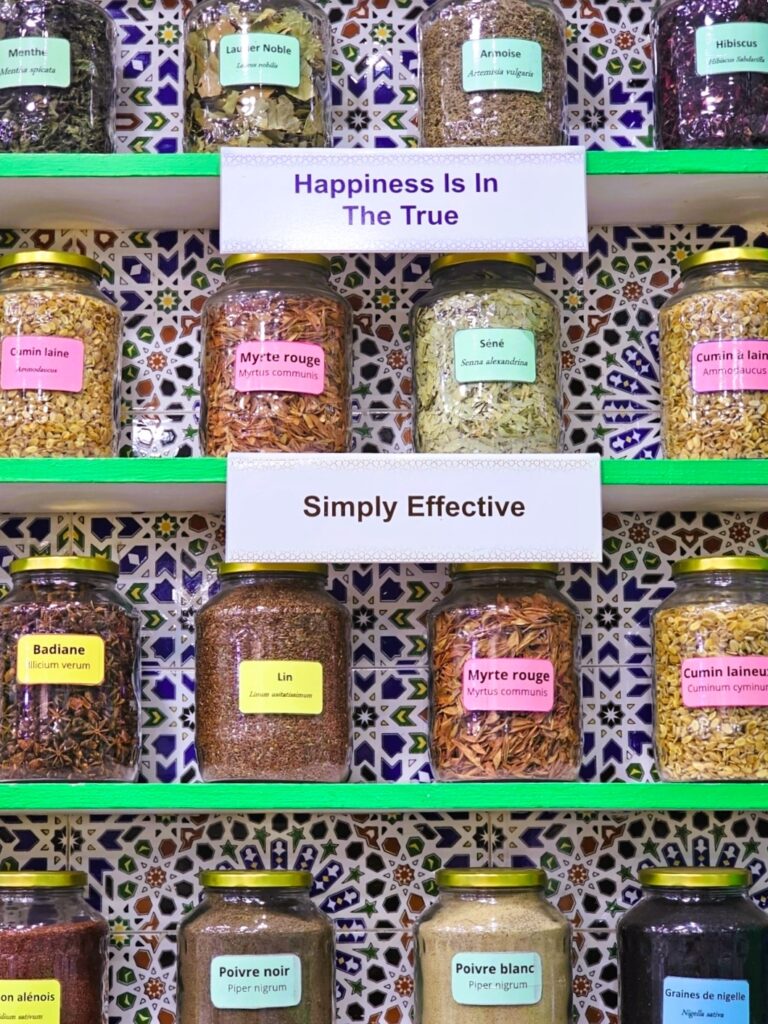
Many Moroccans turn to herbalists (attars) in the medina for advice and remedies. These atmospheric shops are lined with jars of dried herbs, roots, oils, and spices, each believed to support wellbeing in different ways — from digestion to skin care.
Common Remedies You’ll Encounter:
- Argan oil – used for nourishing skin and hair, and sometimes for digestion.
- Cumin – a go-to for easing digestion.
- Nigella seeds (black seed) – traditionally referred to as a “cure-all.”
- Mint & verbena teas – staples for calming the nerves and soothing the stomach.
- Rhassoul clay & black soap – classic hammam products, used for cleansing, exfoliation, and skin health.
🌸 My Experience: At one of the Airbnbs I stayed at in Taroudant, my host Naima was well-versed in healing remedies — it was clear this knowledge was simply part of Moroccan life. Her small herbal patch on the roof terrace was her go-to: I had sage, verbena, and mint teas every day. I don’t think my digestive system has ever been so…happy!
Herbal Consultations:
- Attars (herbalists): In the medinas, herbalists are often happy to recommend remedies for specific ailments. Consultations are informal — more like a friendly chat than a medical appointment — and may include suggestions for herbs, teas, or oils based on your symptoms.
- Traditional healers: In some rural or Berber communities, practitioners combine herbal knowledge with spiritual or cultural traditions. These consultations are usually ritual-based rather than medical, and can be harder for tourists to access.
Exploring these traditions can be a gentle and enjoyable complement to your travels — whether sipping a calming mint tea, or browsing the shelves of a local herbalist.
Food in Morocco – Flavours for Every Diet 🌿🍋
Moroccan food is flavourful and nourishing, known for fresh herbs, warming spices, and slow-cooked dishes.
Meals often begin with soups such as harira (lentils, chickpeas, and herbs) or bissara (fava bean), followed by mains like lamb or chicken tajines, couscous with seasonal vegetables, or freshly grilled fish along the coast. Almost everywhere you’ll go, you’ll be served a small dish of olives as an appetiser — delicious.
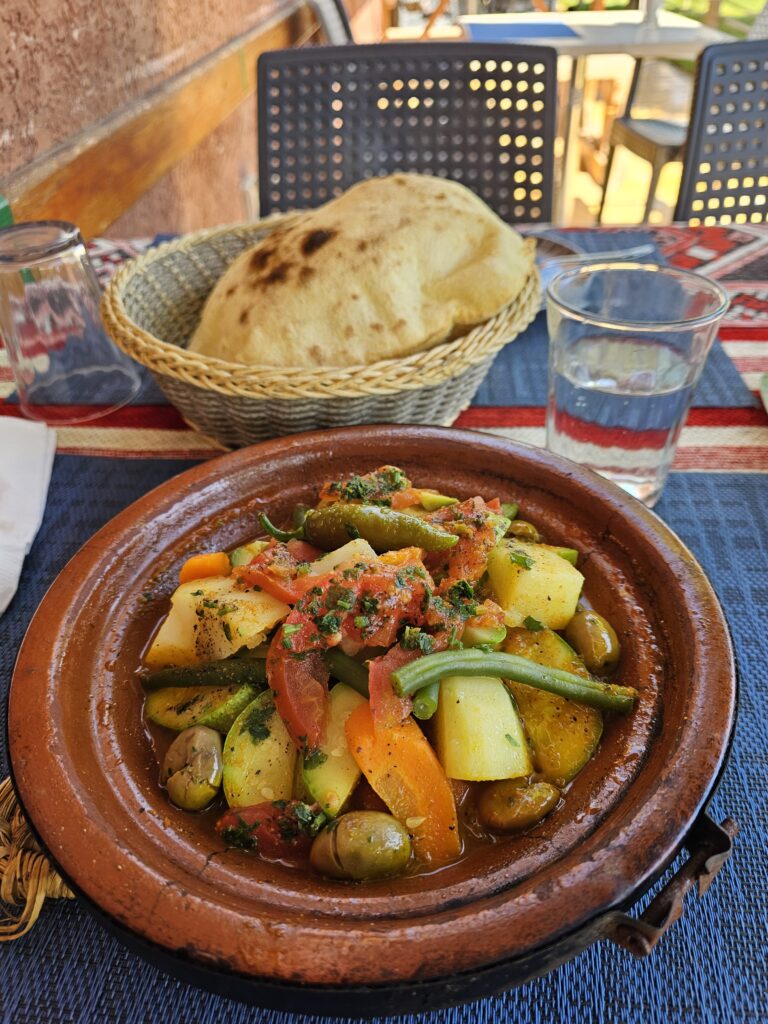
Lighter Choices: If you prefer lighter meals, opt for vegetable or chicken tajines, lentil soups, or couscous with vegetables, rather than heavier red-meat dishes.
Gentle Spice Note: Moroccan food is aromatic rather than fiery. Spices like cumin, cinnamon, coriander, turmeric, and saffron add depth and warmth without overwhelming heat.
Dietary Needs: Whether you’re gluten-free, vegetarian, or prefer milder flavours, you’ll find plenty of options in Morocco. Many riads and restaurants are happy to adapt if you let them know in advance — Moroccan hospitality often shines through in these thoughtful touches.
In Marrakech, there’s a wide variety of places to choose from, including plant-based cafés and international menus, while Essaouira is especially welcoming for dietary needs, offering fresh seafood, vegetarian, and plant-based meals, as well as international restaurants that cater carefully to different diets.
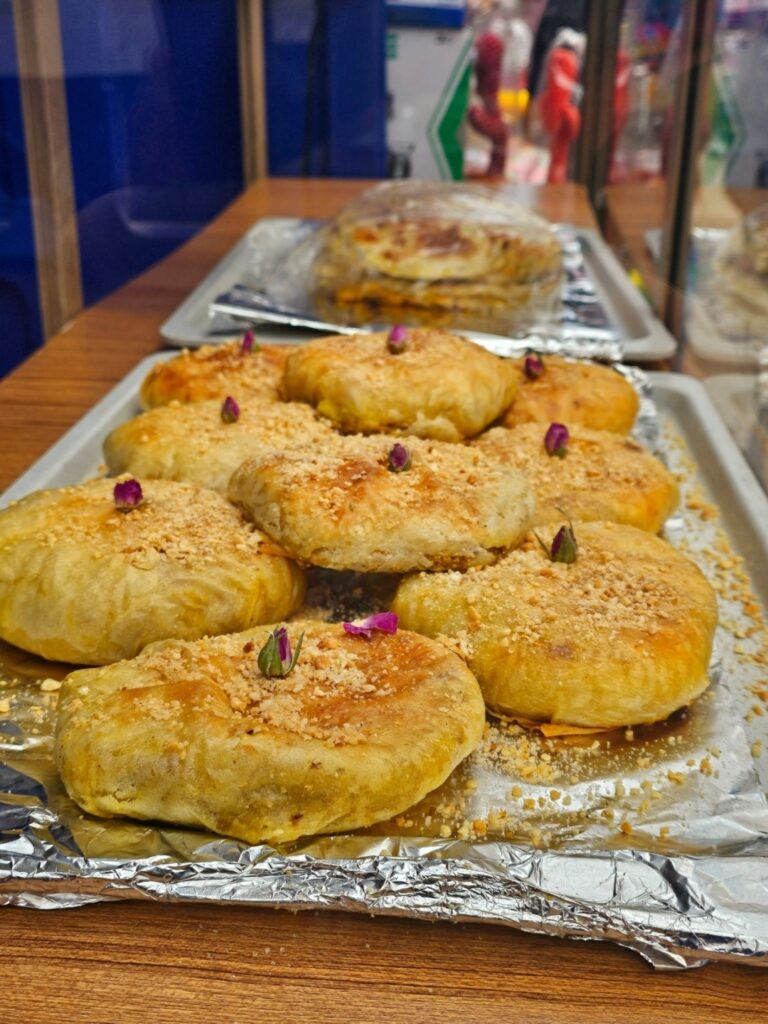
Essaouira: A few of my favourite cafes/restaurant
Plant-based & veggie-friendly:
Mandala Society – stylish café (also in Marrakech) with vegetarian/vegan dishes, smoothie bowls, and fresh juices.
Seafood & light eats:
Harbour stalls – freshly grilled fish and seafood cooked to order.
La Table by Madada – refined but relaxed seafood with a creative menu.
International & fusion:
Koozina (day time only) – blends Moroccan flavours with Mediterranean and international influences; excellent vegetarian and pescatarian dishes. They also do incredible smoothies (their beetroot and cinnamon was heavenly)
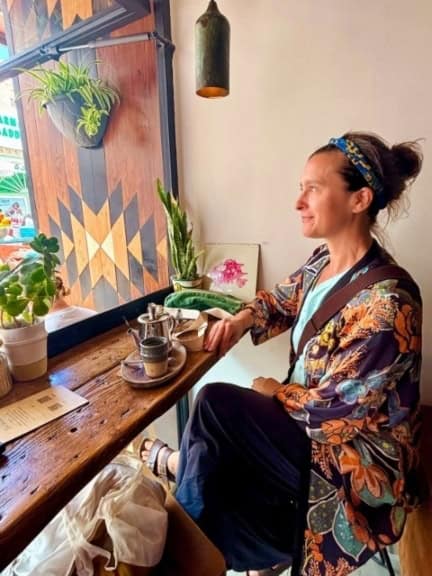
Staying online
Wi-Fi is common in hotels and cafés, but for reliable internet on the go, I personally use airalo eSIM which works well in Morocco and many other countries.
You can also pick up a physical local SIM in many mobile shops and at the airport.
Final Thoughts
Travelling solo in midlife with a chronic health condition isn’t about doing everything — it’s about doing what feels right for you. Morocco’s magic lies in small moments: sipping mint tea on a tiled patio, listening to the call to prayer echo at sunset, or watching the Atlantic waves roll in.
With mindful planning and a gentle rhythm, Morocco can be not just possible, but truly rewarding.
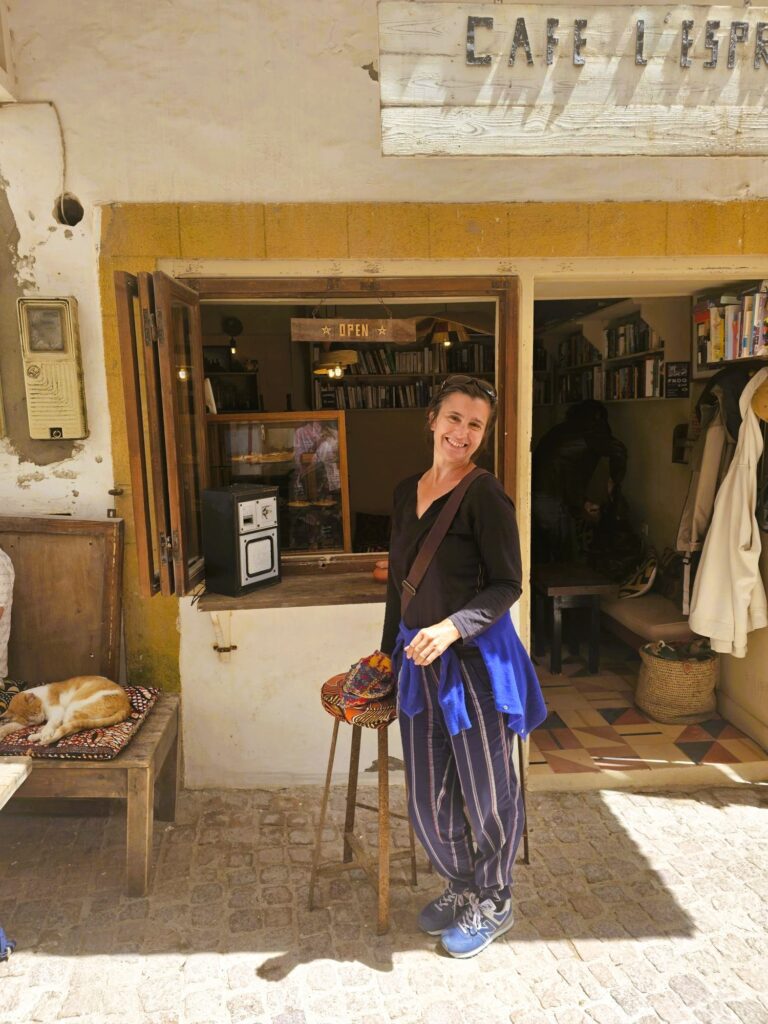
Travelling gently doesn’t limit the journey — it deepens the wonder in Morocco’s simplest moments.
💬 Have you travelled solo with a chronic illness? Are you considering Morocco for your next journey? Share your thoughts or questions in the comments!
Download your Free sample Itinerary for Morocco
✨ Designed with you in mind:
- Women travelling solo
- Midlife explorers
- Gentle, restorative experiences for those managing chronic illness
🌍 Quick Tips
- Airport Transfers: Click here to pre-book airport transfers
- Stay Connected: Get Airolo eSIM
- Currency: Moroccan Dinar. I recommend using Wise
- Language: Arabic (French & English)
- Guided Tours: See some great tours here
- Book Flights: I always use Skyscanner
- Best Insurance for pre-existing conditions: See here
Medical Disclaimer: This guide is intended to support and inspire your solo travel planning with a chronic health condition but does not replace professional medical advice, diagnosis, or treatment. I am not a medical professional. Always consult your healthcare provider before making travel plans, especially regarding your health, medications, and any necessary vaccinations or travel clearances. Your safety and wellbeing are the highest priority.
Blogs in the making
Coming soon: interviews with solo travellers who have chronic health issues & much more…
Sign up for all updates & blog posts
Related Blog Posts: Chronic Illness Travel
Chronic Illness Travel Insurance: Comparing Staysure & Avanti for Pre-Existing Conditions
Travelling Solo with Functional Neurological Disorder (FND): From Fear to Freedom
Solo Travel with Chronic Illness: How to Reclaim Yourself at Midlife
The Unexpected Benefits of Travelling Solo with a Chronic Health Condition
A Destination Checklist for Women Traveling Solo with a Chronic Health Condition
On being a Digital Nomad with MS: An inspiring interview with Monica Lynne
Sri Lanka for Women with Chronic Illness: A Calm, Restorative Destination for Midlife Solo Travellers
My descent into darkness and healing
More Morocco Blog Posts:
Le Jardin Secret – a calm sanctuary in the Marrakesh Medina
A Marrakech walking tour with Free Tour– to soothe solo travel nerves
What happens in a Moroccan Hammam?
Hotel Riad Dar Daif- a grounding hammam and exquisite massage in Ouarzazate
Dar Al Hossoun’s earthy Hammam & Spa in Taroudant
My first public hammam (surprising, naked and swift) – it was an experience!
Are you struggling to decide on a destination for your solo adventure?
Let me help you: download my supportive Destination Checklist
Traveling solo with a chronic condition can be incredibly empowering – but only when it aligns with your current health capacity and limits.
➡️ Download my Destination Checklist to help with your personal reflection and planning.
I’d Love to Hear From You!
Have you travelled solo with a chronic condition? Or are you thinking about it? Feel free to share your thoughts or experiences in the comment section below.
If this post resonated with you, please consider sharing it with someone who might need this kind of encouragement.
Let’s keep in touch.
Join me for all the latest blog posts, reviews and updates.
Orchids to Olives
Journeys of self-discovery, wisdom, healing and friendship