Solo Travel after a heart transplant: an interview with Leslie who was born with congenital heart disease
A Second Heart, a Wider World: Travelling Solo After a Heart Transplant
An Interview with Leslie
Do you wonder if you can travel solo with a chronic illness?
After a heart transplant and ongoing life saving medication, Leslie shows us that solo travel is absolutely possible.
Each journey entails strict medication schedules and certain restrictions, but Leslie is guided by her lifelong passion for seeing the world.
From Congenital Heart Disease to Heart Transplant: Leslie’s Medical History (in brief)
Leslie’s medical history is complex, what follows here is a very condensed version.
I was diagnosed at 4 months old with a heart that had congenital heart defects – 7 defects to be exact.
From a young age, I went through 3 major experimental open heart surgeries.
At aged 46, in 2019, I willingly accepted a hepatitis C heart donor organ from a 29 year old female intravenous drug user.
I was the oldest single ventricle patient to receive a successful heart transplant in Pittsburgh and the 2nd single ventricle patient in the world to receive a Hep C donor’s organ.
There were a lot of complications during and post-transplant. While in the hospital, I had multiple complications such as a brain bleed, a seizure during the surgery, a stroke, pneumonia, pulmonary embolisms, sepsis, multiple blood clots – I almost bleed to death, thrush, paralyzed vocal chords, infiltrated hands, fluid buildup around both lungs, blood infection, plus more.
Most of it was caused from being under anaesthesia too long during surgery – 13 hours rather than 8. I had to have to have brain surgery and fluid drained from my lungs
After the transplant, I underwent physical, occupational, and speech therapy for months.
A heart transplant doesn’t mean you are ‘fixed’
For me and everyone else having a transplant, it doesn’t mean that you are ‘fixed’. A transplant only extends the amount of time you get to spend with your family and friends.
Yes – there are a lot of perks with having a transplant such as being able to run, go scuba diving, hiking in high altitudes, travel, etc… but there are days where you can’t seem to get out of bed or have side effects from your donor organ.
It’s not all a bed of roses, however, I would have a heart transplant all over again if it meant more time to spend with my family and friends.
I also still have liver and kidney failure related to having congenital heart disease. I’m at Stage 3 liver failure and Stage 3 kidney failure, however I’m still optimistic, and for now I don’t need a transplant for those organs, but may in the future.
I always remember what my Hep C coordinator, said to me while awaiting for a heart transplant – “once a congenital heart, always a congenital heart.”
Leslie’s passion for life
Even though I had congenital heart disease, it didn’t stop me from becoming an Elementary teacher receiving a master’s degree in education.
I have travelled extensively throughout the United States, Canada, Mexico, Caribbean, Central America, Europe, and Africa.
I’m bilingual in English and Spanish and I love hiking, reading, photography, and exercising.
I’m truly blessed to have a second chance of life.
Without my family and Pittsburgh Children’s Hospital paediatric cardiology department, I wouldn’t have lived long enough to receive heart surgery as a child and then go on to have a heart transplant at Presbyterian Hospital in Pittsburgh.

Travelling Solo After a Heart Transplant – the Interview
What inspired you to start travelling solo while managing a chronic illness?
Being a child who was in and out of the hospital often, I would meet children from all over the world.
In one instance, I met a little girl from Venezuela who had congenital heart problems as well. At a young age, I wanted to be able to communicate with her, get to know her – about her life in her country. I also wanted to let her know that she wasn’t alone.
At 15, I told my parents that I wanted to study abroad and see the world for myself. At the age of 16, my pen pal invited me to see her in Italy. We agreed that I would visit her after I graduated from high school. My pen pal’s parents sent money for a round-trip plane ticket as a graduation gift.
Unfortunately, I got sick, but I ended up going to visit her by myself while I was studying abroad in Seville, Spain two years after I graduated high school.
I was 20 years old when I first started traveling solo.
Do you have a particular travel style?
Normally, I’m invited to visit a former student or host student in their country. I then tend to visit other countries around their country. I usually spend 2 weeks to 5 weeks abroad traveling.
Honestly, I would spend more time abroad however I have to return home due to multiple medical appointments and blood work.
How do you prepare for a solo trip with your health in mind?
When I travel abroad, I let my family physician, the pharmacist, and my heart transplant team know that I am travelling. I tell them the location and how long I will be gone.
It’s essential that I keep to roughly the same medication routine as I have at home. As a transplant patient rejection medication needs to be taken every twelve hours without missing a dose. If I would miss a few doses, it could cause some life-threatening complications.
I have a MedSchedule app that has all my meds, doses, and a set time to take my medications. The alarm clock on MedSchedule keeps me on track with all my meds. Thus even if it’s early morning, due to the time difference I keep to it.
Have you faced any tough moments while travelling solo? How did you handle them?
I think the only tough moments I have is lifting my luggage above my head on trains and short layovers where I have to walk long distances to catch the next flight quickly and steep hill climbs to see a castle.
In these situations, I get wheelchair assistance on all my flights even if it’s a long layover. I ask someone to help me lift my luggage onto the rack above me when on a train, and sometimes I just see a castle from afar and be thankful that I’m actually able to see the beautiful site in front of me.
The reason why they were tough moments is because I had a major stroke during my transplant which left some limited mobility on my left arm and walking around.
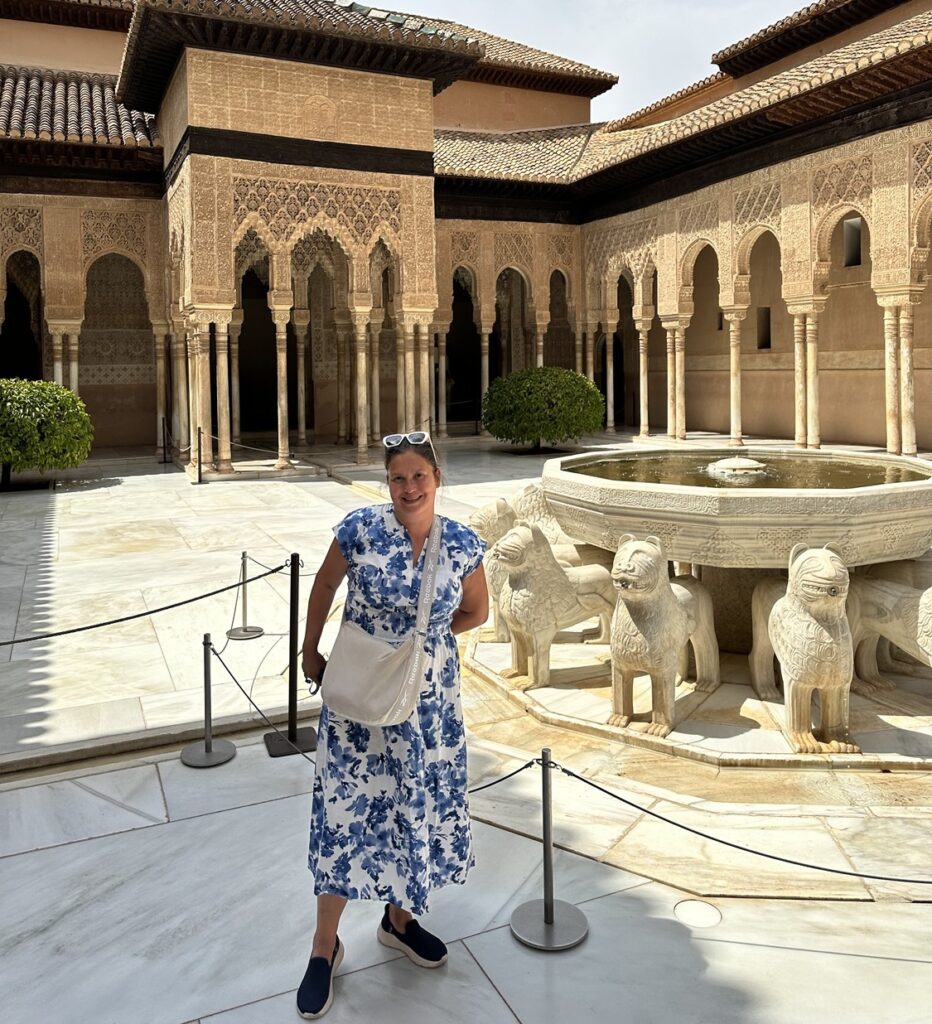
What has solo travel taught you about yourself or your health condition?
Solo traveling is a liberating experience where I can look back at how much progress I have made since birth or even after not being able to walk or talk post heart transplant.
Being disabled doesn’t mean that I can’t enjoy doing the same things as my peers. It just means that I may achieve my goals at different pace than others do and I’m ok with that too.
Can you share a travel experience that made you feel powerful, free, or deeply alive?
In June, I went on a hiking adventure to several national parks in the USA, more specifically the Grand Teton National Park.
This trip for me was one of the most memorable and powerful experiences that I’ll ever have in my life.
I say that because as an individual born with a rare congenital heart disease it’s very unlikely that I would’ve been able to hike 10,000 feet above sea level mainly because of the altitude.
I literally cried after my hike because I was so exhausted and thankful that I was blessed to have a chance to see such a beautiful place.
Most single ventricle patients are unable to hike, let alone walk above 5,000 feet simply because of the air pressures and their hearts cannot withstand it without becoming dizzy, lightheaded, or even passing out due to lack of oxygen.
What advice would you give to a woman with a chronic illness who wants to travel solo, but feels unsure?
Take the first step
My advice is take the first step. Go on a short trip such as eating out by yourself, then going to an event by yourself, and then maybe a trip two or three hours from your home. Then take the steps to travel out of the country – perhaps at first with a friend, but during that trip do an activity or two by yourself,
Finally, when you build up the confidence and courage take the initiative to travel solo.
Ask for help
Always ask for help, whether it be for directions, assistance with luggage, opening a door, or even picking something up for you.
What do you have to lose?
Last but not least try, what do you have to lose, but the opportunity of what ifs, if you didn’t try?
Having a chronic illness may be a hindrance or even irritating at times especially when independence is important. Yes, sometimes I wish I didn’t need to ask for help, but I can’t do it all on my own, so I ask for help to be able to enjoy the things I love to do the most, which is traveling.
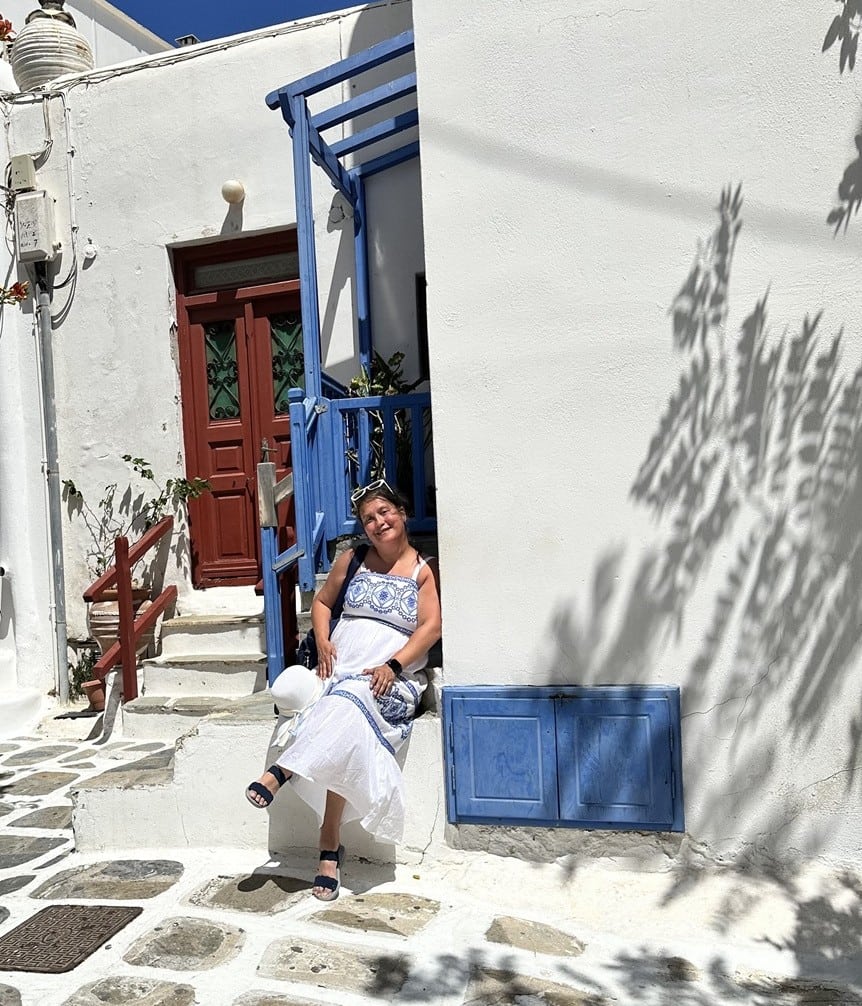
What’s next on your travel bucket list?
My next trips will be back to Europe to explore the rest of the Balkan and Baltic countries solo. Then a trip to see my host sister from Brazil in her hometown of Curitiba, Brazil in 2026.
Thank you Leslie!
I’d Love to Hear From You!
Have you travelled solo with a chronic condition? Or are you thinking about it? Do you have a favourite wellbeing place? Feel free to share your thoughts or experiences in the comment section below.
If this post resonated with you, please consider sharing it with someone who might need this kind of encouragement.
Would you like to contribute a guest blog post?
Do you travel solo with a chronic health condition, whether that be physical or emotional? If you’d like to share your story and tips with others, contact me here 💌
Blogs in the making
Coming soon: more interviews with solo travellers who have chronic health issues & beautiful age appropriate wellbeing places
Sign up for all updates & blog posts
Related Blog Posts: Solo Travel with Chronic Illness
Listening to my body: Solo Journeys with MS – an interview with Sandra Keating
The Hypermobile Traveller: How Katy Balances a Chronic Health Condition and Solo Travel
Chronic Illness Travel Insurance: Comparing Staysure & Avanti for Pre-Existing Conditions
Travelling Solo with Functional Neurological Disorder (FND): From Fear to Freedom
Solo Travel with Chronic Illness: How to Reclaim Yourself at Midlife
The Unexpected Benefits of Travelling Solo with a Chronic Health Condition
A Destination Checklist for Women Traveling Solo with a Chronic Health Condition
On being a Digital Nomad with MS: An inspiring interview with Monica Lynne
Sri Lanka for Women with Chronic Illness: A Calm, Restorative Destination for Midlife Solo Travellers
Are you struggling to decide on a destination for your solo adventure?
Let me help you: download my FREE supportive Destination Checklist
Traveling solo with a chronic condition can be incredibly empowering – but only when it aligns with your current health capacity and limits.
➡️ Download my Destination Checklist to help with your personal reflection and planning.
Let’s keep in touch.
Join me for all the latest blog posts, reviews and updates.
Orchids to Olives
Journeys of self-discovery, wisdom, healing and friendship