Nirvana Naturopathy & Ayurveda Retreat and Hospital (Near Mumbai): My Honest Review
Nirvana Naturopathy & Ayurveda Budget Retreat and Hospital (Near Mumbai)
My Honest Review of a 2 week stay
Are you looking for an affordable naturopathy and ayurveda retreat near Mumbai?
Imagine: two-therapist massages, mud packs, saunas, delicious healthy food…
Nirvana Naturopathy Retreat might just tick the box.
This post shares my very honest two-week experience at Nirvana Naturopathy near Mumbai — the therapies, food, rooms, daily schedule, and the reality of a wellbeing retreat that’s structured and deeply treatment-focused.
I have also included what it was like to stay as a non-Indian guest.

Why I chose Nirvana Naturopathy Retreat & Hospital
I decided to stay at Nirvana Naturopathy Retreat & Hospital for three main reasons.
Knee surgery rehab (and finding physio + acupuncture in one place)
First, I’d had a knee operation four months earlier and wanted to focus on rehabilitation. Nirvana was the only place I could find near Mumbai that offered not just naturopathy and Ayurveda, but also physiotherapy and acupuncture — all in one setting.
It is also an award winning AYUSH & NABH certified Naturopathy Hospital.
Living with FND (Functional Neurological Disorder)
Second, I’m living with ongoing symptoms of FND (functional neurological disorder): numbness, tingling, and digestive issues.
Like many people with chronic health conditions, I’m on a constant mission to support my body and nervous system as gently as possible.
Affordable Price
Nirvana is very reasonably priced with both budget and premium rooms. All treatments (4 a day), all meals, juices, teas, yoga, pranayama and talks are included in the full price.
I paid around £550 per week for a premium room.
Where is Nirvana Naturopathy Retreat located?
Nirvana is located around three hours from Mumbai by car, in Nashik district, Maharashtra, India.
It’s in a lush rural area surrounded by fields and open land and overlooks the picturesque Lake Beale.

Physical Healing-Focused, Not Just Relaxation
Before booking, I was clear on what I wanted: a place that was both relaxing and focused on healing specific conditions. A generic wellbeing or “blissed-out” retreat wasn’t my goal this time.
Nirvana Naturopathy describes itself as both a retreat and a hospital and is an AYUSH Certified Naturopathy Centre — meaning it meets official standards set by India’s Ministry of AYUSH for naturopathic and traditional medicine practices.
From exploring their website and social media, I understood that this would be a more clinical, treatment-focused environment rather than a purely indulgent, spa-style retreat — and that was exactly my experience.
Nirvana is a structured treatment-focused healing centre
From the moment you arrive, there’s a supportive rhythm: doctor consultations, meals, daily routines, yoga, treatments, and health talks.
The philosophy is simple — while you’re at Nirvana, you’re gently guided through a system designed to care for your body and wellbeing.
Nirvana offers an astonishing menu of treatments, including:
- naturopathy
- massage therapies
- Ayurveda
- hydrotherapy
- ozone therapies
- acupuncture
- physiotherapy
- body packs and mud treatments
- detox therapies (including enemas and colonics)
On Arrival – Doctor consultations (and how your plan is decided)
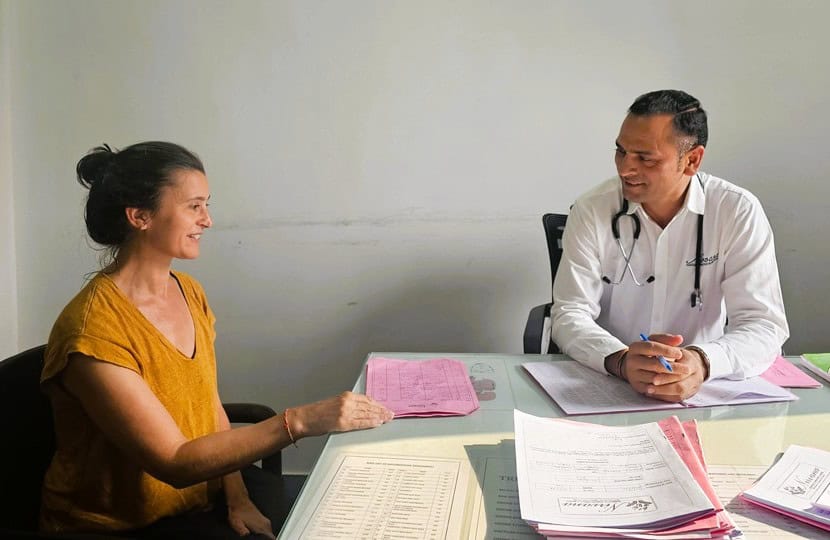
On arrival — and throughout your stay — you have doctor consultations where your health history is taken in detail, along with basic measurements such as blood pressure and vital signs.
My doctor was very approachable and spoke good English.
Blood tests – you’re required to provide blood test results. If you don’t have them, Nirvana can arrange for bloods to be taken, which I did.
My results were mostly normal, except for slightly high cholesterol (which genuinely surprised me as I have a super healthy diet!).
Hormonal testing – I also chose to have my reproductive hormones tested. I had a hysterectomy two years ago (I kept my ovaries), and at 52 I was curious about where I was with perimenopause.
My results suggested I was still ovulating and not currently menopausal — which was helpful to know.
The blood tests were an extra cost.
Personalised diet plan + optional add-ons
From the consultation, the doctor creates:
- a personalised programme of therapies
- a prescribed diet plan
- and optional add-ons depending on your needs
Each therapy was explained to me, along with why it was recommended.
The Daily Schedule at Nirvana Naturopathy: 5 AM Starts, Kriyas, Yoga & Treatments
The easiest way to explain Nirvana Naturopathy is to walk you through a typical day. The routine is structured, immersive, and it starts early—at 5 AM!
At exactly 5 AM, someone gently knocks on your door with a cheerful “Good morning” — and doesn’t stop until you answer! It’s a little shock to the system at first, but I soon found myself waking naturally at 4:45.
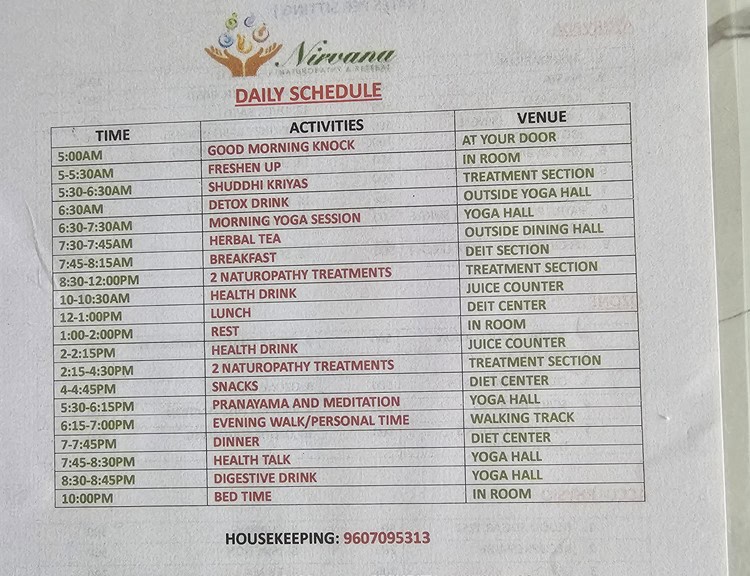
Morning Kriya (yes… at 5.30am)
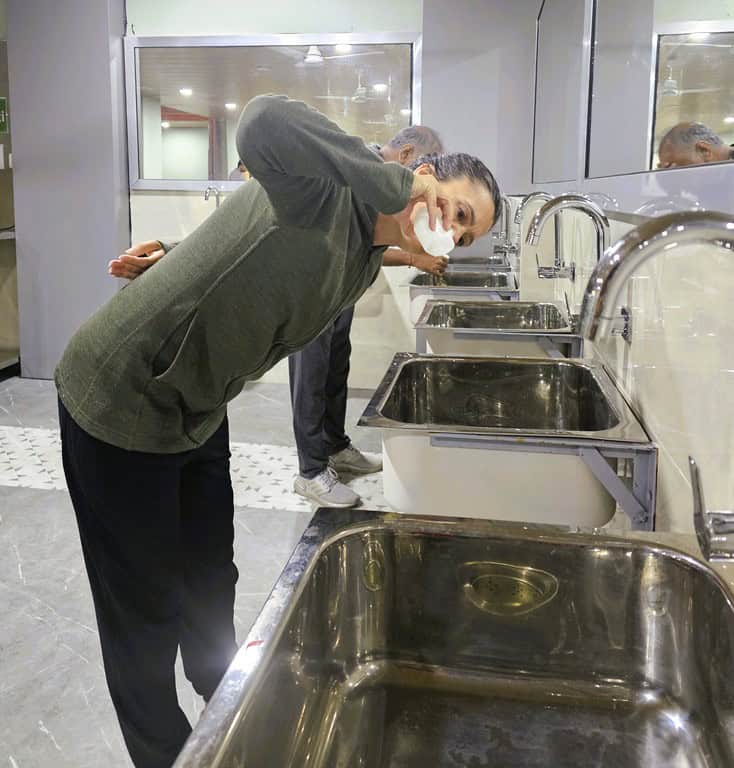
Part of the Nirvana routine is a morning cleansing practice known as kriya — a set of traditional techniques used to support digestion, circulation, sinus health, and overall detoxification.
It includes a few traditional naturopathy / yogic cleansing methods such as:
- Eye bath (eye rinsing)
- Neti (nasal cleansing) – you breathe warm water up your nose
- Mouth oil wash with sesame seed oil – swish oil around your mouth
- Turmeric gargling
And then there was… the ghee.
Ghee up the nose (not for me)
On the first morning I agreed to try ghee in the nostrils — and let’s just say: never again.
I’ve had a complete repulsion to ghee for years (it’s on the same level as cheese for me, which I also can’t stand), so why I let someone put ghee up my nose at 5.30am is honestly beyond me.
That said, plenty of other guests seemed perfectly happy with their “morning ghee shot”, so this is very much a me problem.
Apparently ghee is used for its soothing, lubricating properties and is believed to support sinus health — but for my nervous system… it was an immediate no.
Yoga Classes at Nirvana Naturopathy: Traditional, Mixed Abilities, Minimal English
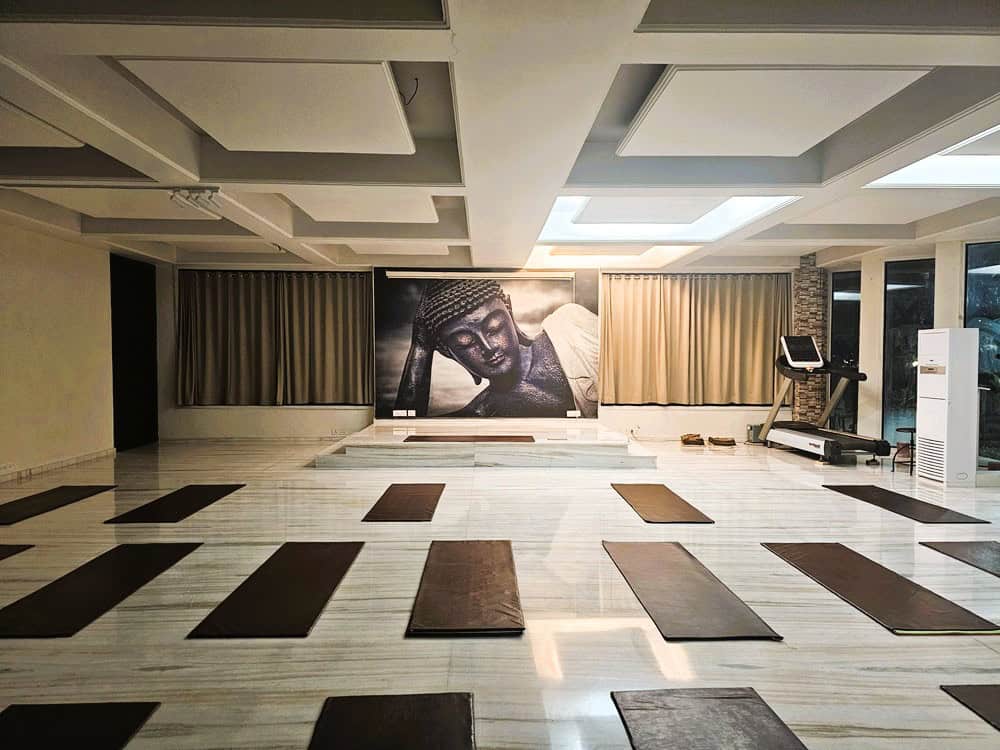
I joined the yoga sessions at 6.30am most days, and I enjoyed them.
It had been a long time since I’d done in-person yoga (I usually practise with my own online teacher), but there was something uplifting about being in a full room of people moving together early in the morning as the sun rose.
One of the nicest things was the mix of people: all ages, all sizes, all abilities.
The yoga was taught by Kamel, and the classes were varied, with each day focusing on different parts of the body. I’m not entirely sure what style he was teaching, but it felt like a fairly traditional Hatha-based class.
Language barrier (and adapting the practice)
The sessions were mostly taught in Hindi, with only a few English words here and there — usually “inhale” and “exhale”.
Because of that, it wasn’t always clear to me whether instructions were being given on how to modify poses for different bodies and abilities, which I believe is key for deep yoga practice.
Personally, I had my own yoga teacher’s voice in my head throughout the practice, reminding me to stay out of ego and listen to what my body needed — rather than trying to force myself into what a “good” posture should look like.
This is especially important for me because I have a degree of hypermobility. Flexibility can look impressive, but stability around the joints — and building strength to support them — matters just as much. This is something I have learnt in recent years from my own yoga teacher who emphasis the importance of shaping yoga around your body.
If I hadn’t had that internal reminder and my own knowledge of yoga, I’m not sure I would have enjoyed the classes as much. I also think that if you don’t speaking Hindi and don’t already practise yoga, the sessions would be challenging.
That said, other guests I spoke to (especially those who understood Hindi) were very happy with the sessions, and some said that adaptations were offered when needed — for example, if you had back pain.
A yoga space where everyone belonged
What I found genuinely lovely was that older guests were also included — some practised on a raised platform, and others used chairs.
It felt like a space where everyone could participate in their own way.
And honestly, I love that. All movement is good.
The cold abdominal pack (not my favourite!)
At the end of each session, a cold pack was placed on the abdomen for around 20 minutes of relaxation.
This is a common naturopathy practice, believed to support digestion and calm the nervous system — though personally, I would have preferred to stay warm.
Morning and Afternoon – Treatments Nirvana Naturopathy
How many therapies do you get per day?
Most days you receive four therapies:
- two in the morning
- and two in the afternoon
You can also add extra treatments at a very low cost.
Naturopathy treatments are included in the overall package, while therapies such as acupuncture, Ayurveda and physiotherapy cost extra. But the prices are surprisingly affordable — for example, one acupuncture session was around 250/300 rupees (£2.50).
Nirvana Therapies: the biggest range I’ve ever seen
Now let’s talk about the therapies — because honestly, Nirvana Naturopathy Retreat offers the widest range of treatments I’ve ever come across at a retreat, and treatments I didn’t know existed.
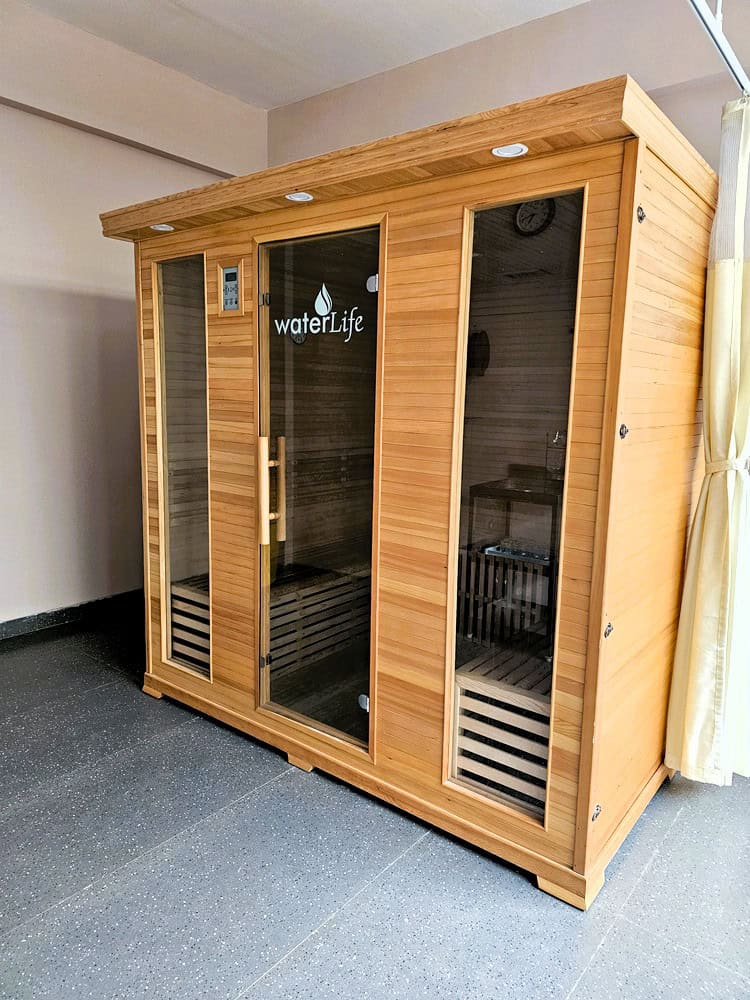
There’s a broad spectrum of treatments including massage therapies, hydrotherapy, steam & sauna, ozone treatments, acupuncture, physiotherapy, colonic therapies, and a whole menu of packs and body treatments.
Massage therapies (often with two therapists!)
The massage therapies at Nirvana were excellent — and one thing that really surprised me was how many treatments were done by two therapists at once, which feels wildly luxurious for a budget retreat.
A few that stood out:
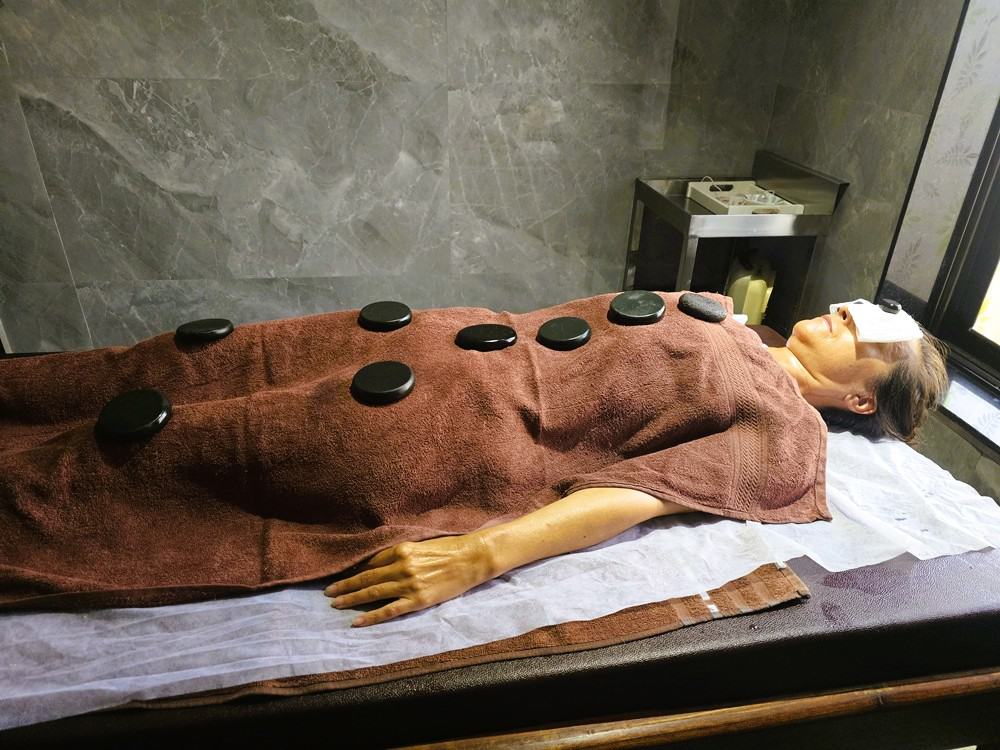
- Hot Stone Massage – deeply relaxing, and again done by two therapists.
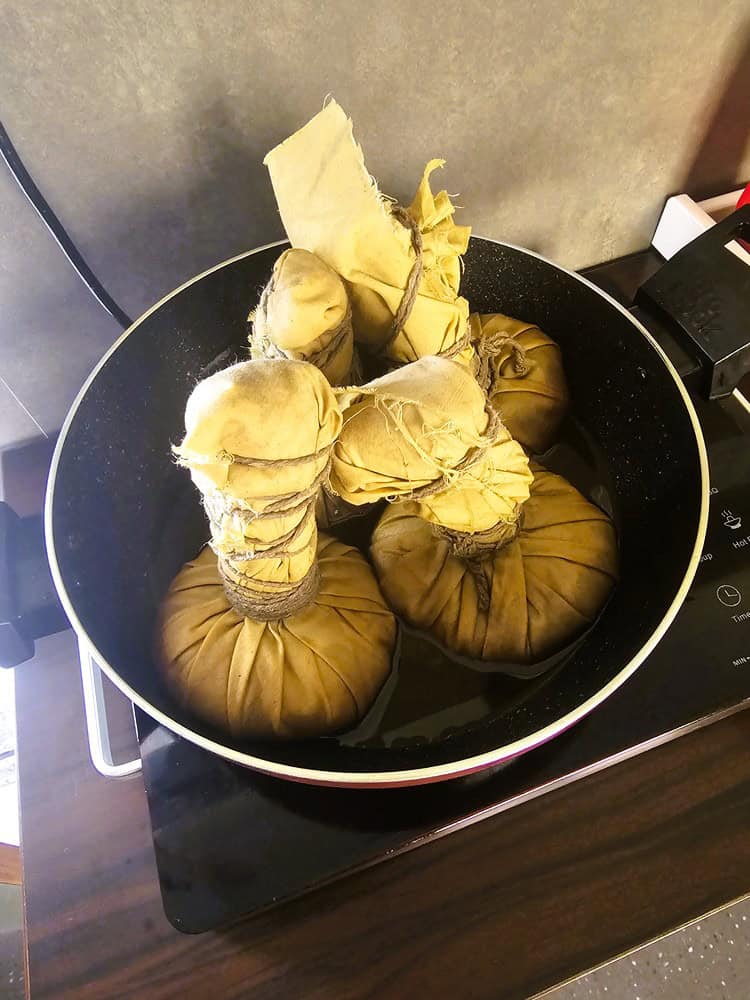
- Potli Massage – one of my favourites. You’re massaged and then “pounded” (gently!) with muslin bags filled with herbs soaked in hot rice water. It sounds odd, but it felt incredible.
- Salt Glow – two therapists rub salt over your body to exfoliate and detoxify (not the nicest sensation, but it’s brief). You then shower, and afterwards they massage you with coconut oil. Oh my god. That part felt amazing.
- Powder Massage – again, two therapists, using herbal powders, followed by steam.
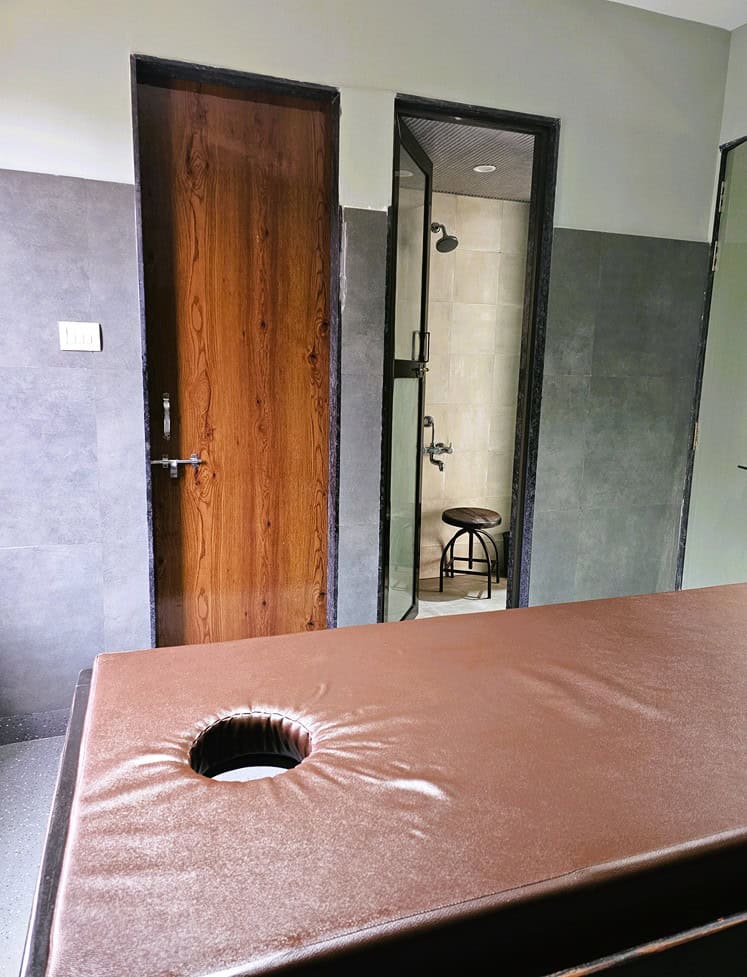
Another lovely detail: many massage rooms have personal steam rooms attached, so after your massage you go straight into steam to absorb the oils and herbs.
There are also many other massage options such as full body, leg-only treatments, head and shoulders, facial massage, and more.
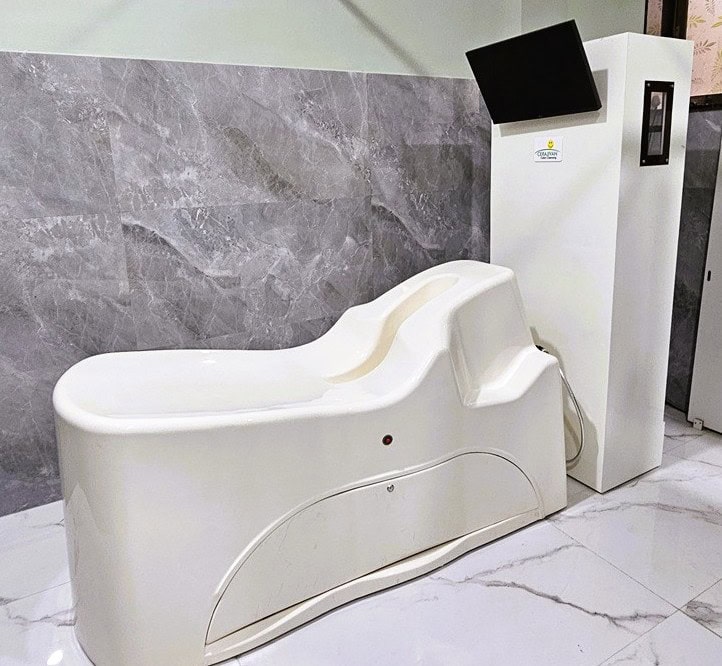
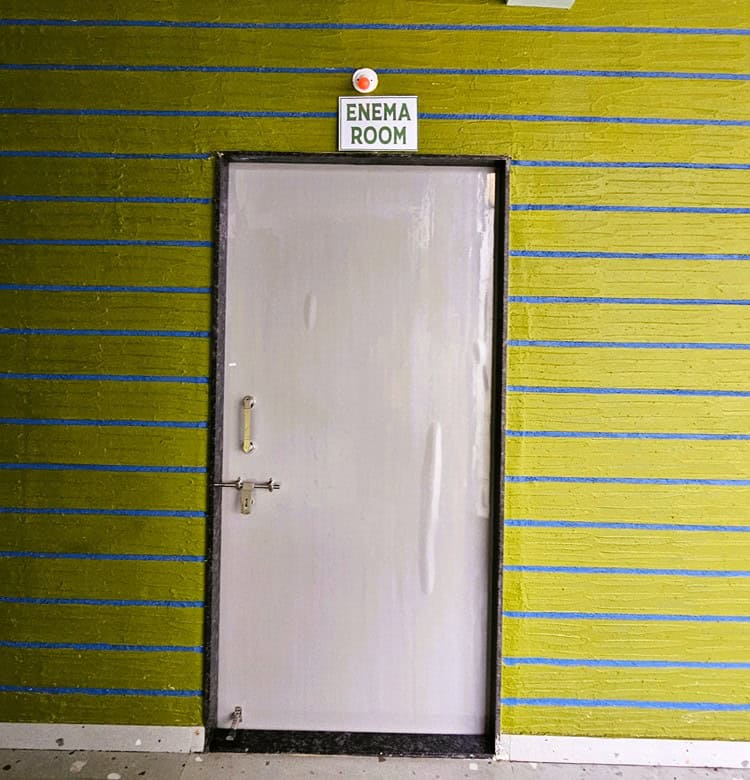
Enemas & colonic irrigation (gut health focus)
Gut health is a big part of naturopathy, so detox therapies such as enemas and colonics are also part of the programme for many guests.
I had a water enema. I’m not a stranger to enemas (I did a series of Ayurvedic oil enemas in Sri Lanka), but I’d never had a water one before.
It was… honestly fine. It didn’t hurt, and yes — it did what it was supposed to do.
I didn’t opt for colonic irrigation. Instead, I tried a yogic cleansing method (more on that below). But the guests I spoke to who did have colonics were positive about the experience, and several said they felt noticeably lighter afterwards.
Hydrotherapy
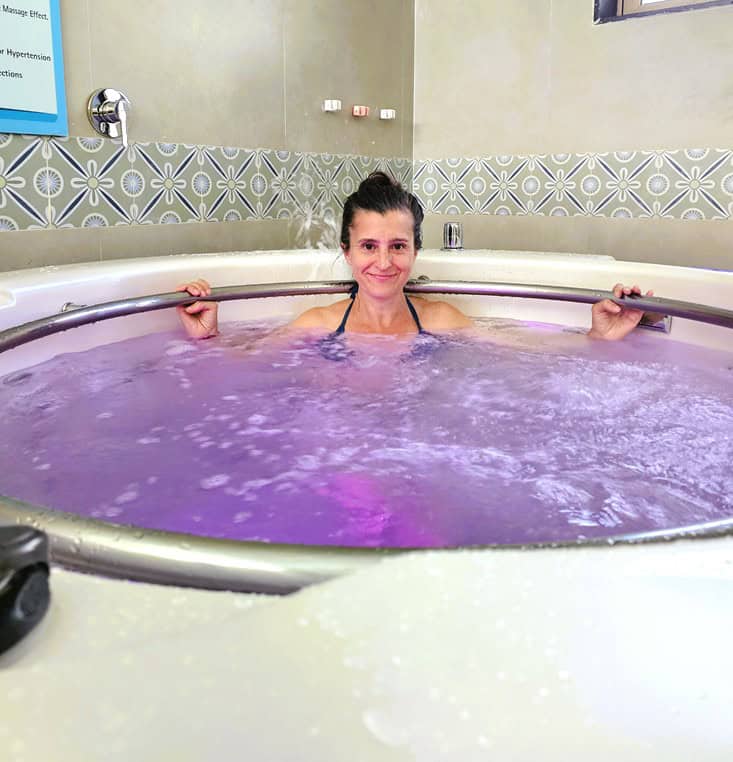
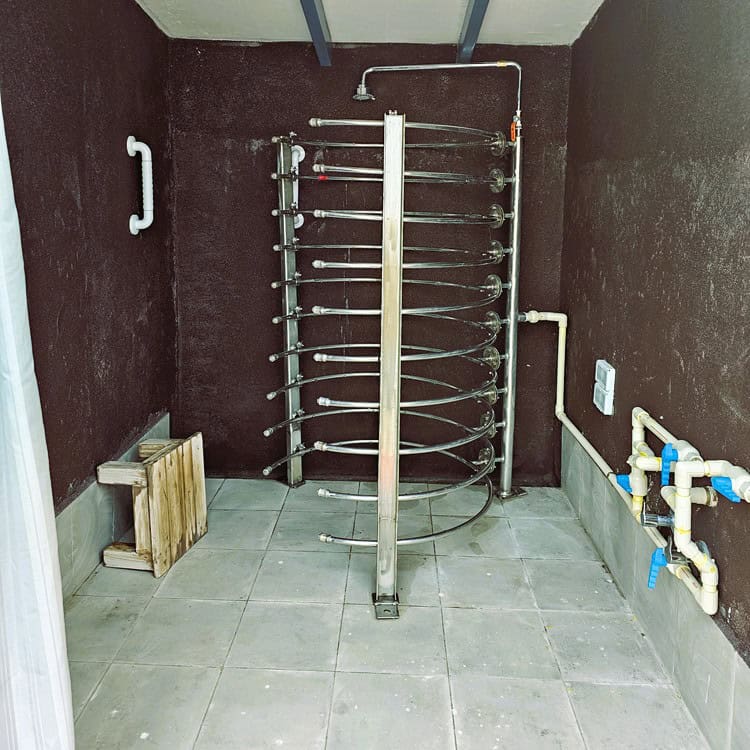
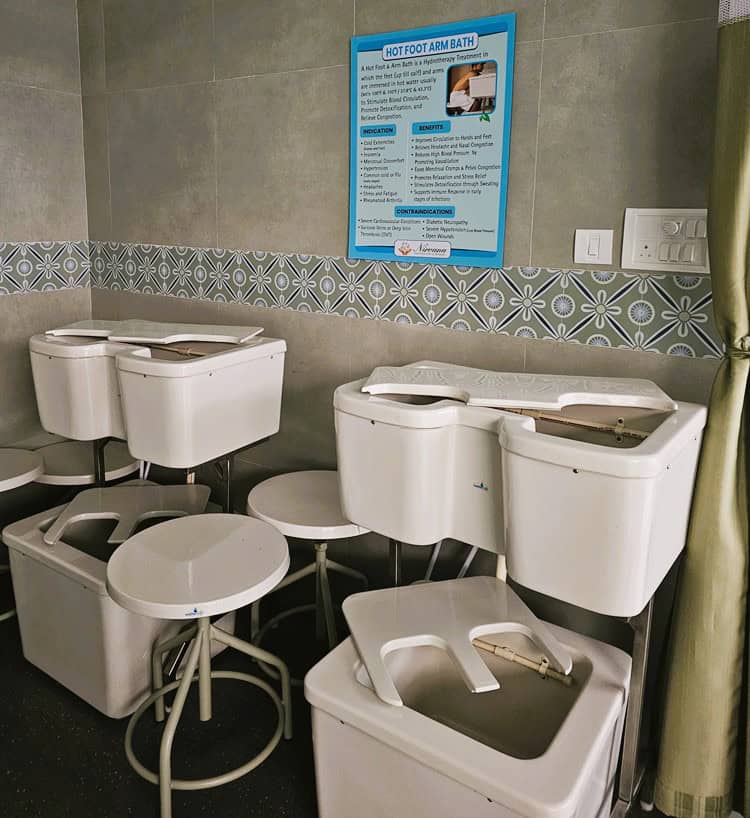
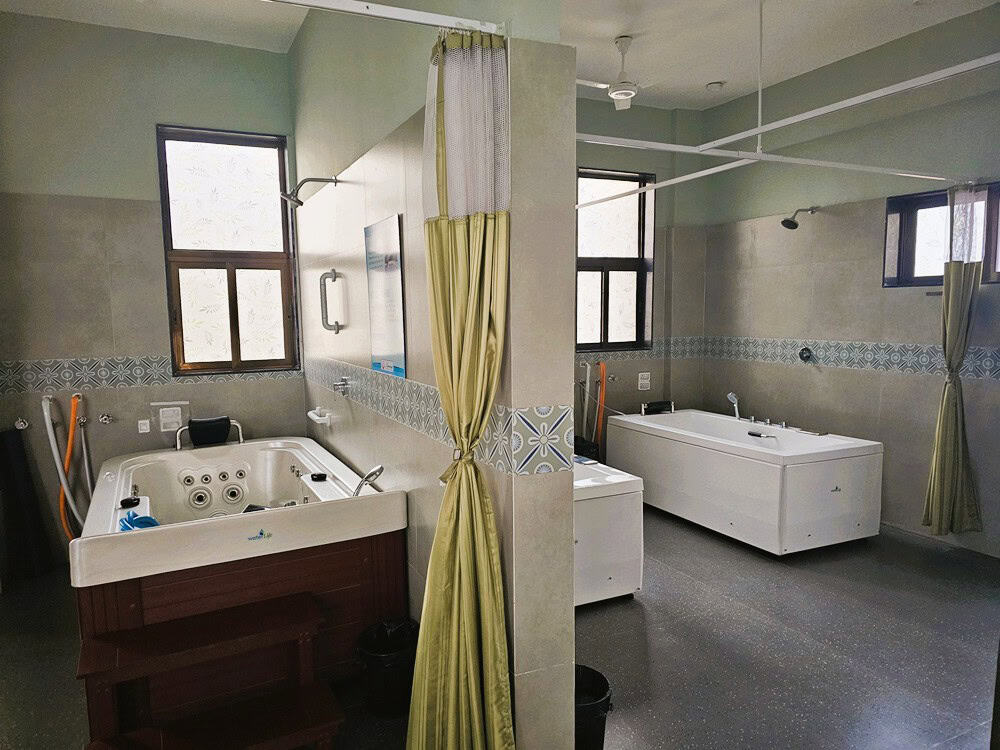
Hydrotherapy is the use of water for healing and circulation — and Nirvana has a huge range of hydrotherapy treatments.
Some I tried:
- Underwater Massage Bath – you lie in a warm bubbling bath while the therapist uses a water jet to massage the body.
- Whirlpool – I loved this one.
- Standing Whirlpool Jet Shower – you stand inside a circular shower system that blasts water from multiple angles. I won’t lie, it looked slightly like torture at first… but it was actually great.
- Ozone Bath – ozone is piped into the bath. I tried it, but I didn’t really “get” this one, and it wasn’t particularly exciting.
There were also various smaller hydrotherapy treatments for legs, hips and arms.
Packs, infrared and heat therapies
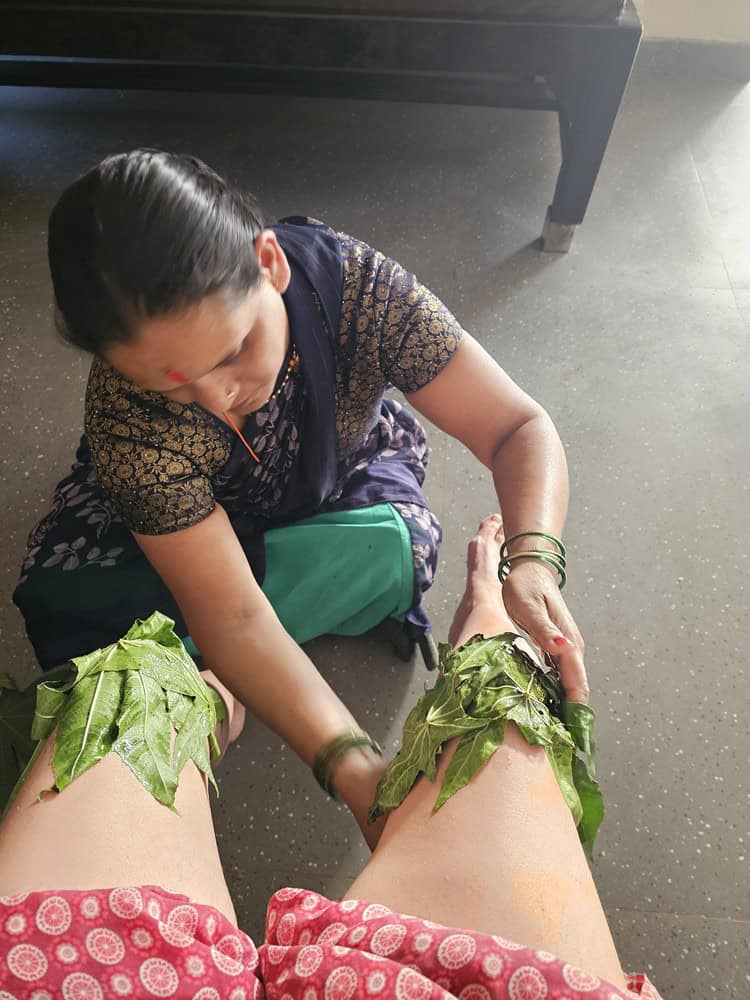
Another key part of the naturopathy programme is the use of packs — often using heated herbs or natural ingredients, wrapped around specific areas of the body.
These were some of the packs I had:
- Cabbage leaf pack – heated in oil and placed on my knees, then wrapped in cling film and a support bandage.
- Castor leaf pack – similar concept, again used for inflammation and pain.
- Mustard pack – ground mustard applied to my knees and lower back
Other packs included kidney packs, liver packs (including castor oil), and more depending on your treatment plan.
They also use infrared therapy, where a heat lamp is placed over a specific body area.
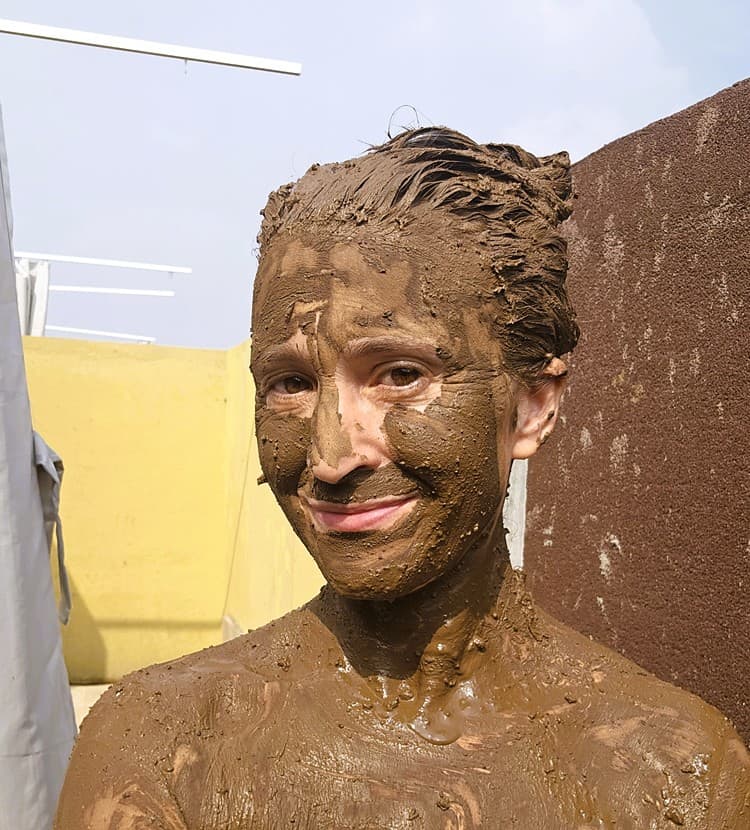
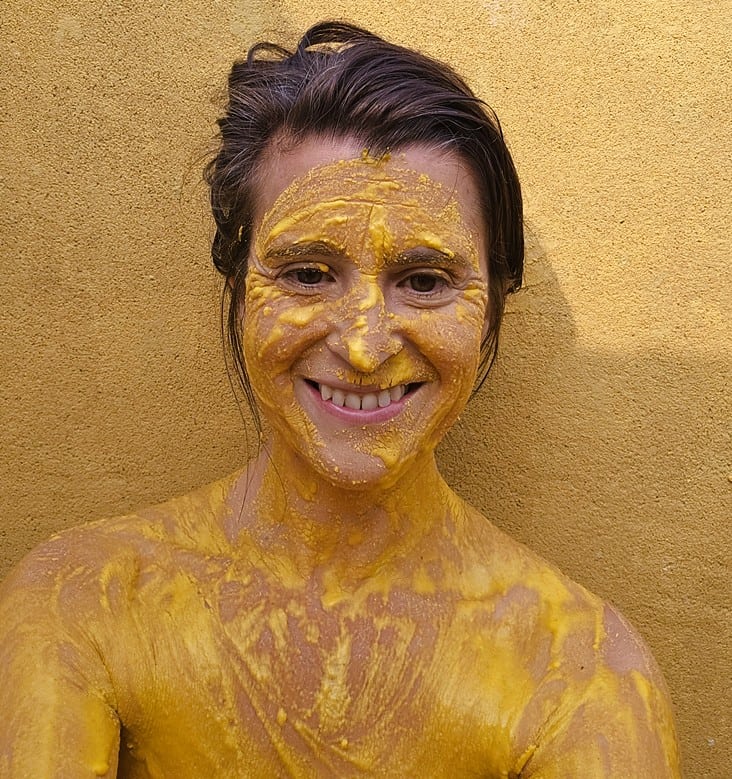
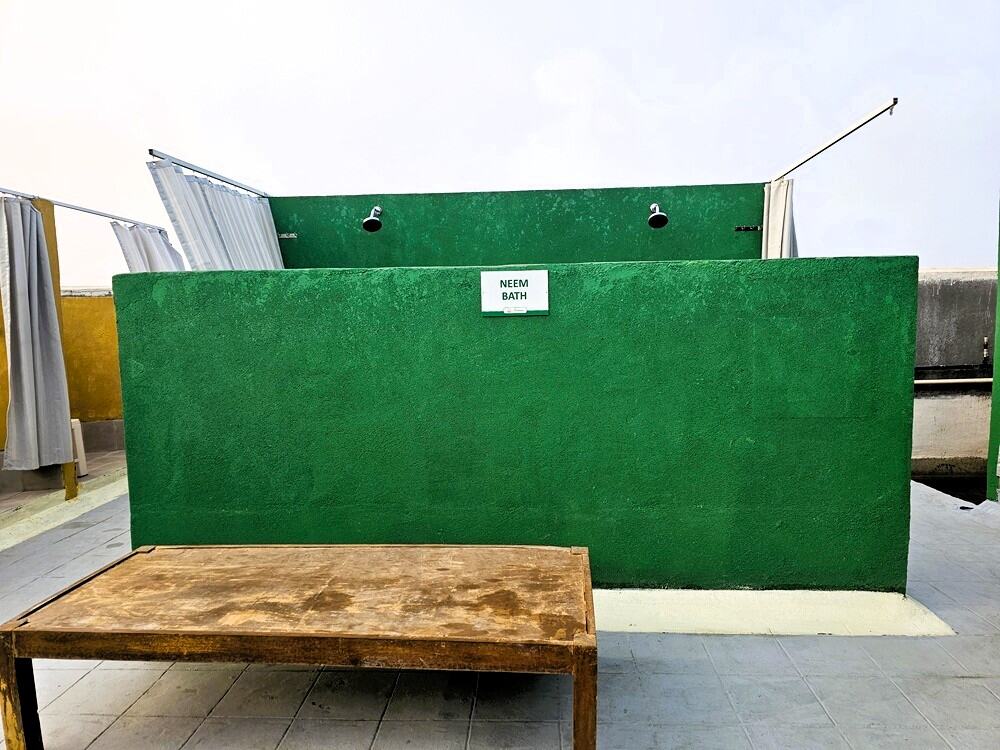
Full-body mud, neem and turmeric baths
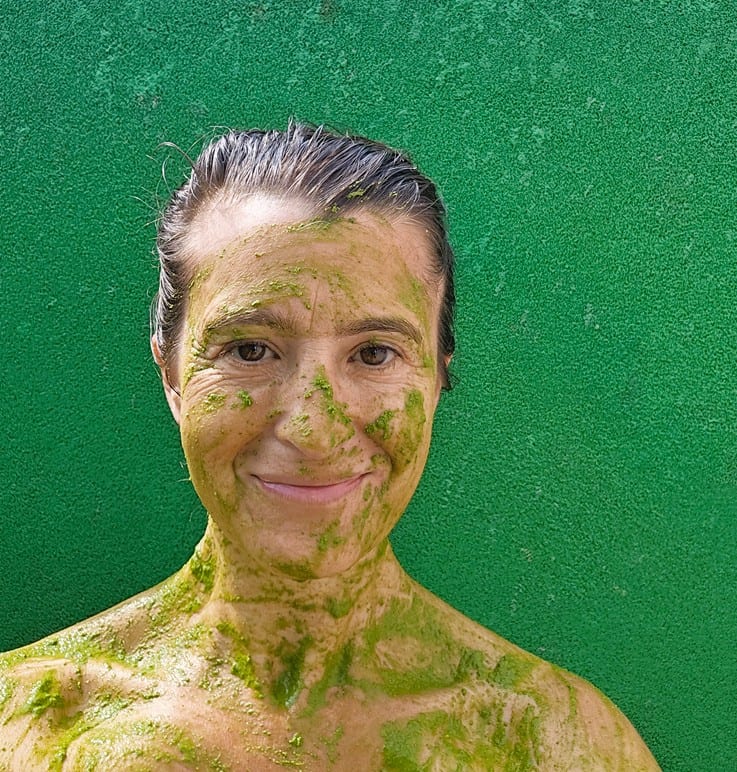
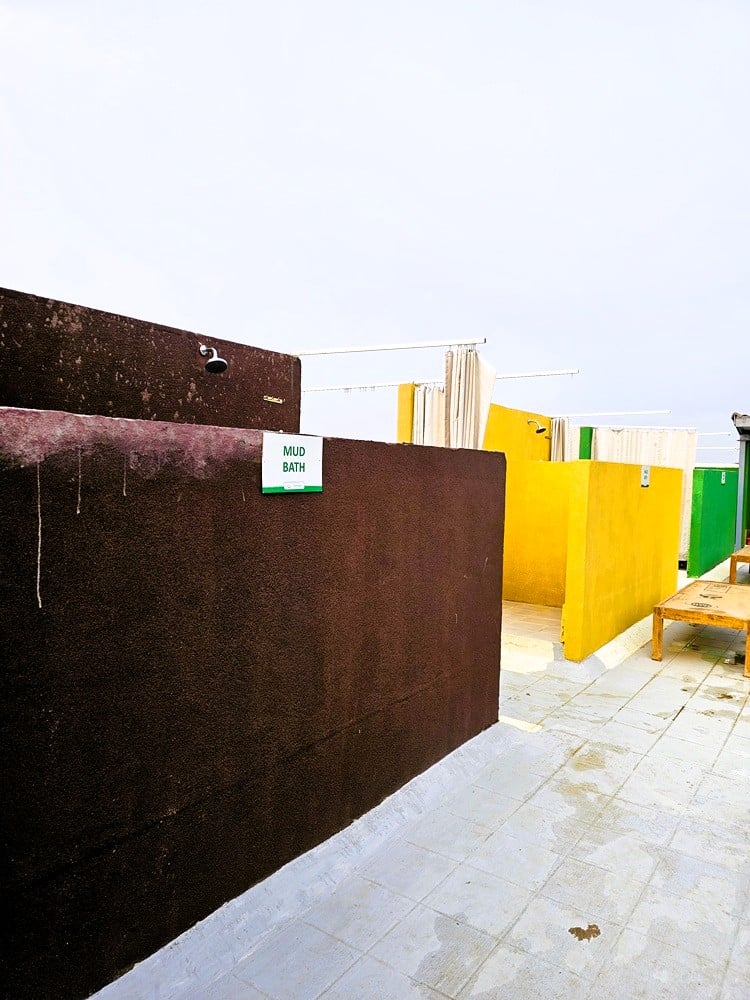
For me, the most exciting treatments were the full-body packs done on the top terrace.
In the open air, your body is covered from head to toe in either:
- mud
- neem paste
- turmeric (haldi) paste
Afterwards, you sit beneath the sun while it dries.
There was something deeply grounding and elemental about it — being smothered in nature’s offerings, sitting under the open sky, and letting the warmth soak into your skin.
Though I will say… sometimes it felt a little chilly while drying!
Acupuncture
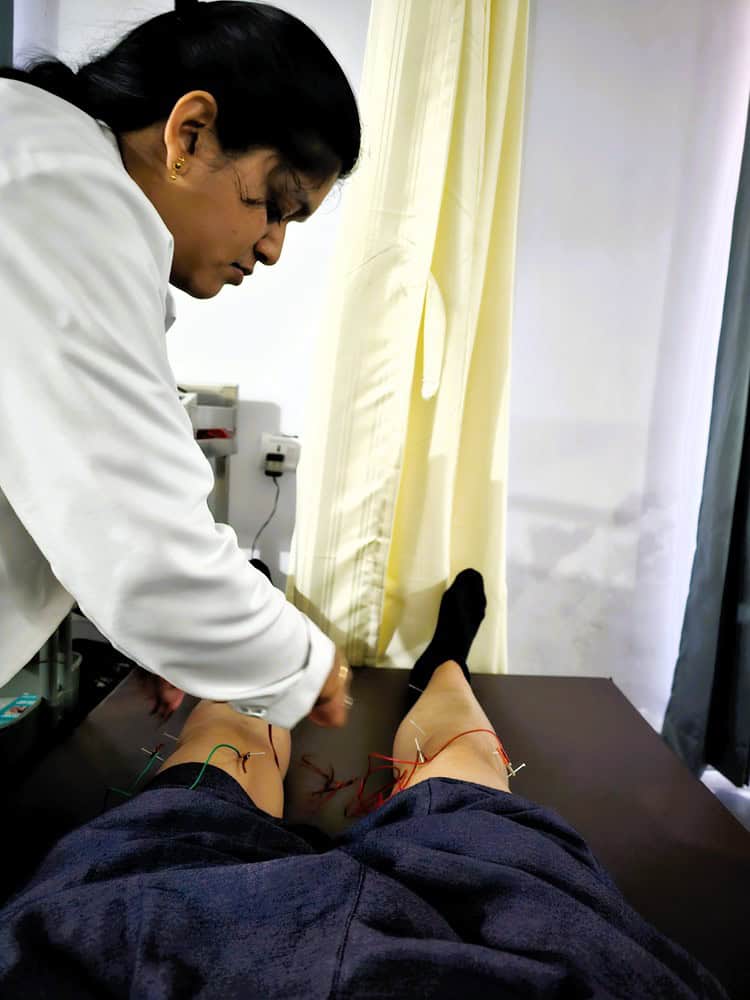
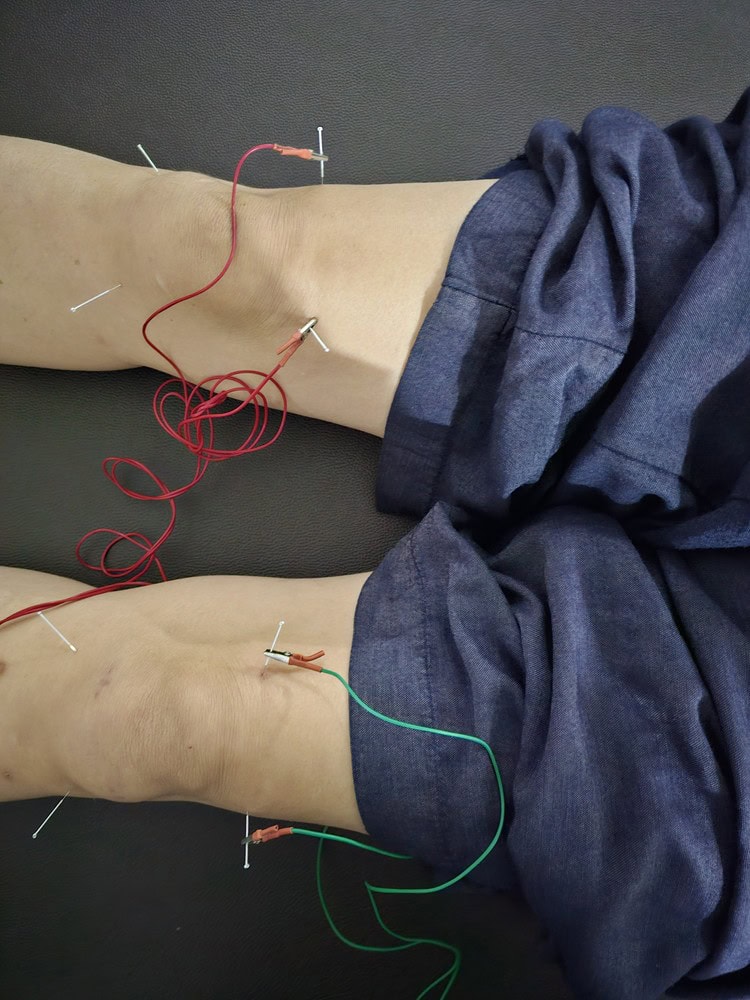
I had acupuncture most days — around five sessions focused on my knees, and five on my lower back.
I found it genuinely beneficial and noticed a definite improvement in knee pain and stability after each session.
Physiotherapy, Ayurveda and ozone (what I didn’t do)
Although physiotherapy was one of my main reasons for choosing Nirvana, I ended up not having it.
I’d postponed my visit by a few months, and by the time I arrived I already had a rehab routine that was working well for my knee and the physiotherapist didn’t see the need for further exercises.
I also didn’t opt for Ayurveda (other than a shiro-dhara treat, which I love), mainly because I’d been lucky enough to be on an Ayurvedic retreat only a few weeks earlier and wanted to focus on naturopathy and acupuncture instead.
And while Nirvana does offer ozone therapies, I didn’t explore those in depth beyond the ozone bath. Though I was quite intrigued by yoni ozone – but I wasn’t offered it!
Therapy Unit & Treatment Rooms at Nirvana Naturopathy (functional, not spa-like)
I think it’s important to say that the therapy unit and treatment rooms at Nirvana are designed for function rather than ambience.
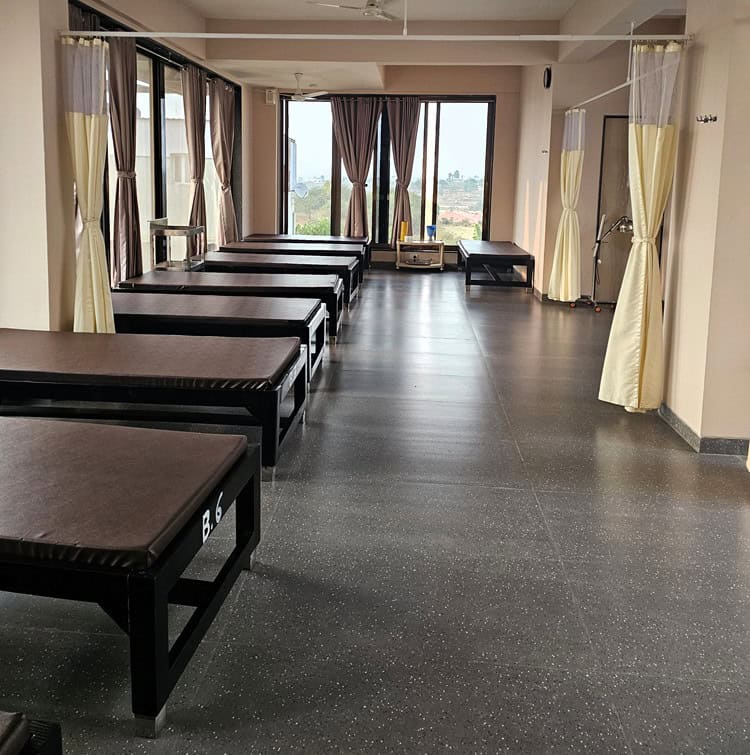
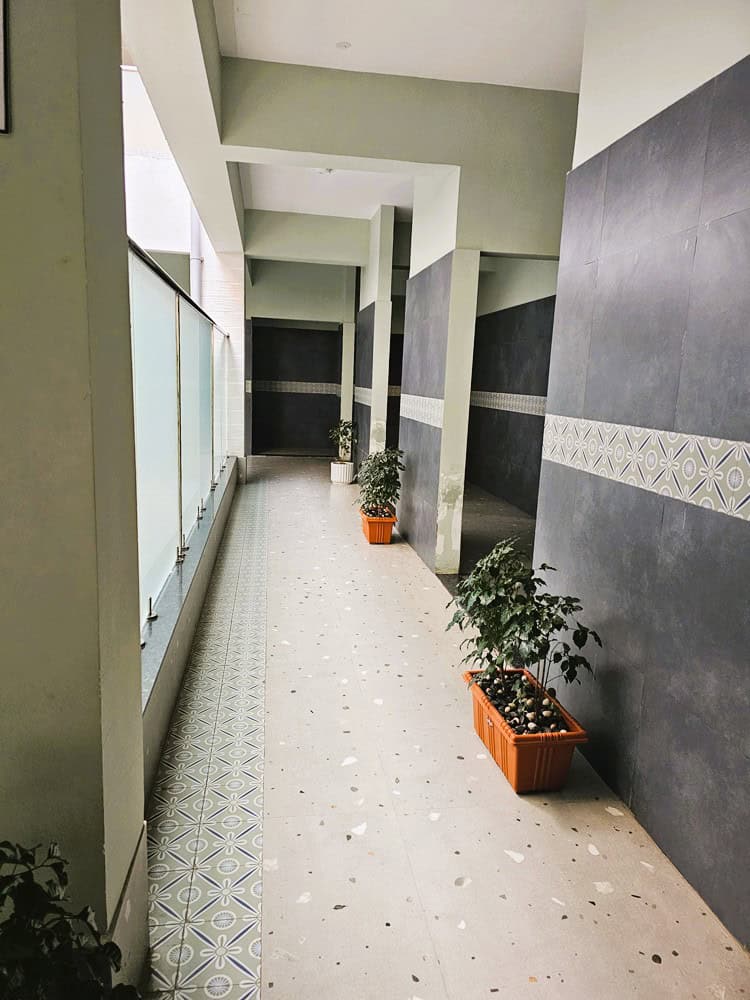
Unlike many spas/retreats I’ve visited, there’s no warm lighting, nice smells, soft décor, or “luxury retreat” feel. The massage rooms are grey/green-tiled and clinical, the hydrotherapy area is full of equipment and separated with curtains, and the packs area — while open and airy with views — still feels very practical and treatment-focused.
It’s hard to show in photos the scale of the treatment centre and how many treatments rooms and treatments are available, but take my word for it, it’s a lot and it can cater to large number of guests.
The treatment facilities — like everywhere else at Nirvana — were spotlessly clean.
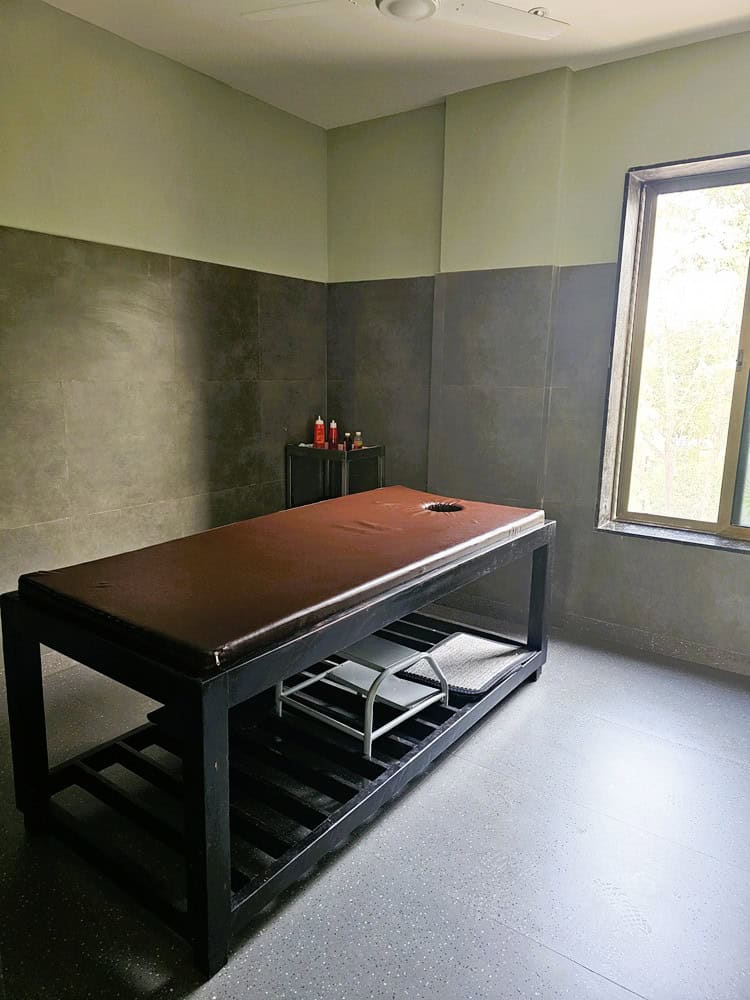
The only space that really had a sense of rustic charm was the open rooftop terrace where the mud packs were applied — and even then, it wasn’t because of décor, but simply because you were under the open sky.
And a small but memorable detail: there was often the same looped “relaxation music” playing in the background. At first it was fine… but after two weeks, I was one pan flute away from losing it — and my headphones became essential.
That said, I had to keep reminding myself: Nirvana is a budget retreat, and while a little more ambience would have been nice, for the price I paid the service and facilities were genuinely excellent.
Therapists (highly skilled, but quite clinical)
Each floor of the therapy unit was coordinated by a supervisor/manager, and I have to say: the organisation and timing were impeccable.
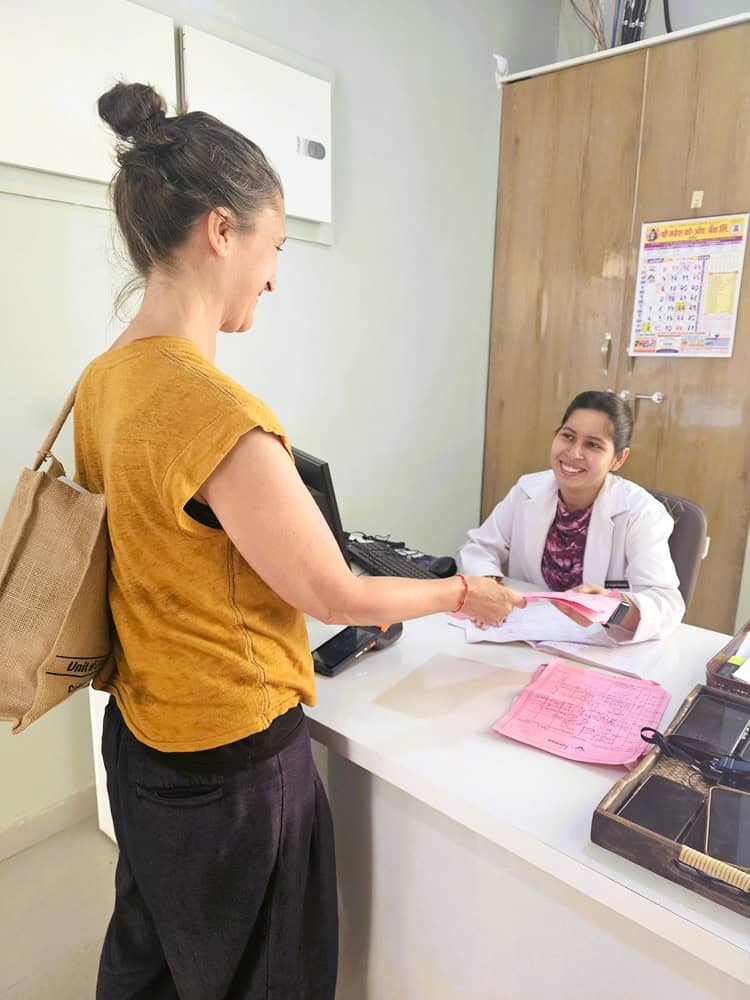
No matter how many clients were there, you were directed to your next therapy promptly, told how long it would last, and then guided straight on to the next one. The whole system ran with impressive efficiency.
The therapists themselves were clearly well trained and delivered consistently excellent treatments. I’ve had a lot of massages over the past few years, and many of the treatments at Nirvana were genuinely of a very high standard.
However, much like the facilities, the therapists often felt quite functional rather than nurturing.
I felt that instructions were often abrupt, and there wasn’t always that softer, more reassuring energy you might expect in a wellness retreat. Very few spoke English, so part of this may simply have been the language barrier; however, I’ve had many none English speaking therapists before and this has not been an issue (the opposite in fact).
A few therapists were warm and gentle, and I did feel that as the days went on they started to soften and warm towards me.
When I spoke to other guests (especially those who spoke Hindi), they said something similar: that Nirvana can sometimes feel a little like being moved through a system — but that the treatments themselves were “top notch” (a phrase I heard a lot in India, and it always made me smile).
In short: incredible therapies, but not a place I’d describe as emotionally soothing and had I had these treatments a few years ago, when I was struggling emotionally, this type of approach may not have worked for me as I felt very vulnerable and I needed a very different type of energy.
Meals (simple, sattvic, and surprisingly good)
The meals at Nirvana Naturopathy are incredibly nutritious, and quite creative.
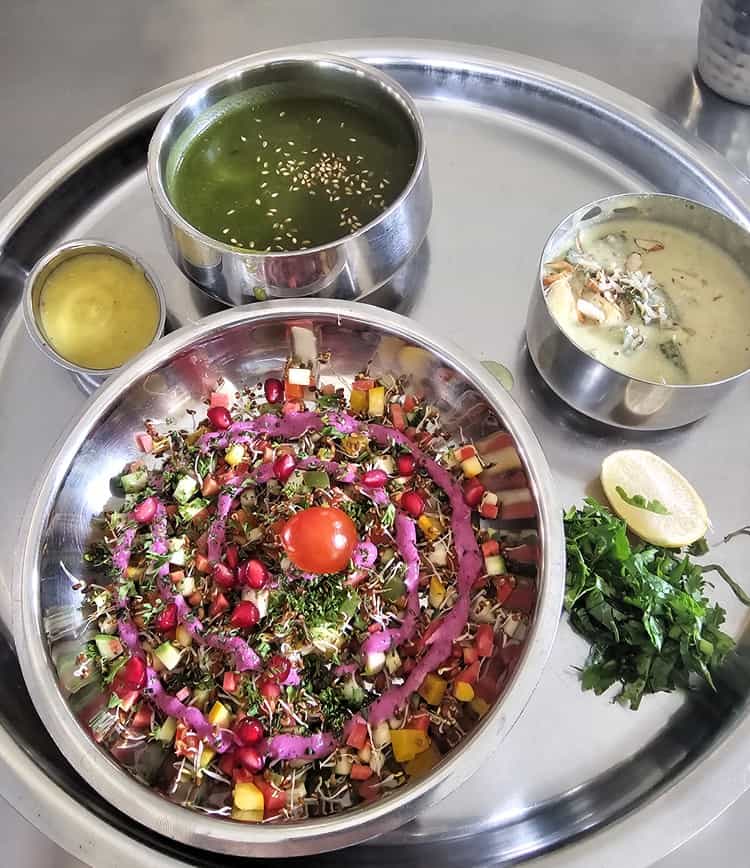
All food is vegetarian and sattvic — meaning no garlic, onion, chilli, or added salt. There also wasn’t any rice (which surprised me), and instead more nutrient-dense grains like millet were used regularly.
Your diet is prescribed by your doctor, and the system is quite strict: you can’t just ask for an extra roti or an extra bowl of fruit unless your doctor has approved it.
I heard many guests grumbling about the meals, saying they were bland and “needed salt.” But personally, I thought the food was really good. Vegetables, pulses, sprouts, and grains were prepared in a variety of ways, and there was enough variation across the two weeks that it didn’t feel dull.
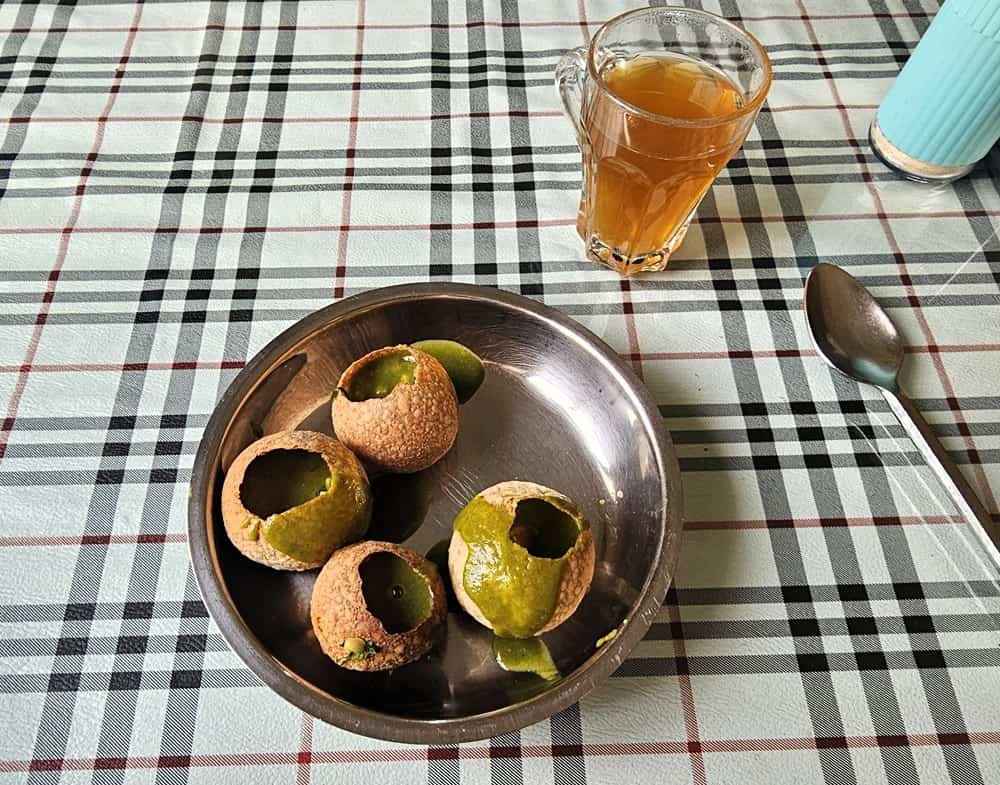
A typical day of food looked like:
Breakfast: fruit and seeds
Lunch: soup, two light curried vegetable dishes, salad, and (if you were lucky) a roti
4pm snack: often popped rice, a light snack, or naturopathy-style version of pani puri (an Indian classic – usually deep fried).
Dinner: similar to lunch, but lighter
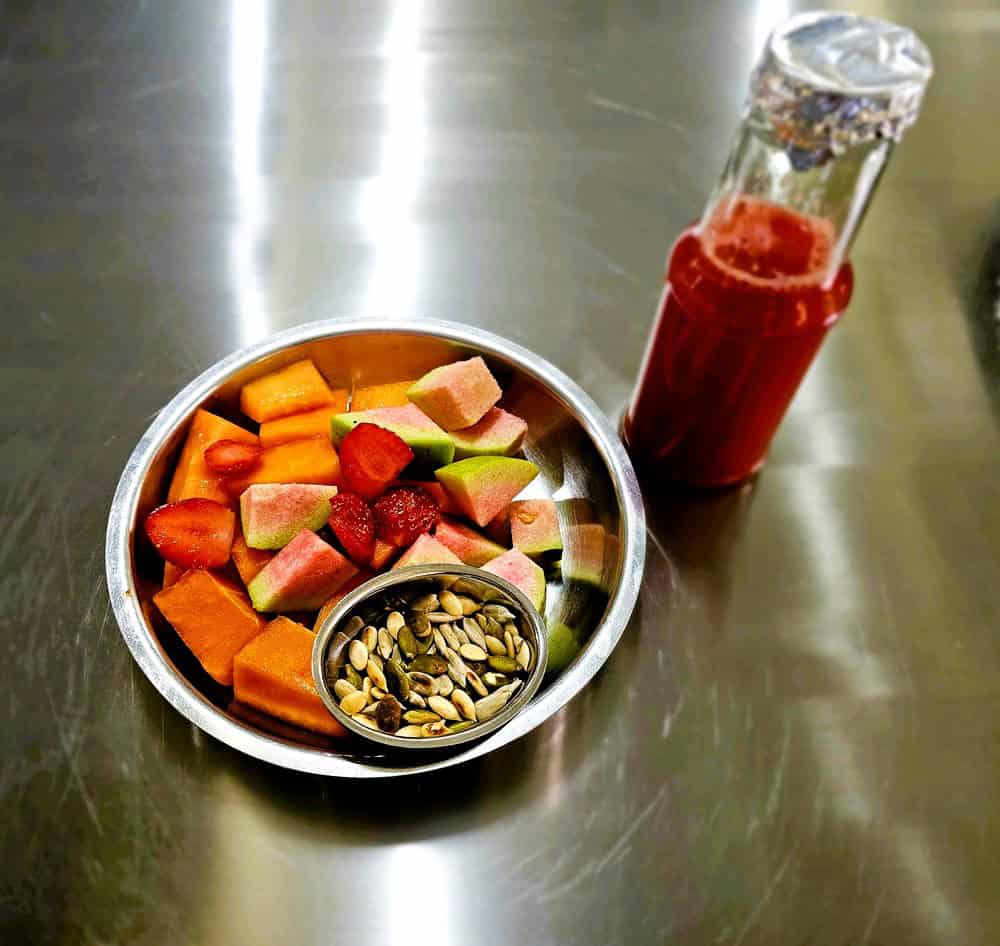
I actually lost 2kg over two weeks, which wasn’t my intention — I specifically told them I didn’t want to lose weight — but I think when you’re eating that cleanly, it’s hard not to.
The dining room has a canteen-style feel—quite lively and a bit noisy. I personally missed a quieter, more reflective setting during meals.
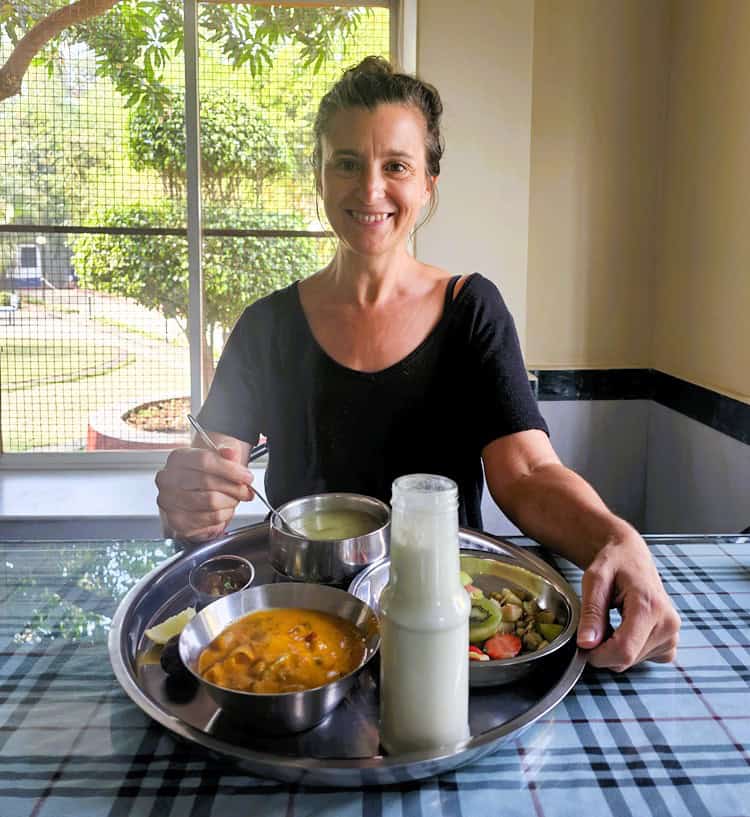
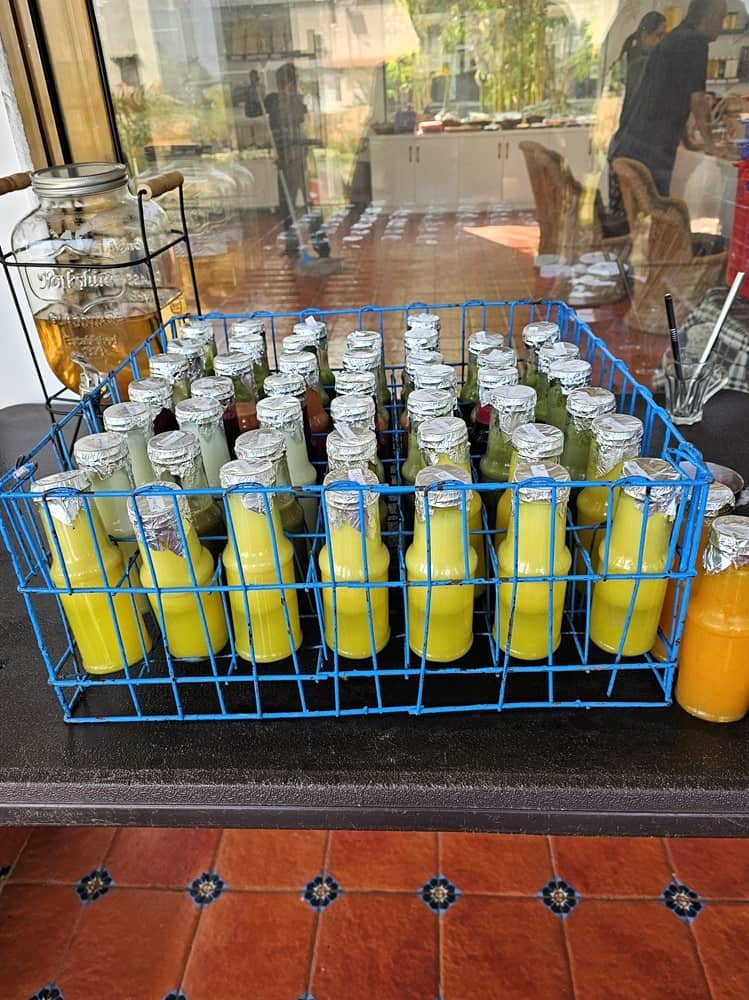
Juices & Herbal Teas
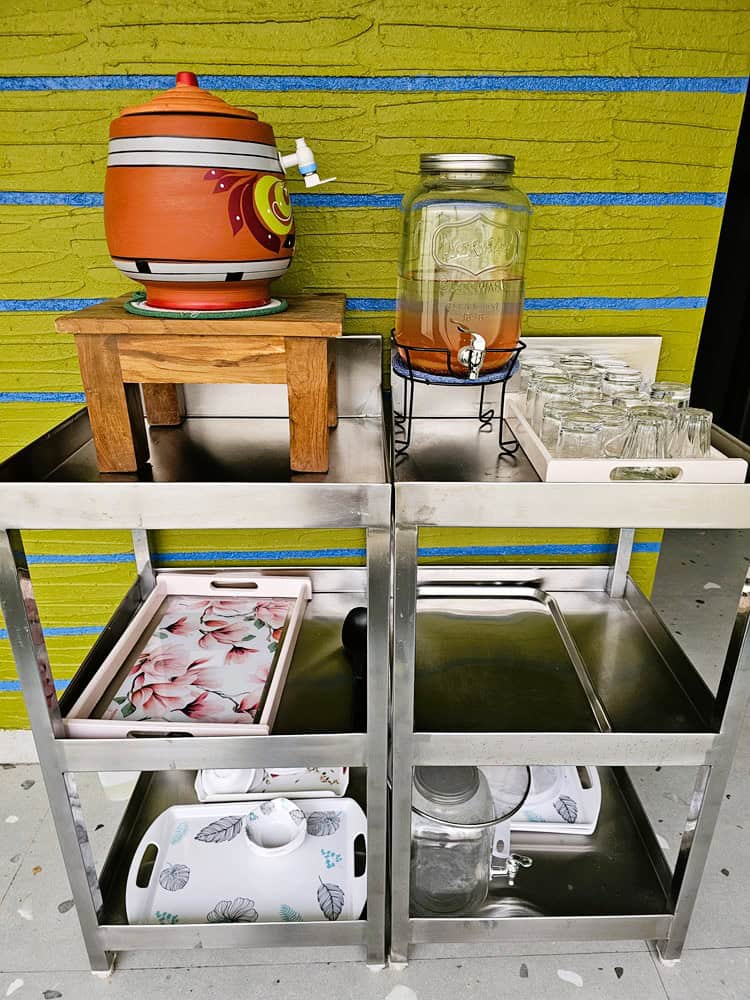
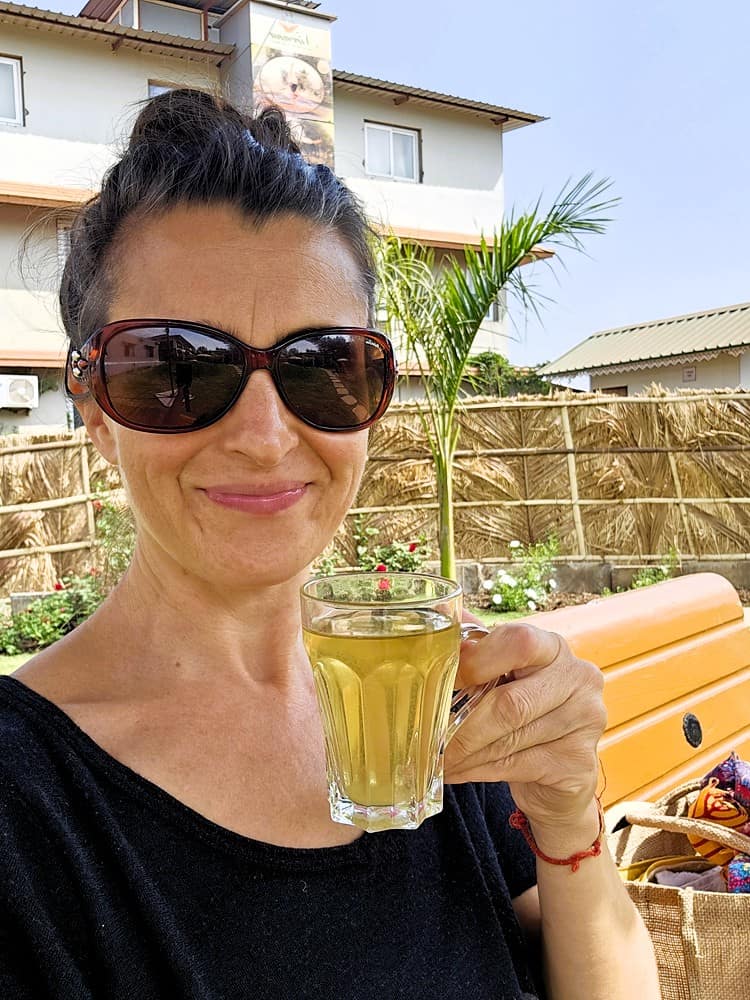
In between meals, the day is punctuated with either fresh juice or herbal tea — again prescribed by your doctor depending on your condition.
Most of the juices were vegetable-based (carrot, beetroot, etc.), and overall they felt very “health-first” rather than indulgent — but in a good way.
Yogic Natural Colonic Cleanse (LSP) – prescribed by the doctor
One of the cleansing practices I tried at Nirvana was a yogic natural colonic cleanse called LSP (Laghu Shankhaprakshalana). Some guests opt for colonic irrigation instead, but I decided I preferred the more natural method.
It consisted of five rounds of:
- drinking salty water while squatting
- followed by a short sequence of exercises
The idea is that the salty water moves through the digestive system and you eventually feel the urge to go to the toilet.
The man next to me went after the first round.
My bowels, however, were… not so enthusiastic.
After each round, the therapist asked if I needed the bathroom — and as the rounds went on, the exercises became harder to do, my stomach felt heavier, and I could feel stress taking over. There was something about the pressure of being watched and repeatedly asked “Do you need to go?” that made my nervous system go into overdrive.
And because I’ve had digestive issues on and off for the last three years, it fed straight into that old loop of embarrassment, anxiety, and feeling like my body was “failing”.
I ended up crying and trying to explain to the doctor (whose English wasn’t the strongest) that my body reacts badly under stress. It didn’t really help, and I eventually went back to my room.
I fell asleep… and when I woke up, I rushed to the toilet.
Evidently, my digestive system just needed a little time — and to not feel pressured.
From what I could tell, everyone’s experience of LSP is different. Some people go quickly (like the man I was with), others take longer (like me), and some don’t go at all.
Personally, I think it would have helped if I’d been given a clearer explanation beforehand about what to expect, because the pressure I felt in the moment wasn’t pleasant — and this was one of the downsides of the language barrier with non-English speaking therapists.
Would I do LSP again? Yes — absolutely. Now that I understand how it works, I actually think it’s a very effective and natural way to clear the bowels. I just wouldn’t choose to do it again in quite the same setting.
Nirvana Naturopathy Accommodation
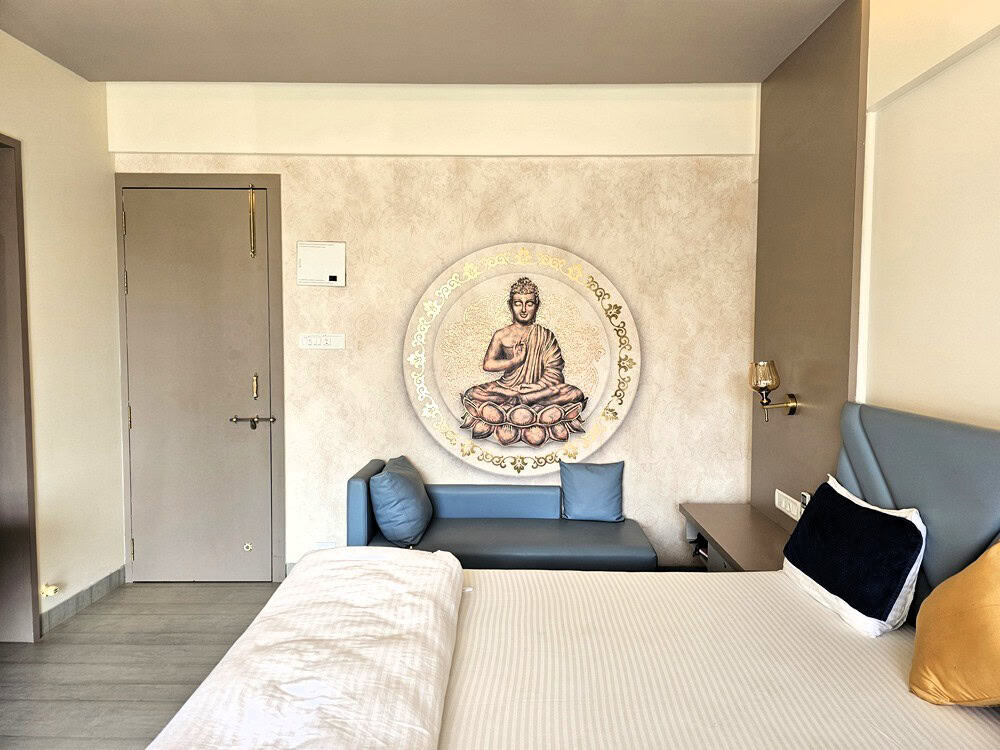
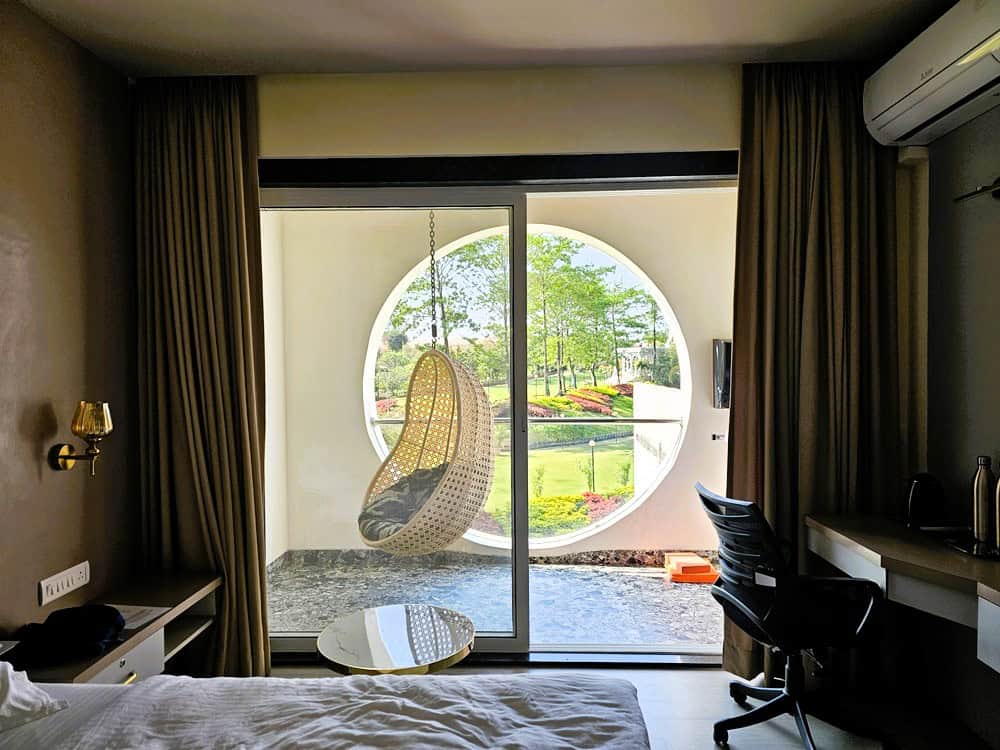
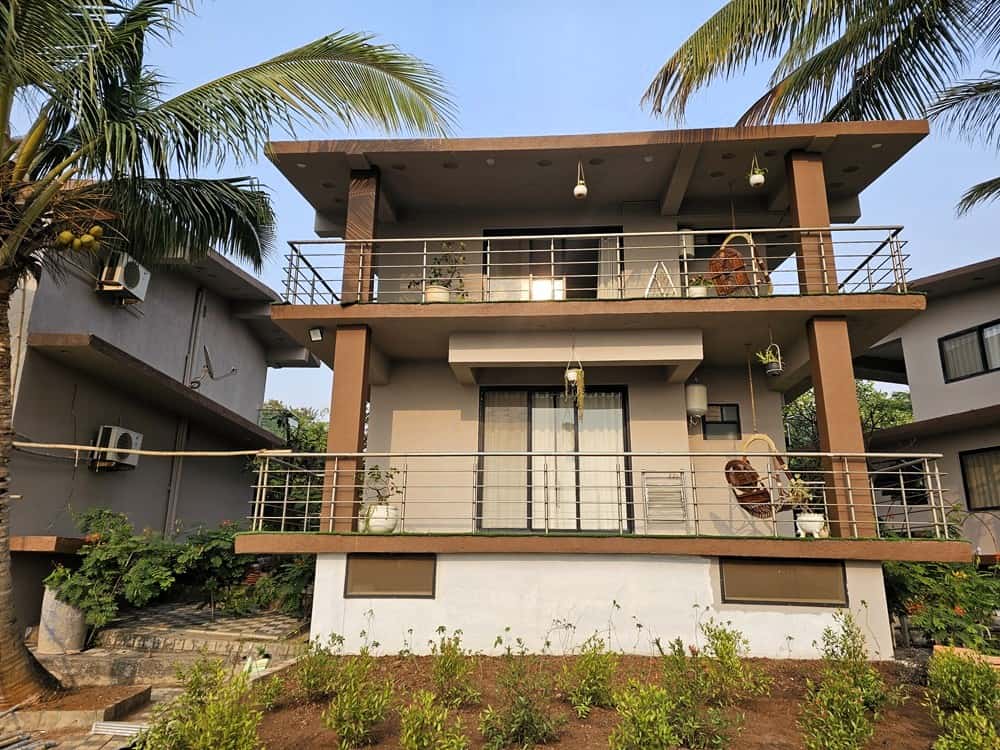
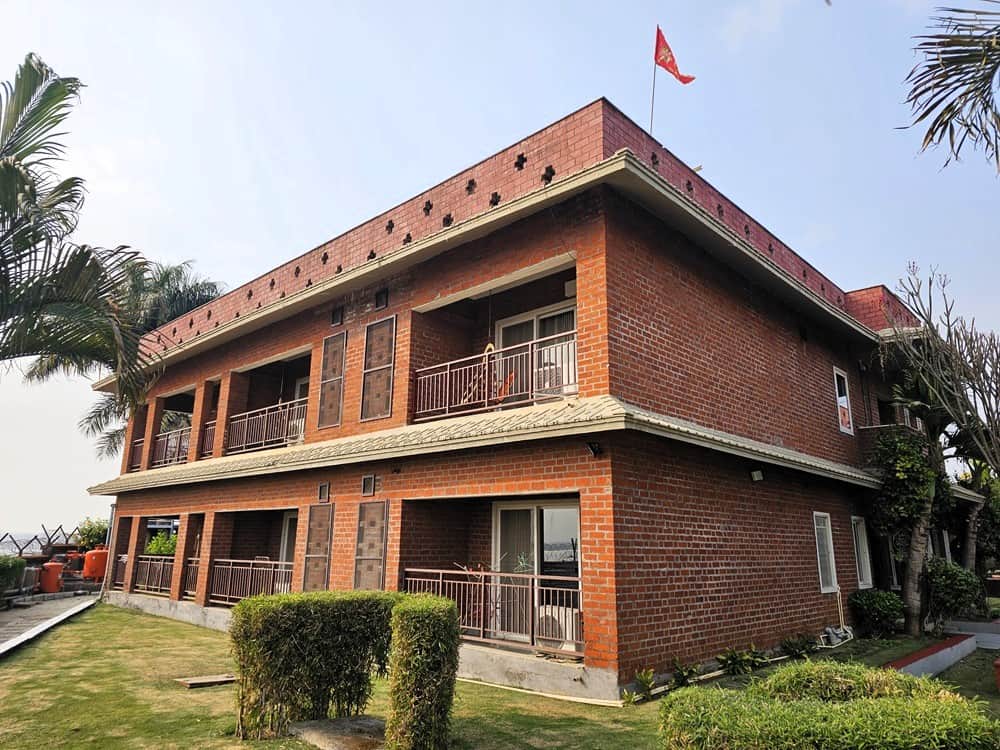
Nirvana Naturopathy offers both premium and budget rooms either garden or lake facing. I chose a garden-facing premium room and really enjoyed it – spacious, light, and with a large golden Buddha painted on one wall, a gentle reminder to stay present.
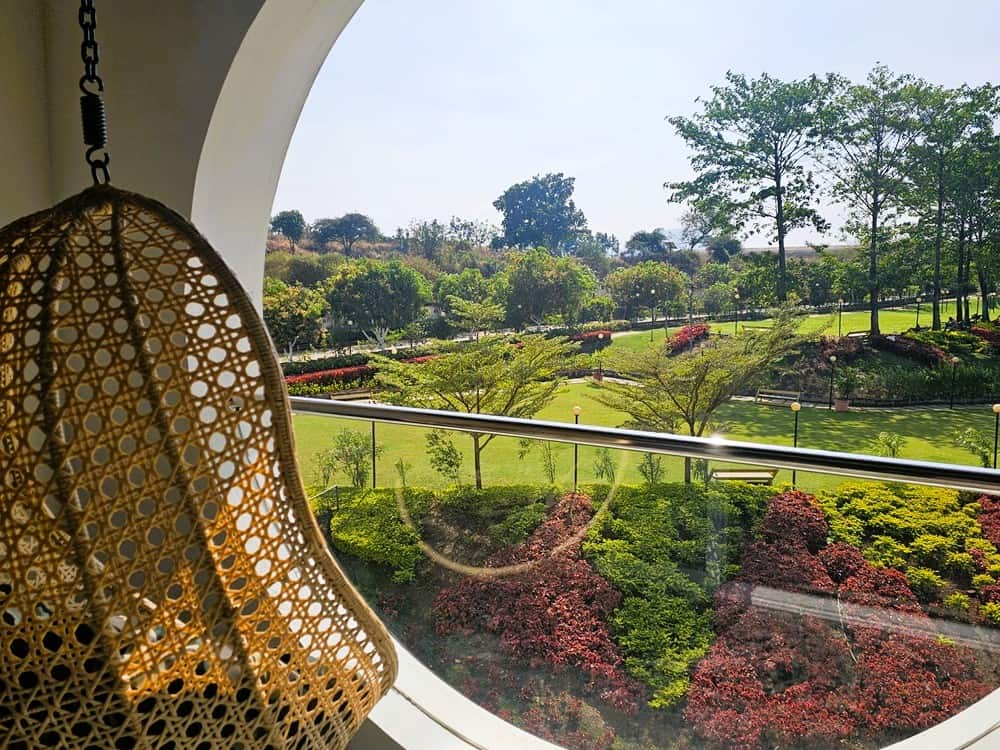
There was a comfortable swinging basket chair on the balcony, overlooking the beautifully kept gardens and the Krishna temple.
Filtered water was available, and the room was cleaned daily with fresh towels provided.
Nirvana Naturopathy Grounds
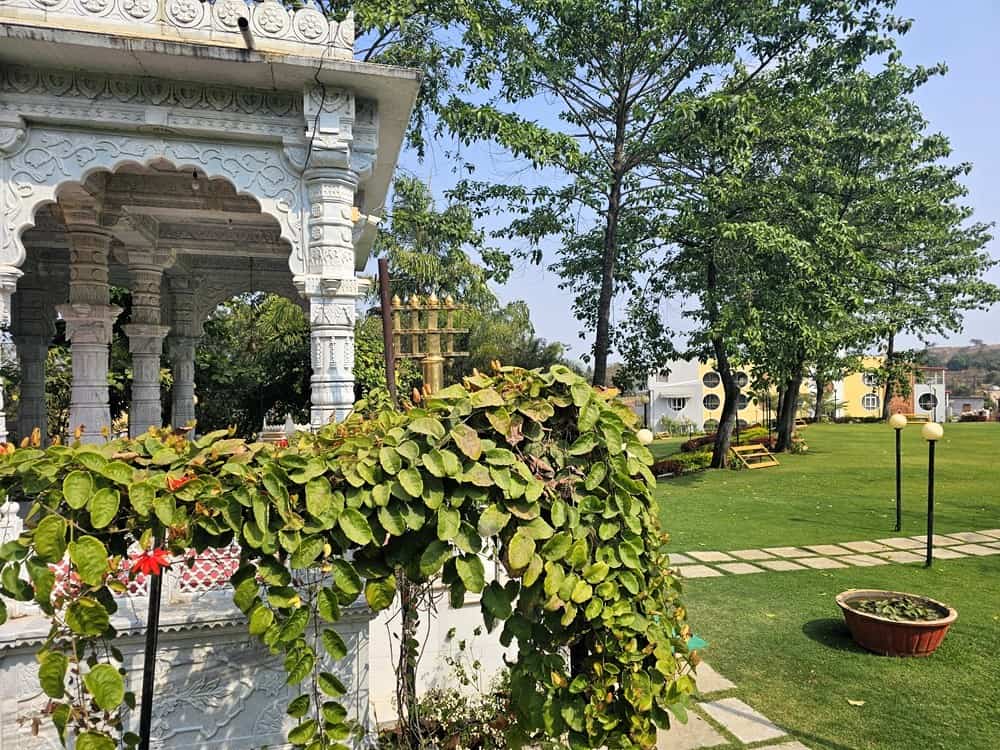
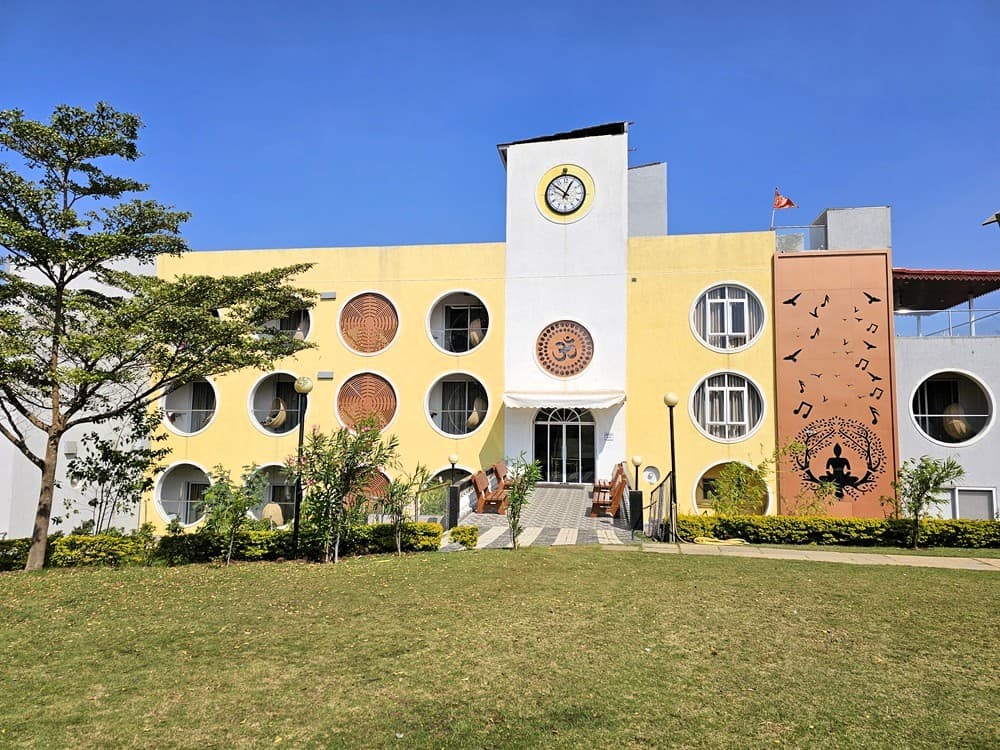
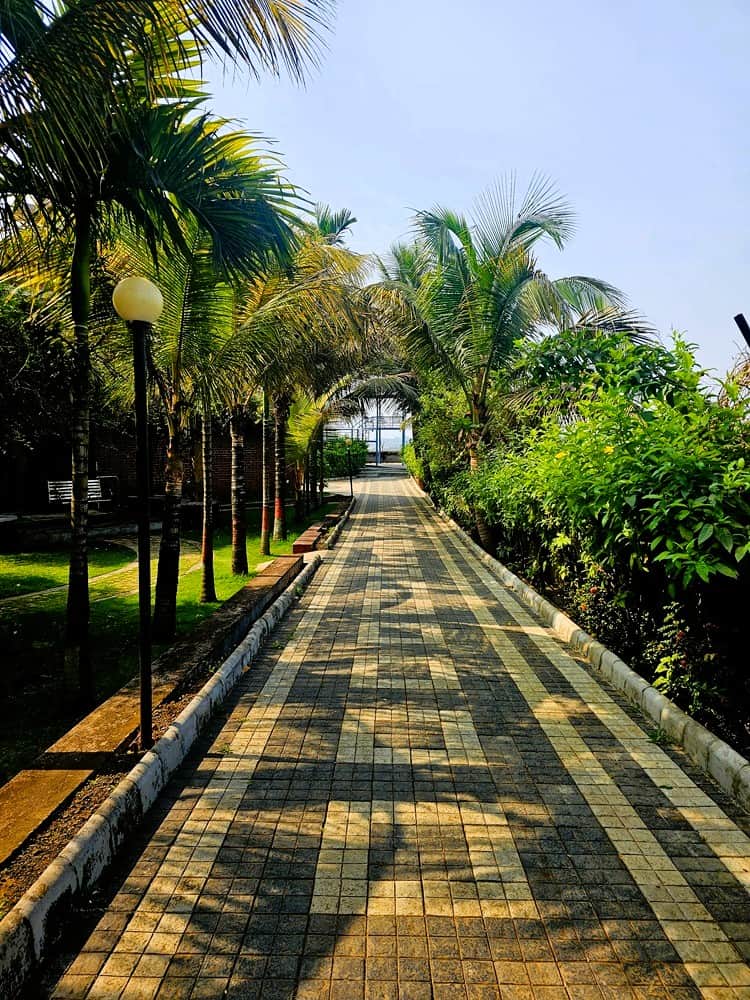
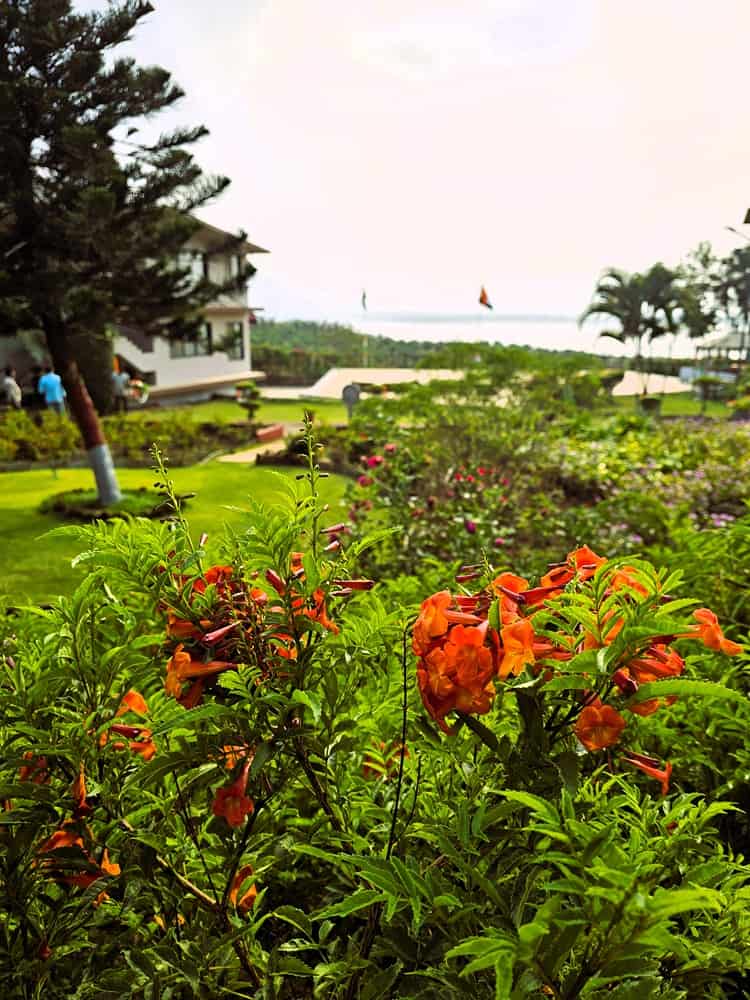
The Nirvana grounds are very pretty — wide open lawns, flower beds, a rose garden, and lots of trees and shrubs. Everything is well maintained and very manicured. There’s plenty of benches for resting.
The entire retreat is highly accessible — wheelchair-friendly, easy to walk around, and designed for guests of all mobility levels.
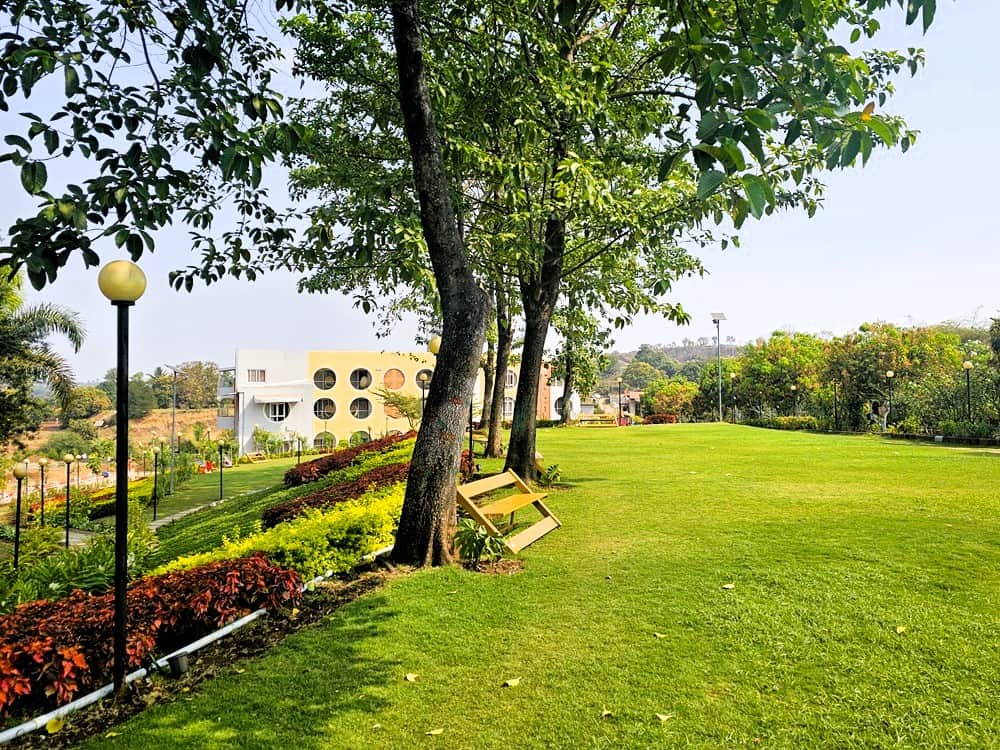
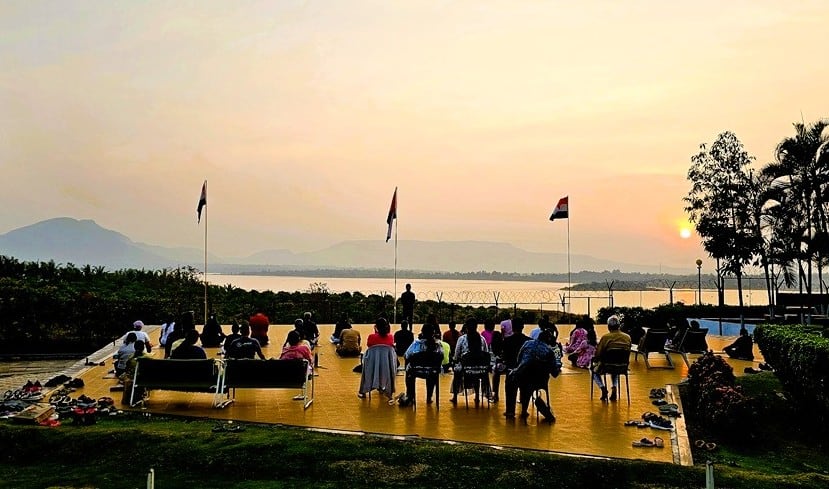
At one end of the grounds you can see the large lake. There’s a yoga/meditation area with a few sun loungers where you can sit and enjoy the lake view or sunset. There’s also a small viewing platform with a couple of rocking chairs which was nice.
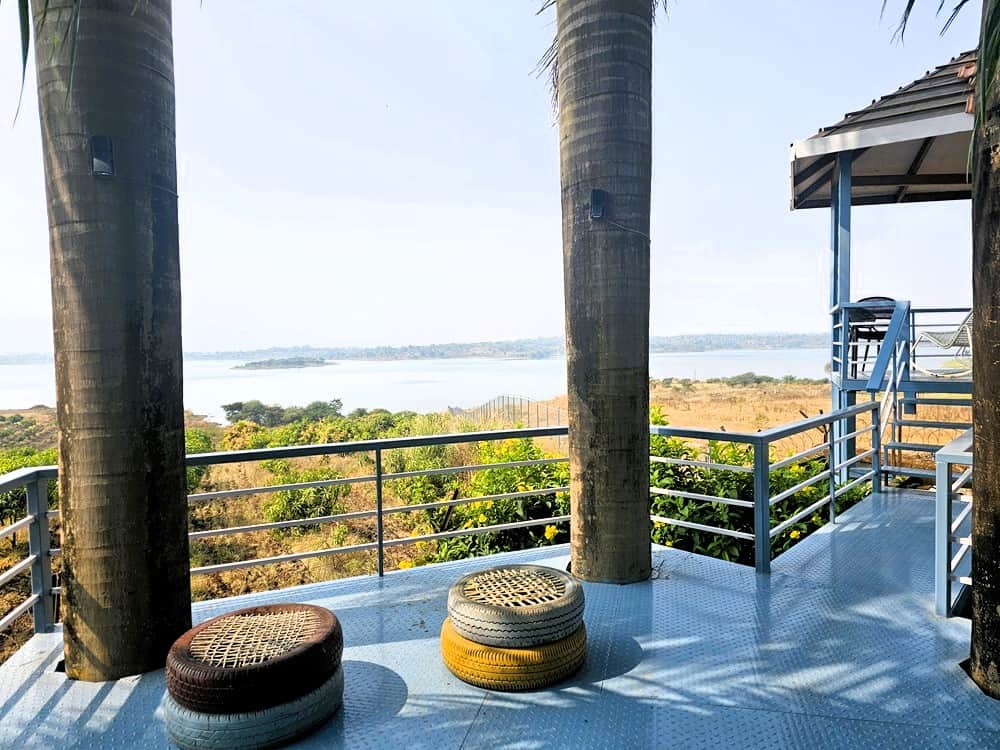
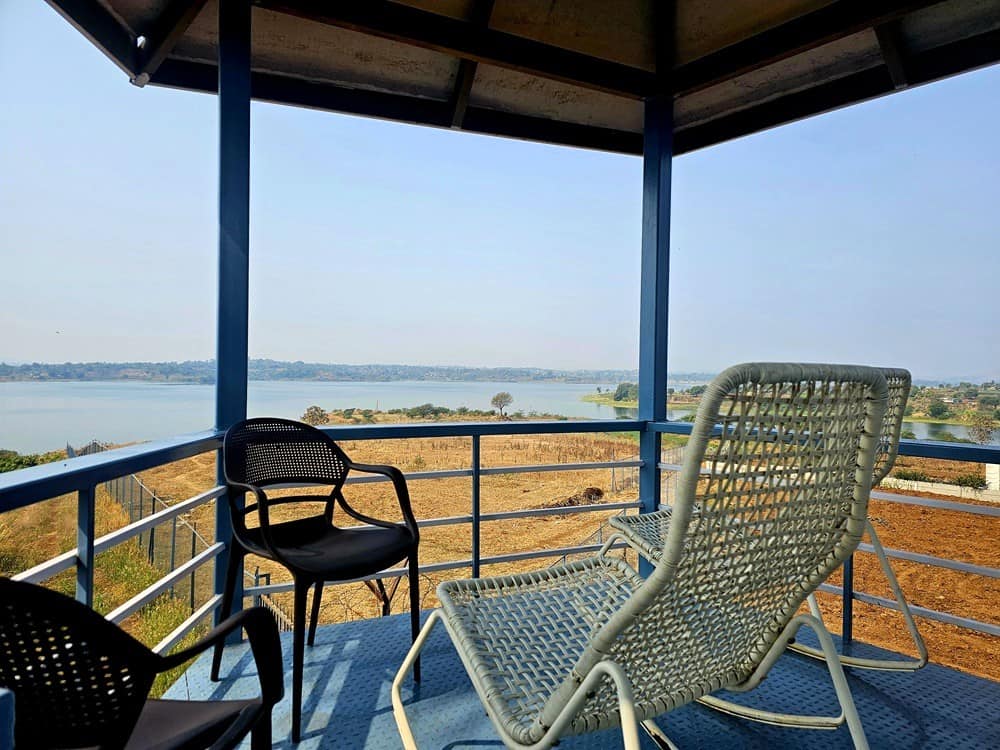
One thing I didn’t fully realise before arriving is that while the lake is heavily featured in the advertising — and yes, it is beautiful — you can’t simply wander down to it whenever you want, or go for long walks around it. The only time I walked down to the lake was one evening with the whole group for a guided meditation.
As pretty as Nirvana is, I did feel that it lacked any sense of wilderness. Everything is so tidy and controlled — and in a way, that reflects the retreat as a whole: there’s a tight structure, and not much freedom to roam. You even need a gate pass to leave the premises!
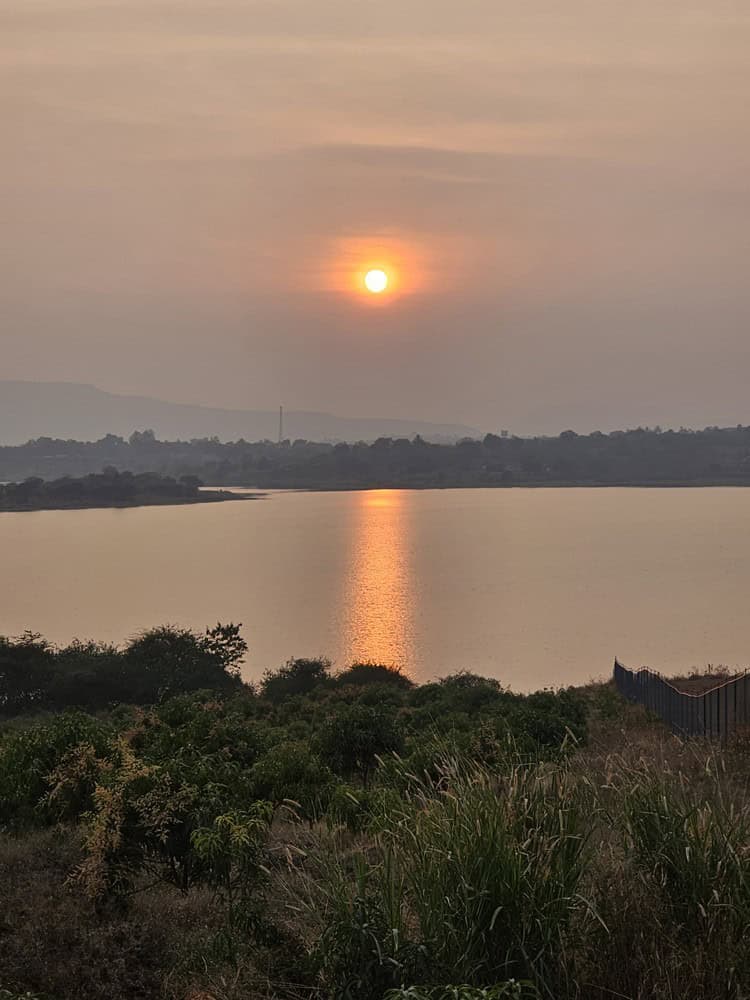
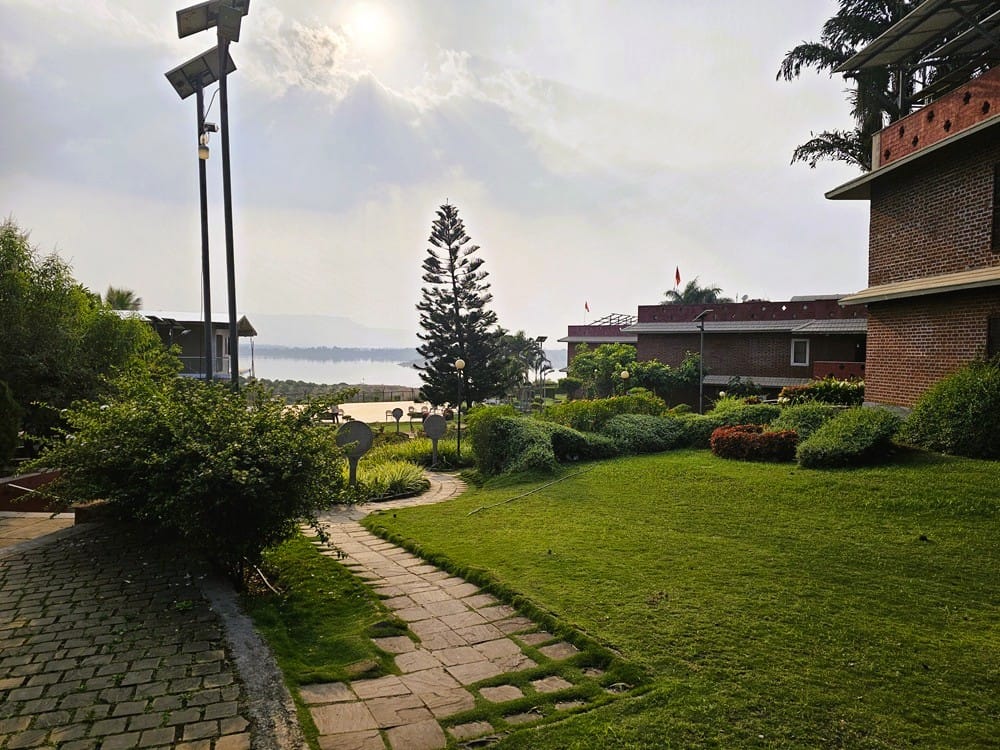
In addition, there’s no swimming pool. I hadn’t been concerned when I booked, as I had assumed I could walk by the lake for exercise, but since that wasn’t possible, it added to the sense of a functional, hospital-like environment rather than a retreat.
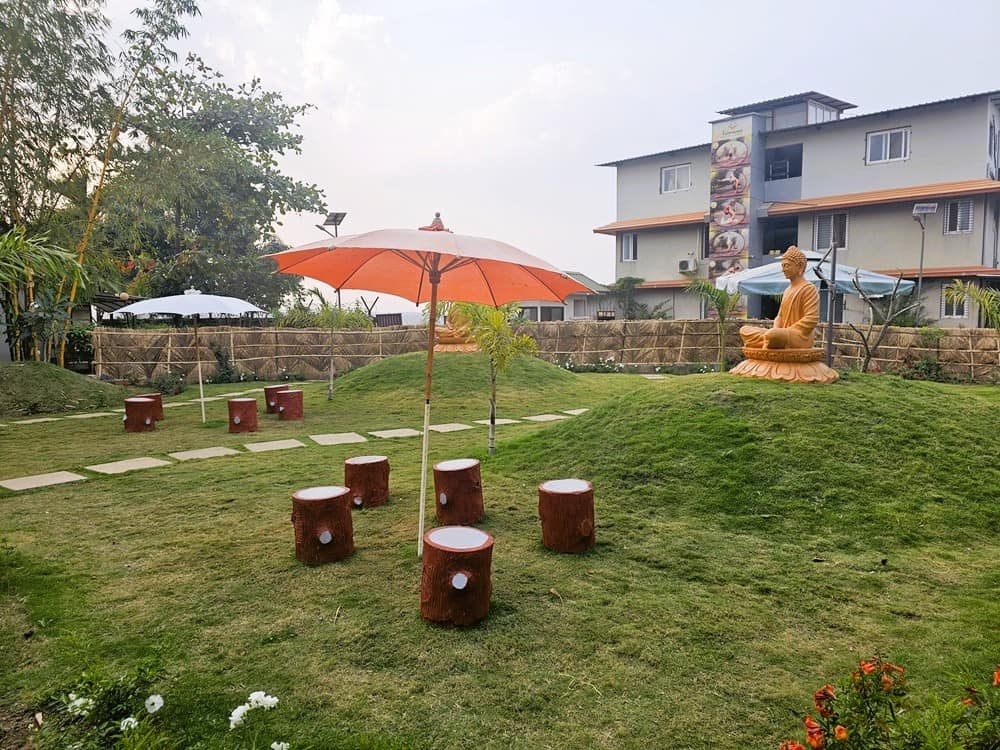
For the first week I was perfectly happy with the calm, manicured environment. But after a while, I started to feel a little trapped.
For me, having the freedom to walk, to feel raw nature, and to escape somewhere quiet without bumping into people is really important. It gives me space to breathe, expand my thoughts, and process what I’m experiencing — and I found that harder to do at Nirvana.
By the time the two weeks were up, I honestly felt like a penned-in horse waiting to gallop away… but first I had to be given a gate pass to escape!
However, I recognise that different guests have different needs and expectations.
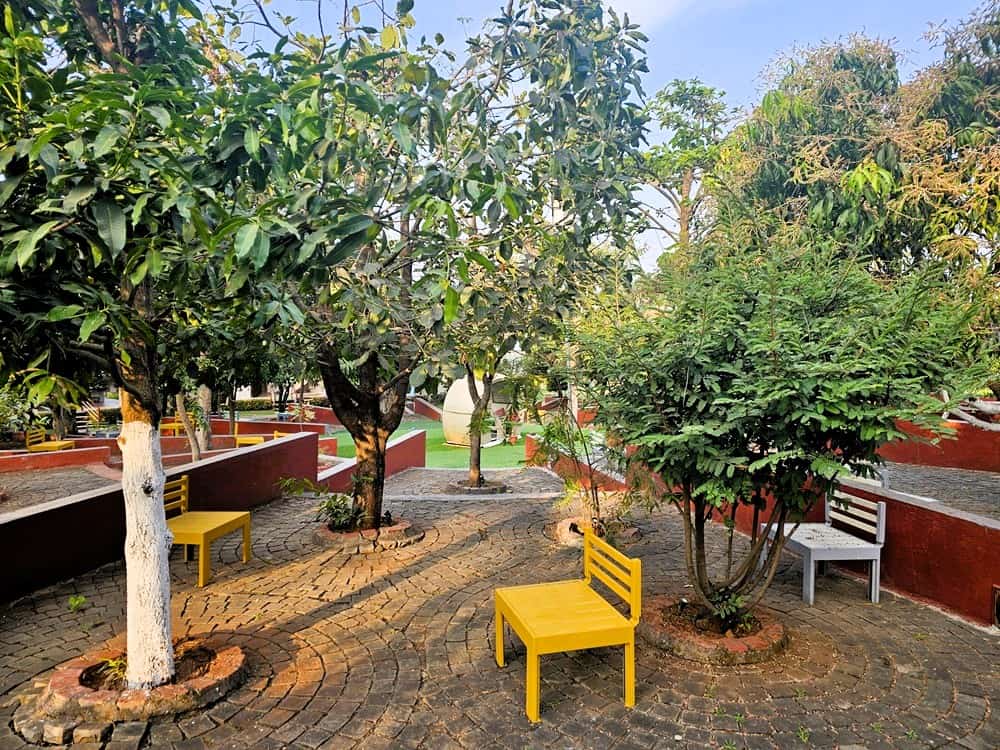
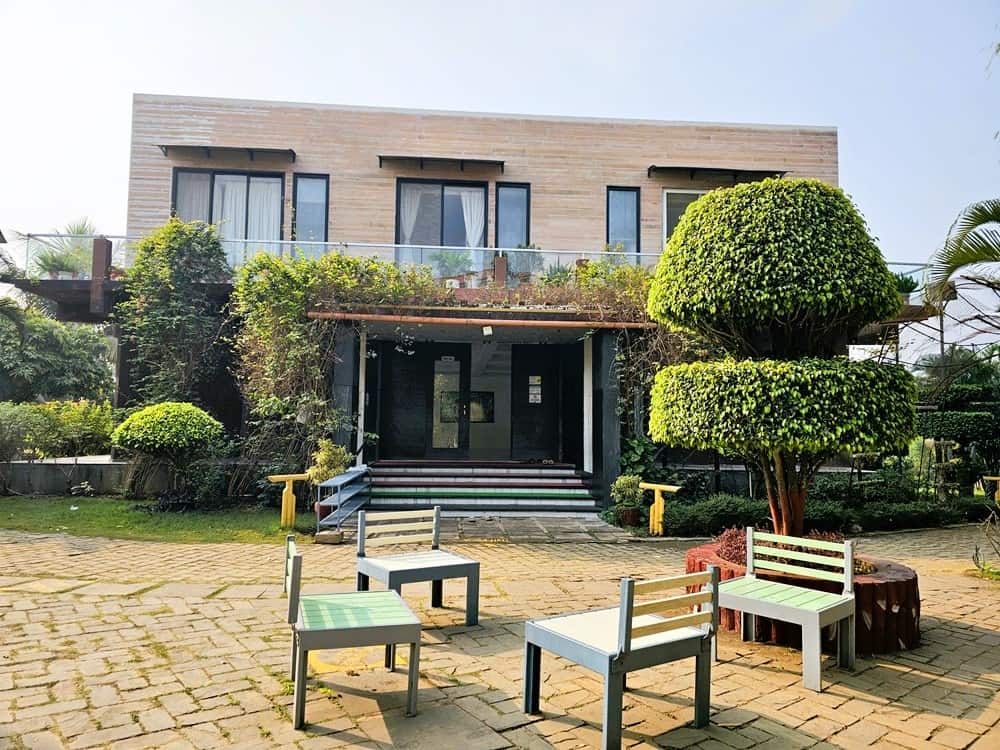
Krishna Temple (one of the highlights)
In the grounds there’s a beautiful little Krishna temple where pooja takes place in the evening — and this was genuinely one of the highlights of my stay.
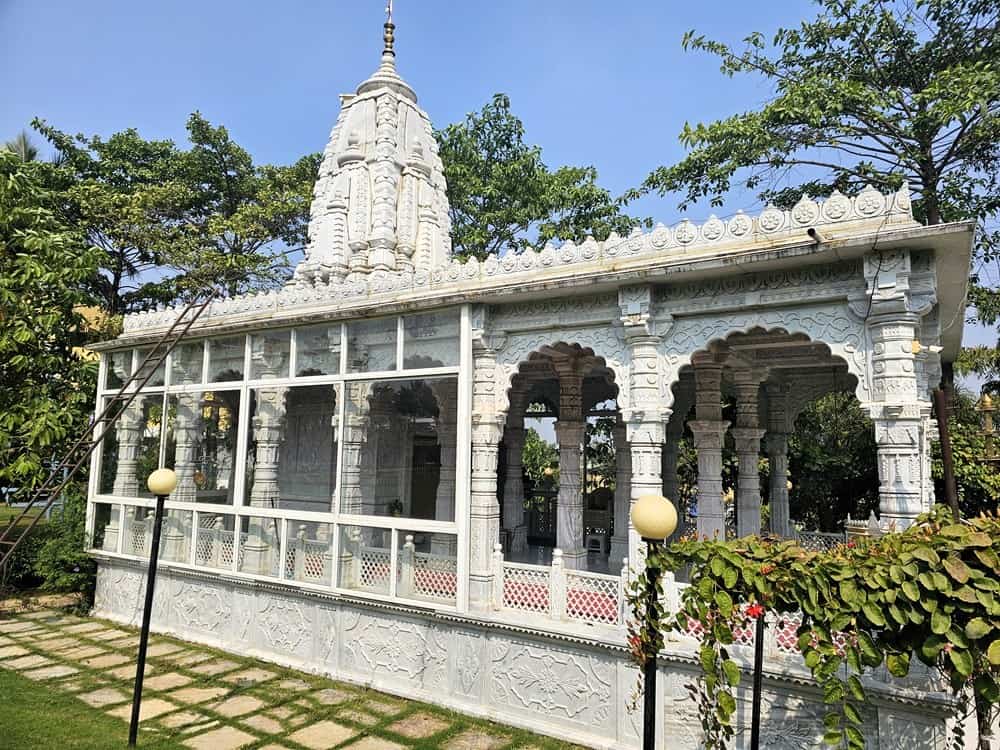
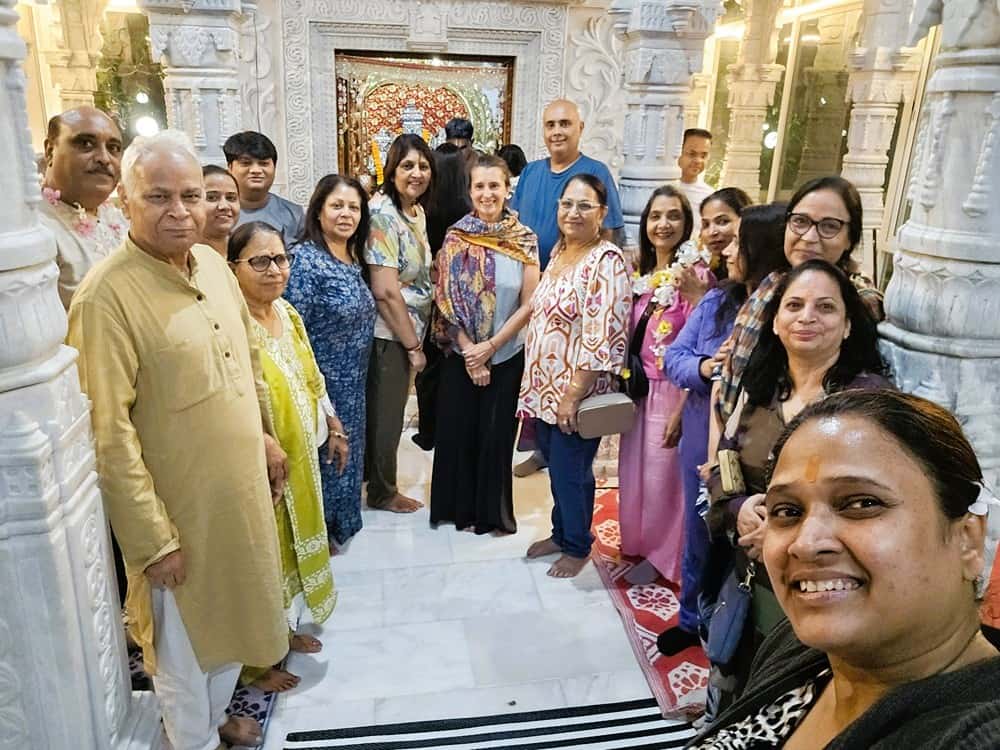
I’ve visited many temples on my travels, but I’d never joined in at a small one like this, and I was made to feel very welcome by the other guests. A few times I found myself unexpectedly emotional.
It reminded me how some cultures — especially India — have a deeply embedded spiritual aspect. People just know what to do: the chants, the rituals, the songs. I felt a strong sense of togetherness and community, which brought both joy and sadness… because it’s something I feel is so lacking in my own culture, and something I consciously seek in my travels.
Construction & Noise (a bit of a surprise!)
On arrival, there was some ongoing construction on the grounds, which I noticed immediately. The manager reassured me it wouldn’t interfere with the experience, and I found that once I settled into the daily routine of treatments, it became much less noticeable. Other guests may barely notice it at all — it’s really a matter of personal sensitivity to noise.
Evening Pranayama
Each evening, there was the option to attend evening pranayama—gentle breathing exercises and meditation—either in the yoga hall or on the yoga terrace overlooking the lake for evening pranayama – a nice peaceful way to end the day
Evening Talks
There were evening talks on a range of subjects, sometimes led by doctors, the yoga teacher, or the chef.
I went to one thinking it might be partly in English — but it was entirely in Hindi. In the end, I treated it as an opportunity to practise being present… and accepting!
The Guests at Nirvana Naturopathy – all ages & many returners
The guests at Nirvana Naturopathy Retreat and Hospital were of all ages — from around 20 to 80+ — and it really is a place that caters for everyone. I would say the majority of people were over 45, with a good proportion over 60.
I spoke to quite a few guests who had returned for the second or third time, and another who had already booked her return visit for the year after.
People were there for a wide range of reasons: chronic health complaints, joint issues, digestion, stress, fatigue — and yes, some were simply there for detox and weight loss. Those who came for health reasons often remarked on how much better they felt as they neared the end of their stay.
One man I particularly remember arrived wearing knee supports similar to mine. He had cartilage and tissue damage, and within a few days he was no longer wearing the supports and said his pain had improved significantly. He was determined to avoid surgery, and this was his chosen path.
For most of the two weeks I was there, all the guests — other than me — were of Indian origin. Many were from near Mumbai, but others had travelled from the USA, Canada, and the UK — often people of Indian heritage who had emigrated.
During my final couple of days, a British family, a Portuguese woman and a Polish family arrived, but for the bulk of my stay I was the only non-Indian guest.
This was a curious experience — one that I both enjoyed and found challenging.
It was also refreshing to visit a retreat where local people made up the majority. So often, I’ve been to wellness retreats and spas in places like Sri Lanka, Morocco, or Tunisia and found that the guests are almost entirely Western, with hardly any locals in sight — something I’ve always found uncomfortable.
At the same time, it could be difficult. While many people spoke English, most general conversation was in Hindi, which made it hard for me to join in socially. It wasn’t a huge issue — I’m used to my own company — but I did miss being able to naturally slip into conversation.
And if I’m honest, I also found it a little tiring at times. When English was spoken it was often heavily accented, and I sometimes had to concentrate hard to follow, which could feel surprisingly exhausting.
Despite the language barrier, there were lots of smiles, warmth, and curiosity — many guests would ask me questions about where I was from, why I was there, and what brought me to India. Even when we couldn’t have long conversations, I still felt a sense of kindness and openness throughout my stay.
Personal Therapy Yoga (effective… but intense)
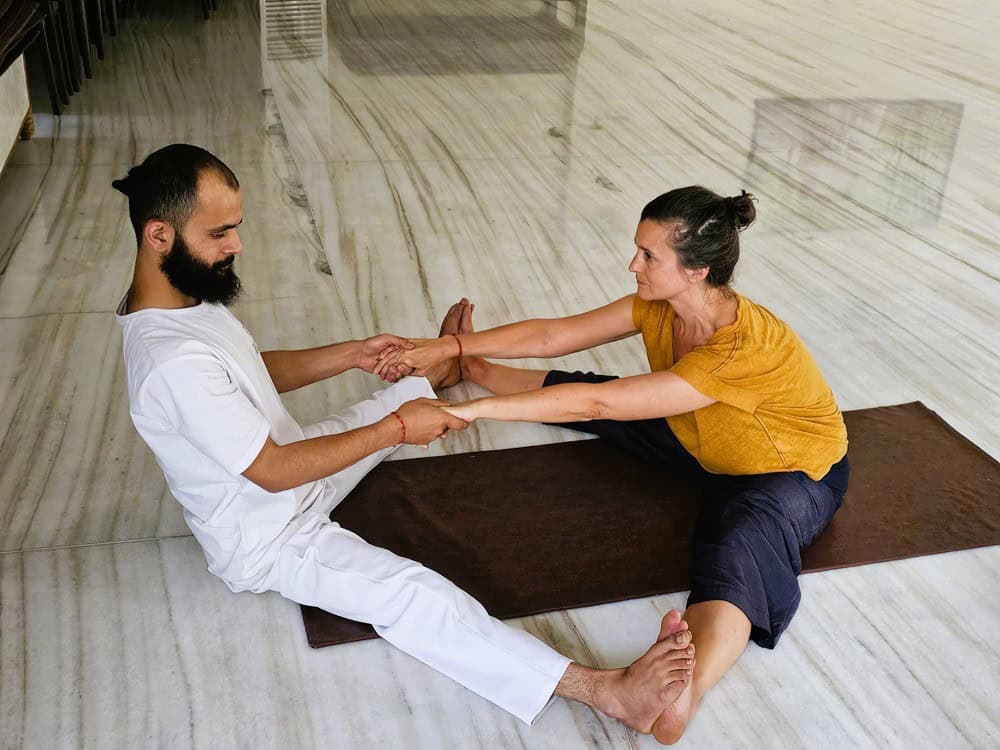
The yoga teacher, Kamel, is sometimes prescribed by the doctors as an additional treatment — and he was for me.
His work is a blend of deep manipulation, pressure points, and massage, designed to get into trouble spots and support realignment.
And I won’t sugar-coat it: it was bloody painful.
One thing I really appreciated was how much time he spent working on my feet — the foundation of everything — and that felt genuinely helpful.
I had a few sessions with him, and many of the other guests absolutely swore by him, especially for sciatica and back issues. I could see why he had such a strong reputation.
That said, while I didn’t doubt his skill, I personally felt a little cautious. Because I have hypermobility, being pushed into postures or deep adjustments isn’t always the best approach for me, and can sometimes lead to increased pain rather than relief.
And because I also have FND, I noticed my nervous system starting to overreact at times — partly because the treatment was intense, and partly because I was worried about being pushed beyond what my body could safely tolerate.
Overall, I’m glad I tried the personal therapy yoga sessions, and I can completely understand why so many guests swear by Kamel’s work. But for me, it was also a reminder that at Nirvana you need to stay connected to your own body and be willing to advocate for yourself — especially if you’re dealing with hypermobility, chronic pain, or a sensitive nervous system. The treatments are powerful, but they aren’t always gentle — and learning when to say “enough” is part of the healing too.
Final Thoughts on Nirvana Naturopathy Retreat and Hospital
Nirvana Naturopathy Retreat and Hospital offers an astounding range of therapies, professionally delivered, the accommodation is contemporary with pretty surroundings. The food is good, highly nutritious, and thoughtfully prepared.
However, it’s important to say that Nirvana feels functional and distinctly hospital-like . It definitely felt like a treatment centre rather than being on a nurturing retreat, which wasn’t a huge surprise given the name ‘hospital’ and it was after all what I expected.
This review reflects my personal experience at Nirvana Naturopathy. Every guest’s journey may differ depending on health needs, expectations, and preferences.
Did it help?
Yes — definitely.
My knee pain improved, and I experienced very little leg and mouth numbness while I was there, which was a big relief.
One of the biggest learnings (mental, not physical)
One of the biggest learnings I had—more mental than physical—came from my experience at Nirvana. I find that all my retreat and spa experiences—whether it’s a therapy group in Malaysia, hammams in Morocco, or thalassotherapy in Tunisia—always give me something new emotionally or mentally. Nirvana was no exception.
One of the most valuable things I learned was how good it can be to be gently pushed out of my comfort routine.
Normally, I’m used to waking up when I like, lounging in bed with a coffee, maybe reading for a while, and then starting the day. I structure my time around work, but there’s a lot of freedom within that because I’m freelance — and I’m very attached to my morning routine. I’ve often said: this is what I need, it works for me.
But being made to get up at 5am and take part in the morning kriya and yoga was strangely powerful. It showed me that I was okay even when things changed. I was okay without my routine. I was okay mixing things up.
And that felt like a bigger healing lesson than I expected.
I also gave up coffee naturally. I know I shouldn’t admit it, but I did sneak in a little coffee at the start — and for the first few mornings, I felt like I needed it. But as the detox kicked in, I genuinely stopped craving it. This happened to me once before on an Ayurvedic retreat, and it still feels slightly mysterious!
Would I go again?
Maybe — for a specific health condition, or a focused physical detox.
But not as a retreat environment that nourished my whole wellbeing. It wasn’t quite the right fit for me in that respect. Personally, I need a setting with a more nurturing, grounding energy and space to move and feel free.
While it was a fascinating experience, what I personally missed was the gentle sense of emotional support—the functionality and manicured space didn’t leave much space for reflection or emotional depth, which is something I value in a retreat.
Nirvana is a functional, treatment-focused healing centre, and if you go with the right expectations, and you’re willing to be “in the system” for two weeks, it can offer a level of therapeutic support that I think is quite unusual.
I left feeling mentally stronger, and grateful I tried it, but I was also happy to leave.

Quick Summary: Nirvana Naturopathy (Near Mumbai)
Type of place: Budget naturopathy retreat
Overall vibe: Structured, clinical, deeply treatment-focused (not spa-like)
✅Best for
• People with a specific health condition (pain, digestion, fatigue, inflammation, etc.)
• Anyone wanting a proper detox, weight loss + intensive therapy programme
• Guests of all ages (20s to 80+), with many older people
🌿What stood out (in a good way)
• Huge range of therapies (the biggest I’ve ever seen)
• Excellent massage treatments
• Food was sattvic and surprisingly good
• Doctors were available throughout the stay
• Impeccably organised treatment schedule
• Very accessible: wheelchair-friendly, walking-friendly, easy to navigate
• Treats a wide variety of conditions — not just “wellbeing” or weight loss
⚠️What surprised me
• It’s hospital-like: you’re very much “in the system”
• Early starts (5AM wake-up knocks are real!)
• Treatment rooms are functional, not spa-style
• Limited freedom to roam (you can’t freely walk around the lake)
• The majority of guests are Indian, and English is limited e.g. therapists, yoga, talks
🧡My honest verdict
Nirvana is a serious, affordable healing centre.
If you go with the right expectations, it can be incredibly effective — but don’t expect frills.
This is my personal experience — every guest’s stay will vary depending on health needs, expectations, and preferences.
Blogs in the making
Coming soon: interviews with solo travellers who have chronic health issues & much more…
Sign up for all updates & blog posts
Related Blog Posts: Wellbeing Spaces
A Budget Ayurvedic Retreat in Sri Lanka for the Ultimate Detox: Nature Lanka
A Gentle Greek Wellness Retreat for Midlife Women: Healing in Ikaria, Greece
The Best Exotic Marigold Retreat – A Midlife Women’s Wellness Retreat in Rajasthan, India
What happens in a Moroccan Hammam?
Dar Al Hossoun’s earthy Hammam & Spa in Taroudant
Dar Al Hossoun’s earthy Hammam & Spa in Taroudant
Happy Stones: unique cottages in Sri Lanka’s sublime hill country
Pure Nature Cabana in Tangalle: inspired by nature & crafted with love
Popular Blog Posts: Chronic Illness Travel
Chronic Illness Travel Insurance: Comparing Staysure & Avanti for Pre-Existing Conditions
Travelling Solo with Functional Neurological Disorder (FND): From Fear to Freedom
Solo Travel with Chronic Illness: How to Reclaim Yourself at Midlife
The Unexpected Benefits of Travelling Solo with a Chronic Health Condition
A Destination Checklist for Women Traveling Solo with a Chronic Health Condition
On being a Digital Nomad with MS: An inspiring interview with Monica Lynne
Sri Lanka for Women with Chronic Illness: A Calm, Restorative Destination for Midlife Solo Travellers
My descent into darkness and healing
Are you struggling to decide on a destination for your solo adventure?
Let me help you: download my supportive Destination Checklist
Traveling solo with a chronic condition can be incredibly empowering – but only when it aligns with your current health capacity and limits.
➡️ Download my Destination Checklist to help with your personal reflection and planning.
I’d Love to Hear From You!
Have you travelled solo with a chronic condition? Or are you thinking about it? Do you have a favourite wellbeing place? Feel free to share your thoughts or experiences in the comment section below.
If this post resonated with you, please consider sharing it with someone who might need this kind of encouragement.
Let’s keep in touch.
Join me for all the latest blog posts, reviews and updates.
Orchids to Olives
Journeys of self-discovery, wisdom, healing and friendship