Living Adventurously with Chronic Illness: How Hannah Shewan Stevens Travels the World Solo
Travelling Through Pain: An Interview with a Solo Female Digital Nomad Living with Chronic Illness
With Hannah Shewan Stevens
.
What if chronic illness didn’t hold you back from seeing the world — but instead inspired you to explore it?
Meet Hannah Shewan Stevens: a solo traveller proving that chronic illness and adventure aren’t mutually exclusive.
Travelling the world solo is already a bold move — but doing it while managing multiple chronic health conditions? That takes a whole new level of courage, adaptability, and self-awareness.
In this interview, we speak to Hannah Shewan Stevens, a solo traveller and digital nomad who has crafted a life of adventure while navigating several complex and painful conditions — including fibromyalgia, complex regional pain syndrome (CRPS), endometriosis, TMJ disorder, and joint hypermobility. Her daily reality includes persistent pain, fatigue, and brain fog.
But in 2022, Hannah made a life-changing decision to take her work on the road and embrace the digital nomad lifestyle — a choice that’s transformed not just where she lives, but how she lives.
What makes Hannah’s journey so compelling is the way she adapts her travels around her health. From seeking out climates that soothe her symptoms, to prioritising rest and investing in recovery-supportive spaces, she’s created a lifestyle that honours both her ambition and her body’s needs.
In this candid and empowering conversation, Hannah shares what inspired her to take the leap, how she manages her health while travelling solo, and what she’s discovered about resilience, self-trust, and building a life that truly fits.
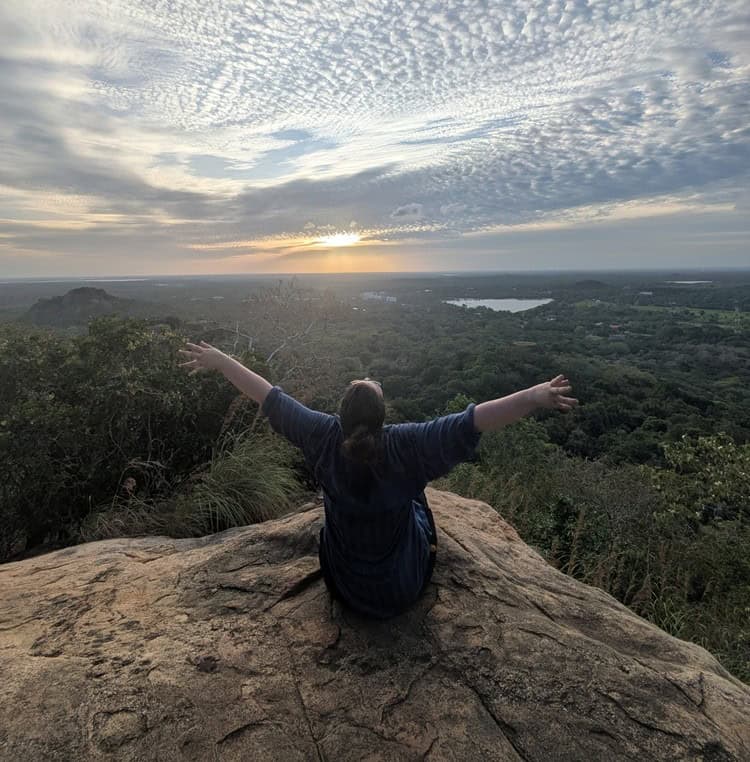
About Hannah:
Hannah Shewan Stevens is an award-nominated freelance feature journalist and creative who travels full-time as a digital nomad. She specialises in covering sex, relationships, health, and travel, with a focus on the intersections of disability, trauma, chronic illness, underreported conditions, LGBTQ+ issues, and mental health.
Hannah is most passionate about shining a spotlight on underreported subject areas, like gender based violence and health inequalities. She has produced work across numerous mediums, including short-form documentaries, features, news, and radio. Her work has appeared on platforms like BBC Three, Snapchat, Facebook Watch, The Mirror, Huffington Post, and more.
You can learn more about Hannah here.
Connect with Hannah on Instagram here.
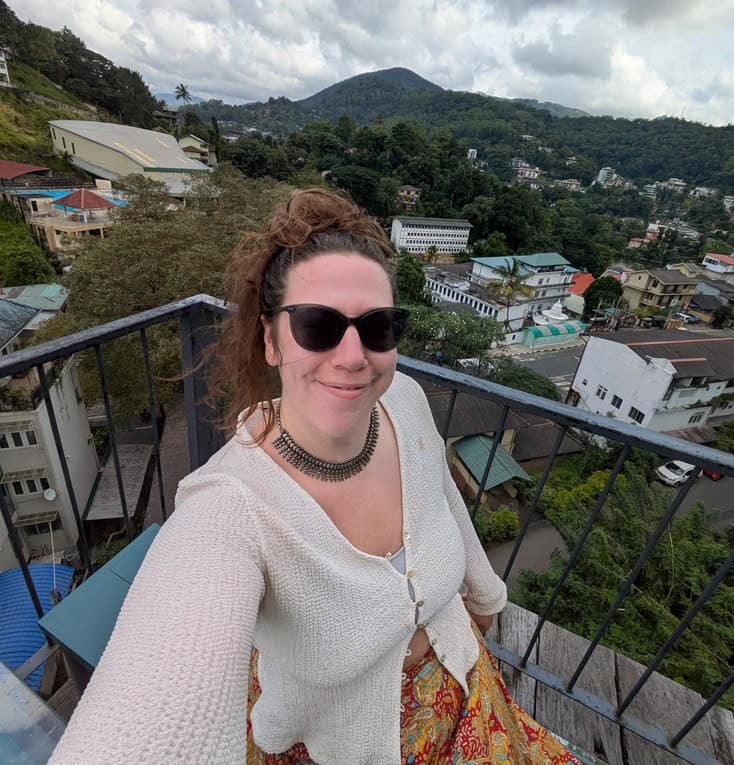
Can you describe your health condition and how it impacts on your daily life?
I have multiple comorbidities so my health history is a little complicated; however, the headliners are fibromyalgia, complex regional pain syndrome, endometriosis, TMJ and joint hypermobility.
The primary impact of these conditions is simple: pain. I have been in non-stop pain pretty much since the age of 14 (I’m now 31). All the conditions also inflict debilitating fatigue, with the side benefit of aphasia and brain fog. All of my conditions impact my ability to function day to day and require a lot of brain power to manage effectively.
What made you embark on a digital nomad lifestyle as a woman alone with health issues?
I started travelling in April 2022 with my partner at the time. I honestly don’t think I’d ever have been brave enough to do it without his support. While we didn’t work out romantically, I’ll always be grateful for the instrumental role he had in changing my life. After two months of travelling together, we broke up and I went on alone. I briefly considered going home but I knew I’d regret it.
I’m so glad that I forged ahead to make my own path. I initially decided to take the leap because I’ve always wanted to do travel, but always found a reason not to, usually my health or after sixth form when I decided to go straight to university. Then, in October 2021, I had my first endometriosis excision surgery and it changed my quality of life overnight. That gave me the confidence to give this lifestyle a go and since then, I’ve not regretted a single moment.
It can feel especially daunting doing this as a solo woman, yet I’ve rarely felt unsafe and have honed some laser sharp instincts to read people as I go!
What pre-trip planning did you do to ensure you were fit for travel?
Before I travelled, I saw every specialist I’m under to get discharged from their service. I’m really lucky that I don’t currently take any medication so I didn’t ned to bring any with me. After years of trial and error, I largely manage my conditions holistically using a combination of massage, physiotherapy, mindfulness, meditation pacing. I also invested a lot of time in self-care, improved my diet and physiotherapy routines to get me in the best shape possible.
How does your health impact the way you travel?
I alternate between hostels and hotels to give myself space to recover from the intensity of sharing rooms with strangers!
I also incorporate a lot of rest days to ensure that I’m getting enough sleep.
Sometimes I do faster periods of travel where I change location every few days, but I schedule lots of slower days and also spend up to a month chilling afterwards to recover. I’m a big lover of slow travel too. I spend less money and my health doesn’t suffer as a result. I also aim to spend most of my time in warmer climates because it really improves my pain levels, particularly joint pain.
Do you require any medication for your conditions?
I don’t have any. I mostly use teas to manage symptoms, like peppermint for nausea, so carry a packet of all my favourites with me. I’m very lucky that my conditions rarely need medication to manage. I occasionally take over the counter painkillers when my endometriosis gets especially brutal, but they don’t do much. Instead, I focus on eating a mostly anti-inflammatory diet, avoid drinking alcohol, exercise obsessively and do regular physiotherapy.
Are there any practices that you incorporate into your routine which help manage your chronic illnesses?
Above all, rest days and pacing. I am not always perfect at this because I get excited and want to keep seeing new places and meeting new people, but it really is the key ingredient to allowing me to make this lifestyle possible. I try to prioritise rest days as much as possible and to keep a steady pace.
I also invest cash in comfier seats on trains, better hostels and hotels and ensure that I am eating well all the time. How I fuel my body makes a huge difference to my overall wellbeing! Sometimes, it costs a little more than if I were to budget travel, but it’s worth it to protect my health.
What impact has the nomadic lifestyle had on your mental health and physical health?
The impact on my mental health has been mixed. It’s given me a new lease of life because I now know that I can do anything I set my mind to. I can make a home for myself anywhere in the world and that gives me so much confidence.
However, there are also a lot of sacrifices. I don’t have my community or support network with me and that can get really lonely, especially when I just need a hug from someone who loves me!
The physical benefits have been huge. My pain levels are way better generally (not always) and I just feel happier and more comfortable in my body living this way.
Do you feel your health has improved by changing your lifestyle?
I’d say largely yes. It’s not perfect and sometimes, like right now, it suffers and I feel really overwhelmed by pain and fatigue. But that’s usually my fault because I’ve pushed too hard. In general, though, it’s helped a lot. I feel stronger in my body, I trust its capabilities far more than I ever have before, and I am totally in love with this lifestyle, which makes being disabled by chronic illnesses a lot easier to bear.
Have you had any difficult days health wise or mentally? How did you manage this?
I’ve had a lot of really hard days as I’ve travelled. The one that stands out the most is definitely when I caught COVID in Hanoi, Vietnam. I was totally alone because all the people I’d met had left the city. I’d booked myself a hotel to work and recover from, after a month of travelling a lot and, wham, I get hit by the worst bout of COVID. I had horrific gastric symptoms that meant I couldn’t keep anything down and I felt so lonely.
I went to hospital to get treatment and then spent two weeks recovering in a hotel room. Due to my conditions, it also took months to recover from the debilitating fatigue and other side effects. It’s the only time in my first year of travelling when I looked up flights home because I just wanted my mum to hug me and care for me! But I stayed because I knew it would be temporary. I’m glad that I did.
Mentally, I’ve had some really tough days when I’ve struggled to meet people or have felt unable to open about my health. It’s not an easy thing to explain to new people; at other times, it’s just exhausting having to keep explaining what you live with and how it impacts your life. Sometimes, that has taken a massive toll and made me feel really anxious or sad. In those moments, I lean on family and friends back home to help me regroup.
Have you experienced health care in other countries and what was your experience?
This has been a huge culture shock for me! In Canada, I herniated three discs in my neck and got an MRI so quickly. The care was amazing.
In Vietnam, I was seen within an hour of showing up and given so much medication, all for less than £50! I didn’t even bother claiming on my insurance because it was less than the excess payment would’ve been.
Last year, I got stuck in the UK for seven months waiting for an MRI scan of my endometriosis to make a plan for surgery. I still haven’t got the results back or a plan for surgery and it’s been months! While in India, my friends all told me I could get all of that done within days. It’s an odd culture shock for sure!
How do you manage travel insurance with a chronic illness?
Most of my conditions don’t require me to have regular treatment, nor would they instigate an emergency. Because of this, I just use regular insurance to cover any accidents and pay out of pocket for treatments relating to my pre-existing health conditions when travelling. Honestly, it works out cheaper than paying the exorbitant prices of travel insurance for chronically ill and disabled people!
What are you favourite locations so far, and why?
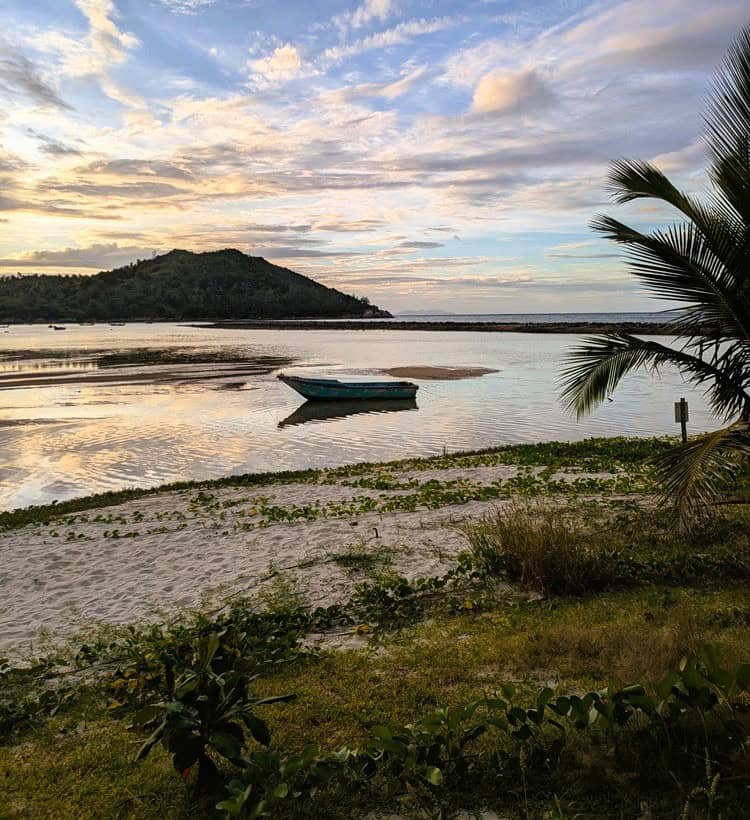
My favourite destinations so far are Thailand because it’s such a gorgeous country and I met so many wonderful people there. I also just felt immediately at home. I can’t wait to go back in a few weeks.
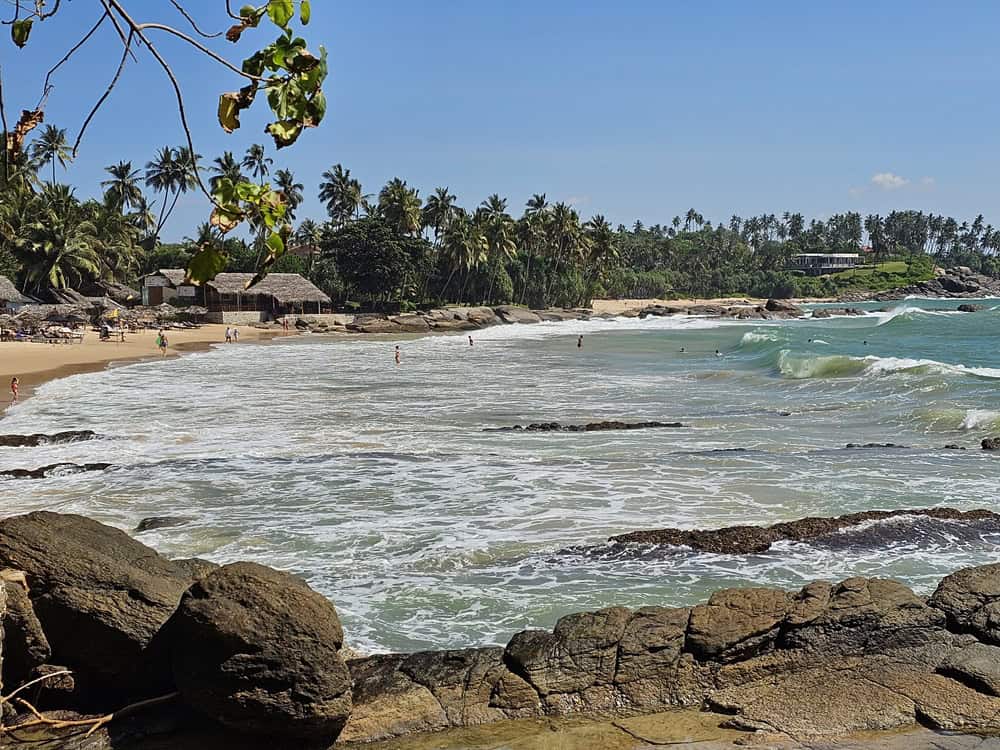
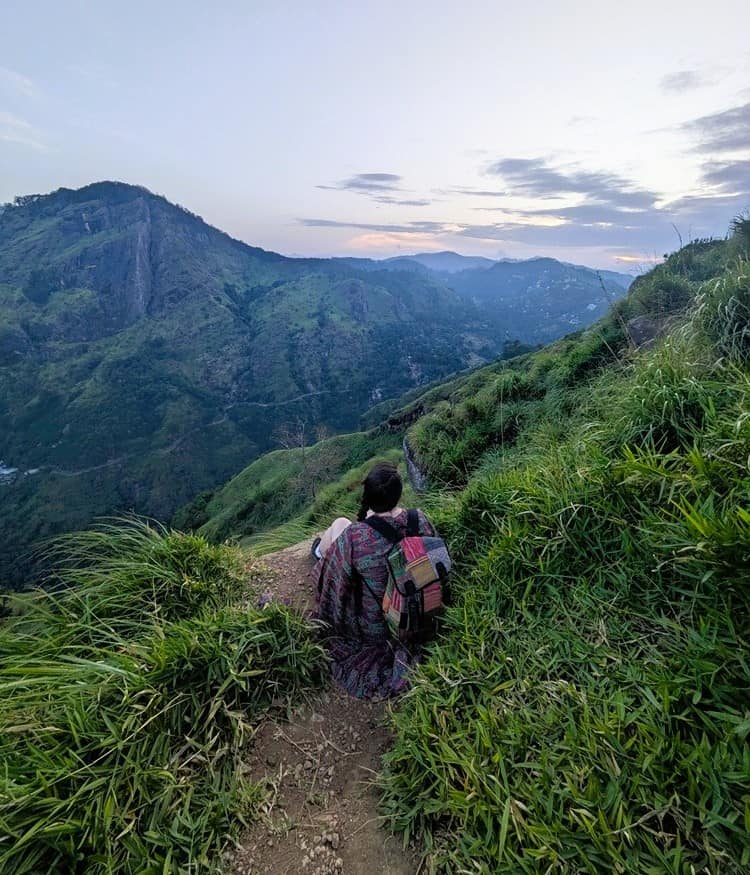
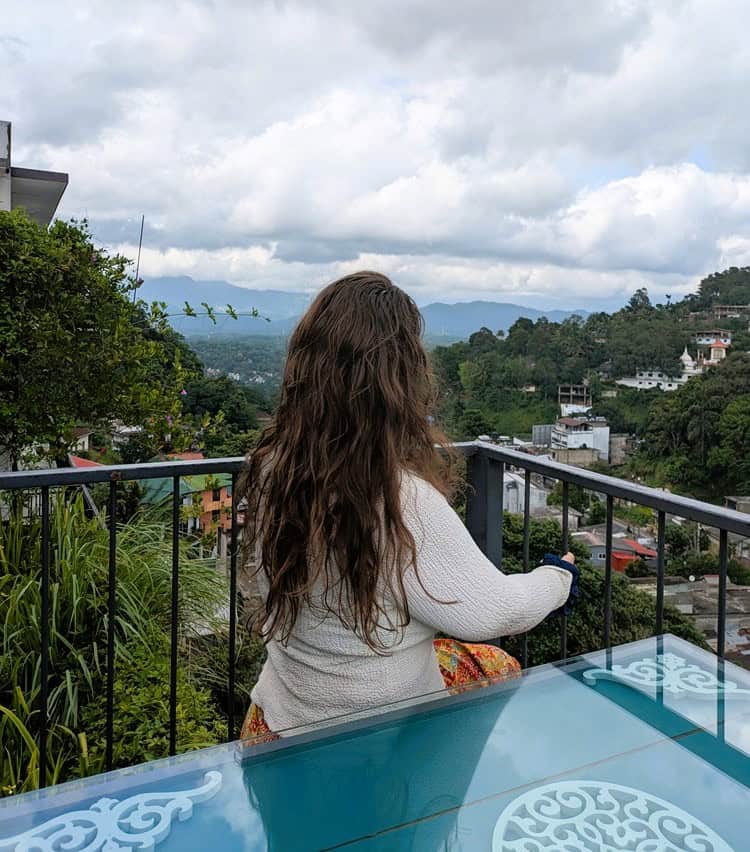
A close joint second is Goa, India and Sri Lanka. Goa is absolutely beautiful and the food is incredible! I’m in Sri Lanka now for the first time and I’ve fallen head over heals in love with the country. It’s full of luscious green landscapes, incredible historic sites, delicious food and some of the friendliest people I’ve ever met.
What would you say to a woman who has a chronic health condition, and wants to travel solo but is scared to and thinks it is too risky?
You are capable of so much more than you think.
Yes, this is going to be harder than it is for the average person, there’s no escaping that. But you can do it!
I know words make these things sound so simple; however, it really is as simple as making the decision and figuring out how to follow through. Travel life for us require more forethought, planning and insurance, but it’s not outside of the realms of possibility at all.
Don’t let your fears dictate your dreams, let hope win and live the fantasy!
Thank you Hannah!
You can learn more about Hannah here.
Connect with Hannah on Instagram here.

Blogs in the making
Coming soon: interviews with solo travellers who have chronic health issues & much more…
Sign up for all updates & blog posts
Are you ready to start planning your solo trip?
Download my Destination Checklist to help with your personal reflection and planning.
Related Blog Posts
Chronic Illness Travel Insurance: Comparing Staysure & Avanti for Pre-Existing Conditions
Solo Travel with Chronic Illness: How to Reclaim Yourself at Midlife
The Unexpected Benefits of Travelling Solo with a Chronic Health Condition
A Destination Checklist for Women Traveling Solo with a Chronic Health Condition
On being a Digital Nomad with MS: An inspiring interview with Monica Lynne
Sri Lanka for Women with Chronic Illness: A Calm, Restorative Destination for Midlife Solo Travellers
My descent into darkness and healing
Disclaimer: This guide is intended to support and inspire your solo travel planning with a chronic health condition but does not replace professional medical advice, diagnosis, or treatment. I am not a medical professional. Always consult your healthcare provider before making travel plans, especially regarding your health, medications, and any necessary vaccinations or travel clearances. Your safety and wellbeing are the highest priority.
I’d Love to Hear From You!
Have you travelled solo with a chronic condition? Or are you thinking about it? Feel free to share your thoughts or experiences in the comment section below.
If this post resonated with you, please consider sharing it with someone who might need this kind of encouragement.